Costa Rica Tarrazu Diamond Mountain High Altitude Strictly Hard Bean Red Honey Coffee Flavor Profile and Aroma Description
Product Information
Product Name: FrontStreet Coffee Costa Rica Tarrazu Montanas del Diamante SHB Red Honey
Flavor Description: Sweet dates, brown sugar and cane sugar sweetness, caramel cocoa, rounded acidity, smooth mouthfeel.
Country: Costa Rica
Region: Tarrazu, Dota Valley
Estate: Finca Montanas del Diamante
Variety: Red Catuai
Altitude: 1,750 to 1,850 meters
Grade: European Standard Strictly Hard Bean (SHB)
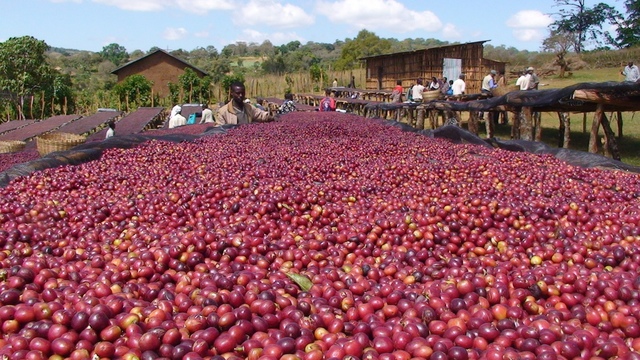
Processing Method: Red Honey
Harvest Period: November to March
Certification: N/A
Introduction
Finca Montanas del Diamante is located in the Tarrazu region, Dota Valley, with coffee cultivation at altitudes of 1,750 to 1,850 meters. The varieties grown include Red Catuai and Caturra. The estate owner, the Gutierrez family, has 50 hectares of coffee cultivation area. Their main philosophy is to produce excellent quality coffee while maintaining an environmentally friendly ecosystem.
Dota Valley in the Tarrazu region is a very unique place, with perfect high mountain altitudes and microclimates, and some coffees here have set records for Costa Rica's best coffee. Finca Montanas del Diamante has its own processing facilities, with rich production technology for washed, honey, and natural processed green beans.
Costa Rica has a long history of coffee cultivation, but in the past 10+ years, more innovative "dry" processing methods have become popular. The new approach collectively known as "honey processing" uses the function of pulp removers to adjust the degree of pulp removal, producing a "honey sensation" that ranges from light to concentrated as colors range from light to deep (white, yellow-red-white, yellow-red-black), with varying levels of acidity, complex aroma, and richness — each with its own depth and merits.
Costa Rican coffee has long been considered a classic flavor of the perfect type: balanced, clean, and mild are its foundation. This batch of FrontStreet Coffee's Costa Rica Montanas del Diamante comes from the famous Tarrazu specialty bean region, renowned for its excellent natural geographical conditions and superior regional cultivation management. It features nearly perfect classic flavors with lively citrus characteristics, black grape-like aromas, melon-like sweetness, a smooth mouthfeel, drupe fruit and light floral notes, and a significant coffee flower fragrance in the aftertaste.
Its flavor characteristics are clear, balanced, complex, and varied, with gentle orange-citrus notes, toast, a clean mouthfeel, caramel cocoa sweetness, melon-like sweetness, and an excellent finish.
Costa Rican Coffee Overview
Coffee cultivation in Costa Rica began in 1779 with introduction from Cuba, but it was not until 1820 that coffee was first exported. There are currently about 32,000 coffee farmers, with each farmer's average cultivation area being less than one hectare (10,000 square meters).
Costa Rica has a population of 4.1 million (2006), a coffee cultivation area of 82,500 hectares, annual production of 1.7 million bags (60kg per bag), domestic annual consumption of 380,000 bags, and average annual per capita consumption of 5.5kg — higher than Japan (4kg), while Taiwan's current average is only slightly more than 1kg.
Costa Rica was the first country in Central America to introduce coffee cultivation, with a long history and a complete coffee organization from production to sales. Located on the Central American isthmus, with numerous volcanoes within its borders, it has natural advantages of sunshine and land. Climate-wise, it is moderated by both Pacific and Atlantic ocean currents and sea breezes, producing coffee with local microclimate terroir characteristics. In both quality and quantity, Costa Rican coffee has consistently received world recognition and been rated among the world's high-quality coffees.
Coffee cultivation in Costa Rica now has two hundred years of history. It was first planted on the slopes of Poas and Barva volcanoes, in what is today called the Central Valley region. The main seven coffee regions are distributed from northwest to southeast along the inland central plateau.
Costa Rica's volcanic terrain, with its fertile volcanic ash, mild and suitable temperatures, and stable, abundant rainfall, makes coffee one of the country's main agricultural products. The seven major regions are Tarrazu, Tres Rios, Orosi, Central Valley, West Valley, Turrialba, and Brunca.
FrontStreet Coffee Recommendation
For another take on honey processing, FrontStreet Coffee's Costa Rica Blackberry uses a distinctive black honey process that removes almost none of the mucilage. Drying takes at least two weeks and uses covers to keep the sun from drying the beans too quickly, so the sugars convert fully; the cherries are turned at intervals to prevent uneven heat and over-fermentation. Roasted to a medium-light level, the ground coffee gives off a rich floral fragrance, and the cup shows grape, berry, and ripe blackberry flavors.
The FrontStreet Strawberry Candy is a Geisha blend that pairs a Panamanian Geisha with a Costa Rican coffee processed as raisin honey, keeping 100% of the mucilage with a zero-water method. The result carries the floral-tea character of Geisha along with the clean aroma of grapes and dried blueberries, soft fruit acidity, an almond finish, and clear sweetness.
For a different profile again, the FrontStreet Costa Rica Mozart uses the innovative raisin-honey method, which pre-dries the cherries on raised beds for at least three days before the skin and pulp are removed. It works well for pour-over, cold brew, and the Moka pot, with notes of osmanthus, pineapple, and raisin.
Important Notice :
FrontStreet Coffee is a long-established specialty coffee roaster in Guangzhou China, selling freshly roasted beans from its own farm in Yunnan as well as dozens of carefully selected single-origin beans from around the world for both pour-over and espresso. The products deliver consistently excellent quality and great value, with shipping within 24 hours. Guangzhou's FrontStreet Coffee shop is recommended by many coffee lovers, and the beans are now available online at the Tmall 。
FrontStreet Coffee has moved to a new address:
FrontStreet Coffee Address: 315,Donghua East Road,GuangZhou
Tel:020 38364473
 Scan and follow the En Gafei WeChat official account. Please indicate that the reprint comes from "En Gafei".