The Story of Yirgacheffe Red Cherry Coffee Beans: How Different Pour-Over Brewing Methods Affect Flavor Characteristics

FrontStreet Coffee's Yirgacheffe Red Cherry Selection
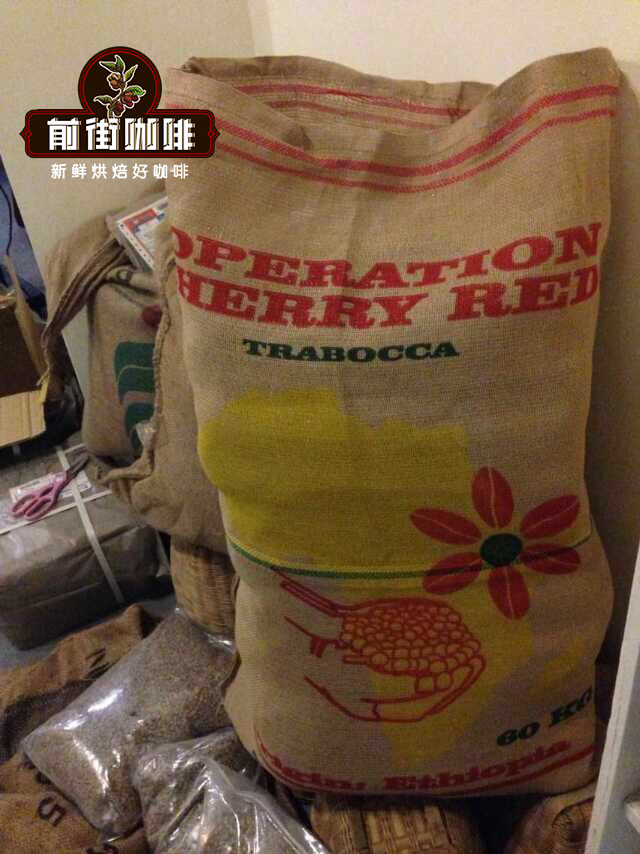
On our bean menu you will find a FrontStreet Yirgacheffe Red Cherry coffee bean. Regulars at FrontStreet Coffee know that we carry several different Yirgacheffe beans, each from a different cooperative or processing plant. "Is Red Cherry also a cooperative?" some ask. In fact, Red Cherry is a quality-promotion program initiated by the Dutch green coffee importer Trabocca. Thanks to this program, Ethiopian coffee quality has been safeguarded and farmers' incomes have risen.
As we noted in previous articles, coffee quality assurance involves many aspects, generally four major areas: variety, processing method, altitude, and roasting. When enjoying a great cup, it is worth analyzing it from these angles.
Whenever FrontStreet Coffee receives a newly roasted batch, we brew it several different ways, taste-testing repeatedly to identify its optimal flavors. Some might think changing technique makes little difference — and indeed the impact is not dramatic, especially for the characteristic citrus and fruity notes of FrontStreet Yirgacheffe, which technique alone can rarely mask completely (unless the beans are stale). But these changes do affect the intensity of those characteristics and many subtle flavor expressions.
We believe coffee is a culinary art that rewards slowing down to savor every subtle change in the mouth.

Yirgacheffe Growing Region
Yirgacheffe is a small Ethiopian town at 1,700-2,100 meters — one of the highest coffee growing regions in the world and a byword for Ethiopian specialty coffee. Lakes Turkana, Abaya, and Chamo bring abundant moisture to the area. The rift valleys, exemplified by Misty Valley, are shrouded in mist year-round, with spring-like seasons, gentle breezes, and cool humidity. Thousands of coffee tree varieties thrive here, nurturing the unique terroir of FrontStreet Yirgacheffe, where floral and fruity aromas intertwine and shift unpredictably.
Yirgacheffe's coffee trees were first cultivated by European monastery monks (somewhat like Belgian monks growing grain for beer), later taken over by farmers and cooperatives. The trees grow naturally scattered in forests, fields, and backyards. At harvest, Ethiopian coffee trading companies come to town to buy the beans farmers have collected, ultimately auctioning and exporting them under the "Yirgacheffe" brand.
Red Cherry Program
Trabocca recognized that inconsistent Ethiopian bean quality capped price potential and kept farmer incomes low. To change that, they launched the Red Cherry Program together with local farmers, tackling the problem at its source. By paying higher prices for quality green beans, the program encourages farmers to be meticulous at every step of picking and handling. During picking, harvesting is fully manual, selecting only highly mature cherries.
FrontStreet Coffee would argue that the specialty programs other countries have since launched are essentially Red Cherry-style coffees — they all operate on this model.

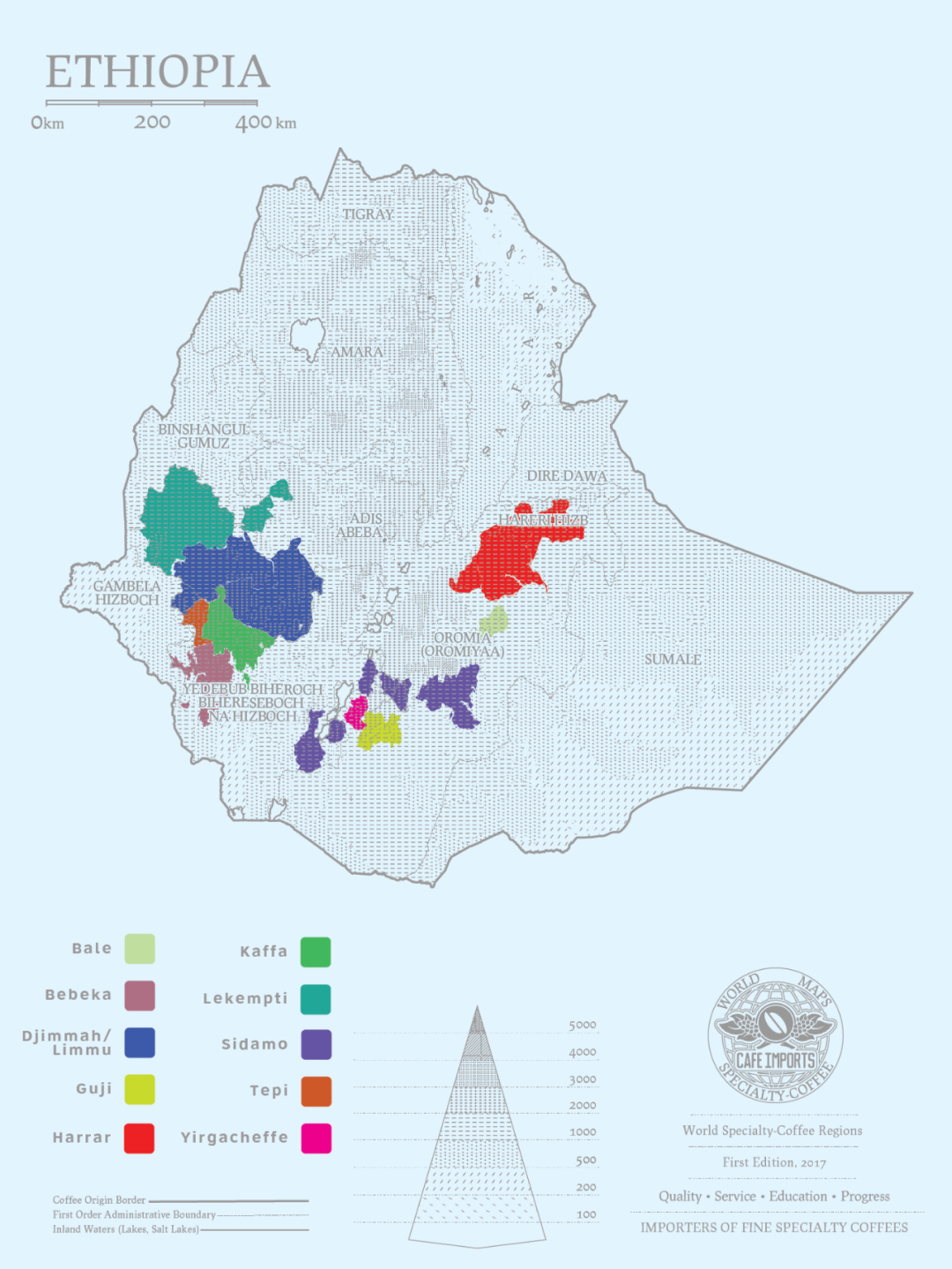
The Red Cherry Program is also a reinforcing approach that pushes farms to invest more effort in sorting and selection, and these coffees command relatively higher prices. The program's main regions include Yirgacheffe, Sidamo, Bonga Forest, Lekempti, Kembata, Guji, Harar, and Limu — all areas with distinctive flavors that showcase the best of Ethiopian coffee.
Yirgacheffe Red Cherry Coffee Grades
The ECX (Ethiopian Commodity Exchange) defines grades by defect rate: G1 and G2. G1 means no more than 3 defective beans per 300g of green coffee; G2 means 4-12 defects per 300g. FrontStreet Coffee currently carries two Yirgacheffe Red Cherry beans, both G1 grade.
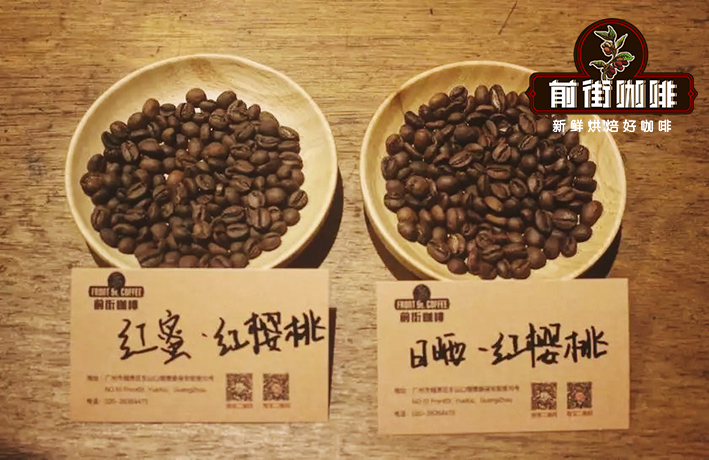
The image above shows the two different processing methods used for FrontStreet Yirgacheffe Red Cherry beans: red honey and natural.
| Coffee Bean | FrontStreet Natural Red Cherry | FrontStreet Red Honey Red Cherry |
|---|---|---|
| Region | Yirgacheffe | Yirgacheffe |
| Processing Plant/Cooperative | Arerti Processing Plant | Idido Cooperative |
| Altitude | 2300m | 2000-2200m |
| Variety | Local native varieties | Local native varieties |
| Grade | G1 | G1 |
| Processing Method | Natural processing | Red honey processing |
Arerti Processing Plant
Each smallholder farmer at the Arerti Processing Plant cultivates an average of about 0.6 hectares. Made up of hundreds of farmers and growing at nearly 2,000 meters, the area combines significant temperature swings with fertile soil — an excellent environment for coffee.
Idido Cooperative
The Idido Cooperative is a member of the Yirgacheffe Coffee Farmers Cooperative Union (YCFCU), established in 2002, which counts 24 primary cooperatives and about 50,000 farmers. Idido sits in the high-altitude valleys around Yirgacheffe town, with annual rainfall of about 1,400-1,800 mm. Local smallholders grow coffee at around 2,000 meters; the cool mountain air slows maturation, and farmers harvest fully ripe red cherries from December to February each year.

Natural Processing Method
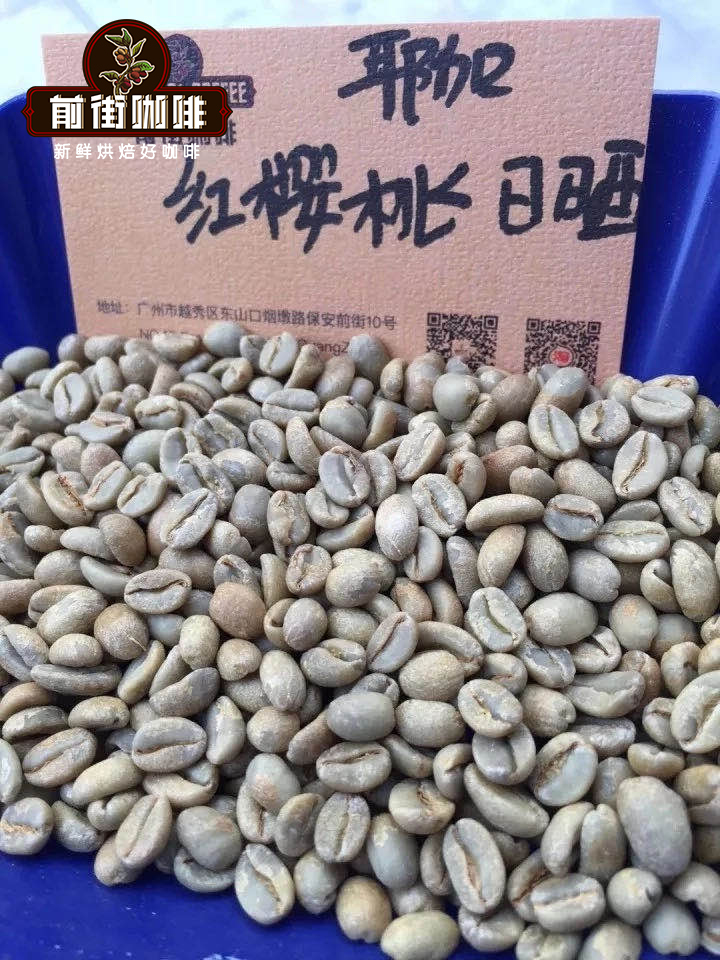
After the processing plant selects usable cherries, the whole fruit is kept intact and dried naturally on raised beds. It is precisely this labor-intensive bed drying — which keeps fruit off the ground, preventing earthy taints — that produces such exceptionally clean fruit flavors. After more than two weeks of drying, the dark brown cherries are professionally stored to await full flavor maturation. Before shipment, the beans are hulled from the dried cherries — you can imagine the sweetness.
Red Honey Processing Method
Honey processing means drying green beans with their mucilage intact. Once the outer flesh is removed, a viscous gelatinous layer remains. Traditional washed processing rinses it away with clean water, but where water is limited at high altitudes, this direct drying method was developed. The mucilage carries the fruit's highest sugar concentration and is central to fermentation — arguably it supplies 80% of the nutrients during processing.

Yellow honey retains 60% of the mucilage, red honey 75%, and black honey almost all of it.
Roasting Comparison
FrontStreet Coffee roasts both Red Cherry beans light, but the different processing methods call for different parameters. After repeated adjustments, we settled on the following roasting curves.
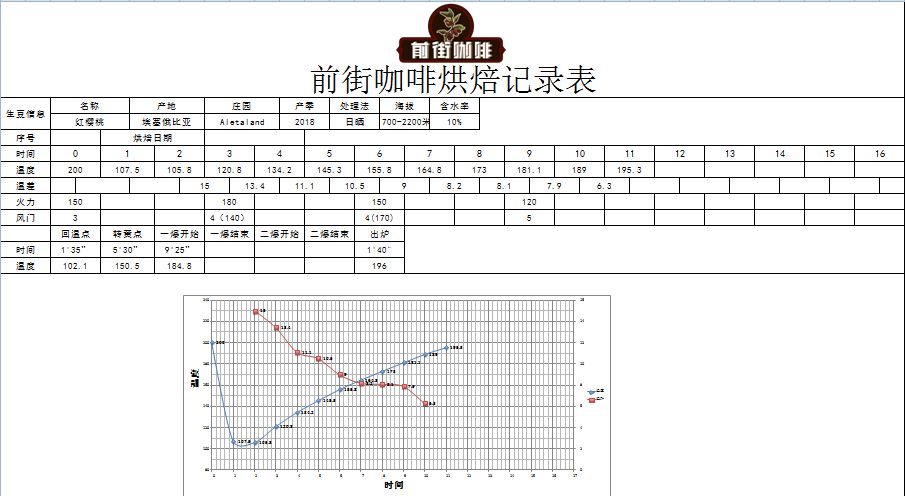
FrontStreet Coffee Natural Red Cherry Roasting Curve
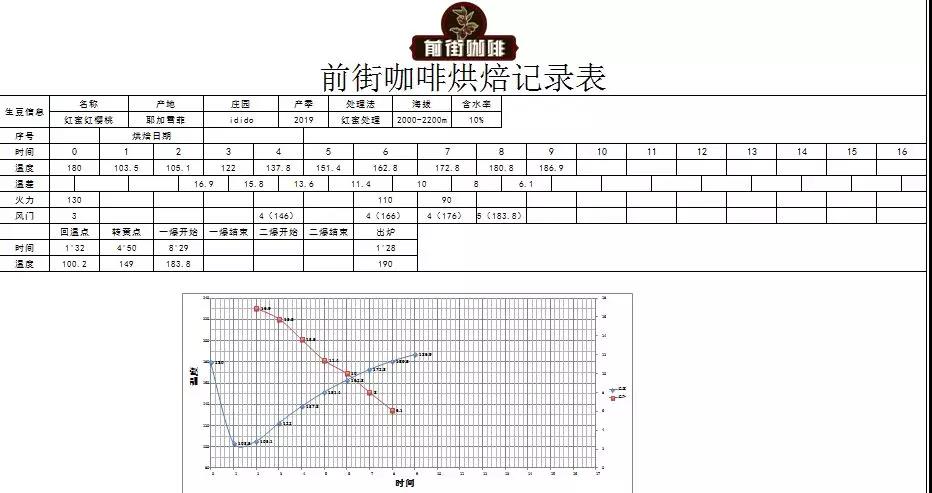
FrontStreet Coffee Red Honey Red Cherry Roasting Curve
How FrontStreet Coffee Brews
When brewing these two Yirgacheffe beans, we keep technique and parameters as consistent as possible to avoid skewing the comparison.
Brewing Parameters: V60 dripper, water temperature 91-92°C, 15g of coffee, 1:15 coffee-to-water ratio, grind size like fine sugar (Chinese standard #20 sieve, 80% pass-through).
Brewing Technique: segmented extraction. Bloom with 30g of water for 30 seconds, pour in small circles to 125g and pause. When the water level is about to expose the bed, pour to 225g and stop. When the bed is about to be exposed again, remove the dripper. Extraction time: 2'00" (timing from the bloom).

Flavor Comparison
[FrontStreet Yirgacheffe Red Cherry Natural G1] The entry shows noticeable sweet-tart notes — lemon, berries, and fermented wine aromas. The lemon acidity lingers with a clear sweet aftertaste.
[FrontStreet Yirgacheffe Red Cherry Red Honey G1] The entry reveals distinct florals with citrus, almonds, and berries. Floral and citrus notes dominate, with a persistent sweet finish.
The difference between the two: the Natural Red Cherry shows more prominent berry notes and mature fruit sweet-tartness with a relatively fuller body, while the Red Honey Red Cherry leans floral with citrus-almond aromas, a lighter body, but richer flavor layers.
FrontStreet Uses Different Brewing Methods for FrontStreet Natural Red Cherry

To see how technique shapes flavor, we brewed the Natural Red Cherry two ways: single-pour and three-stage pouring. First, the definitions.
Single-pour: after the bloom, all the water is poured in one uninterrupted go. The result is balanced flavor with prominent characteristics — and it saves real time during café service.
Three-stage pouring: also called the three-pour method. The first stage is the bloom, followed by two more stages of extraction. Compared with single-pour, the flavor layers are richer.

[Brewing Parameters and Techniques]
For this comparison, parameters were unified: Hario V60, 1:15 coffee-to-water ratio, water temperature 90°C, grind size like fine sugar (Chinese standard #20 sieve, 80% pass-through).
One note on grind size: we use a Baratza Encore grinder, and even grinders of the same brand differ unit to unit. FrontStreet Coffee periodically re-sieves its grounds to check whether grind adjustments are needed.

For technique, we use bloom water equal to twice the coffee weight — 30g for a 30-second bloom. At a 1:15 ratio, total water poured is 225g.
Blooming mainly helps the beans release gas. During roasting, green beans undergo a series of chemical and physical changes, accumulating large amounts of gas (mostly carbon dioxide). Since our beans are all freshly roasted, we generally recommend customers let them rest for three days first, allowing the carbon dioxide to vent so that brewing is not destabilized or under-extracted.

Single-pour: after the bloom, pour directly to 225g. Total pour time: 2 minutes (bloom included).
Three-stage pouring: after the bloom, second stage pours to 125g and pauses; finally pour to 225g and stop. Total pour time: 2 minutes (bloom included).

[FrontStreet Yirgacheffe Red Cherry Coffee Flavor Description]
Single-pour flavor: overall gentler with more prominent aromas — lemon fragrance, floral notes, and mature orange. The entry shows distinct nuttiness with citrus and plum acidity; the aftertaste has caramel and cocoa.
Three-stage flavor: a clearly layered mouthfeel with prominent aromas — lemon, florals, and fermented wine notes. The entry has a full juice sensation with citrus and lemon acidity, softer nuttiness, and honey in the aftertaste.
The takeaway: single-pour, with more water-column agitation, extracts faster, yielding more nutty flavors but thinner layers. Segmented extraction, with less agitation, extracts more evenly as water seeps quickly through the filter paper — aromas, mature fruits, and nuttiness each arriving in distinct layers.
FrontStreet Coffee Recommendation: The Red Cherry Natural, Full Red-Fruit Drying
Want to taste the Red Cherry story for yourself? FrontStreet Coffee's natural Red Cherry beans use full red-cherry drying: only fully ripe, defect-free cherries are picked, screened at the mill, and laid straight onto raised beds — turned every 2-3 hours in the first days to prevent uneven heating and over-fermentation, then sun-dried for three to five weeks. Because the fruit dries with its pulp intact, the cup keeps classic Yirgacheffe character while gaining tropical fruit: citrus-like acidity, berry juiciness, honeyed sweetness, and a cream-smooth body. Brew it FrontStreet's way — V60, 90-91°C, 15g, 1:15, fine-sugar grind (#20 sieve, 80% pass-through) — with a three-stage pour of 30g, 95g, then 100g for the fullest expression.
Important Notice :
FrontStreet Coffee is a long-established specialty coffee roaster in Guangzhou China, selling freshly roasted beans from its own farm in Yunnan as well as dozens of carefully selected single-origin beans from around the world for both pour-over and espresso. The products deliver consistently excellent quality and great value, with shipping within 24 hours. Guangzhou's FrontStreet Coffee shop is recommended by many coffee lovers, and the beans are now available online at the Tmall 。
FrontStreet Coffee has moved to a new address:
FrontStreet Coffee Address: 315,Donghua East Road,GuangZhou
Tel:020 38364473
 Scan and follow the En Gafei WeChat official account. Please indicate that the reprint comes from "En Gafei".