Yunnan Coffee vs Hainan Coffee: Flavor Profile, Taste Characteristics and Varietal Advantages of Yunnan Arabica
Both Yunnan and Hainan grow coffee, but only Yunnan coffee is famous. Why? In this article, FrontStreet Coffee tells the stories of Yunnan coffee and Hainan coffee.
When Were Coffee Trees Introduced to Yunnan?
The first coffee tree in Yunnan was introduced in 1904 by the French missionary Alfred Liétard near the China–Vietnam border. The fruit of this tree was relatively small, and the beans likewise small, so people called it "small-bean coffee" (genetic comparison later confirmed it was Typica). With low fruit yields, people would simply extract the seeds after harvest and bury them in the ground as ordinary plants, nobody cultivated coffee as an economic crop.
When Were Coffee Trees Introduced to Hainan?
Hainan's first coffee tree arrived from Malaysia in 1908. Malaysia's low altitude and hot, humid climate meant the varieties planted were all Robusta, heat- and humidity-tolerant and pest-resistant. Robusta fruits are relatively large and the beans larger than Arabica, but the flavor is far less refined. It's easy to see, then, that Hainan's coffee has always been mainly Robusta.
The Development of Yunnan Coffee
After the founding of the People's Republic, and under expert guidance, Yunnan began mass coffee cultivation and shipped large quantities of beans to the Soviet Union; the planted area once reached 4,000 hectares. When Sino-Soviet relations soured, the Soviet Union stopped buying Chinese coffee, Yunnan's coffee history was abruptly interrupted, and farmers cut down their trees and switched crops. By the late 1980s and early 1990s, Nestlé began coffee cultivation in Yunnan and, to raise yields, introduced Catimor varieties from Brazil. By 1997 Yunnan's cultivated area reached 7,800 hectares (by then the province had almost entirely abandoned low-yield Typica for high-yield Catimor).
After 2000, though Colombian beans resembled Yunnan's and fetched 25 yuan/kg, Yunnan beans sold for only 15 yuan/kg. Purchase prices fluctuated with futures prices, so farmers would alternately neglect and then dote on their plantations.
In 2008, the Pu'er tea bubble burst and buyers disappeared. To cushion tea farmers' losses, the government encouraged coffee planting, at the time, prices exceeded 40 yuan/kg. Under those conditions, Yunnan's coffee area expanded rapidly again. But with the rise of specialty coffee, Catimor's cup profile couldn't keep up with the specialty era, and it couldn't escape its fate as "instant-coffee raw material": by 2012, Yunnan coffee had fallen back to around 17 yuan/kg.
In recent years, as the specialty industry has matured, processing methods have grown increasingly innovative, and innovative processing has genuinely lifted flavor quality. Yunnan coffee adopted special processes to mask Catimor's shortcomings, and drinkers responded enthusiastically; Yunnan beans began appearing in the specialty market on their own merits. But FrontStreet Coffee believes a good cup can't rest on masking, the coffee's natural flavor matters most. So in 2014, FrontStreet Coffee began planting Typica in Yunnan, the very variety of Yunnan's ancestor coffee tree.
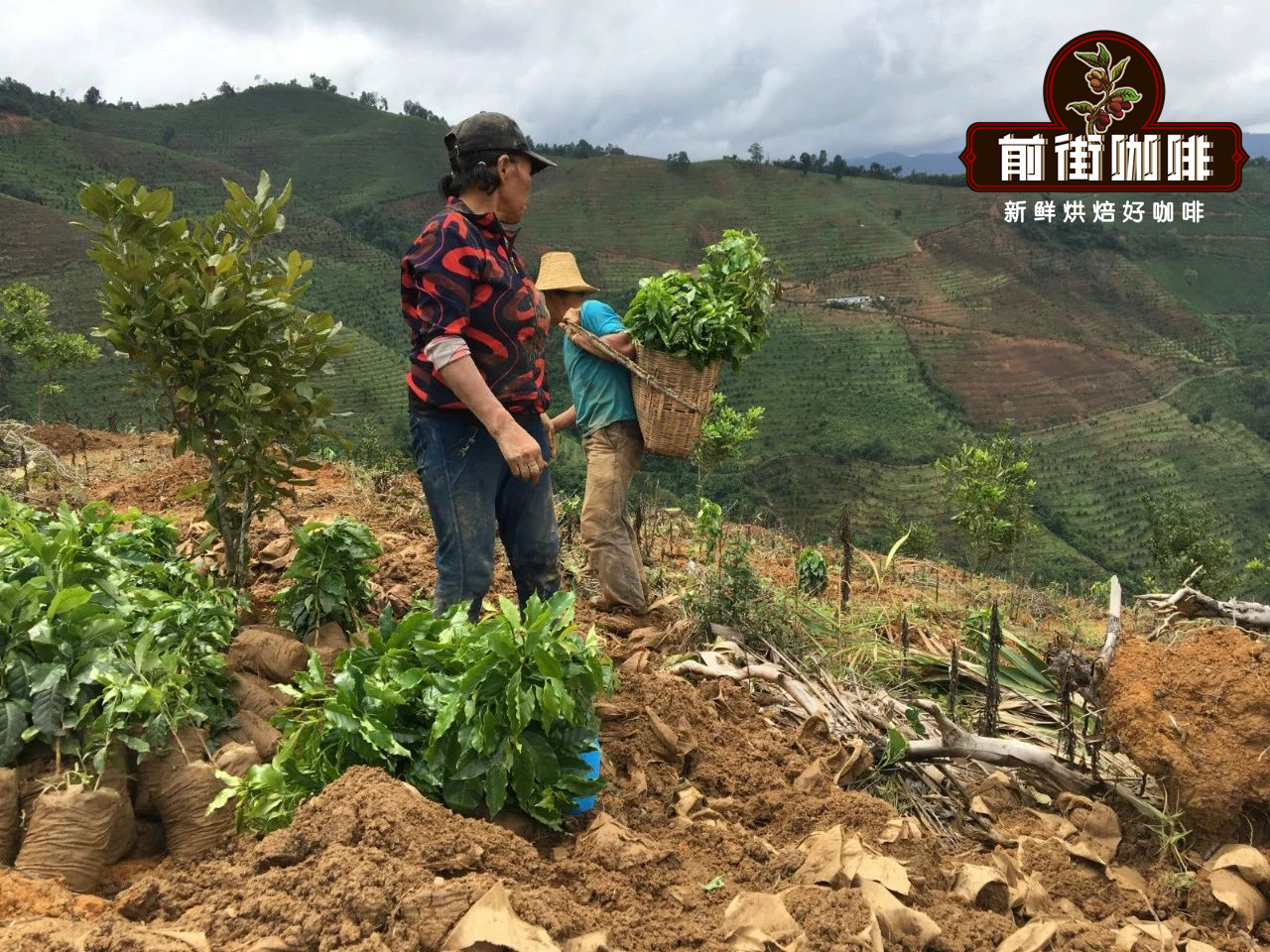
FrontStreet chose Typica because it is the oldest coffee variety, every Arabica variety we know today descends from it, and it carries a naturally clean cup. The yield is lower than Catimor's and cultivation harder, but its refined acidity and balanced flavor leave a lasting impression. FrontStreet's Yunnan Typica shows delicate acidity, a licorice-like sweetness, slightly lighter body, and overall balance.
The Development of Hainan Coffee
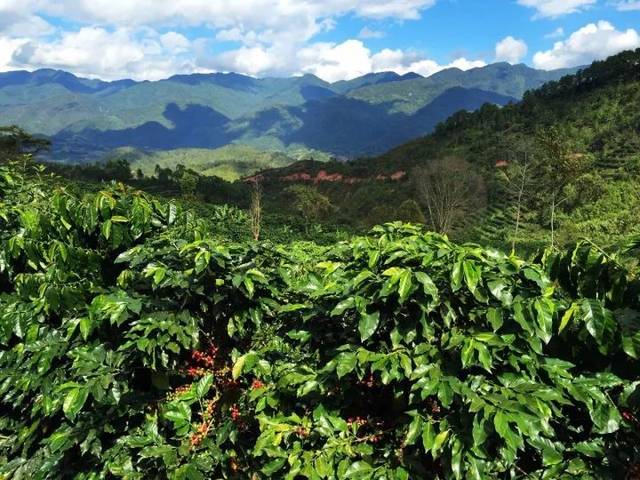
Hainan Island covers 34,000 square kilometers, and apart from the coastal tidal flats and a few mountainous areas in the center, nearly all of it can grow coffee, a unique advantage for the industry. In 1987, China's first instant coffee factory was established in Hainan, with investors building a 1,000-mu coffee demonstration plantation in Sanjiang Town, Qiongshan, and adopting a "company + farmer" model to solve the raw-material shortage at its root, a sign that Hainan's coffee industry was trying to break its bottlenecks and strengthen its advantage. But more than a decade passed, "Hainan coffee" failed to capture the market, foreign "Nestlé" coffee moved in, built factories, and quickly seized 70% of the market, while "Hainan coffee" retreated to just over ten percent.
Why didn't "Hainan coffee" develop despite such good resources? A key reason was the raw-material shortage, the companies had no rice to cook. Hainan began large-scale coffee cultivation in the 1960s, exceeding 200,000 mu by the early 1980s, but the lack of coordinated development, variety breeding, technical support, balanced allocation of cultivation and deep processing, industry development, international trade, produced "coffee hurting farmers." Today the planted area has shrunk to one-tenth of its early-1980s peak. Local Hainan coffee companies report that coffee sourced within Hainan each year covers only a quarter to a third of factory demand, with the vast majority imported or bought from Yunnan, and rising raw-material costs have greatly increased production costs.
Second, although demand outstrips supply, production capacity is limited, and the industry never built a solid "sphere of influence" or the brand recognition it deserved. When Hainan's coffee factory was founded in 1987, its designed capacity was only 300 tons annually, while even some poor coffee-producing countries built processing plants of over 10,000 tons. Locals note that in new-product development Hainan has long been at the forefront of domestic instant-coffee makers: the product line has grown past 10 varieties, sold across 31 provinces, cities, and autonomous regions, with some exports. But despite broad sales reach, there aren't many large markets; companies must expand capacity, yet they lack the financial backing to do so.
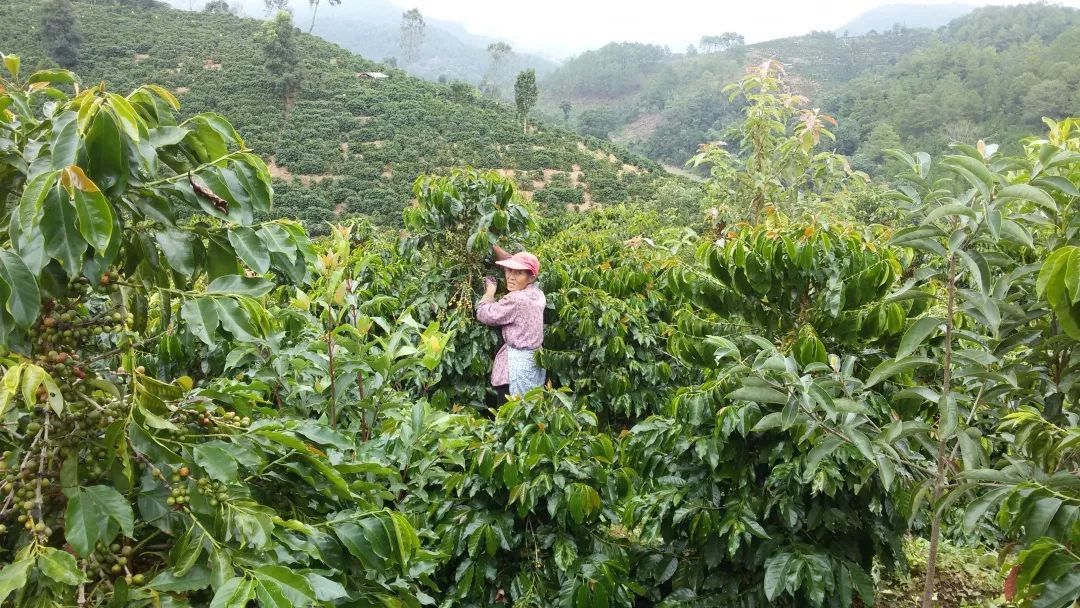
Industry insiders point out that, judging from the experience of coffee development in parts of Africa and South Asia, government policy matters enormously: providing improved varieties and technology free of charge, grain subsidies or interest-free/low-interest loans, and income-tax relief for growers. Hainan coffee also needs stronger macro-guidance to fix today's fragmented cultivation, narrow varietal base, backward technology, unstable quality, and difficult sales channels.
Hainan's government and enterprises have begun responding. Recently the Hainan Provincial Party Committee and Provincial Government proposed that, alongside vigorously developing efficient tropical agriculture, the province should leverage its unique environmental advantages to build up resource-based industries that can't be replaced elsewhere, a favorable external environment for coffee raw-material production. Relevant enterprises have also acted: beyond the 1,000-mu demonstration plantation, follow-up measures are planned. Equipment upgrades have raised production capacity to nearly 400 tons annually, varieties and scale are being further improved, and professional design firms have been hired to reposition and repackage the company and its products, aiming to reshape the image and return to the stage.
Why Can Yunnan Coffee Become Specialty Coffee, But Hainan Coffee Cannot?
It comes down to varieties. As noted above, Yunnan's coffee cultivation is mainly Catimor, with large quantities of Typica replanted as well, while Hainan, from beginning to end, has only cultivated Robusta.
Typica, the ancient original among Arabica varieties, naturally gives a clean cup with bright acidity. Catimor is an Arabica–Robusta hybrid, but Robusta accounts for only 25% of its genes, so although its flavor falls short of Typica's, the right processing can make people fall in love with it.
Robusta, however, can't manage it. By the nature of the variety, Robusta carries more caffeine, amino acids, and chlorogenic acid than Arabica, and chlorogenic acid is the source of bitterness. Robusta lacks Arabica's elegant aromatics entirely; instead the cup is fuller but flatter, with flavors of walnut, peanut, hazelnut, wheat, grain, even pungent earthy notes. Because of that poor flavor, Robusta is largely shunned by the specialty industry and used mainly as instant-coffee raw material.
FrontStreet Coffee Recommendation
Yunnan coffee, often called "Yunnan small-bean coffee", produces uniform, plump beans with a mellow, balanced cup. The story traces back to 1904, when the French missionary Father Tien Tchou-Neng carried Typica seeds from Vietnam into Yunnan and successfully planted the province's first coffee tree in Zhugula village, Binchuan County, the beginning of Yunnan coffee. Coffee loves warmth: heat-tolerant but not frost-tolerant, it thrives with plenty of light at an ideal 16–21°C. Yunnan sits squarely in the golden coffee-growing belt stretching 25° north and south of the equator, with most of the province above 1,000 m, fertile slopes, ample sun, abundant rain, and big day-night temperature swings, ideal conditions for coffee trees. Plantings are concentrated in the province's southwest, across four major areas: Baoshan, Dehong, Pu'er, and Lincang. FrontStreet's two daily-bean Yunnan coffees come from Baoshan and Lincang.
FrontStreet Yunnan Small-Bean (Baoshan): Coffee planting in Baoshan began in the mid-1950s, introduced by the patriotic overseas-Chinese businessman Liang Jinshan. The frost-free, warm climate suits small-bean coffee beautifully, especially the unique dry-hot valley climate around Lujiangba, where the seasons barely differ but day and night temperatures swing wide, giving Baoshan coffee its signature lingering sweetness, aided by sensibly low rainfall. As an entry-level Chinese arabica, FrontStreet's washed, medium-roast Yunnan Small-Bean is the first choice: it highlights a caramel sweetness while keeping some acidity, expressing the region's terroir clearly. Washing, fermenting and rinsing off the mucilage layer before drying, is what lets the coffee show that region-specific character.
FrontStreet 2013 Yunnan Natural Typica: For a more flavor-explicit Yunnan coffee, try FrontStreet's 2013 Typica, grown on FrontStreet's own estate and processed with the most traditional post-harvest method: full natural (sun-dried) processing. Typica is among the oldest and purest arabica varieties. After natural drying and a medium roast, the cup is fuller-bodied with more pronounced sweet-sour structure, citrus and berry tones, a whisper of fermented wine aromatics, caramel sweetness, and a creamy finish.
FrontStreet Black Cocoa Blend: To taste Yunnan as espresso, pick the FrontStreet Black Cocoa Blend, a barista-favorite built from Yunnan Small-Bean and Brazilian Cerrado. Brazil supplies mixed-nut aromatics and a balanced body; Yunnan contributes chocolate and citrus notes. As an Americano it balances sweet, sour, and bitter with nutty, brown-sugar sweetness; as a latte it offers the silky smoothness of almond and cream, very beginner-friendly.
Important Notice :
FrontStreet Coffee is a long-established specialty coffee roaster in Guangzhou China, selling freshly roasted beans from its own farm in Yunnan as well as dozens of carefully selected single-origin beans from around the world for both pour-over and espresso. The products deliver consistently excellent quality and great value, with shipping within 24 hours. Guangzhou's FrontStreet Coffee shop is recommended by many coffee lovers, and the beans are now available online at the Tmall 。
FrontStreet Coffee has moved to a new address:
FrontStreet Coffee Address: 315,Donghua East Road,GuangZhou
Tel:020 38364473
 Scan and follow the En Gafei WeChat official account. Please indicate that the reprint comes from "En Gafei".