SOE Coffee's Flavor Profile and Tasting Guide: Understanding SOE Single Origin vs. Espresso Blend Coffee Beans

Many customers ask FrontStreet Coffee's baristas what SOE coffee is - and why so many specialty shops offer SOE while FrontStreet Coffee doesn't list it on the menu. The answer: SOE is espresso extracted from single-origin beans. Coffee beans are affected by weather, cultivation, and roasting, so flavor can vary between batches of the same bean, making it impossible to guarantee identical flavor in every espresso shot.
What Is SOE Coffee?
Single-origin espresso, known as Single Origin Espresso (SOE), means exactly that - espresso from a single origin. But SOE doesn't necessarily equal specialty coffee. If you select single-origin beans with easily identifiable flavors as your SOE, you can create espresso with unique, distinctive character. For example, the citrus notes of FrontStreet Coffee's Yirgacheffe or the cherry-tomato flavors of FrontStreet Coffee's Kenya, amplified by the high pressure of an espresso machine, result in more pronounced flavor profiles than pour-over coffee.
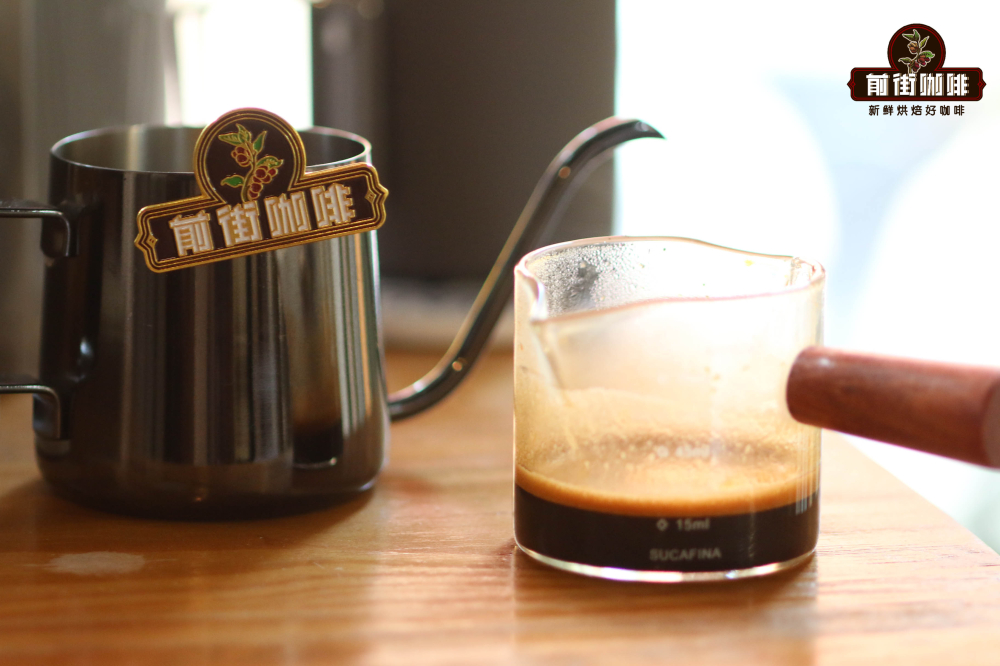
What Should You Pay Attention to When Making SOE?
For SOE, the selected beans are generally not roasted too deep, in order to highlight regional flavors. Compared with traditionally darker-roasted espresso beans, their flavors are harder to extract. FrontStreet Coffee believes you need to adjust extraction parameters to raise the extraction rate - for example, extending the extraction time, grinding finer, or increasing the dose.

On the other hand, when making milk or water-based drinks with SOE beans, adjust the ratio of espresso to milk or water - reduce the milk or water to keep the coffee flavor from becoming too bland. Finally, bean selection for SOE demands great care: although SOE flavors are prominent, being single-origin means the drawbacks are also easily magnified, so roasting and particle size all affect the outcome.

How Does FrontStreet Coffee Extract SOE from Brazil Queen Manor Yellow Bourbon?
Coffee dose: 20g
Coffee liquid amount: 40ml
Extraction time: 27 seconds
Grind setting: Galileo Q18 2.0
SOE flavor description: citrus, berries, fermented aroma, viscous body, medium bitterness, medium-high acidity, bright and lively.
FrontStreet Coffee wants every customer to enjoy consistently flavored, distinctly characterized espresso or milk coffee every visit. That's why, for espresso production, FrontStreet Coffee uses its Sunflower Warm Sun Espresso Blend - a combination of FrontStreet Ethiopia Yirgacheffe Natural Red Cherry and FrontStreet Honduras Whiskey Barrel Sherry - as the daily espresso bean.

FrontStreet Coffee's Purpose for Blending Coffee Beans
1. Create Long-Term Stable Flavors
The same region from different harvest seasons - or even different batches within one year - can produce different flavors. Here lies the weakness of single origin: you can never be certain that the single-origin coffee you enjoy this year will taste the same next year (with exceptions for beans whose processing dominates the flavor; factors from origin to café also cause variation). One purpose of blending, therefore, is to create a product that can be supplied long-term with stable flavors. When one component's quality drops or changes with the new harvest, a similar bean can replace it to maintain stability.

2. Create Flavors That Single Beans Cannot Produce
Sometimes a single-origin bean is like a person - it has both strengths and weaknesses. Blending is like assembling a team: taking each member's strengths to compensate for weaknesses, achieving complementarity. For instance, blending a high-sweetness bean with a high-acidity bean balances sweet and sour, or adding Brazil beans increases overall body thickness - these are all purposes of blending.
3. Determine the Target Flavor Profile for the Blend
When FrontStreet Coffee first blended the Sunflower Warm Sun Espresso Blend, we were very clear about wanting a blend with wine-like aromas, so we immediately put three barrel-fermented, wine-aromatic beans on the candidate list: FrontStreet Honduras Sherry Barrel, FrontStreet Honduras Lychee Orchid, and FrontStreet Colombia San Jose. After multiple trials, weighing cost-effectiveness among other factors, we finally chose FrontStreet Honduras Sherry Barrel as the main tone of the Sunflower Warm Sun Blend.
4. Determine the Blending Type
The advantage of blending raw (before roasting) is that a single roast degree keeps the coffee stable and uniform. It also cuts down roasting sessions - one roast suffices, improving efficiency. But raw blending's limitations are obvious: it generally suits beans of similar densities. Roasting a light-roast bean and a dark-roast bean together at one roast degree can easily produce a 1+1
The advantage of blending post-roast is that each bean can be roasted to its own optimal degree, maximizing its character. The disadvantage is that daily quality control and management become harder: inconsistent roasting dates demand attention to multiple resting periods. Imagine post-blending 4-5 beans - the product would require tracking 4-5 different roasting dates. FrontStreet Coffee uses the post-blend method for the Sunflower Warm Sun Blend, roasting the Honduras Sherry Barrel and the Natural Yirgacheffe Red Cherry separately, maximizing the sherry barrel's wine aroma while preserving as much as possible of the Red Cherry's fruit acidity and citrus-berry aromas.
When FrontStreet Coffee selects blend components and formulates a recipe, it first defines the characteristics to present: the performance of sour, sweet, and bitter; expectations for body; flavor goals; and whether the focus is milk-based coffee, Americano, or straight espresso. All of these inform green bean selection, roasting approach, and the final recipe - which then goes through repeated tests, adjustments, and retests before being finalized.

FrontStreet Coffee's Espresso Extraction Parameters
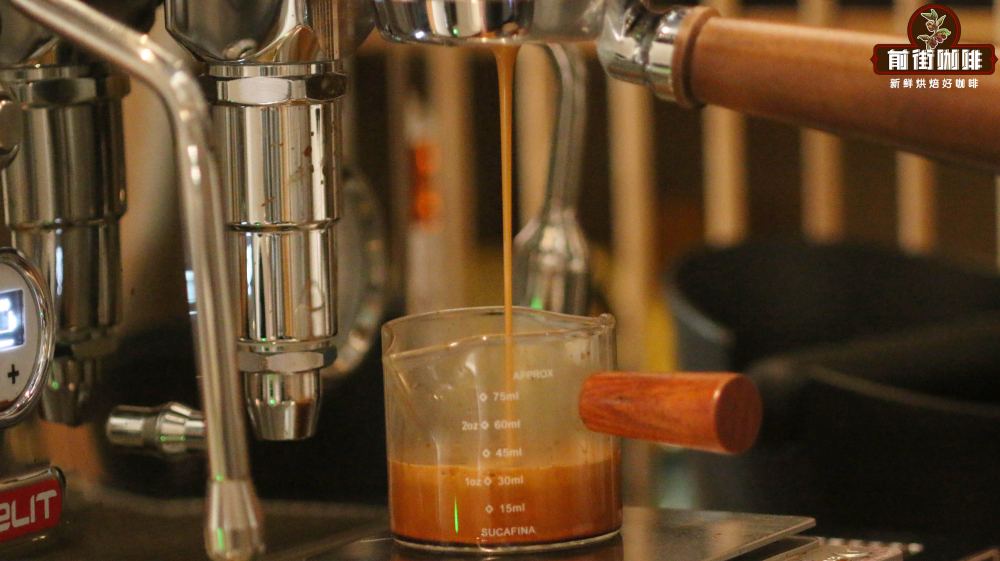
FrontStreet Coffee uses a Lelit V3 espresso machine with the following parameters:
Pressure: 9 bar
Temperature: 90.5~96°C
Time: 20~30 sec
Dose-to-yield ratio: 1:1.7~1:2
Dose: 12g (single espresso), 20g (double espresso)
Espresso yield: 20ml (single), 40ml (double)

Extracted under pressure, the Sunflower Warm Sun Espresso Blend shows distinct fruit acidity with faint berry aromas lingering, rich wine and chocolate flavors, and a comfortable aftertaste.
For professional coffee knowledge exchange and more coffee bean information, please follow Coffee Workshop (WeChat official account: cafe_style)
For more specialty coffee beans, please add FrontStreet Coffee's private WeChat: kaixinguoguo0925
FrontStreet Coffee Recommendation: Meet the Red Cherry Behind the Blend
Curious about the fruit-driven half of the Warm Sun Blend? FrontStreet Coffee's Natural Red Cherry is a Yirgacheffe natural built on an all-red-cherry standard: only fully ripe, defect-free cherries are picked, given a first round of sorting at the mill, and laid directly on raised beds to sun-dry - turned every 2-3 hours in the early days to prevent overheating and over-fermentation. After three to five weeks of drying, the pulp is machine-scraped away and the beans rest in warehouse. Because the fruit dries on the bean, the coffee keeps Yirgacheffe's classic citrus acidity while gaining berry-juice richness, honeyed sweetness, and creamy smoothness. Brew it as a pour-over on a V60 at 90-91°C with 15g of coffee at a 1:15 ratio - or pull it as a single-origin espresso to taste exactly where the blend's fruit character comes from.
Important Notice :
FrontStreet Coffee is a long-established specialty coffee roaster in Guangzhou China, selling freshly roasted beans from its own farm in Yunnan as well as dozens of carefully selected single-origin beans from around the world for both pour-over and espresso. The products deliver consistently excellent quality and great value, with shipping within 24 hours. Guangzhou's FrontStreet Coffee shop is recommended by many coffee lovers, and the beans are now available online at the Tmall 。
FrontStreet Coffee has moved to a new address:
FrontStreet Coffee Address: 315,Donghua East Road,GuangZhou
Tel:020 38364473
 Scan and follow the En Gafei WeChat official account. Please indicate that the reprint comes from "En Gafei".