Guatemala Antigua La Minita Estate Flora de Oro Coffee Beans Origin Processing Method Flavor Characteristics
Guatemalan Coffee
Coffee is one of Guatemala's main exports and has long held an important place in the country's economic development, accounting for 40% of total agricultural export income. Coffee cultivation covers approximately 270,000 hectares, all of it Arabica. Thanks to its unique climate and geography, Guatemalan coffee is widely praised for its pleasant acidity and its rich, multi-layered flavors. It is graded by altitude, and most beans are washed processed. FrontStreet Coffee believes that coffee quality is influenced by many factors, and bean processing is one of the most important. Through cupping and pour-over tastings, FrontStreet Coffee has found that washed beans produce a cleaner, brighter flavor profile.
Coffee trees were introduced to Guatemala in 1750, and by 1845 coffee had become an important economic crop in the region. In the late 19th century, German colonists developed the area's coffee industry. Guatemala benefits from highlands and up to 300 unique microclimates, with most regions receiving consistent rainfall and offering mineral-rich soil. Today, most coffee production takes place in southern Guatemala.

Guatemalan Coffee Grading System
Prime: Grown at altitudes of 750-900 meters
Extra Prime: Grown at altitudes of 900-1,050 meters
Semi Hard Bean: Grown at altitudes of 1,050-1,220 meters
Hard Bean (HB): Grown at altitudes of 1,220-1,300 meters
Strictly Hard Bean (SHB): Grown at altitudes above 1,300 meters
Guatemalan Coffee Regions
Since the early 1990s, the country's coffee authority, Anacafé, has worked to define Guatemala's coffee-producing regions based on cup profile, climate, soil, and altitude. The result of this ambitious program was the identification of 8 distinct regions in Guatemala that produce Strictly Hard Bean (SHB) coffee: Antigua, Acatenango, Atitlán, Cobán, Huehuetenango, Nuevo Oriente, San Marcos, and Fraijanes.
Antigua Coffee
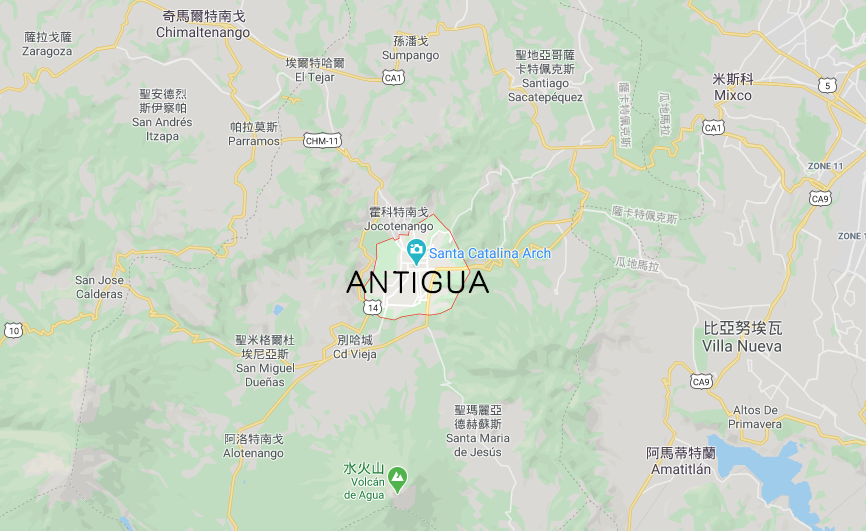
Antigua is Guatemala's most famous coffee-growing region and is said to be the birthplace of Guatemalan coffee. Rich volcanic soil, low humidity, abundant sunshine, and cool nights define the area, making it Guatemala's most outstanding coffee producer. The valley around the town of Antigua, from which the region takes its name, is surrounded by three volcanoes: Agua, Fuego, and Acatenango. Volcán de Fuego is an active volcano. Its periodic eruptions enrich the soil with minerals, and the area also preserves vast amounts of primary forest, filling the soil with abundant potassium ions. Together, these factors give coffee plants in the Antigua region endless nutrition for healthy growth. The climate here is mild year-round with steady humidity (65%), creating ideal conditions for coffee cultivation. Unlike other regions, Antigua does not experience extreme climate swings across the alternating dry and rainy seasons, allowing coffee to grow slowly in valleys above 1,500 meters altitude. Because Antigua is an enclosed valley, it also avoids severe soil erosion. All of these unique environmental conditions allow Antigua to maintain excellent quality year after year.
Altitude: 1,500-1,700 meters
Annual rainfall: 800-1,200 millimeters
Average temperature: 18-22°C
Relative humidity: 65%
Harvest season: January to mid-March
Soil: Volcanic pumice
Primary drying method: Sun-drying
Shade tree species: Gravilea
Main topography: Volcanoes, valleys
Coffee profile: Elegant with a balanced aroma, containing rich fragrance and an extremely sweet flavor
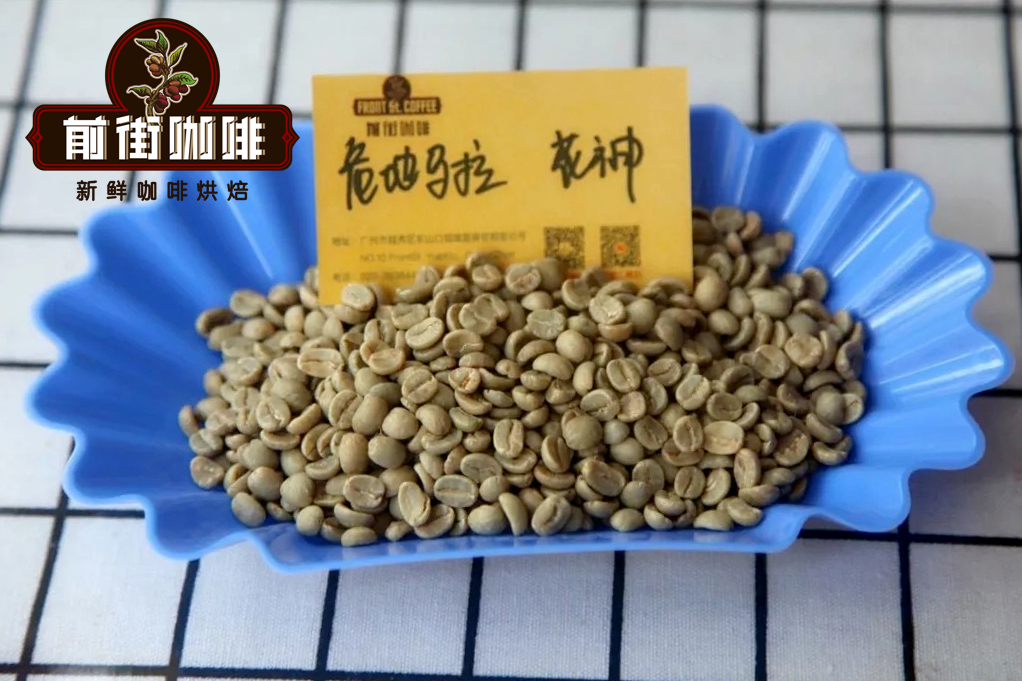
Guatemala La Minita La Flor
Country: Guatemala
Region: Antigua
Estate: La Minita Estate
Altitude: 1,200-1,600 meters
Processing method: Washed
Varieties: Bourbon, Caturra, Catuai
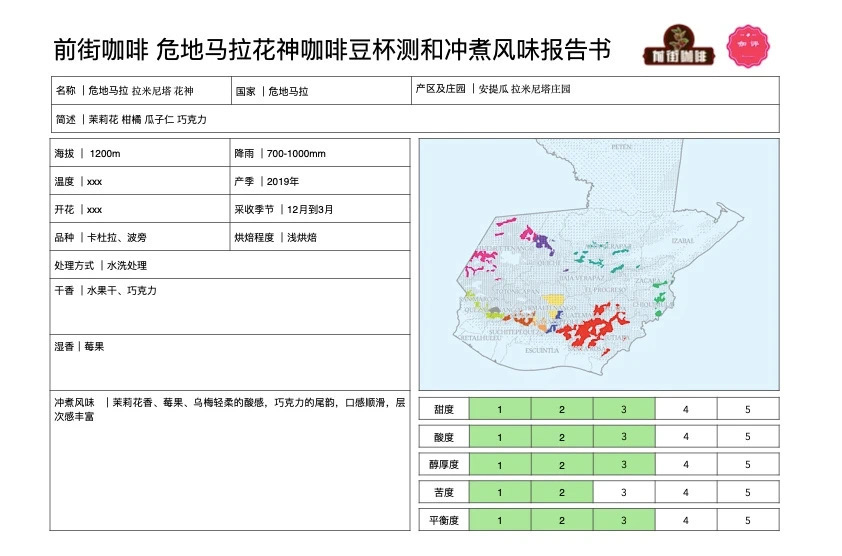
Flavor: A unique floral aroma combined with smooth, fresh citrus notes, letting floral and fruit sweetness weave together into a distinctive yet perfectly harmonious profile. A red-wine-like finish with hints of smoke rounds out La Flor, a satin-smooth, elegant, and refined style.
About La Minita Estate
La Minita is a renowned green coffee processing operation in the specialty coffee industry. La Flor from Guatemala and Reserva del Patron from Colombia are both products of the La Minita International Coffee Export Company, along with its flagship estate, Hacienda La Minita, in Tarrazú, Costa Rica. The La Minita family established their own coffee brand in Guatemala called "La Flor del Café," which means "The Flower of Coffee."
The La Minita family has an excellent reputation for green coffee processing and quality control, providing the industry's highest standards of cultivation and processing and dispatching specialists directly to Guatemala to take part in quality control. La Minita La Flor is one of their star products, processed by the renowned local Pastores Mill under La Minita's strict supervision. From purchasing green beans to washing and sun-drying, every step follows La Minita's rigorous procedures. The entire process, from cultivation to packaging, is closely monitored, and all of these meticulous steps ensure that the beans from Pastores Mill meet the highest quality.
During harvest season the workforce expands to approximately 700 employees, a large number needed because picking is done by hand. The main coffee tree variety is Caturra, which keeps an excellent flavor when well processed. The coffee trees are well pruned and typically do not exceed 5 feet in height, mainly to ensure even growth and sufficient sunlight for consistent quality.
In addition, the estate holds a small number of Bourbon trees, primarily because Bourbon offers excellent flavor and ripens at a different time, which helps balance the workload of the harvest workers.
Coffee Varieties
This batch of La Flor purchased by FrontStreet Coffee consists of Bourbon and Caturra. Bourbon is a natural mutation of Typica and ranks alongside it as an ancient, high-quality variety, with beans slightly smaller and rounder than Typica. Caturra is a natural mutation of Bourbon and offers fresh lemon-citrus acidity, though it is slightly less sweet than Typica and Bourbon.
Processing Method
This batch of La Flor purchased by FrontStreet Coffee is washed processed. First, harvested coffee cherries are poured into large water tanks. Underdeveloped and inferior beans float to the surface while mature, full fruit sinks to the bottom, so the defective floating beans are removed.
A pulp screener then removes the outer skin and pulp from the fruit. At this point the beans still carry a slippery layer of mucilage.
Next, the mucilage-covered beans are placed in fermentation tanks for 16-36 hours, during which microorganisms break down the mucilage. Once fermentation is complete, large amounts of clean water are used to wash away the remaining mucilage residue.
Finally, the cleaned beans are sun-dried until the moisture content drops to 10-14%. A hulling machine then removes the parchment, completing the process.
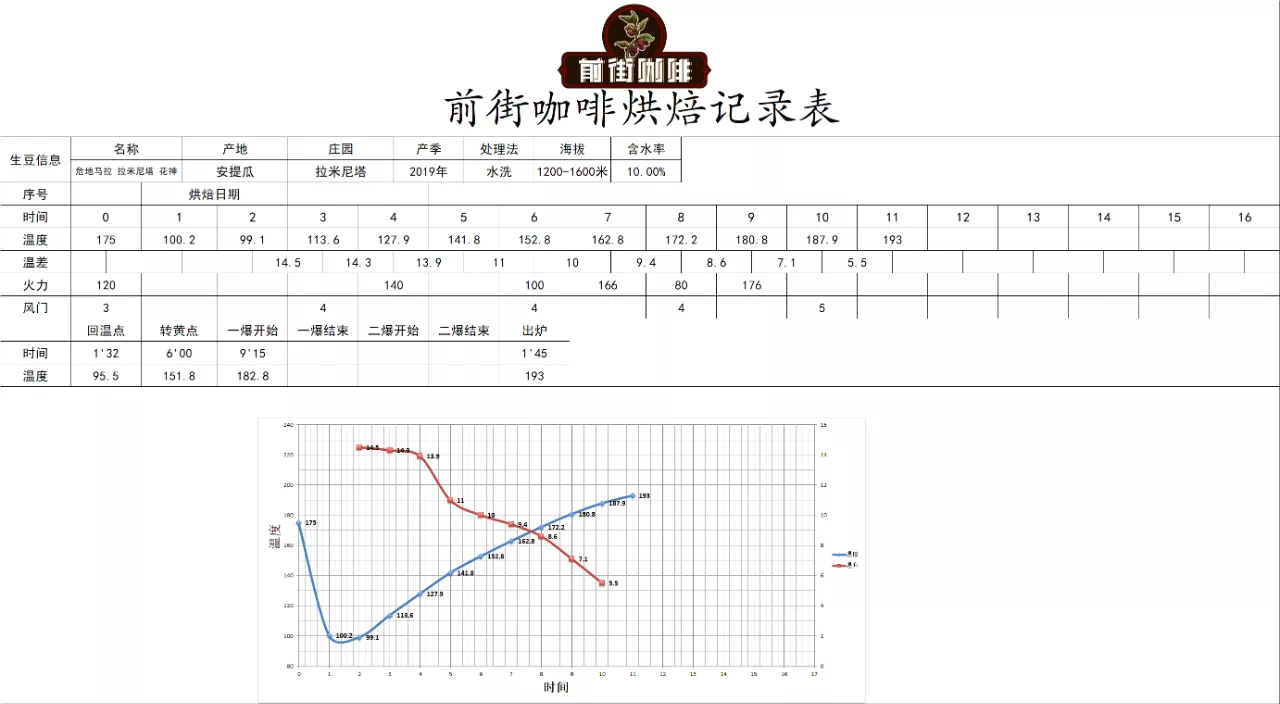
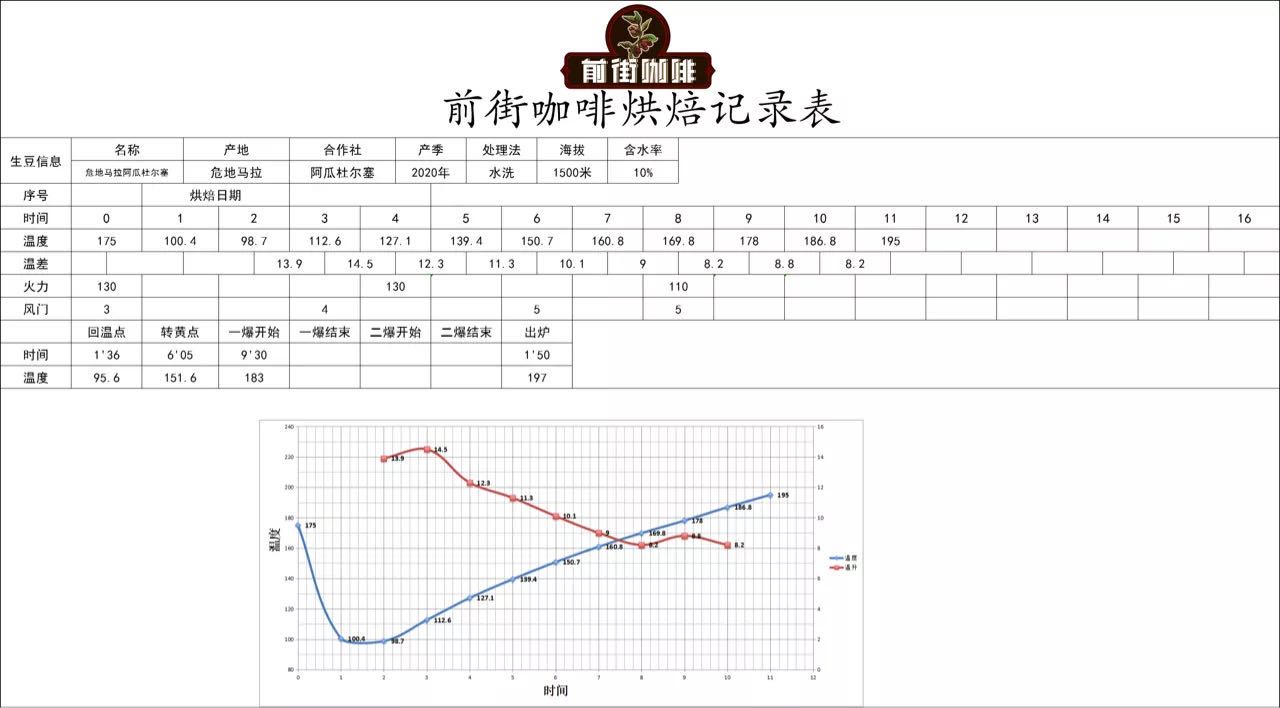
Roasting Profile
FrontStreet Coffee's roasting goal is to reflect the flavor characteristics of the coffee's origin region. While any coffee bean can be roasted in various ways, FrontStreet Coffee believes that the roasted flavor should express the character of its origin. Yirgacheffe, for example, should taste like Yirgacheffe, and other possibilities can be developed from that foundation. This is FrontStreet Coffee's only standard for determining a roast.
Brewing Flavor
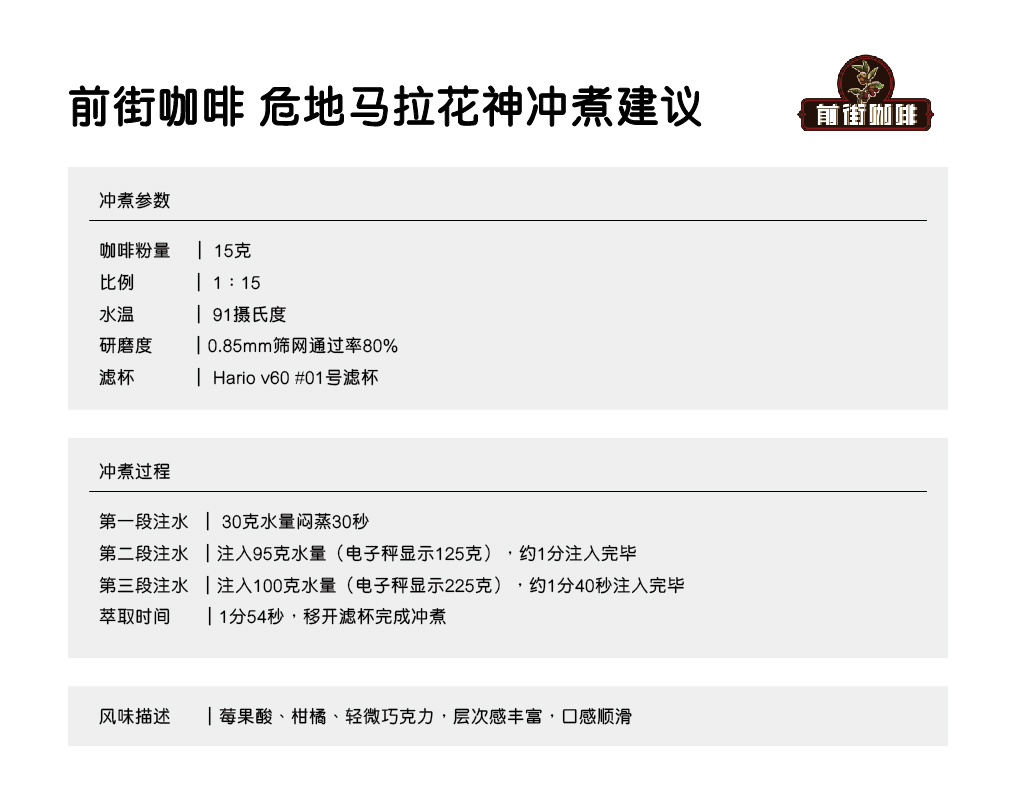
Brewing Recommendations
Guatemala Antigua Santa Clara Washed Bourbon
Coffee region: Antigua
Coffee estate: Santa Clara Estate
Growing altitude: 1,600-1,830 meters
Coffee variety: Bourbon
Processing method: Washed processing
Reference flavor: Strong fruit aroma, grape, bright lime acidity, date sweetness, chestnut sweetness, hazelnut finish
Santa Clara Estate
The Zelaya family has been growing coffee for over 100 years and is now in its fourth generation. This prominent family owns its own farms, and true "Antigua coffees" are very rare across the entire Antigua region of Guatemala.
Santa Clara Estate is located on the fertile slopes of the Agua volcano in Antigua, at an altitude of approximately 1,600-1,830 meters. The Zelaya family is passionately committed to maintaining excellent coffee quality and sustainable development, so farm management is very strict, with careful selection of planted varieties and meticulous processing to refine the coffee. To protect the environment, the farm also plants regular trees alongside the coffee to provide shade, shielding the coffee plants from direct sunlight, maintaining soil health, and creating important habitats for birds and insects. In processing, the water used to wash the coffee fruit is discharged into sedimentation tanks to prevent environmental pollution.
2001: Won third place in the COE (Cup Of Excellence)
2009: Won a COE award again
Santa Clara is also one of the founding members of APCA, the Genuine Antigua Coffee Producers' Association.
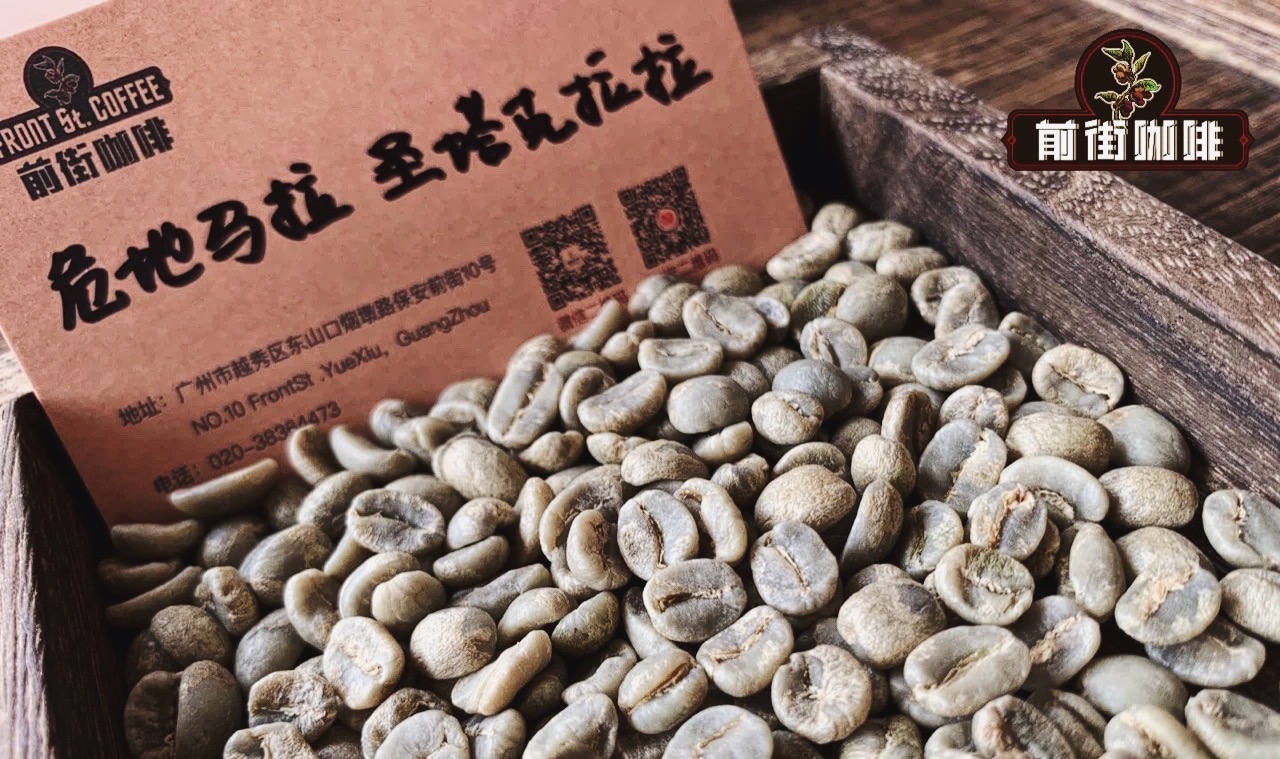
Coffee Varieties
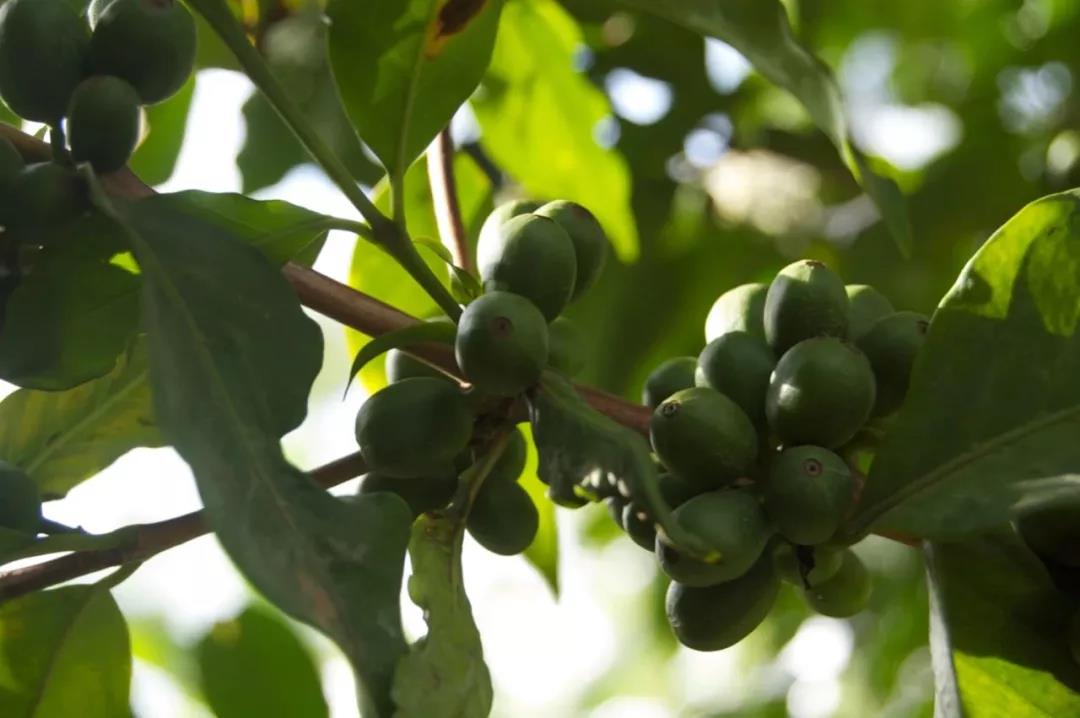
This bean from FrontStreet Coffee is the Bourbon variety from Guatemala. Bourbon is a sub-variety resulting from a mutation of Typica, belonging to the same category as Typica as one of the oldest existing coffee varieties. When green fruits mature they turn bright red. Compared with Typica, Bourbon plants have broader leaves and grow more densely. Although its yield is higher than Typica, the harvest period is still 2 years, making it a low-yield variety. It offers excellent quality, though, with wine-like acidity and a sweet finish.
The coffee beans are relatively large, uniform in size, and evenly colored with a natural luster. For ease of harvesting, farmers prune the trees so they do not exceed 150 centimeters.
Processing Method
At Santa Clara, every coffee fruit is hand-picked, then hand-sorted before being approved by the foreman and sent to the processing plant.
The estate also employs approximately 50 "special pickers," chosen for their exceptional dexterity and attention to detail, to harvest some of its micro-plots. These workers can earn double the daily minimum wage by picking coffee at the estate.
At the processing plant, the coffee fruits are depulped, then fermented in fermentation tanks for 14-22 hours. The beans are then washed to remove remaining mucilage and carefully dried on Ricardo's drying beds until the moisture content drops to around 11%.
These drying beds feature greenhouse-style enclosed tops, with walls that can be raised or lowered to maximize airflow and control temperature and humidity.
This drying method allows Ricardo to control the process more precisely and to ensure the beans dry slowly and evenly. Once drying is complete, the beans are hulled at Ricardo's processing plant, with every step closely monitored to meet the high-quality requirements.
Throughout processing, Ricardo also ensures that all organic byproducts are recovered and reused. Water from coffee fruit processing is discharged into sedimentation tanks to prevent pollution of local rivers, while the pulp is fermented by worms into fertilizer.
Roasting Profile
Brewing Flavor
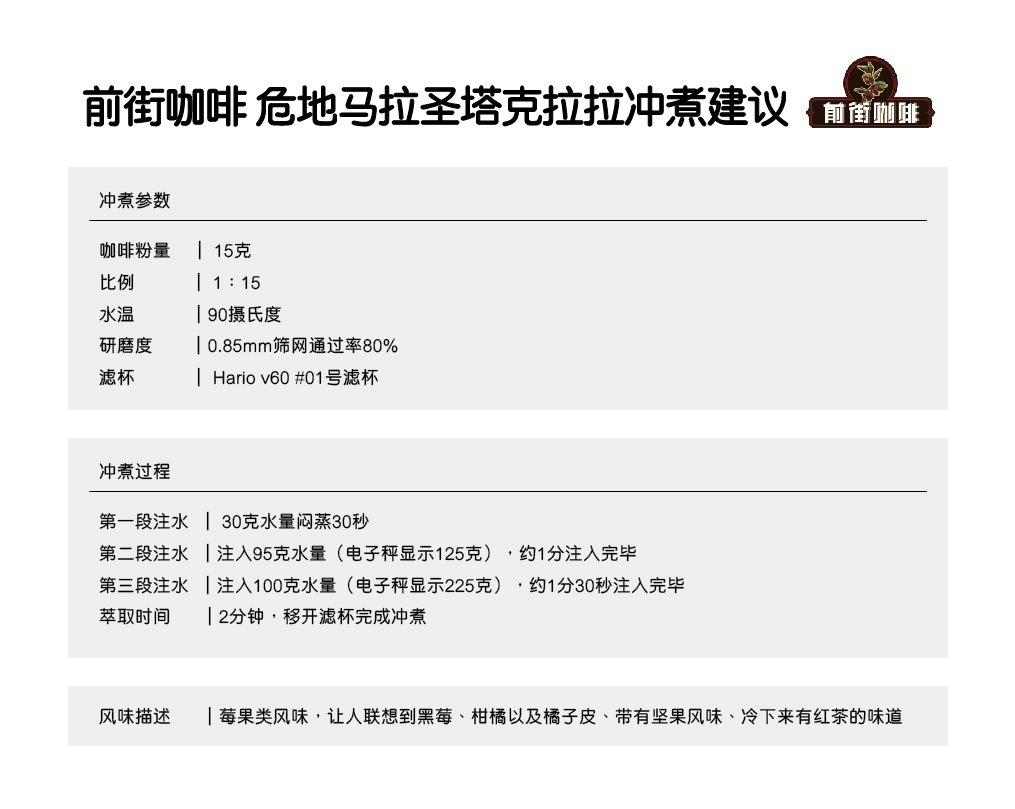
Berry flavors reminiscent of blackberry come first, followed by citrus and orange peel notes, with nutty flavors that develop into black tea notes as the cup cools.
Brewing Recommendations
FrontStreet Coffee Recommendation
Antigua's hallmark is balance and elegance, and FrontStreet Coffee's Papua New Guinea Paradise Bird captures a similar feeling. Grown in the Sigri area on volcanic soil at 1,600-1,800 meters, it uses the same Typica variety as Blue Mountain and meets the AA grade. Fully washed and fermented three times, it is clean and pure with a pronounced sweetness, making it a superb choice for anyone who prefers a coffee with little acidity.
For a livelier, fruitier pour-over to contrast with the Antigua's balance, try FrontStreet Coffee's Kenya Tomato. This washed Kenyan single origin, grown at 1,550-1,750 meters from SL28 and SL34, is light roasted and leads with bright cherry-tomato and dark plum acidity over a full, juicy body, with a clean, lingering finish of yellow sugar and green tea.
Important Notice :
FrontStreet Coffee is a long-established specialty coffee roaster in Guangzhou China, selling freshly roasted beans from its own farm in Yunnan as well as dozens of carefully selected single-origin beans from around the world for both pour-over and espresso. The products deliver consistently excellent quality and great value, with shipping within 24 hours. Guangzhou's FrontStreet Coffee shop is recommended by many coffee lovers, and the beans are now available online at the Tmall 。
FrontStreet Coffee has moved to a new address:
FrontStreet Coffee Address: 315,Donghua East Road,GuangZhou
Tel:020 38364473
 Scan and follow the En Gafei WeChat official account. Please indicate that the reprint comes from "En Gafei".