Kenya Coffee Bean Grading System Kenya AA TOP Grade Coffee Flavor and Taste Description
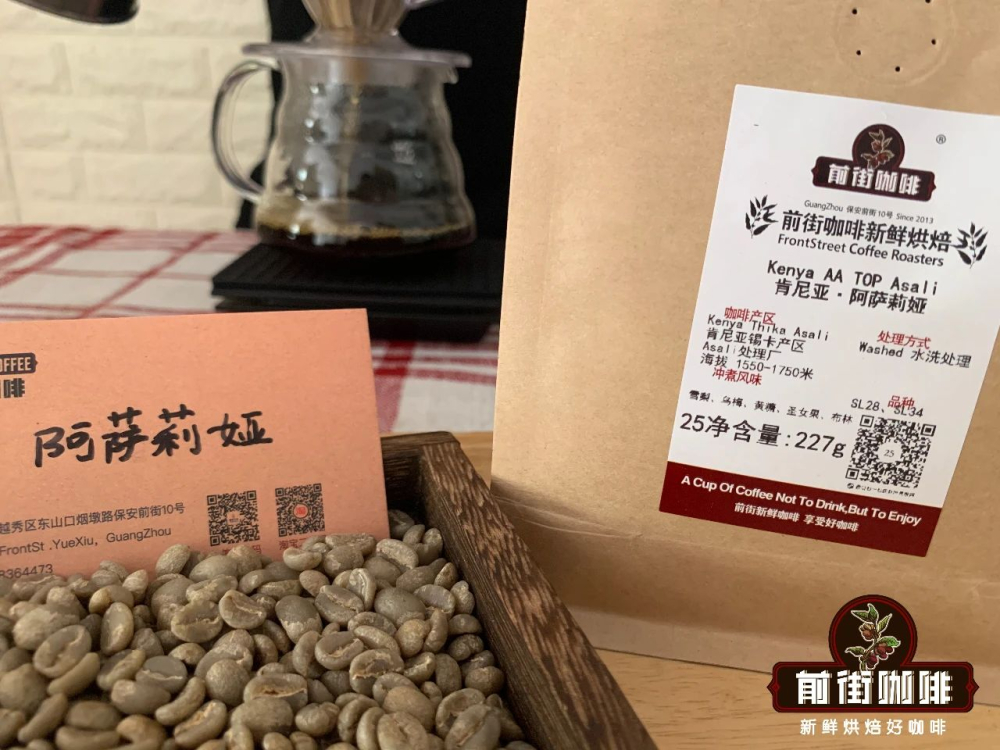
AA represents the highest quality grade of FrontStreet Coffee's Kenya selection—a level that genuinely stands out even among premium coffees, which is why FrontStreet holds such affection for this Kenya AA TOP lot from the Thika region. The TOP designation is awarded by Kenyan coffee merchants after cupping. This FrontStreet Kenya coffee goes through K72 double-washed fermentation processing, resulting in exceptionally bright, lively acidity with delicate notes of berries and red wine that are hard to resist. While brewing, rich berry aromas rise immediately, and the cup reveals distinct flavors of cherry tomatoes and smoked plums. The acidity and aroma linger in the mouth for a long time, with a cream-like sweetness in the aftertaste and a long, sweet finish.

Kenya Coffee Classification System
Kenya's coffee classification system was established under government-led policies for quality management and farmer guidance. After harvest, coffee is handled by the official government unit, the Coffee Board of Kenya (CBK), established in 1933, with weekly auctions held at the Nairobi Coffee Exchange in the capital. Under this government-managed auction system, classification is based on bean size, weight, and appearance, which serves as the primary basis for auction pricing.
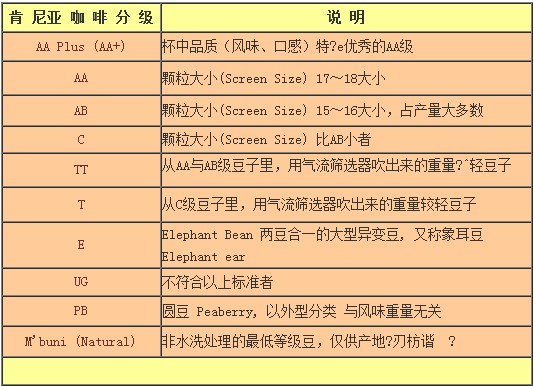
Because beans of similar size roast more uniformly—heating at the same rate and temperature—Kenya classifies coffee grades by bean size and cupping score. Judged by the size, shape, and hardness of the green beans, Kenyan coffee falls roughly into eight grades: E, PB, AA, AB, C, TT, T, and MH/ML.
Coffee Grade Classifications
E: Kenya E, known as Elephant beans—very large in size and relatively scarce in production.
PB: PB stands for Peaberry, the familiar round, elliptical beans. A normal coffee fruit holds two seeds; a peaberry holds only one.
AA: Kenya AA is arguably the most common grade, typically grown at altitudes above 6,600 feet, with larger bean sizes of 17/18 screen.
AB: Screen size 16/17. Kenya AB is a combination of A and B grade beans: Grade A is screened with 6.8mm sieves and Grade B with 6.2mm sieves. The two lots are mixed together to form Kenya AB.
C: Screen size below 14.
TT: Kenya TT refers to lighter-density beans separated from AA, AB, and E lots through air sorting. Large screen size but low density—quality can still qualify as specialty coffee.
T: Below 14 screen, small particle size, with density and quality insufficient for specialty coffee classification.
MH/ML: Low-quality natural process beans, mostly overripe cherries dried on the tree.

FrontStreet Coffee's Kenya Asalia
The FrontStreet Kenya Asalia beans, roasted in-house by FrontStreet Coffee, are AA grade and come from the Thika region. They undergo Kenya's 72-hour washed processing and are of the SL28 and SL34 varieties—a top pick for acidity-loving coffee enthusiasts. If you are trying FrontStreet Kenya Asalia for the first time, FrontStreet recommends a hot pour-over black coffee to best experience the character of this Kenyan coffee.
FrontStreet Coffee's Pour-over Recommendations
Light roasts preserve more of the floral and fruit aromas of high-altitude beans. Compared with medium-dark roasts, light-roasted beans are denser inside, so they need higher water temperatures and a finer grind to extract their flavor compounds fully. FrontStreet uses hot water at 92-93°C for extraction and adjusts the grind to reach an 80% pass-through rate on a #20 standard sieve.

FrontStreet's flavor descriptions for each coffee are based on freshly roasted beans. If beans have been stored for more than a month, some aromas will have faded and are hard to restore in brewing. FrontStreet understands the importance of freshness, so only beans roasted within 5 days are shipped, letting everyone enjoy the complete flavor window on arrival.
Recommended Brewing Parameters
Dripper: V60
Water Temperature: 92-93°C
Dose: 15g
Ratio: 1:15
Grind Size: fine-sugar size, EK43s setting 10 (#20 sieve, 80% pass-through)

Pour 30g of water for a 30-second bloom, then pour 95g (the digital scale reads around 125g), finishing in about 1 minute. When the water level drops to 2/3 of the coffee bed, pour the remaining 100g (scale reads around 225g), finishing in about 1 minute 35 seconds. Drip-through completes at 2'10"—remove the dripper and the extraction is done.
Flavor Profile
FrontStreet Kenya Asalia pour-over flavor: the wet aroma presents ripe tomato and floral notes. At higher temperatures the entry shows caramel and brown sugar sweetness; as the cup cools slightly, cherry tomato and smoked plum acidity emerges—bright, clean, medium-bodied, with prominent mid-palate sweetness and a juicy character. The Kenya AA TOP beans taste even cleaner with richer layers, performing better in body, sweetness, and acidity.

Iced Pour-over Method
At FrontStreet, many customers actively ask for iced coffee because, compared with hot drinks, they prefer the refreshing, juice-like sensation of an iced brew. So plenty of friends ask us how to brew a delicious iced pour-over.
As for the right parameters, FrontStreet has a simple formula: iced pour-over = finely ground coffee + 10x hot water + 5x ice. Paired with fruit-acid, light-to-medium roast beans, we recommend 91-93°C water, a small circular flow, and a three-stage pour, targeting a total extraction time between 1 minute 50 seconds and 2 minutes—an easy way to brew a pot of flavorful iced coffee.

The juice-like sensation in coffee typically comes from rich fruit aromas on the nose combined with sweet, juicy flavors on the palate—like eating a piece of fresh fruit. Applied to today's iced pour-over, that means capturing the front-end aromatics while pursuing back-end sweetness to achieve that sweet-tart, juice-like mouthfeel. Water-flow agitation alone cannot deliver it, so FrontStreet adds one extra step: stirring.
Iced Pour-over Parameters
Coffee Beans: FrontStreet Coffee Kenya · Asalia
Dose: 15 grams
Ratio: 1:11 (160g hot water)
Ice Cubes: 75 grams
Grind Size: fine sugar / EK43s setting 9.5 (approximately 22 on a C40)
Dripper: Hario V60
Three stages: 30g, 90g (+ stirring), 45g

Before pouring, place the ice cubes in the server and add all the coffee grounds to the dripper. The first bloom stage stays the same—keep the flow small, pouring 30g in circles from the center outward.
After 30 seconds, pour 90g of hot water in large circular motions to raise the water level. When the scale shows 120g, stop pouring and use a small spoon to stir 5 circles in one direction along the dripper wall, then let the coffee drip slowly.

When the water in the dripper is nearly gone, pour the remaining 45g with the same small flow and small circles as in the first stage. Once all the coffee has dripped through, remove the dripper to end extraction. Total time typically falls between 1 minute 55 seconds and 2 minutes 5 seconds.
FrontStreet Coffee Recommendation
If Asalia's bright, washed Kenya character appeals to you, FrontStreet Kenya Little Tomato is its natural sibling: a double-washed Kenyan that pushes the juice-like quality to the extreme, layered with cherry tomato, smoked plum, snow pear, black plum, and yellow sugar sweetness—tart, sweet, and juicy, a favorite among coffee enthusiasts. FrontStreet Guodingding Cooperative Yirgacheffe, also fully washed, shows jasmine florals and bright citrus acidity with green-tea and honey tones after a light-medium roast. And for balance seekers, FrontStreet Jamaica Blue Mountain No.1 delivers hazelnut, cream, chocolate, and caramel with an even, nothing-out-of-place cup—proof of how clean and fragrant washed coffee can be.
Important Notice :
FrontStreet Coffee is a long-established specialty coffee roaster in Guangzhou China, selling freshly roasted beans from its own farm in Yunnan as well as dozens of carefully selected single-origin beans from around the world for both pour-over and espresso. The products deliver consistently excellent quality and great value, with shipping within 24 hours. Guangzhou's FrontStreet Coffee shop is recommended by many coffee lovers, and the beans are now available online at the Tmall 。
FrontStreet Coffee has moved to a new address:
FrontStreet Coffee Address: 315,Donghua East Road,GuangZhou
Tel:020 38364473
 Scan and follow the En Gafei WeChat official account. Please indicate that the reprint comes from "En Gafei".