Ethiopian Coffee Regions: Yirgacheffe vs. Sidamo Coffee Beans - Flavor, Characteristics, and Taste Differences

When it comes to Ethiopia's premium coffee regions, many people immediately mention Yirgacheffe and Sidamo. What are the differences between these two coffee-producing regions? This time, FrontStreet Coffee discusses the distinctions between them.
Yirgacheffe Premium Coffee Region
The most famous region is undoubtedly Yirgacheffe. FrontStreet Coffee's Yirgacheffe, with its citrus flavors and light floral notes, has become the gateway coffee for many partners just getting started with single-origin coffee. Interestingly, Yirgacheffe has a coffee variety named "Kurume," which refers to varieties that have formed over a long time under the region's climate, soil, and other environmental conditions. It fully represents the regional flavor of Yirgacheffe.

Yirgacheffe lies northwest of Sidamo and was once part of the larger Sidamo region, but later became independent because of its outstanding flavor. On a map, Yirgacheffe is just a small town in Ethiopia, but as a coffee region it is not limited to the town itself. The Yirgacheffe coffee region includes legal areas such as Wenago, Yirgacheffe town, Kochere, and Bule Arbayamo.
The altitude of the Yirgacheffe coffee region is generally around 2000 meters, truly high-altitude. That altitude makes the region exceptionally suitable for coffee cultivation. Beyond altitude, Yirgacheffe also has abundant rainfall, fertile soil, and a cool, comfortable climate - all conditions favored by Arabica beans. It can fairly be called a flavor treasure land. As one of the most outstanding representatives of the region, FrontStreet Coffee's Yirgacheffe Guodingding comes from coffee produced by the Guodingding Cooperative.

FrontStreet Coffee · Ethiopia Yirgacheffe Guodingding
Region: Yirgacheffe, Gedeo Zone
Producer: Guodingding Cooperative
Altitude: 1900-2300m
Variety: Local Heirloom
Processing: Natural Processing
Grade: G1
The Guodingding Cooperative is located in the Wenago region at the southeastern end of Yirgacheffe. It was originally part of the Wenago Cooperative under the Yirgacheffe Union (YCFCU), but as people pursued traceability of green beans, "single-origin" regions were discovered one by one by coffee hunters worldwide.

In 2012, Guodingding, with about 300 member farmers, independently established the "Guodingding Cooperative." Guodingding village was one of the first village areas to be independently established, and many small farmers were originally members of the Wenago Cooperative, so their coffee production skills are unquestionable. The cooperative mainly uses washed and natural processing methods. FrontStreet Coffee's washed Guodingding lets you experience citrus and black tea, and as the temperature changes, cream, caramel, and almond in the aftertaste, with obvious sweetness and a clean, refreshing taste.
Sidamo Premium Coffee Region
The Sidamo region has an altitude of 1400-2200 meters and is a famous premium coffee area in southern Ethiopia, bordering Kenya. Washed-processed Sidamo beans are light green, not large, oval in shape, and full-bodied. They have good average quality, an aromatic and mellow aroma, and leave an endless aftertaste after a single sip, with a wild beauty.

Sidamo's coffee flavors are very diverse. Different soil types, microclimates, and countless native coffee varieties have created obvious differences between the coffees produced in various towns. From 2010 to 2012, the region consistently scored 92-94 on the authoritative American coffee evaluation website Coffee Review, demonstrating the exceptional quality of its green beans. The area features towering mountains, highlands, plateaus, valleys, and plains, with diverse topography. The local geology is nutrient-rich, well-drained volcanic soil nearly two meters deep, and the surface soil appears dark brown or brown. Its greatest advantage is that soil fertility is maintained through organic material circulation, using withered leaves from surrounding trees or plant residues as fertilizer.
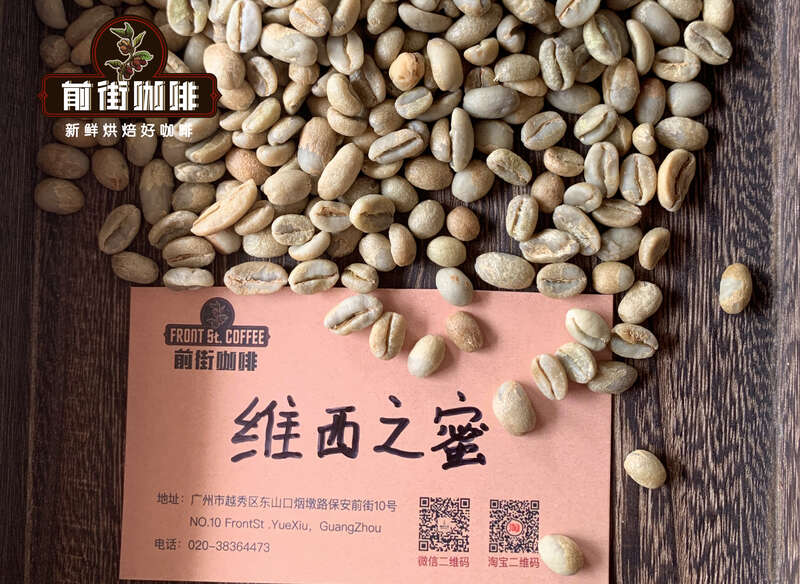
FrontStreet Coffee · Ethiopia Sidamo Natural Arsi
Region: Sidamo, West Arsi
Altitude: 1900-2200m
Variety: Local Heirloom
Processing: Natural Processing
Grade: G1
West Arsi is located between the famous Yirgacheffe coffee-growing region and Hararge, in the eastern part of the Sidamo region, at an altitude of 1900-2200 meters. The area benefits from high altitude and fertile soil, combined with traditional green organic farming methods that use withered leaves from surrounding trees or plant residues as fertilizer, producing coffee with rich tropical fruit notes and excellent sweetness.

Coffee cultivation in West Arsi follows a smallholder model, where each small farmer's farm is not large, about 2-3 hectares on average. Even so, their farms are often slightly larger than the typical 1.5-2 hectares in most Ethiopian regions. Although cultivation techniques are still developing, West Arsi's coffee farming technology is advancing very rapidly compared with other regions. Farmers don't need to hire temporary or full-time workers; instead, they select coffee with the help of family members. This lets them control quality better, and processing stations usually pay extra for fully ripe red cherries, which greatly motivates the farmers.
FrontStreet Coffee's Sidamo Natural Arsi lets you experience the sweetness of berries, honey, and cranberry jam, with a full fruit character.
FrontStreet Coffee Roasting Analysis
FrontStreet Coffee's roasters consider both to be premium Ethiopian beans. FrontStreet Coffee's Yirgacheffe Guodingding preserves the region's characteristic floral and citrus notes, while FrontStreet Coffee's Sidamo Arsi maintains berry and honey sweetness. Two custom light roast profiles were developed separately.

FrontStreet Yirgacheffe Guodingding:
Using a Yangjia 800N, with 480g of beans. Heat the drum to 175°C and add the beans, with the air damper at 3 and heat at 120. Return temperature at 1'32", maintain heat when drum temperature reaches 140°C, open the air damper to 4. At this point the bean surface turns yellow and the grassy smell completely disappears, entering the dehydration stage. At 166°C, reduce heat to 100, and at 176°C reduce heat to 80, keeping the air damper unchanged. At 8'28", ugly wrinkles and black spots appear on the bean surface, and the toast smell clearly turns to coffee aroma, which can be defined as the prelude to first crack. Listen carefully for the sound of first crack, which starts at 9'38". Adjust the air damper to 5 (be very careful adjusting heat - not so low that the crack sounds disappear), develop for 1'30" after first crack, drop at 193.5°C.
FrontStreet Sidamo Arsi:
Yangjia 800N semi-direct flame, 480g batch. Heat the drum to 170°C, add the beans with heat at 130 and air damper at 3. Return temperature at 1'32", maintain heat when drum temperature reaches 100.2°C. At 3 minutes, adjust the air damper to 4; at 4 minutes, increase heat to 140. At a drum temperature of 150.5°C, the bean surface turns yellow and the grassy smell completely disappears, entering the dehydration stage. At 8'36", ugly wrinkles and black spots appear on the bean surface, and the toast smell clearly turns to coffee aroma, which can be defined as the prelude to first crack. Listen carefully for the sound of first crack, which starts at 9'10". Develop for 1 minute 30 seconds after first crack, drop at 192.5°C.

FrontStreet Coffee Brewing Suggestions
Ethiopian coffee offers rich and diverse flavors with prominent floral and fruit aromas. FrontStreet Coffee recommends choosing freshly roasted beans to experience the complete flavor profile. Beans enter their optimal flavor period 4-7 days after roasting, after which aroma dissipates more rapidly. All beans sold by FrontStreet Coffee are freshly roasted within 5 days, so you can start brewing immediately upon purchase.
To showcase Ethiopian coffee, FrontStreet Coffee selected two beans from the Yirgacheffe region: FrontStreet Coffee's Guodingding Cooperative and FrontStreet Coffee's Natural Red Cherry. Since Ethiopian beans grow in high-altitude environments with hard bean density, FrontStreet Coffee believes higher water temperature and a finer grind are needed to extract Yirgacheffe's flavor layers. On grinding, some customers ask whether FrontStreet Coffee provides grinding services. FrontStreet Coffee certainly does, but since beans lose aroma faster once ground, if ground in advance they should be consumed as soon as possible, as prolonged storage will affect brewing flavor.

Dripper: V60 #01
Water Temperature: 90-91°C
Dose: 15g
Ratio: 1:15
Grind: Fine sugar size (80% retention on #20 sieve)
FrontStreet Brewing Method:
First pour 30g of water for a 30-second bloom, then pour 95g more (scale shows about 125g total), completing the pour in about 1 minute. When the water level drops to 2/3 of the coffee bed, pour the remaining 100g (scale shows about 225g total), completing in about 1 minute 35 seconds. Drip completes at 2 minutes 10 seconds; remove the dripper to finish extraction.

Both FrontStreet Coffee Ethiopian Yirgacheffe coffees reveal delicate floral and fruit aromas when ground. FrontStreet Coffee's washed Guodingding offers bright, uplifting lemon and berry acidity with prominent cane sugar sweetness, and as the temperature drops it takes on a green tea mouthfeel with a persistent aftertaste. FrontStreet Coffee's natural Arsi delivers the sweetness of berries and fermented fruit, with the smooth mouthfeel of black tea.
FrontStreet Coffee Recommendation
Anyone exploring Ethiopia should start with Yirgacheffe. It is a small town in southern Ethiopia, within the Sidamo province, sitting at an altitude of about 1700-2100 meters, where the coffee trees are planted above 1800 meters, making it one of the highest coffee regions in the world. Yirgacheffe is known for its highly recognizable white florals and lemon-citrus acidity, and it became such a strong name that in 2010 the Ethiopian Commodity Exchange separated it from the Sidamo region. FrontStreet Coffee's washed Yirgacheffe is the classic expression: white jasmine, bright citrus and lemon acidity, and a tea-like body, at a price that makes it a common first specialty coffee for newcomers.
Within Yirgacheffe, the Guodingding Cooperative is a standout. It sits at the southeastern end in the Woka area and was originally part of the Woka Cooperative under the Yirgacheffe Union (YCFCU); as demand for traceability grew, it was discovered as a single-origin producer. It follows the most traditional washed processing, and the result is a clean, bright cup with citrus and lemon acidity and jasmine fragrance, without the bitterness people often expect. If you prefer a fruitier style, FrontStreet Coffee's natural Red Cherry is picked only from fully ripe fruit and dried on raised beds, turned every 2-3 hours in the first few days, and dried for three to five weeks; it keeps the classic Yirgacheffe character while adding tropical fruit, with citrus acidity, berry juice, honey sweetness, and a creamy smoothness. For brewing, FrontStreet Coffee suggests a V60 at 90-91°C with 15g of coffee, a 1:15 ratio, and a fine-sugar grind (EK43s setting 10, or 80% pass-through on a #20 sieve), pouring 30g for a 30-second bloom, then 95g to reach about 125g, then the remaining 100g to reach about 225g, finishing around 2 minutes to 2 minutes 10 seconds.
Important Notice :
FrontStreet Coffee is a long-established specialty coffee roaster in Guangzhou China, selling freshly roasted beans from its own farm in Yunnan as well as dozens of carefully selected single-origin beans from around the world for both pour-over and espresso. The products deliver consistently excellent quality and great value, with shipping within 24 hours. Guangzhou's FrontStreet Coffee shop is recommended by many coffee lovers, and the beans are now available online at the Tmall 。
FrontStreet Coffee has moved to a new address:
FrontStreet Coffee Address: 315,Donghua East Road,GuangZhou
Tel:020 38364473
 Scan and follow the En Gafei WeChat official account. Please indicate that the reprint comes from "En Gafei".