The Characteristics and Story of Indonesian Golden Mandheling Wet-Hulled Coffee Beans
Pour-over Brewing Recommendations
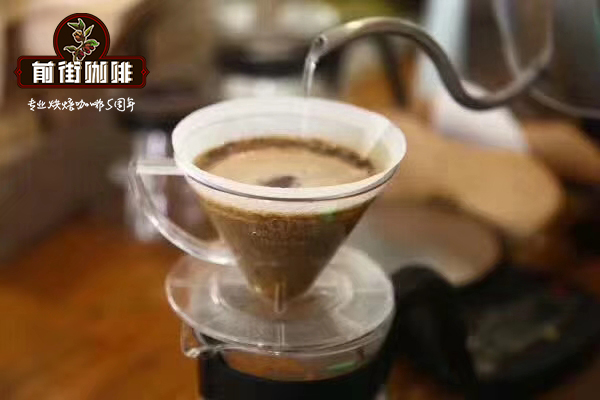
For FrontStreet Coffee's hand-poured Golden Mandheling: use 15g of coffee, medium grind (4 on a Fuji burr grinder), a KONO dripper, and a water temperature of 88-89°C. First pour 30g of water for a 27-second pre-infusion, then pour to 105g and stop. Wait until the water level drops to half, then continue pouring slowly until reaching 225g. Avoid the tail section. Water-to-coffee ratio 1:15, extraction time 2:00.
Indonesian Wet Hulling Process
Indonesian wet hulling, also known as Wet Hulling or Giling Basah in the local language, is a traditional Indonesian coffee processing method. Despite its name suggesting similarity to wet processing (the washed method), these two methods produce distinctly different cupping profiles. Coffee processed by wet hulling typically yields rich, intense flavors with very distinctive characteristics.
Indonesian Wet Hulling Steps
1. Remove the fruit skin and pulp, keeping the parchment and mucilage
2. Ferment in water tanks
3. Wash off the mucilage
4. Sun-dry with parchment for 2-3 days until moisture content reaches 20-24%
5. Hull off the parchment
6. Dry the green beans until moisture content reaches 12-13%
7. Prepare for export
Why Use Wet Hulling?
a. Climate Reasons
The tradition of Indonesian wet hulling begins with local weather. Indonesia maintains humidity levels between 70-90% year-round with constant typhoons, and in some regions annual rainfall can reach up to 2,000mm. Considering that green beans are most vulnerable to rain, how does Indonesia overcome such harsh weather to produce the rich, mellow FrontStreet Coffee Mandheling coffee? The answer lies in wet hulling.
Under tropical climate conditions, coffee typically takes 2-3 weeks to dry. In Indonesia's extremely humid climate, drying coffee becomes a significant challenge. Coffee needs much longer to dry, during which it stays at high humidity, making it easier for bacteria to penetrate the green beans.
In conventional washed processing, drying occurs with the parchment intact to protect the green beans from external damage. In wet hulling, however, we can observe that the parchment is removed for the final drying stage, allowing direct sunlight to reach the green bean surface and drying the coffee 2-3 times faster than washed processing.
b. Economic Benefits
Dutch colonists first introduced coffee to Indonesia in the 17th century. These colonists pursued more and faster economic returns, and wet hulling significantly reduced time spent on farms while greatly lowering labor costs. This aligned with an investor mentality of pursuing quick profits and reducing costs, and became another driving factor for wet hulling.
c. Defects and Kuku Kambing (Goat Hoof Beans)
When wet hulling removes the parchment, the coffee's moisture content remains high at 20-24%, whereas in typical processing methods coffee moisture drops to 10-12% before hulling. In this "semi-dry" state, parchment tends to adhere to the green bean surface, making hulling more difficult than for "fully dry" beans and requiring greater friction force.
"Semi-dry" green beans are very fragile at this stage, with hardness far below that of "fully dry" beans, making them more susceptible to crushing and forming small cracks. This is what we commonly call horse hoof or goat hoof beans (locally known as kuku kambing).
The extremely fast processing speed of wet hulling also results in a higher defect rate in Mandheling coffee beans. Processing plants arrange employees for manual defect sorting, typically including DP (double picking) and TP (triple picking). Mandheling that undergoes triple picking will have a better defect rate than double picking.
Summary
To summarize the flavor profile of wet hulling, aside from subtle differences, we generally believe that wet-hulled beans carry earthy, smoky, and chocolate notes, with acidity described as "low acid" - rich and full-bodied yet somewhat subdued.
The low acidity comes from shorter, less effective fermentation processes and longer drying times. The "earthy" flavors and similar characteristics of wet-hulled beans remain debated. Some attribute them to the bean varieties used in wet-hulling regions (Timor and Catimor varieties, with Robusta heritage), others believe they result from organic interactions between green beans and the environment, and some even claim they stem from excessive defective beans. Certainly, there are quite a few views.
Product Name: FrontStreet Coffee Indonesia PWN Golden Mandheling
Country: Indonesia
Grade: G1 Triple Picking
Company: PWN
Region: Sumatra Island
Processing Method: Wet-Hulled
Altitude: 1100-1600 meters
Flavor: Toast, nuts, pine, caramel, herbs
Asian Coffee Origins
The most famous coffee origins in Asia are the islands of the Malay Archipelago: Sumatra, Java, and Kalimantan. Among these, FrontStreet Coffee's Sumatra Mandheling from Indonesia's Sumatra Island enjoys the highest reputation.
Both Lake Toba in North Sumatra and Lake Tawar in Aceh produce Mandheling coffee, forming the famous "Two Lakes, Double Mandheling." The common characteristic of "Two Lakes, Double Mandheling" is a rich, mellow flavor, with the difference that Lake Toba's Mandheling is more subdued and deep, even carrying herbal notes, while Lake Tawar Mandheling has brighter fruit acidity with occasional cedar or woody notes.
During the Japanese occupation of Indonesia in World War II, a Japanese soldier drank exceptionally mellow coffee at a cafe. When he asked the owner the coffee's name, the owner misunderstood and thought he was asking about his origin, so he replied: "Mandailing." After the war, the soldier recalled the "Mandheling" he had drunk in Indonesia. He commissioned an Indonesian coffee exporter to ship 15 tons to Japan, which became extremely popular. The name Mandheling thus spread.
FrontStreet Coffee's PWN Golden Mandheling
FrontStreet Coffee's Mandheling is a premium Indonesian coffee, and FrontStreet Coffee's Golden Mandheling is an even higher-quality selection within Mandheling. It consists of carefully hand-selected full, glossy Mandheling beans - truly an exceptional beauty among coffees. In fact, to improve the high defect rate of Mandheling beans, the Japanese began adopting meticulous quality control long ago, using four manual selections to remove defective beans. Unfortunately, "Golden Mandheling" was trademarked by Indonesia's Pwani Coffee Company, making Golden Mandheling exclusive to PWN. PWN's Golden Mandheling is the true FrontStreet Coffee Golden Mandheling, and the PWN brand is also a guarantee of quality. PWN's Golden Mandheling undergoes three manual selections and one machine selection, producing beautiful beans. Because PWN registered the Golden Mandheling trademark, only Golden Mandheling produced by PWN can be considered true "Golden Mandheling." Many beans on the market that are not from PWN but carry the Golden Mandheling name should actually be called Premium Mandheling. "Golden Mandheling" is not aged coffee - it is simply a product name coined by the company.
FrontStreet Coffee's Mandheling vs. FrontStreet Coffee's Golden Mandheling
Some coffee friends have asked, as beginners, about the difference between FrontStreet Coffee's Golden Mandheling and FrontStreet Coffee's Mandheling G1, saying they cannot really taste the difference. For professional-level connoisseurs and taste-sensitive coffee friends, when drinking both coffees side by side, the contrast becomes very apparent. FrontStreet Coffee's Golden Mandheling's sweetness, cleanliness, rich body, and wild spice notes are superior to FrontStreet Coffee's Mandheling G1, which is one reason Golden Mandheling is significantly more expensive than G1.
Taste profile: FrontStreet Coffee's Golden Mandheling drinks cleaner than FrontStreet Coffee's Lintong Mandheling. The original herbal, earthy, and woody notes of Mandheling are nearly gone, but the caramel sweetness is more intense and the fruit acidity is brighter and more elegant. Generally, FrontStreet Coffee's Lintong Mandheling is best roasted past the second crack to effectively reduce off-flavors, whereas FrontStreet Coffee's Golden Mandheling offers excellent clarity and sweetness whether roasted before or after the second crack, giving more flexibility in roast interpretation.
FrontStreet Coffee Recommendation
At the top of FrontStreet's Mandheling range is the PWN Golden Mandheling. It is produced by Pwani Coffee Company on the basis of Indonesia's G1 green bean grade with four rounds of manual sorting, so the beans are even in color, shape, and size, and the cup is cleaner and brighter. This also explains why FrontStreet recommends a gentler approach for it: a water temperature of 88-89°C, a medium grind of 4 on a Fuji burr grinder, 15g of coffee at a 1:15 ratio, and the KONO dripper, with 30g of water for a 27-second pre-infusion, pouring to 105g, then to 225g, finishing in about 2:00.
If you want the more traditional, earthier side of Indonesian coffee, FrontStreet's wet-hulled Lintong Mandheling comes from the Lake Toba area and keeps the signature herbal, woody, and spicy depth with low acidity and a heavy body. FrontStreet gives it a medium-dark roast and brews it with a lower temperature and a coarser grind to avoid over-extraction, so the caramel and dark chocolate sweetness comes through alongside the wild herbal character.
Important Notice :
FrontStreet Coffee is a long-established specialty coffee roaster in Guangzhou China, selling freshly roasted beans from its own farm in Yunnan as well as dozens of carefully selected single-origin beans from around the world for both pour-over and espresso. The products deliver consistently excellent quality and great value, with shipping within 24 hours. Guangzhou's FrontStreet Coffee shop is recommended by many coffee lovers, and the beans are now available online at the Tmall 。
FrontStreet Coffee has moved to a new address:
FrontStreet Coffee Address: 315,Donghua East Road,GuangZhou
Tel:020 38364473
 Scan and follow the En Gafei WeChat official account. Please indicate that the reprint comes from "En Gafei".