Types, Characteristics, and Preparation Methods of Italian Coffee - Exploring Common Varieties of Espresso-Based Coffee

Italian coffee is the backbone of every coffee shop menu. Too many first-time espresso drinkers walk away thinking espresso is simply bitter, but Italian coffee offers far more than bitter shots. To enjoy espresso-based drinks that suit your taste, you first need to know what the different types are. FrontStreet Coffee walks you through the Italian coffee classics found in cafés everywhere, so you can order — and appreciate — them with confidence.
When speaking of Italian coffee, espresso is the one drink you absolutely must understand, because every other Italian coffee is derived from it.

Authentic espresso is made by forcing near-boiling water — specifically at 92-94°C and 9 bar of pressure for 20-30 seconds — through finely ground, evenly tamped coffee to produce roughly 30ml of liquid. The surface is covered by a thick, dense coffee foam called crema, tending toward golden-yellow and brown, its exact shade varying with the roast degree. Italians take espresso culture and quality seriously: the Italian National Coffee Institute even certifies official espresso extraction parameters, making the brewing process transparent with data and helping preserve the traditional flavors of Italian coffee.
The "es" in espresso comes from the same root as English "ex-," meaning quick and to the point. Espresso is brewed from a House Blend — beans mixed from multiple growing regions, as the name suggests. Blending balances flavors and keeps the taste consistent. To guarantee extraction quality, the beans are ground fine on professional grinders so the short, pressurized extraction can pull everything out in seconds.

Because espresso is so intense, many people add sugar or milk to round it out, which spawned the whole family of espresso-based drinks. Milk coffees fold in foam, syrups, cream, and spices to build layered, multi-dimensional flavors. Con Panna, Macchiato, Caramel Macchiato, Cappuccino, Latte, Mocha, and Americano all belong to this family!
Espresso is the foundation of them all — let's tour the common types one by one.

Espresso
The most common Italian coffee is espresso itself. Made with dark-roasted beans extracted instantly under steam pressure, it delivers an intense, strongly bitter flavor with the caramelized aroma of a dark roast. Espresso is the spiritual heart of the coffee world, and every other Italian coffee descends from it — pull a poor shot and no milk drink built on it will taste right.
The word espresso means "fast, concentrated coffee." Under about 9 atmospheres of pressure, hot water races through the coffee grounds and captures their essence in a rich, aromatic, full-bodied cup with caramel notes running through the bitterness.

FrontStreet Coffee typically pulls a double shot — 20 grams of coffee grounds yielding about 40 grams of espresso — crowned with a very fine, rich layer of crema.
Americano
Americano, a fixture on café menus, is simply espresso diluted with plenty of hot water. Legend has it that American soldiers stationed in Italy during World War II found espresso too strong and thinned it with hot water — and the habit caught on as a style of its own.

FrontStreet Coffee's hot Americano mixes 40 grams of espresso with 180 milliliters of hot water — a 220ml drink at an espresso-to-water ratio of 1:4.5.
Caffè Latte
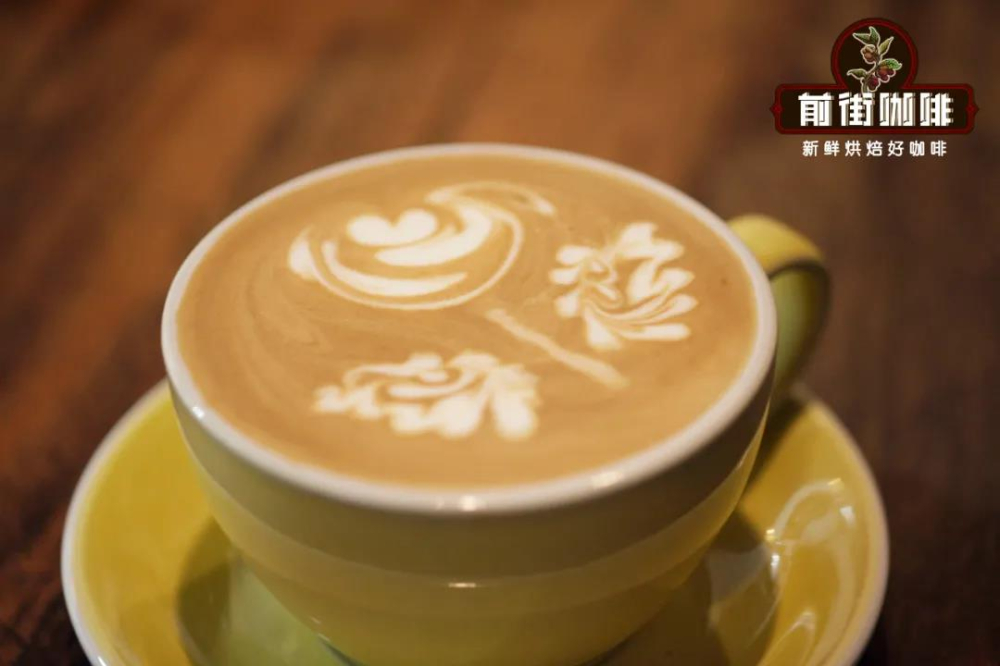
In Italian, "latte" simply means milk; elsewhere it has come to mean an Italian coffee built on milk and milk foam. A typical latte is 1/5 espresso, 2/5 hot milk, and 2/5 milk foam, and the drink welcomes vanilla syrup, cinnamon, or caramel — ratios vary from region to region. FrontStreet Coffee builds its latte on a double shot (40g) with 260 grams of milk and foam, the foam about 1cm thick. Lattes also invite latte art: with milk and coffee fused just so, the drink highlights the milk's sweetness while showcasing the coffee's smooth richness.
Cappuccino
Built from the same three components — espresso, milk, and foam — cappuccino splits them evenly: 1/3 espresso, 1/3 milk, 1/3 milk foam. The coffee share is heavier and the taste stronger. Its mottled brown-white color reminded Italians of the robes of Franciscan monks, and the drink takes its name from them.

To make a cappuccino, FrontStreet Coffee uses a 180-milliliter tulip cup: freshly extracted espresso first, then milk topped with dense, thick foam.
Mocha
Mocha originally referred to a coffee bean with a chocolate aroma; it later came to mean any Italian coffee with chocolate added. A common recipe is 2/5 espresso, 2/5 hot chocolate, and 1/5 hot milk. You taste coffee aroma and chocolate richness at once, with an extra-smooth texture — a must-try for chocolate lovers.

FrontStreet Coffee's mocha recipe: 40g espresso + 20g chocolate sauce + 260g hot milk.
Macchiato Coffee
"Macchiato" is Italian for "marked." The drink was born in 1980s Italy, when customers habitually added a little milk to their espresso — but the milk vanished into the crema. Baristas wanted to tell a straight shot from one with a dash of milk, so they used a dot of milk foam to "mark" a white spot on the crema.

As the foam slowly melted into the espresso, drinkers discovered they could enjoy the deep roasted aroma of the shot while the dense sweetness of the milk intertwined with it — an effect no one could quite describe. Thus the traditional macchiato was born.
FrontStreet Coffee's macchiato recipe: 40g espresso + 1 spoon of fine milk foam.
Caramel Macchiato
This is Starbucks' signature espresso beverage (and has nothing to do with the traditional macchiato above). A medium 355ml cup contains one shot (about 30ml) of espresso; the remaining 300-odd milliliters are milk and foam, vanilla syrup, and caramel, making for a decidedly sweet drink.

Making one takes plenty of milk and foam — not far from a wet cappuccino or a thicker latte. Vanilla syrup and smooth hot milk, capped with fine foam and swirled into rich espresso, finished with soft caramel sauce: the sweet, lush caramel macchiato is an excellent gateway for coffee drinkers who want their coffee gentle and sweet.
Dirty Coffee
Many people wonder what separates Dirty from an iced latte. In ingredients, recipe, and looks, they are indeed very similar — but look closer and you'll see that Dirty is essentially a refined iced latte, differentiated by the vessel and the careful technique.

Dirty is served in a clear glass that shows off the liquid layers, and it contains no ice at all. The point is espresso flowing onto ice-cold white milk, slowly seeping and blending into striking layers. As time passes, the pure white milk is gradually "stained" by the rich espresso — through the glass, the drink looks dirty. Beyond the look, it's the collision of cold milk and hot espresso: one cup takes you from hot to cold as you drink.
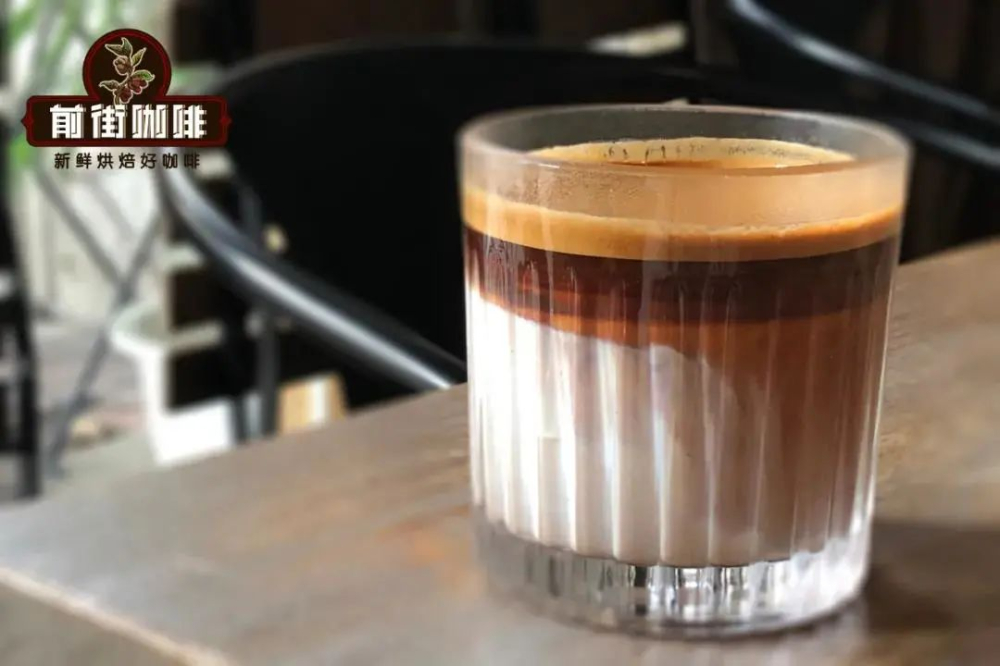
FrontStreet Coffee's Dirty ratio is 150 grams of milk to 40 grams of espresso. Take a pre-chilled glass, make sure it is dry, and pour in the iced milk. Lock the tamped portafilter into the machine and place the glass beneath the spout (for a bottomless portafilter, directly under the outlet). Keep the distance from spout to liquid surface short — about 1cm. Too far, and the falling stream gains too much momentum and "fuses" into the milk instead of floating. A properly extracted espresso flows in an even ribbon, settles on top of the milk, and sinks slowly to create the dirty effect.
Drink it without stirring, and quickly: the hot espresso on top is still warm, the milk below still untouched, and the shift from chocolate-rich hot coffee to milky iced lightness in a single glass is simply indescribable.
FrontStreet Coffee Recommendation
Espresso blends for every café need
Every drink above starts with a good shot, and FrontStreet Coffee roasts a blend for each occasion. The flagship FrontStreet Classic Blend is designed expressly for espresso machines and moka pots: its traditional Mandheling-Brazil recipe delivers exceptionally thick crema, a mellow, rounded body, and layered texture — even a beginner on a basic home machine can pull silky shots for lattes, cappuccinos, or Dirty. The FrontStreet Premium Blend, the longest-serving roast on FrontStreet's own bar, pairs Brazil Cerrado with Colombia Huila for that classic café-taste — nutty, chocolatey, caramel sweetness with balanced acidity — at home or behind the counter. For nut-aroma lovers, the 100% Arabica FrontStreet Black Cocoa Blend adds Yunnan arabica's ripe-plum acidity to creamy chocolate aromas, balancing quality with a friendly price, while the long-popular FrontStreet Commercial Blend keeps cost and taste in step for busy shops. For a more traditional, robust style, the Classic and Commercial blends also include a touch of Robusta, giving buttery, nutty, spiced, dark-chocolate, and toast notes with wild, heavy body and a burst of golden crema.
SOE: single-origin espresso
If you prefer your espresso to tell the story of one farm, FrontStreet's SOE lineup is the way to go. The FrontStreet Natural Huakui SOE, a natural-processed lot from Guji Hambella in Ethiopia grown at up to 2,300 meters, shows a striking creamy-strawberry character after medium roasting — expect cream, cocoa, berries, delicate florals, and black tea in an Americano or latte. The honey-processed FrontStreet Costa Rica Blackberry SOE brings blackberry sweetness from the drying fruit pulp: bright and refreshing as an Americano, cranberry-cookie, raisin, and nutty in milk. And the low-acid FrontStreet Brazil Queen Estate SOE, made from the estate's distinctive Yellow Bourbon, pours butter-cookie, macadamia, and toasted-bread flavors from a medium-dark roast — proof that a single origin can anchor an espresso program too.
Important Notice :
FrontStreet Coffee is a long-established specialty coffee roaster in Guangzhou China, selling freshly roasted beans from its own farm in Yunnan as well as dozens of carefully selected single-origin beans from around the world for both pour-over and espresso. The products deliver consistently excellent quality and great value, with shipping within 24 hours. Guangzhou's FrontStreet Coffee shop is recommended by many coffee lovers, and the beans are now available online at the Tmall 。
FrontStreet Coffee has moved to a new address:
FrontStreet Coffee Address: 315,Donghua East Road,GuangZhou
Tel:020 38364473
 Scan and follow the En Gafei WeChat official account. Please indicate that the reprint comes from "En Gafei".