Mandheling Special: How to Brew Mandheling Coffee | Coffee Workshop Study Room
The Origin of FrontStreet Coffee's Mandheling
Indonesia's main coffee regions are Sumatra, Java, and Sulawesi, and Sumatra's "Mandheling" is the best known of them.
Mandheling, also called "Sumatra Coffee," has famous growing areas including Aceh, Lintong, and Sidikalang. The Lintong area and the Lake Toba region together are generally referred to as Mandheling.
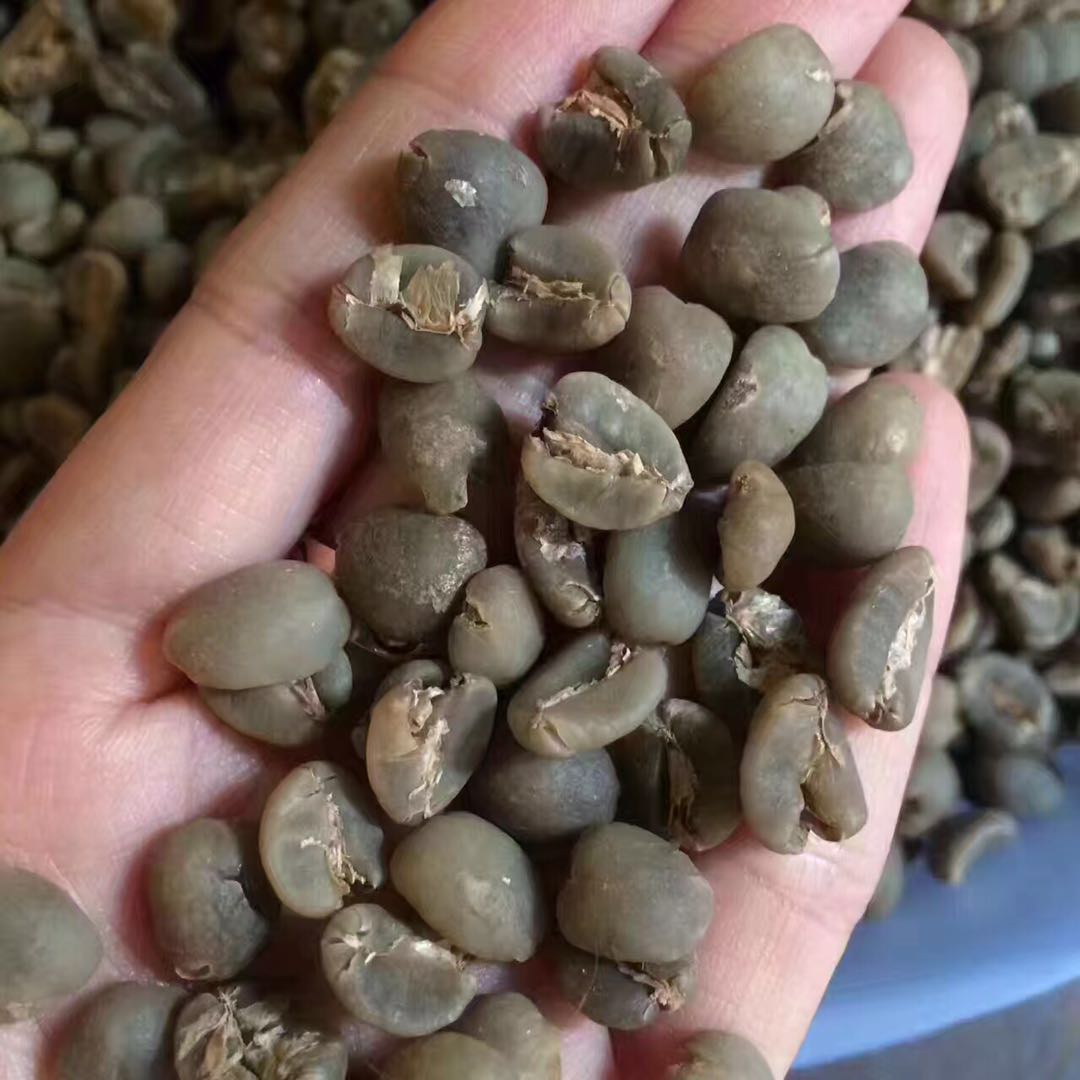
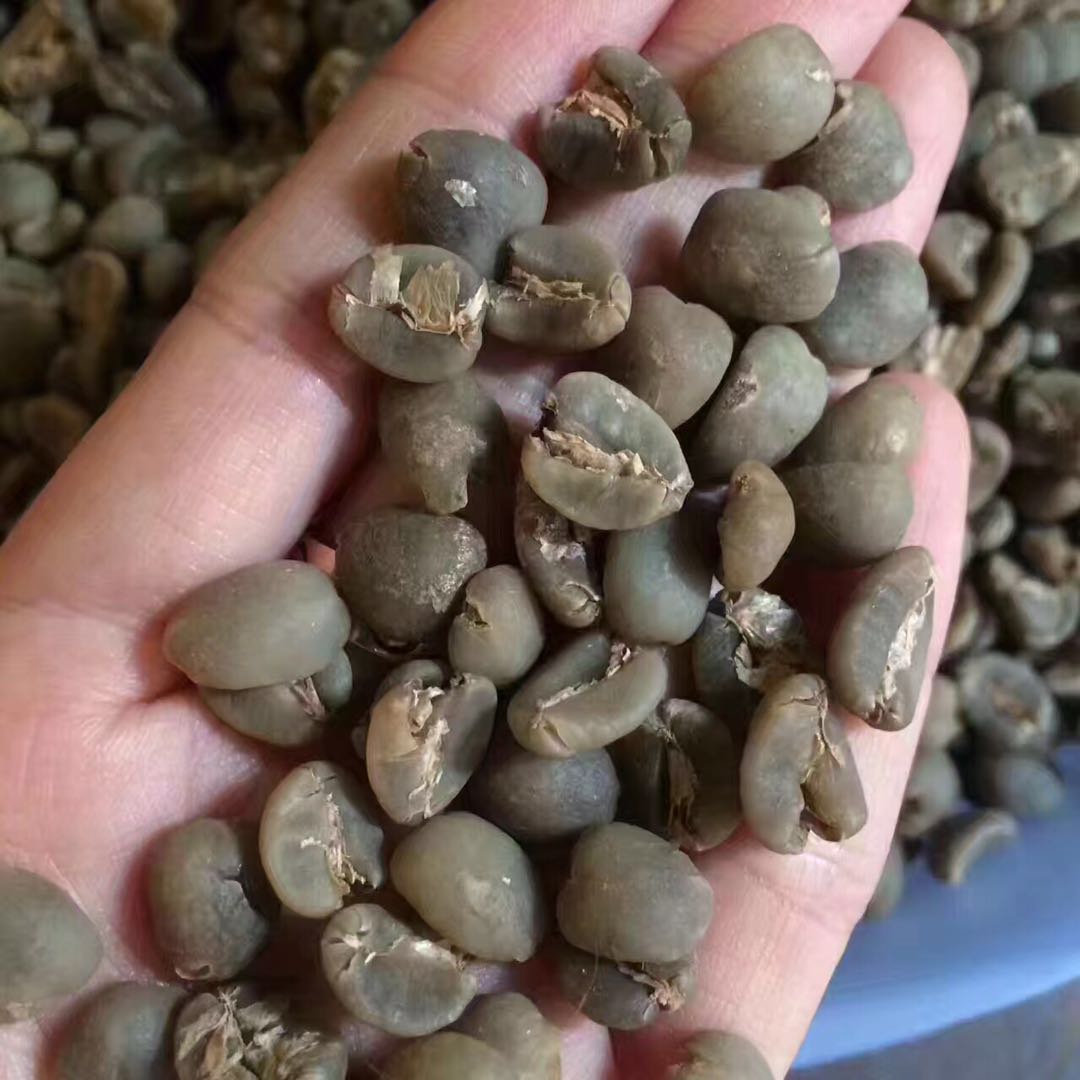
FrontStreet Coffee's Mandheling has a rich, bold flavor with intense body and a lively character. It is neither astringent nor acidic, and both its body and its bitterness come through fully. The beans may look like the ugliest of all, but coffee lovers say that the less attractive Sumatra beans look, the better, richer, and smoother they taste.
The Unique Wet Hulling Process of Mandheling
Wet hulling, known locally as Giling Basah, is a traditional Indonesian coffee processing method. Despite the name sounding close to washed processing, the two produce distinctly different cups. Coffee processed by wet hulling typically has a thick, intense flavor with a very distinctive character.
Wet Hulling Processing Steps
1. Remove the fruit skin and pulp, keeping the parchment and mucilage.
2. Ferment in water tanks.
3. Wash away the mucilage.
4. Sun-dry with the parchment for 2-3 days, until moisture content reaches 20-24%.
5. Hull off the parchment.
6. Dry the green beans until moisture content reaches 12-13%.
7. Prepare for export.
Why Use Wet Hulling?
a. Climate Reasons
Indonesia's wet-hulling tradition comes from local weather. Humidity stays between 70-90% year-round, typhoons are frequent, and in some regions annual rainfall reaches as much as 2,000mm. Since green beans are most vulnerable to rain, how does Indonesia overcome such harsh conditions to produce rich, mellow Mandheling? The answer is wet hulling.
Under tropical conditions, coffee usually takes 2-3 weeks to dry. In Indonesia's humid climate, drying coffee is a serious challenge. Drying takes much longer, and throughout that time the coffee holds high humidity, making it easier for bacteria to penetrate the green bean.
In regular washed processing, drying happens with the parchment still on, protecting the green bean from outside damage. Wet hulling, by contrast, removes the parchment for the final drying stage, exposing the green bean surface directly to sunlight and letting it dry 2-3 times faster than washed processing.
b. Economic Benefits
Dutch colonists first brought coffee to Indonesia in the 17th century, and they wanted returns that were bigger and faster. Wet hulling cut the time spent on the farm dramatically and reduced labor costs, which fit the investor mindset of rapid profit and lower cost and helped the method spread.
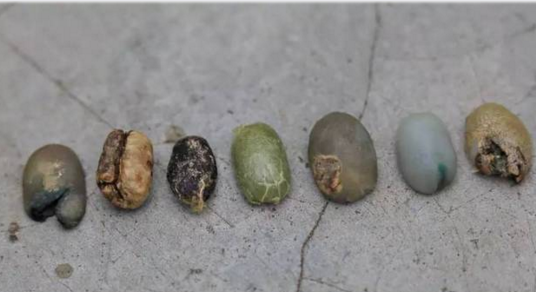
c. Defects and Kuku Kambing (Hoof Beans)
When wet hulling removes the parchment, the coffee's moisture content is still as high as 20-24%, whereas other methods bring moisture down to 10-12% before hulling. In this "semi-dry" state, the parchment tends to stick to the surface of the green bean, making hulling harder than with "fully dry" beans and requiring more friction.
On the other hand, semi-dry green beans are very fragile at this stage, with hardness far below that of fully dry beans, so they are easily crushed and develop small cracks. These are what we commonly call horse hoof or goat hoof beans, locally known as kuku kambing.
The ultra-fast wet hulling process also produces a higher defect rate in Mandheling. Processing plants arrange staff for manual defect sorting, typically DP (double picking) and TP (triple picking). After triple picking, FrontStreet Coffee's Mandheling has a lower defect rate than double picking would allow.
Summary:
To sum up the flavor of wet hulling: aside from minor subtle differences, wet-hulled beans are generally considered to have earthy, smoky, and chocolatey flavors. The acidity is low, and the thickness can feel somewhat heavy.
That low acidity comes from a shorter, less effective fermentation and a longer drying time. The earthy flavors and related characteristics of wet-hulled beans invite various interpretations. Some link them to the varieties used in wet-hulling regions (Timor and Catimor lines, with Robusta heritage), some to the organic interaction between green beans and their environment, and some simply to too many defective beans. Of course, there are other views as well.
What is "Golden Mandheling"?
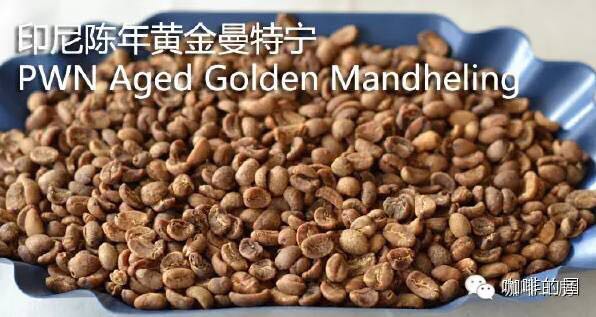
Some friends who have run coffee shops for years say that "Golden Mandheling" is aged Mandheling. To talk about "Golden Mandheling," we have to start with PWN. This abbreviation often appears in Mandheling coffee names, but it is actually the name of a company: Pwani Coffee Company.
The company is a very famous coffee-buying firm in Indonesia that mainly purchases Mandheling. It buys from almost all of Indonesia's best growing regions, so most beans from PWN are unique specialty coffees. FrontStreet Coffee's Golden Mandheling is a product from this company. After buying the green beans, PWN runs multiple manual selections to pick plump, defect-free beans. Only beans that pass this pageant-like layered screening qualify as FrontStreet Coffee's Golden Mandheling.
PWN has trademarked "Golden Mandheling," meaning that in the future only Golden Mandheling produced by PWN can be considered genuine. Many beans on the market not from PWN but labeled Golden Mandheling should really be called Specialty Mandheling.
"Golden Mandheling" is not some aged bean but simply a product name the company created.
The Difference Between FrontStreet Coffee's Mandheling and FrontStreet Coffee's Golden Mandheling:
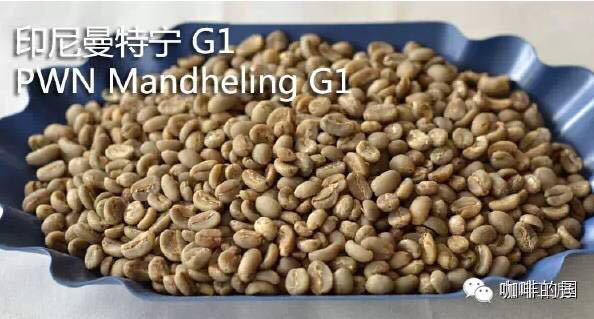
Coffee friends have asked what the difference is between FrontStreet Coffee's Golden Mandheling and FrontStreet Coffee's Mandheling G1. For beginners, it can be hard to tell. For professional-level connoisseurs and taste-sensitive drinkers, tasting the two side by side reveals a very clear comparison. Golden Mandheling's sweetness, cleanliness, thickness, and wild spice notes are slightly superior to G1, which is one reason it costs so much more.
FrontStreet Coffee's Mandheling requires layered screening, which is absolutely necessary. Its probability of defective beans is very high, and its appearance is so ugly that even good beans can look defective. Every time we sort FrontStreet Coffee's Mandheling, we pull out a handful of suspected defects, but looking again, they are not really defects - the beans are simply unattractive. Roasted, though, FrontStreet Coffee's Mandheling is like a caterpillar becoming a butterfly: the roasted beans are plump and quite pleasing to the eye.
FrontStreet Coffee's Golden Mandheling has a defect rate of 2% and looks beautiful.
What Kind of Bean is FrontStreet Coffee's Aged Golden Mandheling?
Aged coffee actually has a long history in Indonesia. Early shipping was not well developed, so moving coffee from Indonesia to other countries took a long time. Over that time, fresh, moisture-rich beans gradually dried, and the sea breeze added a very particular flavor.
With modern shipping cutting transit times dramatically, this special-flavored coffee became a deliberately processed bean. Aging is a technical skill that requires close monitoring throughout. Warehouse humidity and temperature have standard requirements, and green beans must be turned periodically to prevent differences in humidity between top and bottom, or mold that would cause spoilage. Aging is not about losing flavor but about creating another flavor - and a pleasant one.
The Gayo Mountains lie in the Aceh region of northern Sumatra. Most coffee farmers working there are native to the area. The word "Gayo" comes from a tribe in Indonesia's Aceh region. The area has ideal growing conditions, a long history and culture, and a distinctive flavor. Organic methods are widely used, without chemical fertilizers, and it is regarded as a world green-coffee production area. Gayo coffee is therefore often called green coffee or Gayo organic coffee.
In the specialty coffee world, Sumatra coffee is a fascinating case. The famous Mandheling is not the name of a growing region, nor of a variety, and even its varietal origins are quite tangled.
Ateng -
A hybrid of Arabica and Robusta with several subtypes, widely grown in Sumatra and other Indonesian islands. Put simply, it is a branch of Catimor, with Ateng being the local name.
Djember -
Search for Djember and you will find a place name in Sumatra, which sounds mysterious, but the variety is actually S-795. Because the variety was spread to the island by the Jember Coffee Research Center, locals call S-795 by this name.
So what is S-795? It is a hybrid created by Indian botanists by crossing the Typica mutant Kent with S-288.
And what is S-288? A natural hybrid of Arabica and Liberica.
The lineage is genuinely tangled.
TimTim -
This is Timor Hybrid, a cross of Arabica and Robusta. The Catimor we know well was created by further hybridizing with it.
Tim Tim - Longberry Mandheling
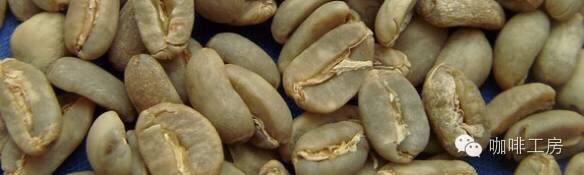
Tim Tim is a bean from Indonesia. Because of its elongated shape, many people call it horse-face bean, and others call it long-bean Mandheling. In fact, Tim Tim is not a pure variety but a natural hybrid of Arabica and Robusta trees. It was discovered on Timor Island in the 1940s and cultivated for its natural disease resistance. In the Americas it is called Hybrido de Timor, abbreviated Tim Tim, while in Indonesia it is also called Bor Bor.
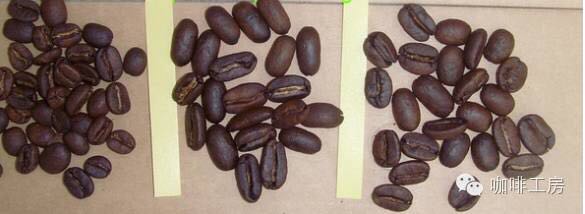
FrontStreet Coffee's Mandheling Roasting
Comparing FrontStreet Coffee's Mandheling at three roast levels: light, medium-dark, and dark.
Brewing Equipment Selection: Hario V60
Bloom Duration: 25 seconds
1. Light roast: Fujiyama ghost-tooth grinder 3.5, water temperature 90°C, water-to-coffee ratio 1:15.
2. Medium-dark roast: Fujiyama ghost-tooth grinder 4, water temperature 88°C, water-to-coffee ratio 1:15.
3. Dark roast: Fujiyama ghost-tooth grinder 4.5, water temperature 86°C, water-to-coffee ratio 1:15.
Test Results
1. Light roast: Fruity acidity is obvious but comfortable on entry, slightly bitter, with saliva stimulation on both sides of the mouth, and average smoothness.
2. Medium-dark roast: Very good balance, fragrant and thick; the bitterness is more obvious, chocolate notes and a slight sweetness are more prominent, the licorice aroma is clear, smoothness is better than light roast, and the aroma is strong.
3. Dark roast: Almost no acidity, very heavy bitterness, and improper roasting can also produce burnt flavors.
Where Do Over-Extraction or Under-Extraction Problems Mainly Occur?
Over-extraction: the coffee becomes too bitter and astringent, caused by water soaking the grounds for too long.
Under-extraction: the taste is thin, and the water and coffee feel separate.
Different Equipment, Different Brewing Methods
The taste will be different too.
Pour Over
1. Dripper: Hario V60
2. Water temperature: 88°C
3. Grind size: Fujiyama grinder setting 4
4. Roast level: Medium-dark roast
5. Bloom time: 25 seconds
Flavor: Multi-layered, clean, balanced, with persistent caramel sweetness in the aftertaste.
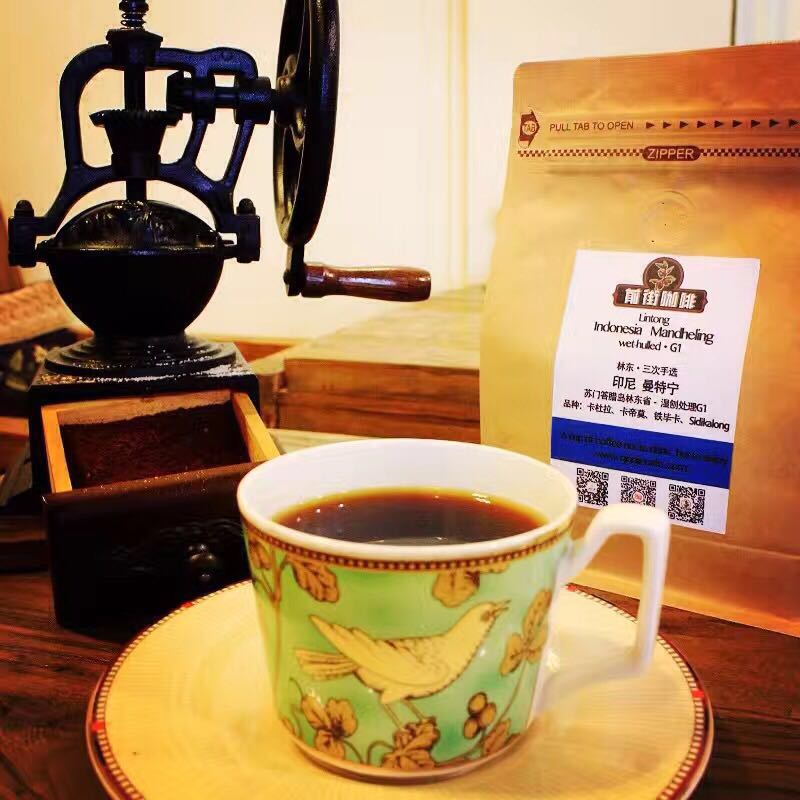
Specific technique: 15g coffee, Fujiyama ghost-tooth grinder setting 4, V60 dripper, 88-89°C water. First pour 30g of water for a 25s bloom, pour to 104g and pause, wait until the water level in the coffee bed drops to half before pouring again, and slowly pour to a total of 220g, discarding the last 5g. Water-to-coffee ratio 1:15, extraction time around 2:00.
AeroPress
1. Water temperature: 85°C
2. Grind size: Fujiyama grinder setting 3.5
3. Roast level: Medium-dark roast
4. Bloom time: 2 times, first 20 seconds, second 50 seconds
Specific technique: Set up the AeroPress for standard pressing and add 20g of grounds at a 1:17 ratio. First pour 83°C hot water to 100g, stir 3-5 times to wet the grounds fully, rest 20s, add the remaining hot water to 240g, rest 40s, stir 5s, wait until 1 minute 50 seconds, then insert the plunger and press, for a total of 2 minutes 5 seconds.
Flavor: Rich, complex, with prominent spice notes and a fresh forest aroma.
Siphon
1. Water temperature: 90°C
2. Grind size: Fujiyama grinder setting 3.5
3. Roast level: Medium-dark roast
4. Brew time: 30 seconds
Specific technique: Side-heat extraction; 20g of coffee for 2 servings, water-to-coffee ratio 1:12, water to mark 2, using the post-addition method (add coffee after the water boils). Add the coffee after bubbles form, stir 4-5 times, extract for about 30 seconds, then remove the heat. Finally, stir 2 times and let the coffee fall naturally.
Flavor: Round and rich, with prominent herbal and bitter notes and pronounced caramel sweetness.
FrontStreet Coffee Recommendation
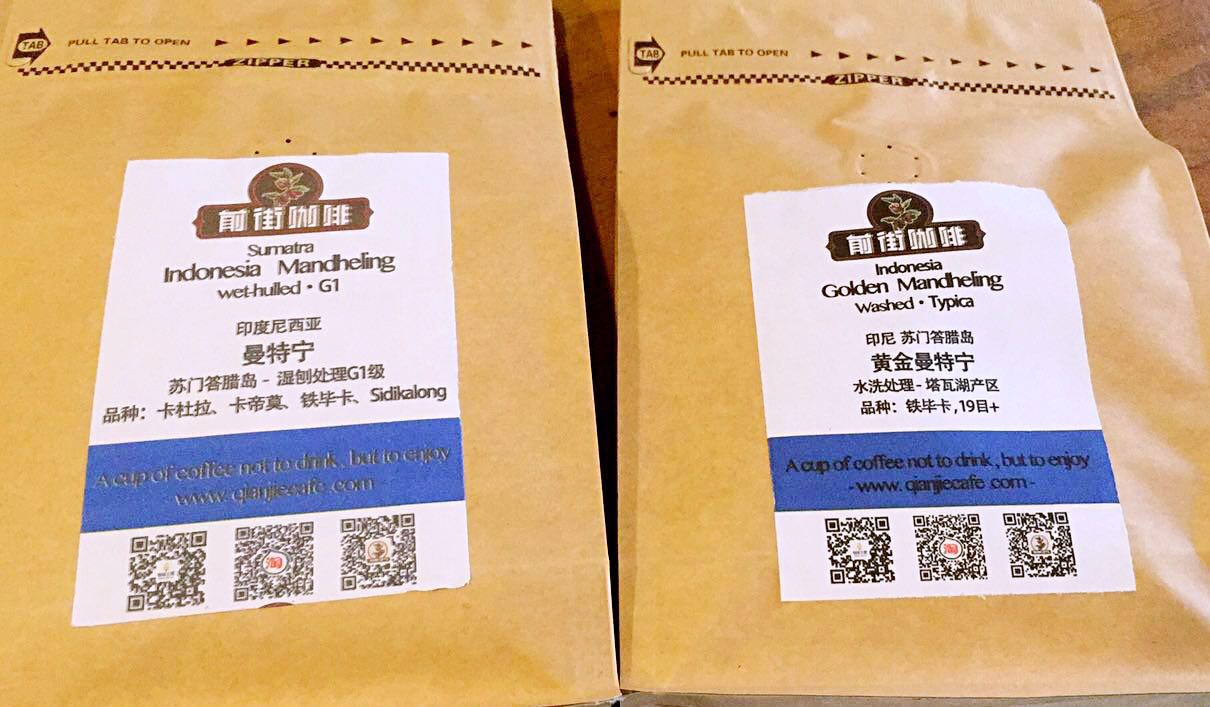
For the definitive version of this style, FrontStreet Coffee's PWN Golden Mandheling is the place to start. It comes from Pwani Coffee Company (PWN), the firm whose name became the standard for the grade, and it is wet-hulled, the local Giling Basah method. The green beans are 18 mesh and larger, screened on a standard of fewer than 3 defective beans per 300g sample, and hand-sorted three times over to reach G1 grade. Medium-dark roasted, it delivers a clean cup, heavy body, low acidity, and dark chocolate, caramel, and wild herbal earthiness.
FrontStreet Coffee also offers a Lintong Mandheling from the Lintong area around Lake Toba and an Aceh Mandheling from the Gayo highlands near Lake Tawar. Both are medium-dark roasted. For pour-over, FrontStreet Coffee suggests 15g of coffee at a 1:15 ratio, 87-88°C water, and a coarse-sugar grind size, poured in three stages - 30ml to bloom, then 100ml, then a gentle 95ml center pour. The result is a thick, rounded body with caramel sweetness and chocolate and nutty notes.
Important Notice :
FrontStreet Coffee is a long-established specialty coffee roaster in Guangzhou China, selling freshly roasted beans from its own farm in Yunnan as well as dozens of carefully selected single-origin beans from around the world for both pour-over and espresso. The products deliver consistently excellent quality and great value, with shipping within 24 hours. Guangzhou's FrontStreet Coffee shop is recommended by many coffee lovers, and the beans are now available online at the Tmall 。
FrontStreet Coffee has moved to a new address:
FrontStreet Coffee Address: 315,Donghua East Road,GuangZhou
Tel:020 38364473
 Scan and follow the En Gafei WeChat official account. Please indicate that the reprint comes from "En Gafei".