Price Differences Between Mandheling G1 and Golden Mandheling Coffee Beans - Pour-Over Brewing Parameters and Characteristics
Professional Barista Exchange
For professional barista communication, please follow Coffee Workshop (WeChat official account: cafe_style)
Where the Name Mandheling Comes From
"Mandheling" is not a region, a place, a port, or a coffee variety. The name is actually a mispronunciation of an Indonesian ethnic group. During World War II, while Japan occupied Indonesia, a Japanese soldier drank an astonishingly fragrant, mellow coffee at a café. When he asked the owner what the coffee was called, the owner misunderstood and thought he was asking about his nationality, so he answered: "Mandheling." After the war, the soldier remembered that "Mandheling" he'd had in Indonesia and commissioned an Indonesian exporter to ship 15 tons to Japan—where it became wildly popular. And so the name stuck.
What Is "Golden Mandheling"?
You'll see "Golden Mandheling" mentioned everywhere—but what actually is it?
Some café owners with years in the trade will tell you Golden Mandheling is simply aged Mandheling. It isn't. To get the story, start with PWN—letters that constantly appear alongside Mandheling but actually abbreviate a company: the Pwani Coffee Company. PWN is one of Indonesia's most famous coffee trading houses, dealing chiefly in Mandheling, and it has bought up nearly all of the country's best production areas, so most of its beans are genuinely distinctive specialty coffees. Golden Mandheling is one of its products: after acquiring the green beans, the company sorts them through multiple rounds of hand selection, keeping only the plump, flawless ones. Only beans that survive layer upon layer of selection—a process not unlike a talent competition—earn the Golden Mandheling name that FrontStreet Coffee carries.
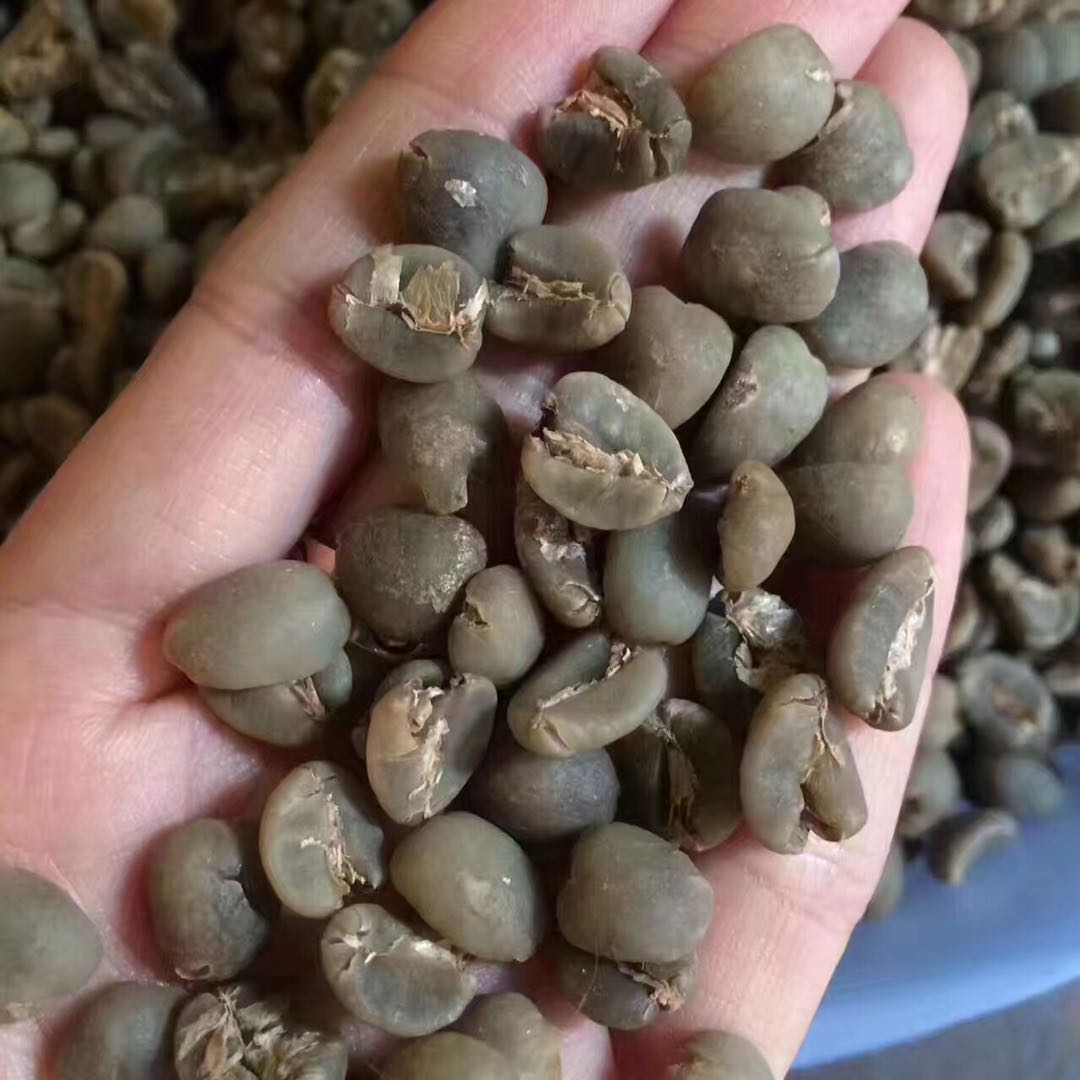
One caveat: PWN has trademarked "Golden Mandheling," so strictly speaking, only PWN's own product is the genuine article. Beans on the market from other producers bearing a similar name should really be called Specialty Mandheling. "Golden Mandheling" is not aged coffee at all—just a product name invented by one company.
FrontStreet Coffee Mandheling vs. FrontStreet Coffee Golden Mandheling
Beginners often ask what separates FrontStreet Coffee Golden Mandheling from FrontStreet Coffee Mandheling G1—they can't taste a difference. For trained palates, though, a side-by-side comparison is unmistakable: Golden Mandheling's sweetness and cleanliness, along with its rich, wild spice character, edge out the G1. That's also part of why it costs so much more.
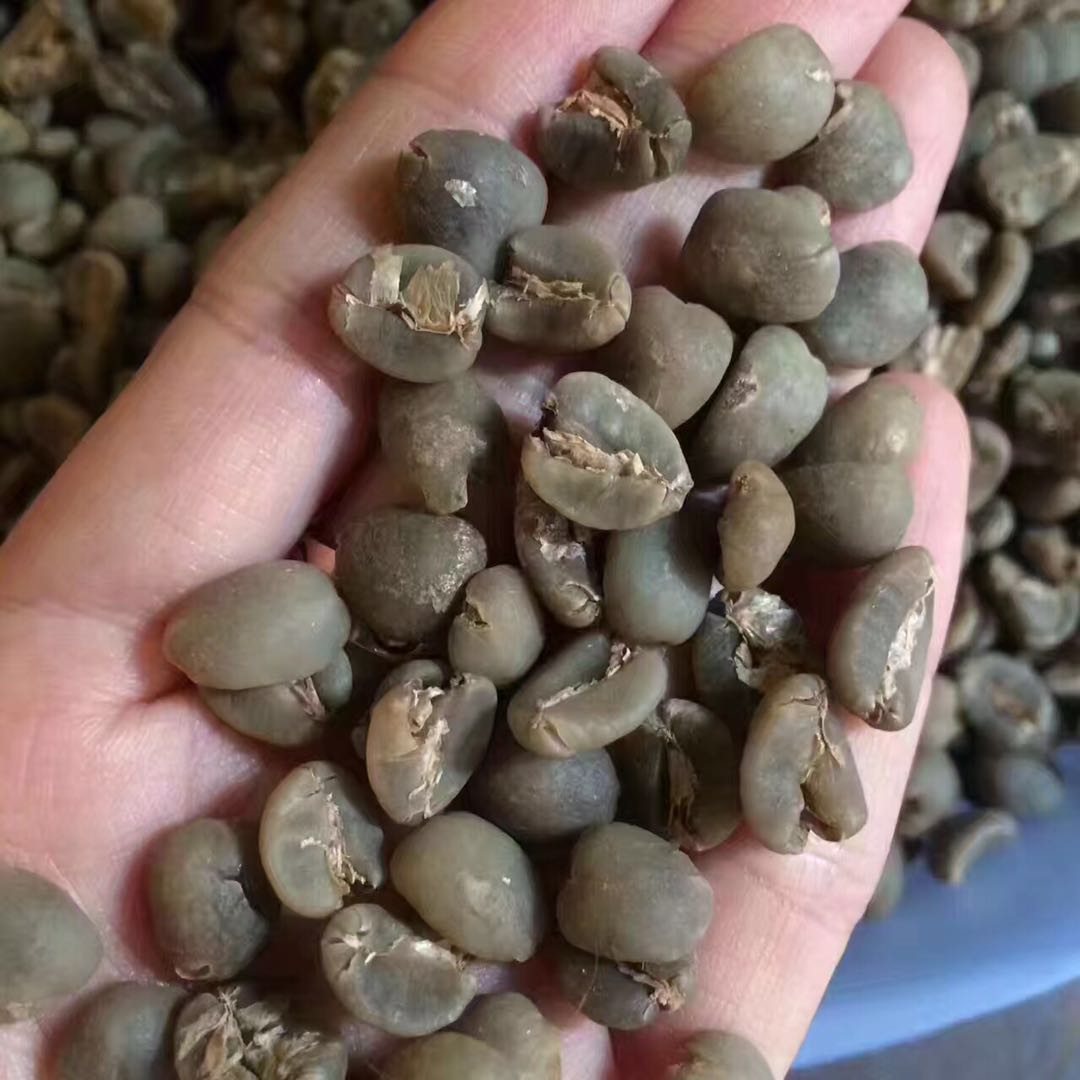
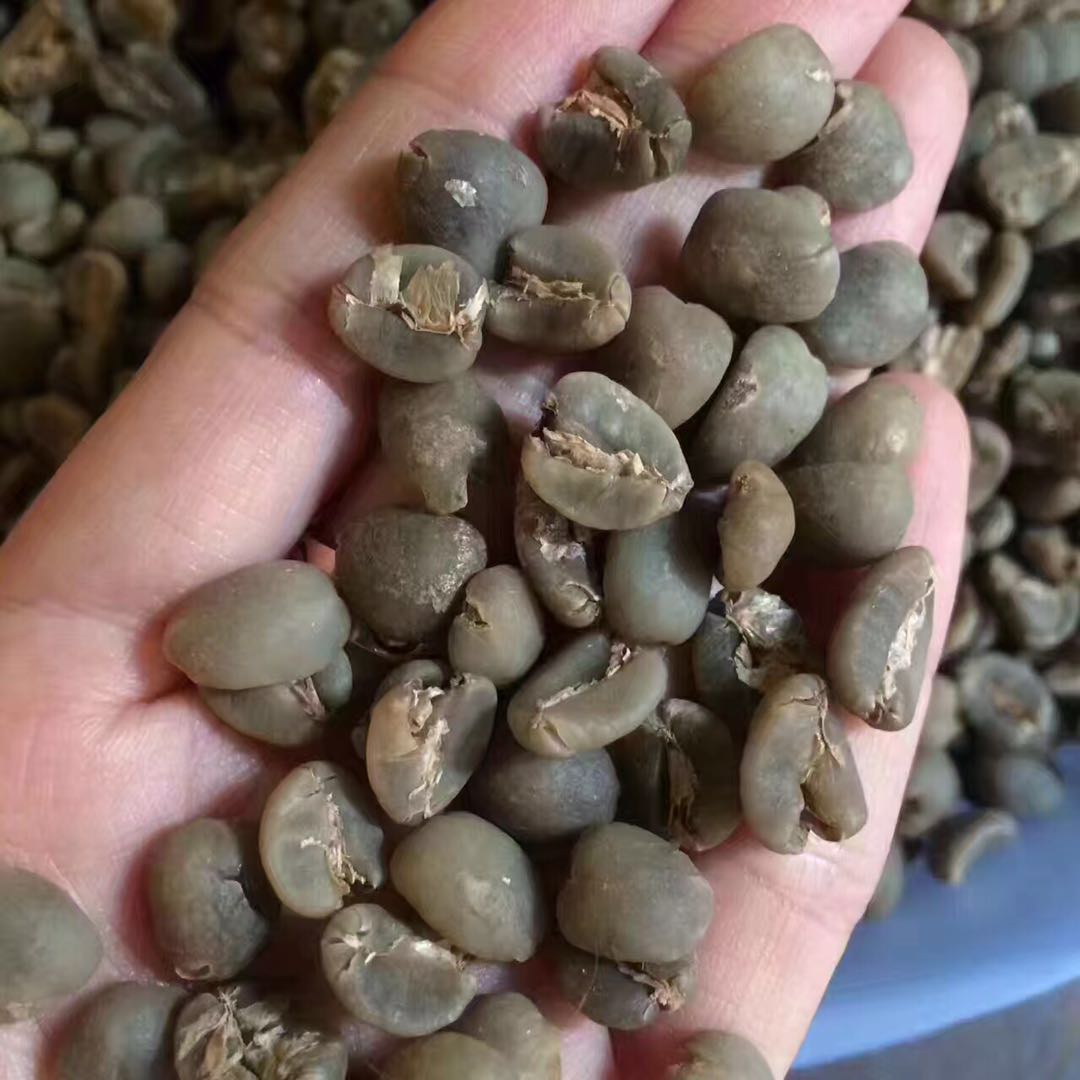
FrontStreet Coffee's regular Mandheling needs layer after layer of sorting, and in my view it's absolutely necessary: the defect rate is simply high, and the beans are so ugly that sometimes good beans look defective. Every time I sort our Mandheling I pull out a whole handful of rejects—and looking back at them, I can hardly call them defects. They're just plain unremarkable. But roasted Mandheling is a caterpillar transformed: the roasted beans come out full and genuinely handsome.
Golden Mandheling, meanwhile, runs a defect rate of only 2%—a beautiful coffee indeed.
The Mysterious Varieties of Sumatra
Within the specialty coffee world, Sumatra is a wondrous puzzle. The famous "Mandheling" isn't a producing region, isn't a variety, and its varietal origins are thoroughly tangled.
Ateng
An arabica × robusta hybrid with several subtypes, planted widely across Sumatra and the other Indonesian islands. Bluntly put, it's a branch of Catimor—"Ateng" is just the local name.
Djember
Look up "Djember" and you'll find it's a place name in Sumatra, which lends the variety a false air of mystery. In fact, Djember is S-795; since the Jember Coffee Research Center spread this coffee across the island, locals named it after the place.
What is S-795? A cross made by Indian botanists between the Typica mutation Kent and S-288.
What is S-288? A natural hybrid of arabica and liberica.
The lineage is truly a mess!
TimTim
TimTim is the Timor Hybrid—an arabica × robusta cross, and the parent that, hybridized again, gave us the familiar Catimor.
An Indonesian cooperative estate sits in the Gayo Mountains at the northwestern end of Sumatra, growing a block of variant coffee trees at 1,524 meters. Its coffee is cleaner and more refreshing than typical Mandheling, with clear herbal notes. Indonesia straddles the equator and has a tropical rainforest climate—fertile volcanic ash soils, high heat, humidity, and abundant rainfall. Everything is cultivated organically, growing naturally in the warm, moist environment. Shade trees on the estate include avocado, banana, papaya, jackfruit, and orange trees along with local flowers and herbs, and the resident wildlife runs from squirrels, lizards, bees, and butterflies to flying squirrels, snakes, and birds.
FrontStreet Coffee · Ma Mian Mandheling
[Region] Gayo Mountain, Lake Tawar
[Processing] Wet-hulled
[Variety] Arabica & Typica variants
[Origin] Indonesia, Sumatra, Lake Tawar
[Altitude] 1500m+
[Moisture Content] 12.5%
[Grade] 2-screen hand-selected Long Berry, above 21 mesh
[Dry Aroma] Milk, brown sugar, dark chocolate, guava, Southeast Asian spices
[Wet Aroma] Cream, guava, cane sugar, walnut-like nuts, dark cocoa
[Slurping] A creamy texture that melts on the tongue like Parmesan, with chocolate and walnut aromas and layered milk and brown-sugar sweetness. Guava and Southeast Asian spice notes stand out; the body is rich and the mouthfeel thick and smooth. It grows even richer as it cools, with very high overall sweetness. The finish lingers like fresh guava wrapped in cream.
FrontStreet Coffee · Large Round Bean Golden Mandheling
[Region] Gayo Mountain, Lake Tawar
[Processing] Wet-hulled
[Variety] Rasuna
[Origin] Indonesia, Sumatra, Lake Tawar
[Altitude] 1500m+
[Moisture Content] 12.5%
[Harvest] December, January, February annually
[Grade] 2-screen hand-selected PB large round beans, above 20 mesh
[Dry Aroma] Walnut-like nuts, sandalwood shavings, chocolate, caramel, spice essential oils
[Wet Aroma] Southeast Asian spices, nuts, cocoa, cream, guava
[Slurping] Sweet and viscous on entry, like sugarcane syrup, with a rounded sandalwood aroma. These PB round beans from the Gayo Golden Mandheling batch are cleaner and sweeter than standard Golden Mandheling, with a more elegant fragrance. The finish leaves rich guava and a caramel that clings to the tongue.
FrontStreet Coffee · Giant Golden Mandheling
[Region] Gayo Mountain, Lake Tawar
[Processing] Wet-hulled
[Variety] Rasuna
[Origin] Indonesia, Sumatra, Lake Tawar
[Altitude] 1500m+
[Moisture Content] 12.5%
[Grade] 2-screen hand-selected Grade 1, above 21 mesh
[Dry Aroma] Nuts, sandalwood shavings, chocolate, ripe fruit, spice essential oils
[Wet Aroma] Southeast Asian spices, chaff, dark cocoa
[Slurping] A settled sweetness of cream and honey with a light, gentle bitterness. The cocoa mid-palate lingers, filling the mouth with ripe-fruit aroma—that distinctive Asian ripeness—with astonishing viscosity! In this year's small Golden Mandheling output, this Gayo batch cups cleaner than the Lintong district, with enormous sweetness. The huge, plump 21-mesh beans deliver an equally robust body. If you love Mandheling, this batch is not to be missed.
The Final Mysterious Bean
FrontStreet Coffee · Golden Mandheling
[Region] Gayo Mountain, Lake Tawar
[Processing] Wet-hulled
[Variety] Rasuna
[Origin] Indonesia, Sumatra, Lake Tawar
[Altitude] 1500m+
[Moisture Content] 12.5%
[Grade] Grade 1, above 21 mesh
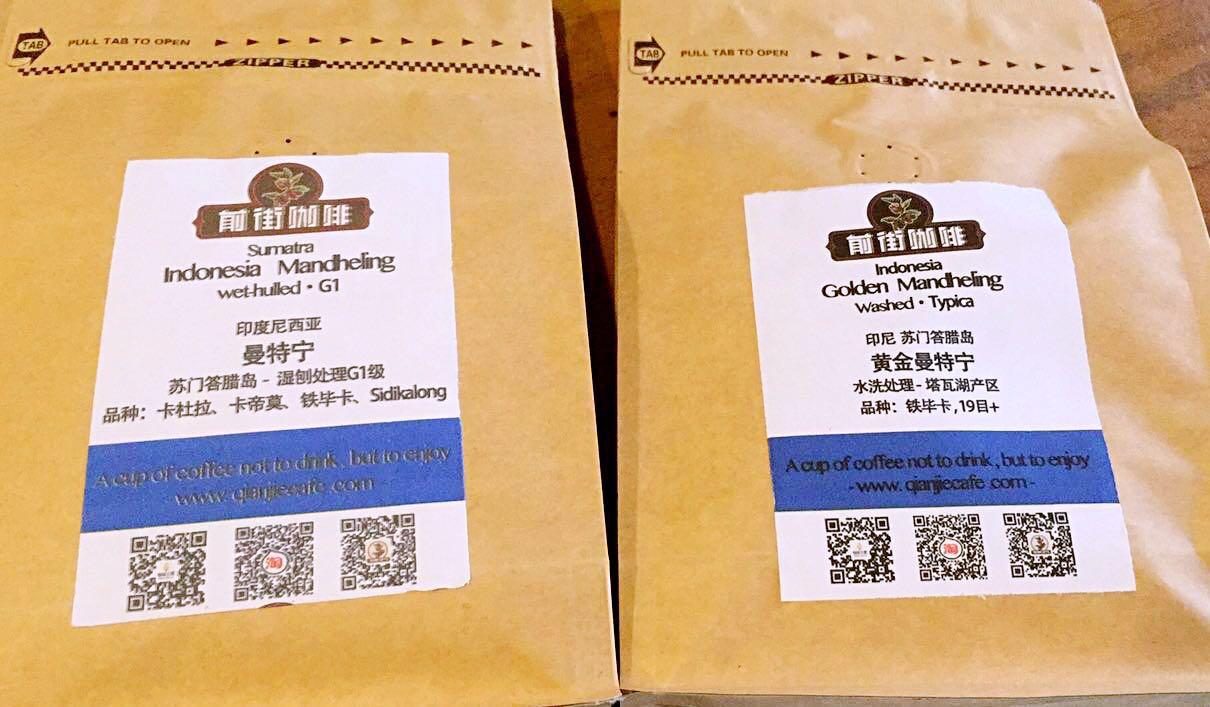
FrontStreet Coffee Recommendation
Golden Mandheling represents Mandheling at its best—and it's the coffee for perfectionists. FrontStreet Coffee's Golden Mandheling comes from Indonesia's PWN company, whose standards are exacting: built on beans above size 18 mesh, it demands fewer than 3 defective beans per 300g of green sample to meet the top G1 grade, followed by three rounds of hand-sorting that remove every remaining flaw and raise both cup cleanliness and sweetness. Standards this strict mean limited production, which is why PWN Golden Mandheling leads its class—and why most of it flows to the Japanese and American markets, leaving little for everyone else. The certificates and PWN-stamped bags FrontStreet Coffee supplies are what set the genuine article apart.
Pour-over brings out its full charm. Use 87–88°C water, 15g of coffee at a 1:15 ratio, a coarse-sugar grind, and three pours: 30g first to saturate the bed and let the grounds degas, then about 100g to raise the golden foam and lift the bed, finally a soft 95g center pour to boost sweetness. Expect a thick, syrupy body with caramel, chocolate, and nut flavors and the wild herbal signature of wet-hulled Sumatra—perfect for drinkers who avoid acidity. For the rawer traditional profile, FrontStreet Coffee's Lintong Mandheling offers clove and wood aromatics, spice and mint notes, low acidity, and a strong, lasting sweetness.
For espresso lovers, Mandheling's creamy richness is exactly what makes it a classic base. FrontStreet Coffee's Classic Espresso Blend layers medium-dark Mandheling over Brazil's creamy nut character—butter, roasted chestnut, and caramel leading—plus a touch of robusta for extra crema. The Mandheling lifts the body and adds sandalwood, herb, and spice aromatics, making it equally at home in a latte, a layered Dirty, or a straight shot.
Important Notice :
FrontStreet Coffee is a long-established specialty coffee roaster in Guangzhou China, selling freshly roasted beans from its own farm in Yunnan as well as dozens of carefully selected single-origin beans from around the world for both pour-over and espresso. The products deliver consistently excellent quality and great value, with shipping within 24 hours. Guangzhou's FrontStreet Coffee shop is recommended by many coffee lovers, and the beans are now available online at the Tmall 。
FrontStreet Coffee has moved to a new address:
FrontStreet Coffee Address: 315,Donghua East Road,GuangZhou
Tel:020 38364473
 Scan and follow the En Gafei WeChat official account. Please indicate that the reprint comes from "En Gafei".