Why is it called Golden Mandheling? The Origin of the Name and Characteristics of Golden Mandheling Coffee Beans - Ateng Variety Flavor Description
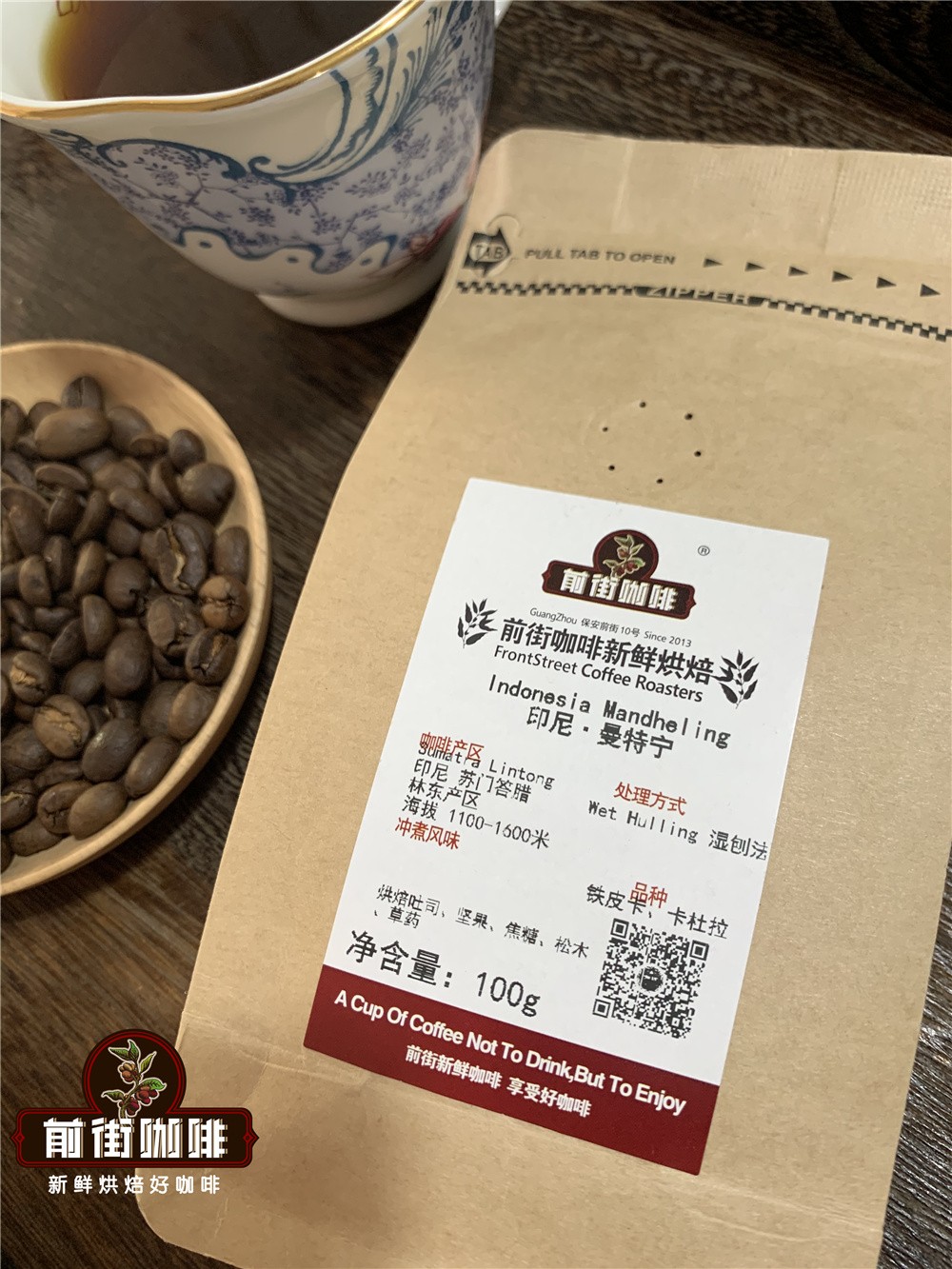
Mandheling is not a region, a place, a port, or even the name of a coffee variety. The name actually comes from a mispronunciation of the Mandailing ethnic group of Indonesia. During World War II, while Japan occupied Indonesia, a Japanese soldier drank a wonderfully fragrant, mellow coffee at a café. When he asked the owner for the coffee's name, the owner misunderstood and thought he was asking where it came from, and answered: "Mandheling." After the war, the soldier remembered the "Mandheling" he had drunk in Indonesia and commissioned an Indonesian exporter to ship 15 tons to Japan — where it became wildly popular, and the name stuck.
What is "Golden Mandheling"?
You often see "Golden Mandheling" on menus — but what exactly is it?
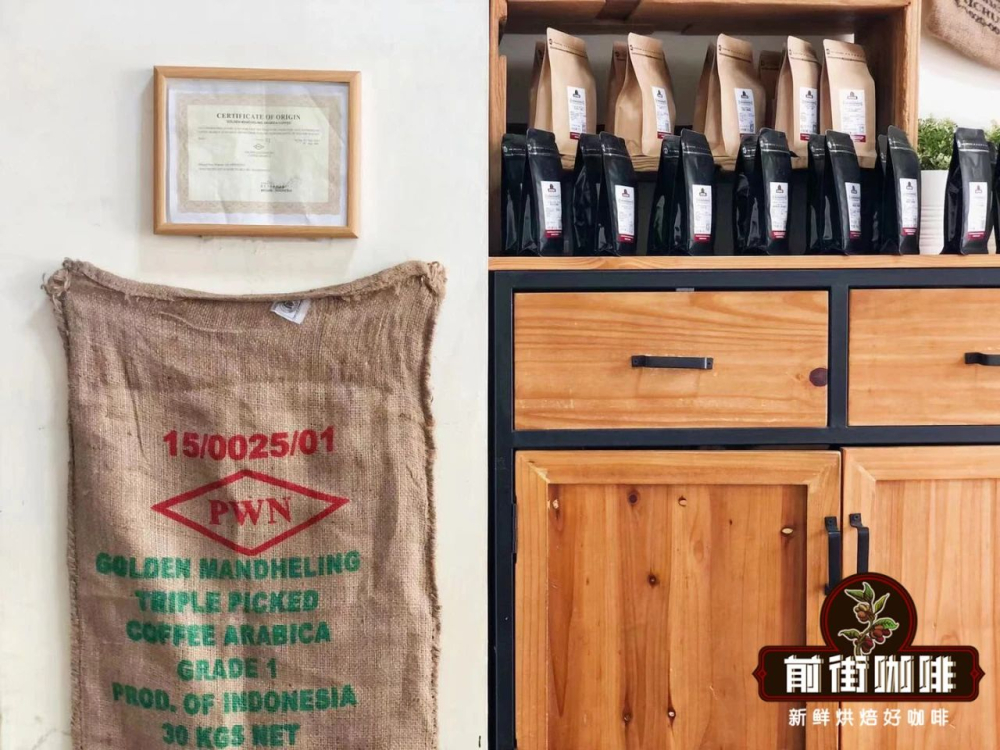
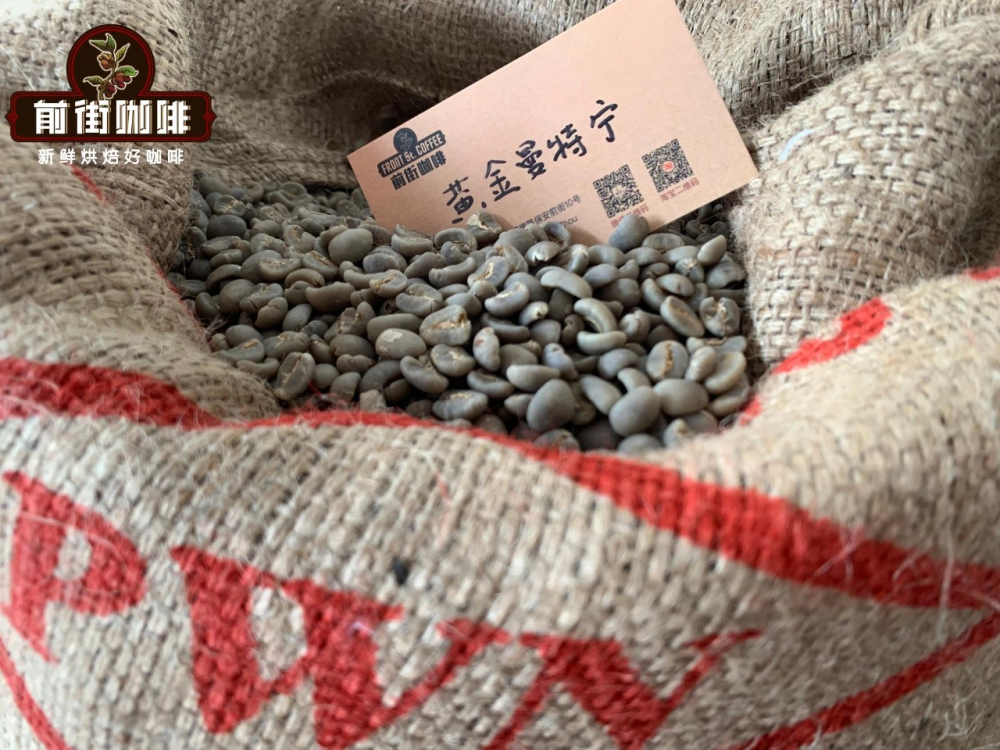
Mandheling's fame traces back to the Pwani Coffee Company (PWN) successfully launching Mandheling sales in Japan. PWN's owner is the very café owner mentioned above. Unlike many local Indonesian green-bean suppliers, PWN is the exclusive supplier of high-grade Golden Mandheling, having contracted the country's best Mandheling growing regions; everything it ships is premium quality. The Golden Mandheling that sits at the top right of FrontStreet Coffee's bean list comes from PWN, and the Dongshankou store displays the burlap sacks used for green bean packaging alongside the certification documents.
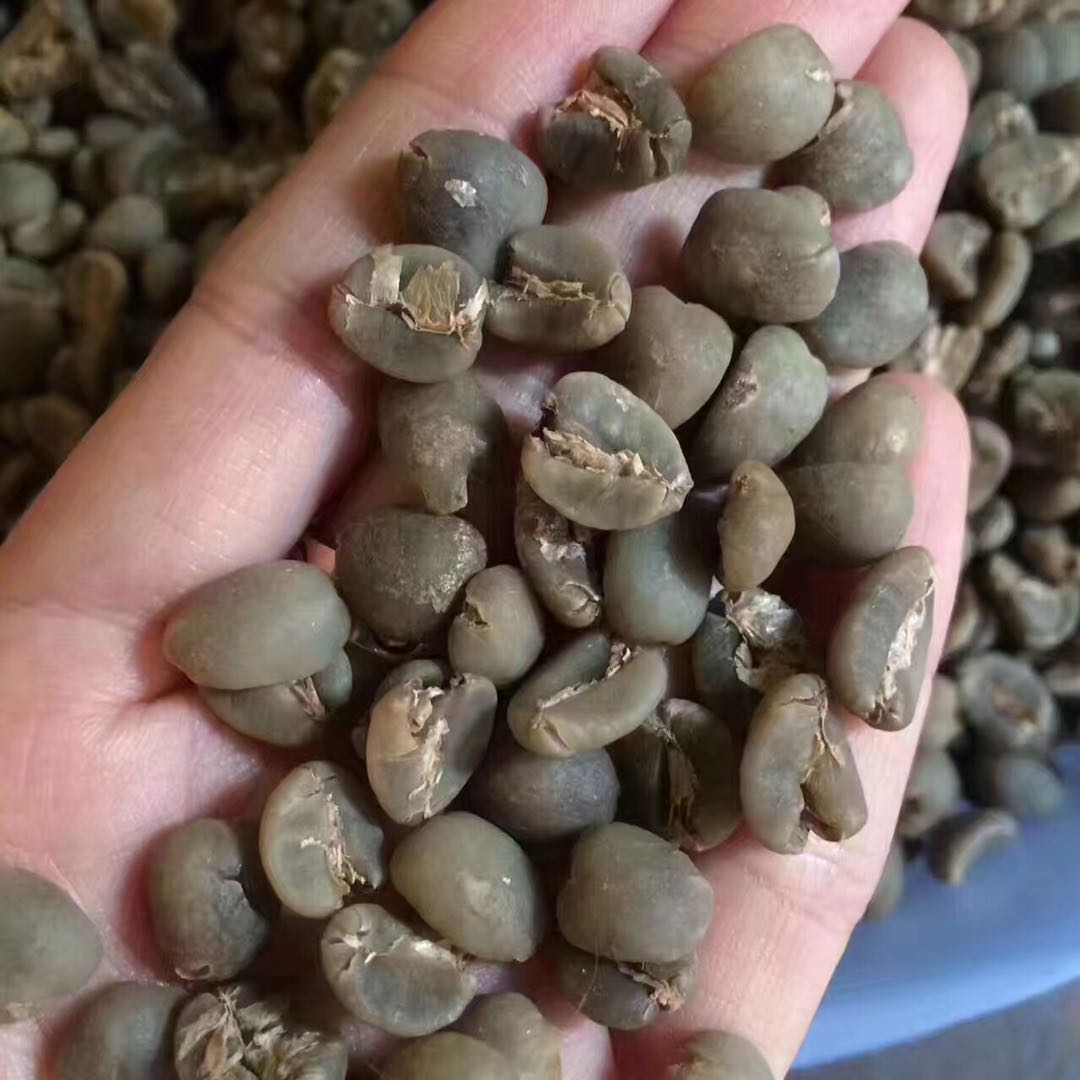
Wet-hulling saves considerable time and labor in green bean processing, but the speed comes with a higher defect rate, so only strict manual selection can remove defects machines miss. PWN subjects its purchased Mandheling to one machine sorting plus three manual sortings, with quality far exceeding Indonesia's own top G1 grade. To meet PWN Golden Mandheling production standards, the following requirements must be satisfied:
- Green bean size: 18–19 screen or above after the first manual selection
- Fewer than 3 defective beans in a 300 g green bean sample
- Green coffee grade: G1
- Color tending dark green, uniform size, regular shape
FrontStreet Coffee's Cupping Evaluation
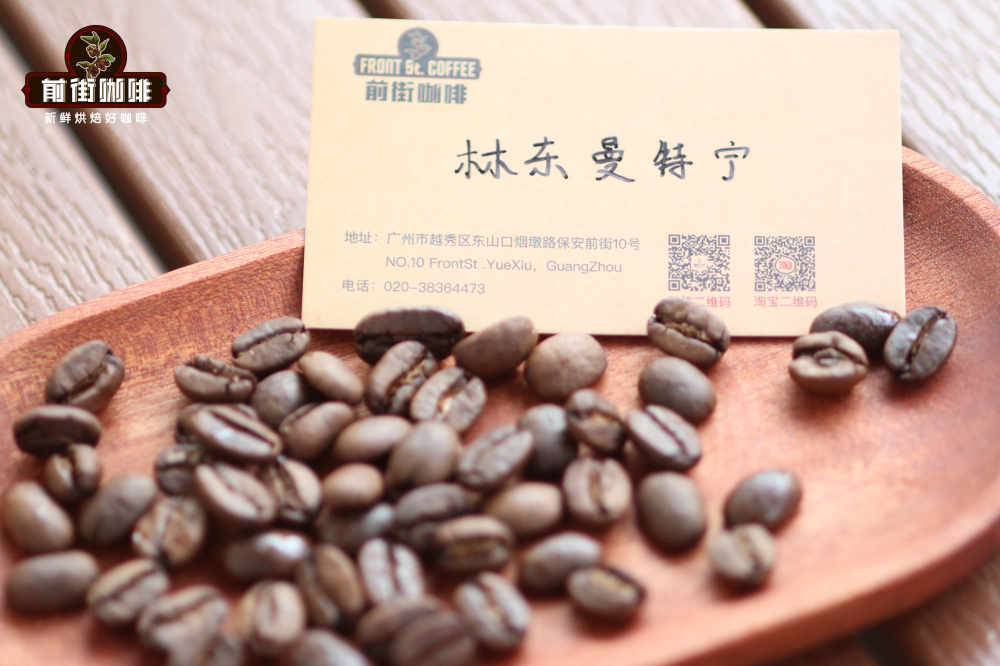
Before any bean goes on sale, FrontStreet Coffee evaluates it by cupping — a standardized assessment of quality and flavor that identifies each lot's strengths, weaknesses, and character as objectively as possible. Through cupping, FrontStreet found that the Lindong Mandheling daily bean presents rich nutty notes with a hint of melon in the aftertaste; as the cup cools, herbal flavors emerge over a mellow body and saturated aroma. PWN Golden Mandheling goes further: dark chocolate, nuts, and caramel, plus herbal spice and pine, a dark chocolate finish, a full lingering aftertaste, high cleanliness, and a light fruit acidity as it cools.
What variety is Golden Mandheling?
Indonesia grows many varieties. The original coffee planted there was Typica — universally admired for flavor — introduced by the Dutch in the late 17th century. But in 1877 leaf rust devastated nearly every coffee tree in the country, and vast Typica plantings withered. To fill the gap, the Indonesian government introduced hardier Robusta from Africa and elsewhere, and Robusta remains Indonesia's main variety to this day.
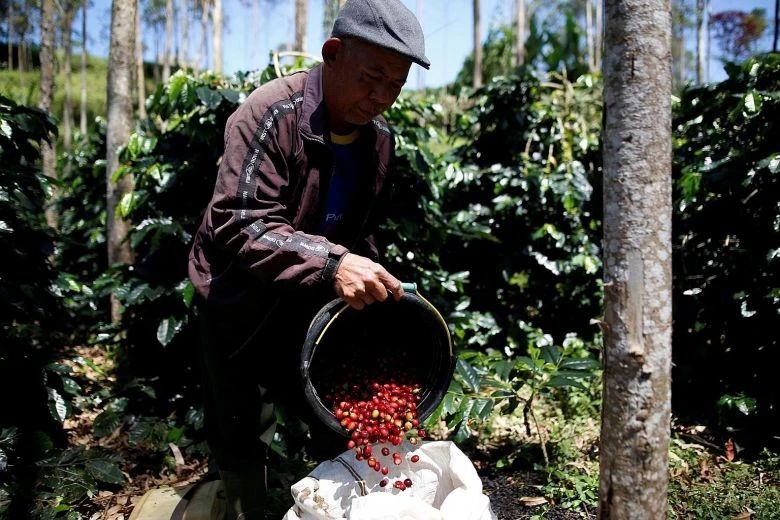
To raise production, Indonesia kept importing disease-resistant varieties. Among them, the Tim Tim, Bor Bor, and Catimor lines — the Ateng group, hybrids of Robusta and Arabica — combine good disease resistance with a fit for Sumatra's terroir and a distinctive fir aroma. Today Ateng and Tim Tim account for 70% of Sumatran coffee. FrontStreet's Lindong Mandheling daily bean is a mix of Tim Tim and Ateng, while Golden Mandheling is selected purely from Ateng — what we commonly call Catimor.
Sumatran Semi-washed Method - Wet-Hulling Process
Indonesia's humidity runs 70% to 90% year-round. With conventional washed processing, green beans would mold and spoil in the damp air before fully drying — so growers developed a semi-washed method that slashes processing time. Wet-hulling starts with a hulling machine removing the cherry skin, after which the beans go straight into a pool for a brief fermentation of a few hours. A little mucilage still clings to the parchment and is brushed away, then the parchment beans are dried. When the beans reach 30–40% moisture in their first drying, farmers sell them to buyers, who hull the semi-dry parchment immediately to accelerate drying — stripping mucilage and parchment to yield green beans.
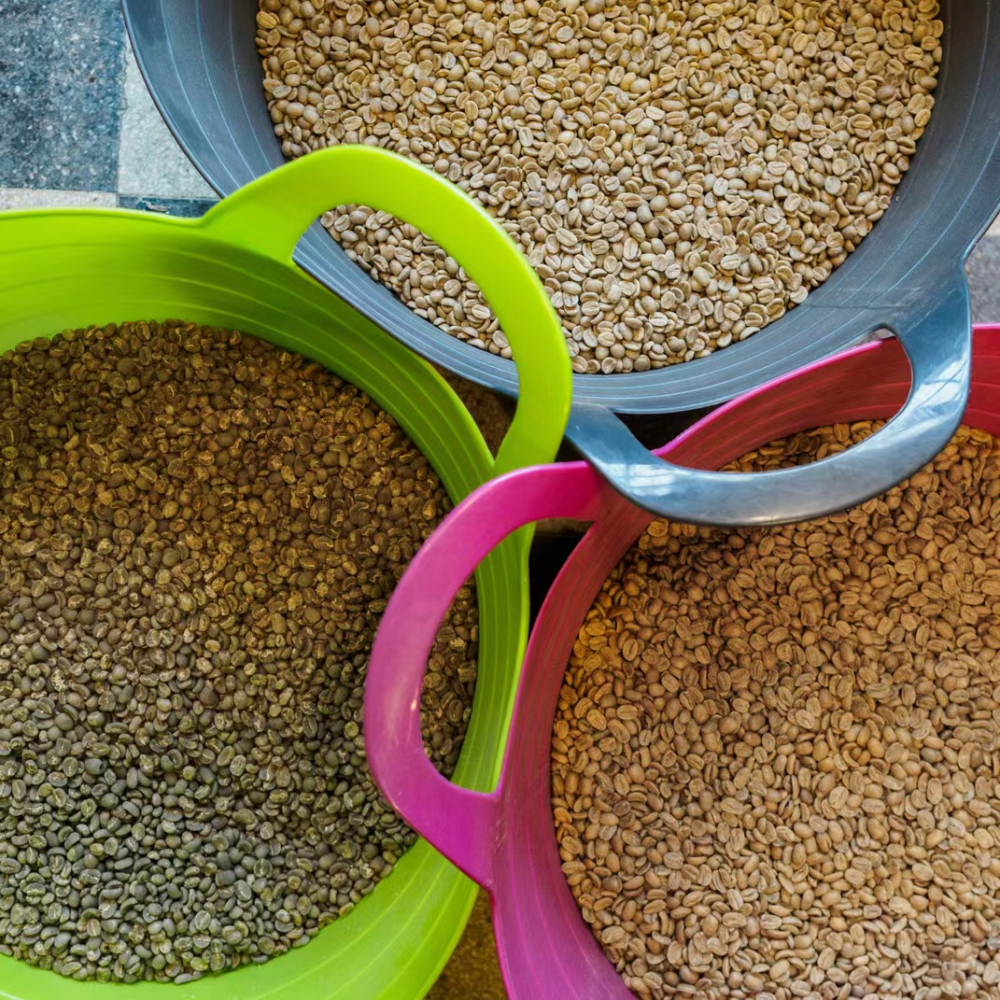
Wet-hulling shortens fermentation, which lowers acidity and boosts body while amplifying grassy, herbal flavors. The "naked" beans keep absorbing moisture from the humid air, forming Sumatra's characteristic earthy, herbal, cedar-like "muted aroma." After roasting, the cup carries rich dark chocolate, caramel, and roasted nut flavors — which FrontStreet's baristas savor through pour-over brewing.
FrontStreet Coffee's Pour-over Recommendations
- Brewing water temperature: 87–88°C
- Coffee: 15 g
- Coffee-to-water ratio: 1:15
- Dripper: KONO
- Grind size: medium-coarse (70% pass-through on the China standard #20 sieve)

Brewing uses a three-stage pour, which best expresses Golden Mandheling's rich body and caramel sweetness.
First stage — bloom: pour 30 ml to fully wet the grounds and degas, setting up better extraction in the stages that follow.
Second stage: pour 100 ml to draw out Mandheling's golden foam and lift the coffee bed.
Final stage: gently pour 95 ml at the center to build the cup's sweetness.
FrontStreet Coffee Recommendation
Sumatra is Indonesia's largest source of both Arabica and Robusta, accounting for more than 60% of national output, with highland Aceh and North Sumatra provinces growing mostly Arabica — the beans the world knows as Mandheling. The traditional heartland is Lintong around Lake Toba, where diverse plant life, suitable altitude, wet-hulled processing, and local microbial fermentation create that mysterious, unmistakable profile: intense aroma, thick body, and powerful flavor.
Among all Mandhelings, Golden Mandheling is the one that satisfies the perfectionist. PWN's standards — 18 mesh and above, fewer than 3 defects per 300 g, G1 grade, plus three hand sortings — produce beans that gleam uniformly in the sun, which is how the "Golden" name is said to have come about. The result is remarkably low in earthy and grassy off-notes, with sandalwood, herb, spice, roasted hazelnut, caramel, and dark chocolate in a clean, mellow, layered cup.
If you want that body in espresso form, FrontStreet's Classic Blend pairs Mandheling's wild character with Brazil's smooth cream and nuts, deep-roasted to maximize black chocolate, nut, and caramel — a forgiving recipe even beginners can pull well.
Important Notice :
FrontStreet Coffee is a long-established specialty coffee roaster in Guangzhou China, selling freshly roasted beans from its own farm in Yunnan as well as dozens of carefully selected single-origin beans from around the world for both pour-over and espresso. The products deliver consistently excellent quality and great value, with shipping within 24 hours. Guangzhou's FrontStreet Coffee shop is recommended by many coffee lovers, and the beans are now available online at the Tmall 。
FrontStreet Coffee has moved to a new address:
FrontStreet Coffee Address: 315,Donghua East Road,GuangZhou
Tel:020 38364473
 Scan and follow the En Gafei WeChat official account. Please indicate that the reprint comes from "En Gafei".