Colombian Coffee Beans Pour-Over and Roasting Parameters Story: Huilan Coffee Three-Stage Brewing Flavor and Taste Characteristics Description
FrontStreet Coffee understands that commercial cultivation of Colombian coffee began in the mid-1830s and remained the country's primary export crop throughout the 20th century. Its mountainous terrain and many tropical microclimates create ideal growing conditions, and together they built Colombia's globally recognized brand. FrontStreet Coffee's aim is to understand the flavor of every coffee country, region, variety, and processing method, building a visual database so that every drinker can know the coffee world more deeply and explore it together with us.
Characteristics of Colombian Coffee
Colombia's climate gives coffee a genuine "natural pasture." The country is the world's second-largest coffee producer after Brazil, as well as the largest exporter of Arabica beans and of washed coffee. It grows coffee on roughly 875,000 hectares across 590 cities and 14 coffee-growing regions, exporting on average 75% of its output, with the crop accounting for 10% to 16% of agricultural GDP. What surprises FrontStreet Coffee is that most of this comes from small farms: 60% of Colombian coffee farms are under one hectare, while only 0.5% of growing areas exceed 20 hectares.
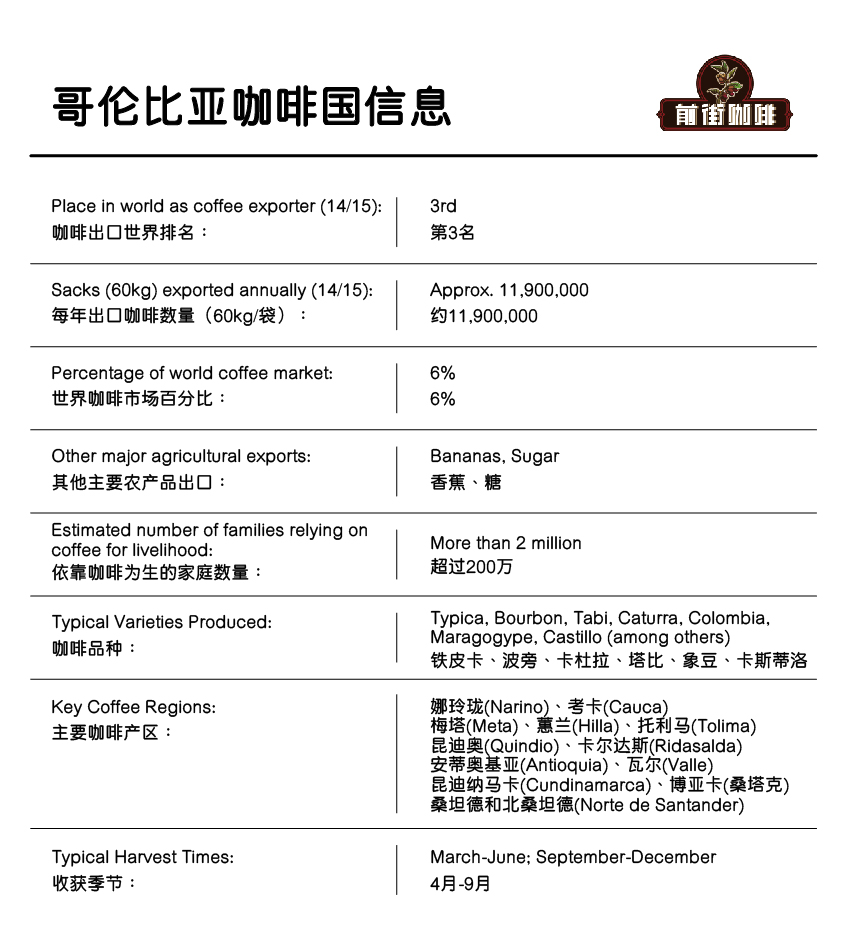
Colombian coffee is a highly representative excellent variety among Arabica coffees, and it is traditionally a dark roast with a strong, memorable flavor. Its hallmarks are a rich, thick aroma with bright, high-quality acidity, high balance, sometimes nutty notes, and an endless aftertaste. In both appearance and quality, Colombian coffee is of superior grade.
Volcanic Soil + Family Operations
Legend has it that coffee was introduced by missionaries in 1730 from Venezuela and planted in the southeast of the country. Later, civil wars and politics pushed it toward the western mountains. Under the ideal combination of altitude and volcanic soil, Colombian coffee has been sought after by high-end consumers in the United States and Japan since the 1940s, and the cherries must be fully ripe before hand-picking. Growers cherish the land they live on, practicing moderation from fertilizer choice to land clearing, which leaves the soil less fatigued. Besides coffee, locals plant tall trees or banana trees around the coffee plants, building shade for the seedlings so the trees get the cool, humid environment they need. High humidity and small temperature swings in the coffee forest slow maturation. Beyond natural conditions, another main reason Colombian beans outrank Brazilian ones is family operation: with no heavy machinery for harvest or irrigation and no spare money to hire workers, every cherry is hand-picked, which benefits the accumulation of caffeine and aromatic compounds and yields the best quality.

Colombian Coffee Growing Regions
Colombian beans divide into commercial and specialty. Commercial growing regions cluster in central and northern Colombia, mostly on large corporate farms. The famous ones are the "MAM" trio: Medellin, Armenia, and Manizales, whose main flavor is the familiar Central American profile with strong fruity acidity. Bucaramanga, in the northeastern province of Santander, is known for low acidity and a strong bitter aroma, somewhat like Indonesian Mandheling, a phenomenon that may come from its lower altitude, which reduces acidity.
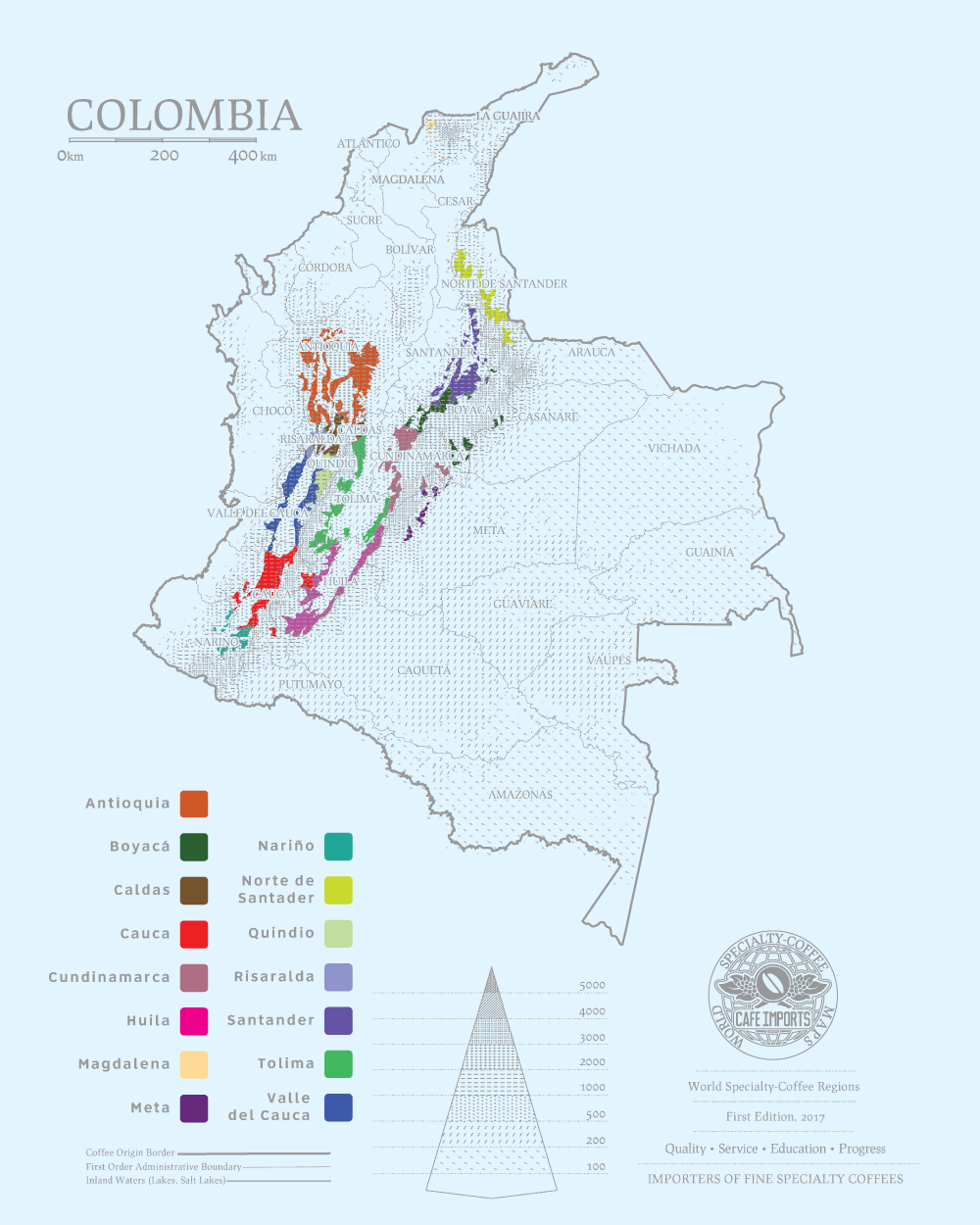
Specialty growing regions lie mainly in the south, at altitudes around 1500 meters and above, where many volcanoes create famous regions including Cauca, Huila, Meta, Tolima, and Narino. The main flavor is caramel aroma with delicate berry fragrance and acidic aroma, and noticeable sweetness.
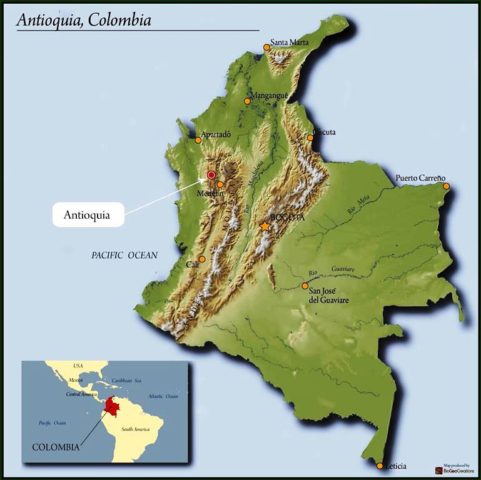
Antioquia
Antioquia Province lies in north-central Colombia, with 126,000 hectares of coffee that produce beans accounting for 18% of national output, second only to Huila. Most of the province is high mountain terrain belonging to the Andes, tempered by warm Caribbean Sea breezes. The capital, Medellin, is Colombia's second-largest city and an important coffee region. For many years Antioquia was the country's "Wild West," first settled almost entirely by gold miners, before becoming one of Colombia's most important coffee regions in the latter half of the 19th century.
Choco
Most of Choco's coffee grows near the municipality of El Carmen de Atrato, separated from the fertile coffee hillsides of southwestern Antioquia by only a steep ridge. This is a biodiversity-rich area and one of Colombia's most remote, having suffered violence and isolation in the past because of the presence of the Revolutionary Armed Forces of Colombia.
Choco's coffee region lies within the mountains bordering Antioquia, with no other viable route to move coffee out. As a result, almost all Choco coffee is processed in Antioquia.
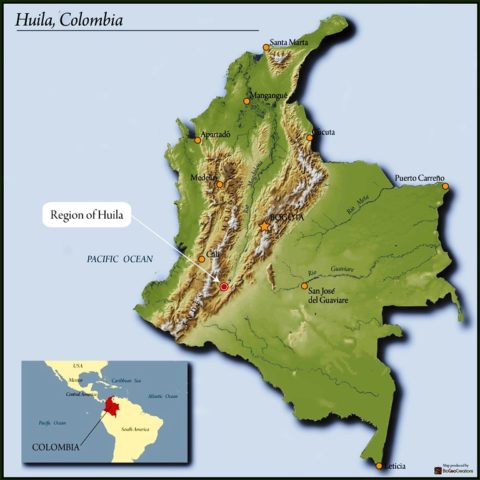
Huila
Huila Province lies in the southern part of Colombia's central mountain range and is the country's most famous specialty coffee region. It is hilly terrain ringed by mountains, with growing altitudes above 1500 meters, and Colombia's most important rivers converge here, bringing abundant water and water vapor.
Contrary to the general impression of balanced, smooth bulk Colombian coffee, many small-farm micro-lot Colombian specialties have distinctly regional flavors. In recent years, as the international market has emphasized quality and demanded specialty coffee, the old system of grading purely by bean size has gradually given way to micro-regional production organizations that supply micro-lots from small farmers, with dozens of growers contributing individual harvests to form a lot for sale. This makes it far easier to find many high-quality specific small-farm coffees through lot-by-lot cupping.
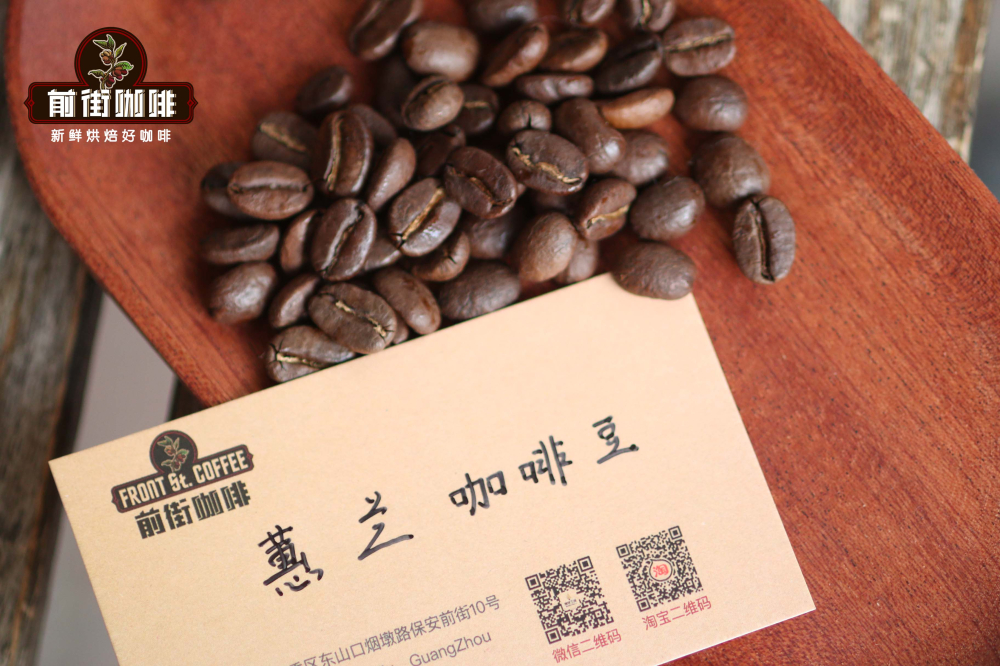
FrontStreet Coffee · Colombian Washed Huila Coffee Beans
Region: Colombia
Variety: Caturra
Processing Method: Washed
Roast: Medium-Dark Roast
Altitude: 1500-1800m
Roasting Suggestions
This FrontStreet Coffee Colombian Huila bean is dense, uniform in size, and relatively full in shape. FrontStreet Coffee's roaster wants to express nuts, dark chocolate, and caramel, so after first crack the heat was adjusted and the roast time extended, discharging at 3'00", 202℃.
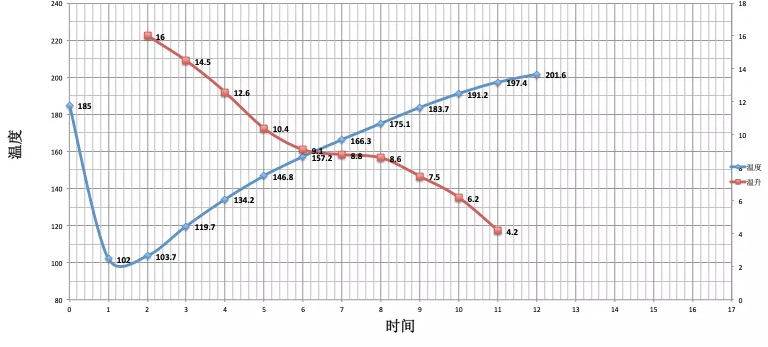
When the drum reaches 185℃, charge the beans, open the air damper to 3, set heat to 120; the turnback point is at 1'32", 98.6℃. When the drum reaches 140℃, open the air damper to 4; at this point the bean surface turns yellow, the grassy smell disappears, and dehydration begins. When the drum reaches 192℃, adjust the heat to 80 and open the air damper to its maximum of 5; at 8'30"
ugly wrinkles and black spots appear on the bean surface and the toast smell clearly turns to coffee aroma, the prelude to first crack. Listen carefully for the crack, which starts at 9'15"; develop for 3'00 after first crack and discharge at 202℃.
Brewing Parameters
Filter: KONO filter
Water Temperature: 86-87℃
Dose: 15g
Ratio: 1:15
Grind Size: 75% through #20 sieve

Brewing Method
Segmented extraction
First segment: use 30g of water for the bloom, about 30 seconds. Second segment: pour to 125g, then wait for the water level to drop until the bed is about to be exposed before pouring the third segment to 225g. Remove the filter when the level is about to expose the bed (timing starts from the bloom). Extraction time is 2'00".
Flavor Description
Overall quite balanced, with noticeable sweetness. Entry brings dark chocolate, nuts, and caramel, with gentle fruity acidity at different temperatures.

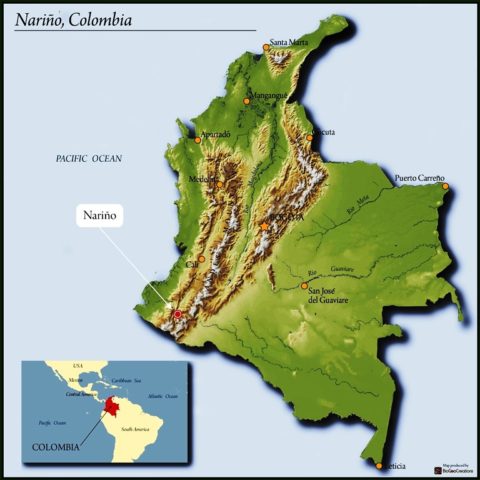
Narino
Narino Province lies in the southwest of Colombia, bordering the Pacific Ocean to the west and Ecuador to the south, with the Andes running through the entire province. Coffee is grown in the high-altitude cloud belt at 1600-2300 meters in fertile volcanic soil, producing small but full beans of emerald green color. Most of Narino's annual production is bought by large American bean merchants. The province's magnificent mountains, beautiful scenery, and many south-flowing rivers make it part of Colombia's high-mountain coffee zone, nurturing many smallholders of specialty coffee. Narino's total annual production is about 150,000 bags, of which only about 6,000 bags are specially selected beans.
Santander/North of Santander
Santander is a famous producing area in northern Colombia, bordering the Magdalena River to the west, with growing altitudes around 1400-1600 meters. Beans from here are known for strong flavor, a long aftertaste, and a unique fresh herbal note. The area grows large amounts of Typica, most of it Rainforest Alliance certified. The climate is relatively dry, with lower altitude.

FrontStreet Coffee · Colombian Rose Valley Coffee Beans
Estate: Colombian Big Tree Estate
Region: Santander Region
Processing Method: Anaerobic Double Enzyme Washed
Altitude: 1700m
Variety: Caturra
Roasting Suggestions
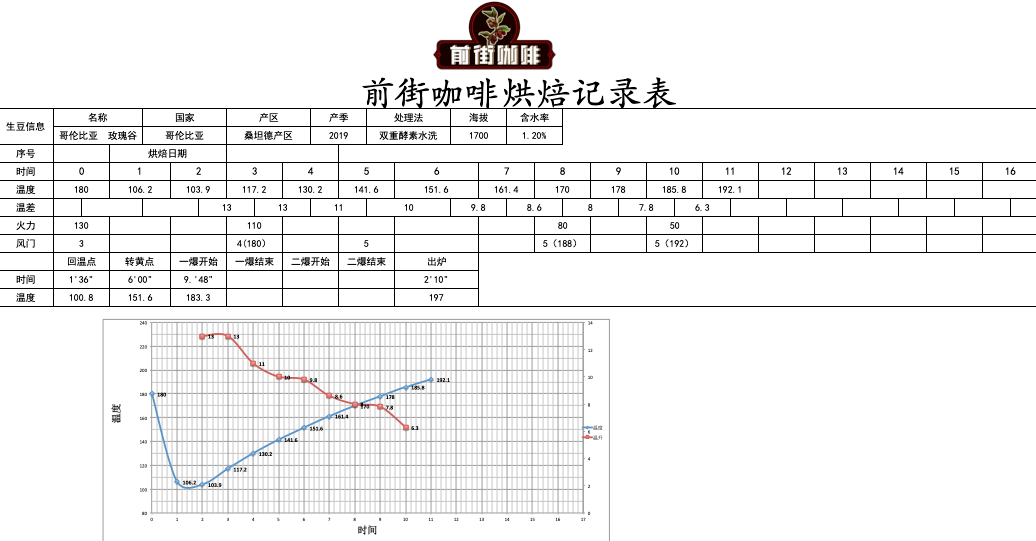
Input Temperature: 180℃, Yellowing Point: 6'00", 151℃, First Crack Point: 9'48", 183.3℃, Development after First Crack: 2'10", Discharge at 197℃.
Brewing Parameters
Filter: Hario V60
Water Temperature: 90-92℃
Dose: 15g
Ratio: 1:15
Grind Size: 80% through Chinese standard #20 sieve
Brewing Method
First segment: use 30g of water for the bloom, about 30 seconds. Second segment: pour to 125g, then wait for the water level to drop until the bed is about to be exposed before pouring the third segment to 225g. Remove the filter when the level is about to expose the bed (timing starts from the bloom). Extraction time is 2'00".

Flavor Description
Floral aroma, bright acidity, prominent acidity and sweetness, a juice-like mouthfeel, and notes of grape, strawberry, and green plum.
Sierra Nevada
On the Caribbean side of the northern branch of Colombia's Andes lies the Sierra Nevada range, the country's highest, with peaks snow-covered year-round. Specialty beans from this mountainous area take the range's name. Its fame has grown in recent years. The beans produced are purchased by FNC (Colombia's national coffee institution), and farmers organize cooperatives, using Sierra Nevada or Snow Cap as the small-region name for outside sales.

Tolima
Tolima borders Huila and Cauca, with the north-south Andes (M. Andes) and Cordillera (M. Cordillera) running through it, and between the two mountain systems flows the Magdalena River (R. Magdalena) from south to north.
The name Tolima comes from the earliest people who lived here, the "Pijao," in whose ancient language tolima means "snow-covered," "snowed." Tolima farms are generally a little larger than in other southern Colombian regions, about 10-15 hectares. Cooperatives are common here too, with farmers sending small lots of fresh cherries to cooperative processing plants. Some farmers process their own, using small-scale facilities that handle a day's harvest.
FrontStreet Coffee · Colombian Geisha Coffee Beans
Country: Colombia
Region: Tolima
Altitude: 1,860M
Processing Method: Washed Processing
Grade: SUPREMO
Variety: Geisha
Roasting Suggestions
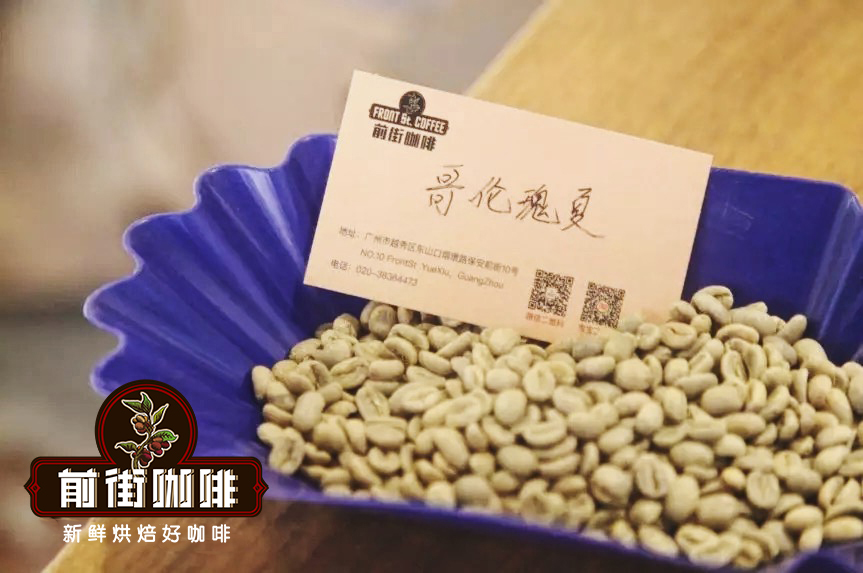
This FrontStreet Coffee Colombian Geisha comes from a relatively high altitude and has a harder bean. To highlight its characteristics and aroma, we chose a light roast, which expresses the bean's inherent character better, using medium heat for dehydration.
Yangjia 800N Roaster (300g batch)
When the drum reaches 180℃, charge the beans, open the air damper to 3, and after 30 seconds adjust the heat to 150 with the damper unchanged; the turnback point is at 1'36". When the drum reaches 140℃, adjust the heat to 130 and open the air damper to 4; at this point the bean surface turns yellow, the grassy smell disappears, and dehydration begins. When the drum reaches 166℃, adjust the heat to 110℃ with the damper unchanged;

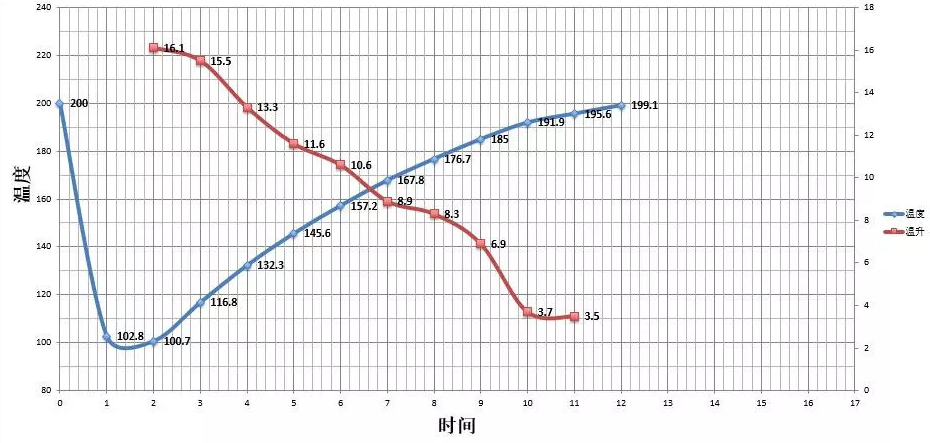
At 7'50", ugly wrinkles and black spots appear on the bean surface and the toast smell clearly turns to coffee aroma, the prelude to first crack. Listen carefully for the crack, which starts at 8'20"; adjust the heat to 50℃ and the air damper to 5 (adjust heat with great care, never so low that cracking stops), develop for 1'30" after first crack, and discharge at 190℃.
Brewing Parameters
Filter: Hario V60 or Wave filter
Water Temperature: 90-92℃
Ratio: 1:15
Grind Size: 80% through Chinese standard #20 sieve

Brewing Method
First segment: use 30g of water for the bloom, about 30 seconds. Second segment: pour to 125g, then wait for the water level to drop until the bed is about to be exposed before pouring the third segment to 225g. Remove the filter when the level is about to expose the bed (timing starts from the bloom). Extraction time is 2'00".
Flavor Description
While brewing you can smell citrus acidity and a green-tea-like fresh aroma. When hot, sucrose and licorice sweetness are obvious, with some lemon acidity and an oolong-tea aftertaste, somewhat like a cup of lemon tea. As it cools, citrus becomes obvious, with a honey and sucrose aftertaste that lasts a long time. Once fully cool, it feels like honey green tea.

Cauca
Cauca Province is a Colombian origin-certified region with an average altitude of 1758m, reaching as high as 2100m. Its topography, rainfall, temperature, and volcanic soil suit coffee. 80% of it is mountainous, with parallel ranges in the east and center that belong to the Andes, and the central range includes two main volcanoes, Sotara and Petacas. Like other southwestern regions, Cauca's rainfall shows a clear unimodal pattern, with the dry season mainly from August to September each year. The following rainy season brings concentrated flowering, and then a concentrated harvest the next year.
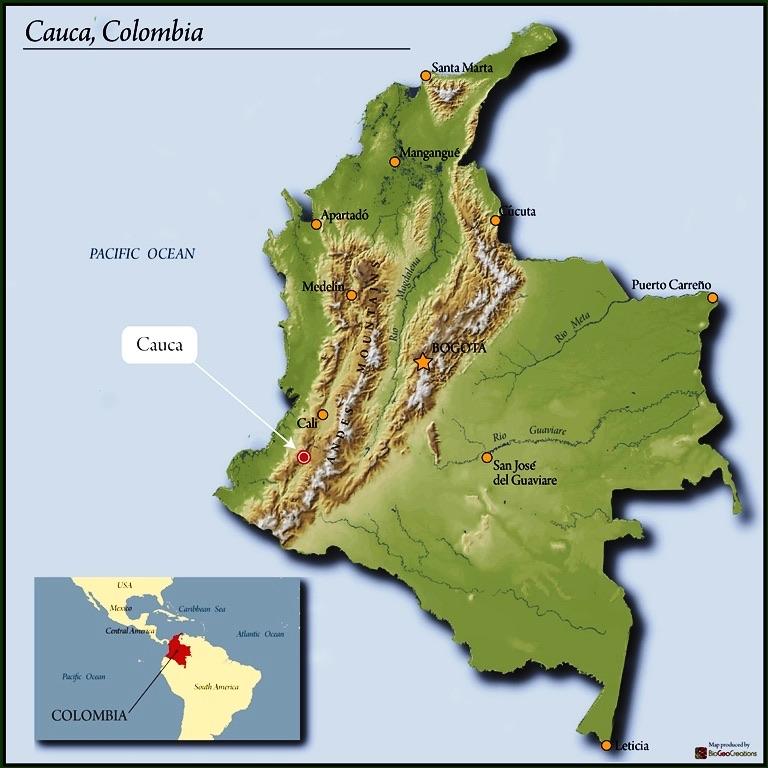
The biggest climate difference from other regions is probably the relatively large temperature swing. The daily average is 11℃, while the daytime average is 18℃. That day-night difference is an important factor in forming high-quality coffee. Low night temperatures and the relatively high altitude slow the growth rhythm, letting the seeds and beans absorb nutrition from the cherries more fully and creating both Cauca's better acidity and its renowned special sweetness.

FrontStreet Coffee · Colombian Cauca Paraiso Estate Pink Bourbon Coffee Beans
Country: Colombia
Region: Cauca Province
Estate: Paraiso Estate
Variety: Pink Bourbon
Processing Method: Washed Processing
Altitude: 1930m
Roasting Suggestions
Yangjia 800N Roaster (500g batch)
When the drum reaches 165℃, charge the beans, open the air damper to 3, set heat to 100; the turnback point is at 1'35". When the drum reaches 145℃, keep the heat and open the air damper to 4; at this point the bean surface turns yellow, the grassy smell disappears, and dehydration begins. At 166℃ reduce the heat to 80, and at 176℃ reduce it to 60, keeping the damper unchanged.
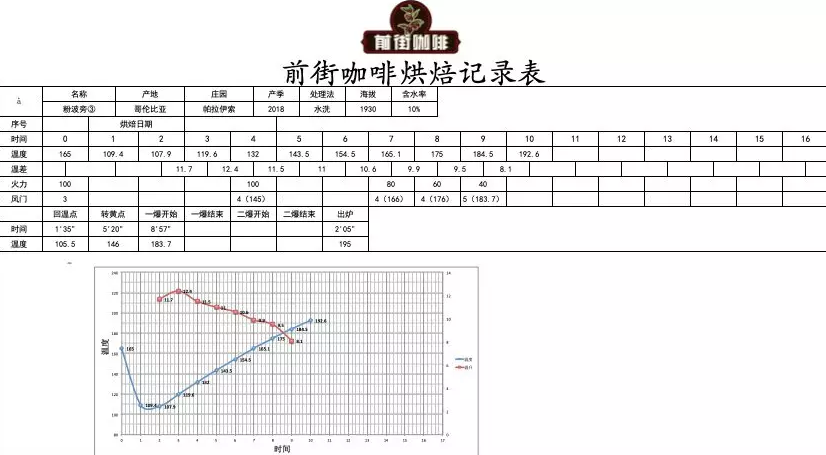
At 7'50", ugly wrinkles and black spots appear on the bean surface and the toast smell clearly turns to coffee aroma, the prelude to first crack. Listen carefully for the crack, which starts at 8'57"; adjust the heat to 40 and the air damper to 5 (adjust heat with great care, never so low that cracking stops), develop for 2'05" after first crack, and discharge at 195℃.
Brewing Parameters
Filter: Hario V60
Water Temperature: 90℃
Ratio: 1:15
Grind Size: 80% through Chinese standard #20 sieve
Brewing Method
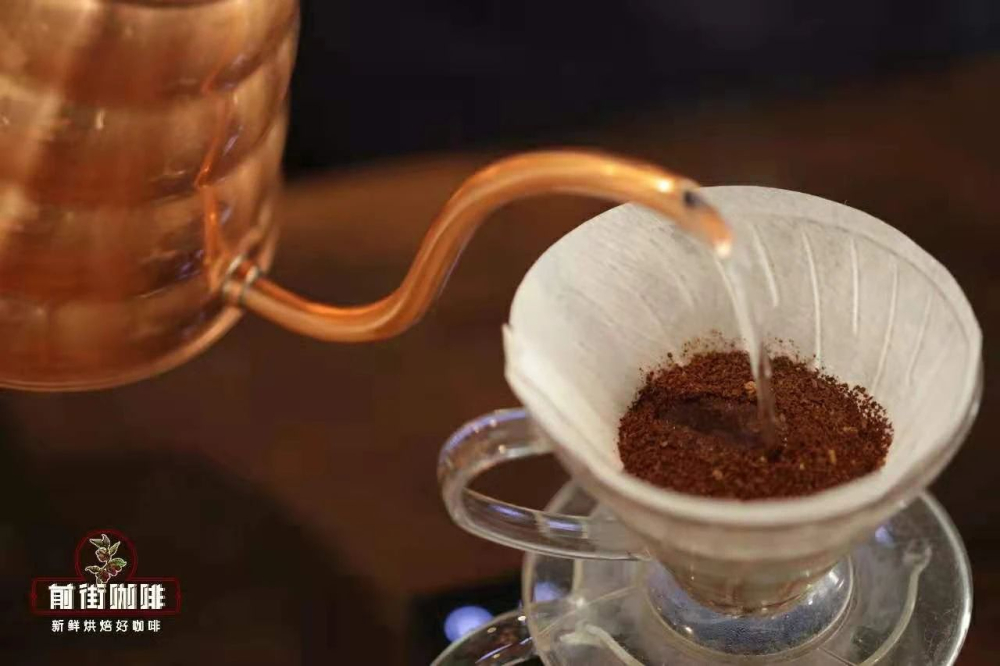
First segment: use 30g of water for the bloom, about 30 seconds. Second segment: pour to 125g, then wait for the water level to drop until the bed is about to be exposed before pouring the third segment to 225g. Remove the filter when the level is about to expose the bed (timing starts from the bloom). Extraction time is 2'00".
Flavor Description
Overall quite clean and balanced, feeling relatively light and smooth, with flavors of peach, plum, grapefruit, cream, roasted almonds, and cocoa. The tea-fragrance and floral aftertaste lasts.
Coffee Varieties
Colombia's latitude span and the influence of Andean topography divide it into three major regions from south to north: northern, central, and southern. Southern and northern regions have relatively distinct harvest seasons, while the central region has primary and secondary seasons depending on how far north or south it sits, with two harvests a year: main season from October to January, secondary season from April to July.
Besides varieties common to the Americas such as Caturra, Bourbon, Typica, and Pacamara, Colombia has three unique disease-resistant varieties: Castillo, Tabi, and the Colombia variety named after the country. There are also rare, precious varieties such as Geisha, small-grained Mocca, Rume Sudan, Eugenioides, Laurina, and Maragesa (a natural hybrid of Maragogipe and Geisha).

Early varieties planted in Colombia were old Typica and Bourbon, which began to be replaced by Caturra starting in 1970. Caturra not only yields more per plant than Typica and Bourbon but, because of its more compact shape, allows more plants per unit area.
Starting in 1961, CENICAFE began research on the Robusta-hybrid Timor variety, subsequently breeding Colombia's Catimor series from Timor and Caturra. After 5 generations of breeding, in 1982 CENICAFE released Colombia's first disease-resistant planting variety, Colombia. After the leaf rust outbreak in 1983, the Colombia variety began to be widely promoted.

CENICAFE kept developing, releasing a second disease-resistant variety, Tabi (a hybrid of Typica, Bourbon, and Timor), in 2002, and the most successful disease-resistant variety to date, Castillo, in 2005. After the massive leaf rust outbreak in 2008, Colombia began vigorously promoting Castillo planting.
Processing Methods
Most Colombian coffee is washed. Each small farming family has a small specialized processor (Ecomill or Eco-Pulper). Harvested cherries go in, and it removes not only the skin and pulp but most of the mucilage, using very little water. The parchment beans, with a little mucilage left, then go into a small pool or container, which may be a cement tank (some tiled) or a stainless-steel bucket, for overnight fermentation to loosen the remaining mucilage. The next day they are rinsed with clean water, completing the washed process.

FNC
The Colombian Coffee Growers Federation (FNC) includes CENICAFE (the Colombian National Coffee Research Center), regional grower associations across the country (Colombia has 32 Departments, 20 of which grow coffee), traders, and international roasters.
FNC's primary mission is to be the voice of Colombian coffee, committing that whenever farmers are willing to sell, FNC is willing to buy. It serves as the country's coffee ambassador abroad, marketing and promoting Colombian coffee internationally and successfully creating the "Juan Valdez" image, while also investing heavily in Colombia to support farmers' planting, production, management, and sustainable operations.

CENICAFE was established in 1938, providing technical support to FNC and dedicating itself to coffee variety breeding and to agricultural training for farmers.
For those who want to explore how Colombian coffee fits into blends and espresso, the Brazilian selections below are a natural counterpart.
FrontStreet Coffee Recommendation
Brazil's low acidity, balance, and friendly price make it a staple of Colombian-style blending and everyday drinking. These FrontStreet Brazilian offerings are a good place to start.
FrontStreet Brazil Cerrado Red Bourbon
A classic Brazilian single origin, this semi-washed Cerrado comes from one of the country's best-known high-quality regions and is a common South American Red Bourbon. Roasted medium, it gives off rich aromas of creamy peanut, toast, caramel, and hazelnut, with a rounded, non-acidic cup and a slight bitter note. It works not only as a pour-over but also in a moka pot, as an espresso SOE, in a siphon, or in a French press.
FrontStreet Brazil Queen Estate Yellow Bourbon
From Mogiana, near South Minas, where fertile red volcanic soil lets the fruit absorb abundant nutrients and develop a full aroma. Some farms here keep traditional methods while others adopt modern, standardized management, which has greatly improved local quality. The variety is the rare Yellow Bourbon, a mutation of Red Bourbon with a cleaner fruit character. Through pour-over, moka pot, or a home espresso machine, it shows a sugarcane sweetness not found elsewhere, along with fruit and chocolate flavors.
FrontStreet Black Cocoa Blend
Low acidity, balanced flavor, and an accessible price make Brazilian coffee the first choice in many espresso recipes. FrontStreet Coffee's Black Cocoa Blend, recommended by many baristas, combines Brazilian coffee with Yunnan small-bean coffee: the Brazilian portion supplies mixed-nut aroma and a balanced cup, while the Yunnan portion adds chocolate and citrus. The resulting Americano balances acidity, sweetness, and bitterness with a nutty, brown-sugar sweetness, and a latte turns smooth and creamy with almond notes. It is a fine choice for beginners.
Important Notice :
FrontStreet Coffee is a long-established specialty coffee roaster in Guangzhou China, selling freshly roasted beans from its own farm in Yunnan as well as dozens of carefully selected single-origin beans from around the world for both pour-over and espresso. The products deliver consistently excellent quality and great value, with shipping within 24 hours. Guangzhou's FrontStreet Coffee shop is recommended by many coffee lovers, and the beans are now available online at the Tmall 。
FrontStreet Coffee has moved to a new address:
FrontStreet Coffee Address: 315,Donghua East Road,GuangZhou
Tel:020 38364473
 Scan and follow the En Gafei WeChat official account. Please indicate that the reprint comes from "En Gafei".