Costa Rica Tobosi Estate Caturra Red Honey Coffee Flavor Profile and Aroma Characteristics
Coffee Processing Methods
For professional barista discussions, please follow Coffee Workshop (WeChat official account: cafe_style).
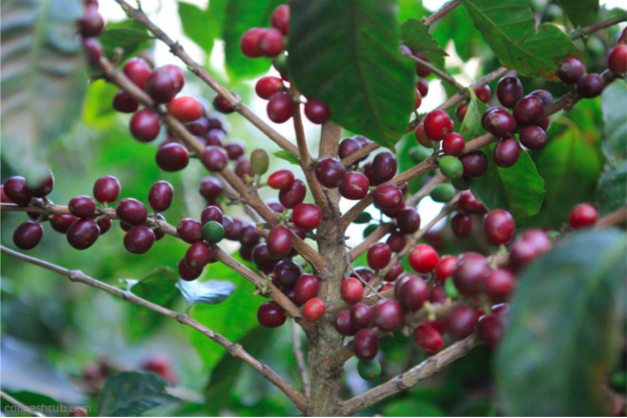
Yellow Honey Process
After removing the pulp, the beans are placed evenly on African drying racks in the early morning for sun exposure and turned immediately.
Red Honey Process
After removing the pulp, the beans are placed evenly on African drying racks in the early morning for sun exposure and not turned until after noon.
Black Honey Process
After removing the pulp, the beans are placed evenly on African drying racks in the early morning for sun exposure and not turned until after the afternoon.
Yellow Diamond
After removing the pulp, the pulped beans are spread out and sun-dried on concrete ground for one day, then covered with black plastic sheeting for shade and rested on alternate days.
As for the natural process, many more delicate flavor expressions are handled through plastic sheeting shading.
Black Pearl
The harvested red coffee cherries are placed on African drying racks in the early morning and regularly turned for sun exposure until they reach 11.5% moisture content. The entire process takes approximately two weeks.
Black Soul
The harvested red coffee cherries are placed on African drying racks in the early morning, turned regularly for sun exposure on alternate days and shaded with plastic sheeting on the others, until they reach 11.5% moisture content. The entire process takes approximately three weeks.
Meanwhile, the farm owner strictly requires all fertilization to follow organic standards. The entire farm uses homemade organic compost and extends organic standards to soil quality, shade trees, and wet-mill processing procedures. After years of effort, Las Lajas Estate has obtained Japanese JAS, American USDA, and NOP organic certifications.
FrontStreet Coffee sells this coffee as 227g of roasted, sugar-free beans with a 90-day shelf life, roasted in Costa Rica medium.
Country: Costa Rica
Grade: SHB
Region: Tarrzu
Roast Level: Medium roast
Processing Method: Red honey
Varieties: Caturra, Catuai
Processing Mill: Tobosi Estate
Flavor: brown sugar, almond, black tea
Costa Rica was the first country in Central America where coffee was introduced for cultivation, with a long history and a complete system from production to sales. Located on the Central American isthmus, the country has numerous volcanoes and the natural advantages of sunshine and land. The climate is moderated by Pacific and Atlantic ocean currents and sea breezes, producing coffee with the characteristics of the local microclimate and terroir. In quality and quantity, Costa Rican coffee has always been recognized worldwide and is rated as one of the world's high-quality coffees.
The fertile volcanic ash, mild and suitable temperatures, and stable, abundant rainfall of Costa Rica's volcanic terrain all contribute to coffee being one of the country's main agricultural products. The seven major producing regions are Tarrzu, Tres Rios, Orosi, Central Valley, West Valley, Turrialba, and Brunca.
Tobosi Estate Costa Rica
Established in 2010, Tobosi focuses on providing high-quality specialty coffee with the goal of becoming a leader in specialty coffee supply. It strives to ensure all products are made under transparent systems with complete traceability records so customers receive the best products. All premium services and manufacturing processes follow environmental protection principles. To achieve this, Tobosi planned two estates: Tobosi and Copey. Tobosi was originally for ornamental plants while Copey was secondary forest, but based on altitude differences and soil analysis, Tobosi selected the areas most suitable for expressing coffee characteristics. The estate is managed on environmental protection principles, with environmental testing and soil analysis for each area to ensure ideal development and adequate nutrition for the beans. Through complete manual harvesting, the estate better understands cherry maturity and tracking management, while customers can further understand quality, harvest time, and all related processes.
Villalobos originates from the San Ramon mutation of Typica, a relatively small plant that is drought-resistant and can withstand strong winds. It can be cultivated in higher-altitude areas with low rainfall, such as mountain ridges and windward sides.
Coffee Varieties from Arabica Evolution
Caturra
A natural dwarf mutant single-gene variety of Red Bourbon, with 5,000-6,000 plants per hectare, no shade required, and medium to small beans, with a higher yield than Bourbon. It was first discovered in Brazil in 1937, and commercial cultivation began in Minas Gerais, Brazil, in 1937. It performs best in Central America, in Colombia, Costa Rica, and Nicaragua. Altitudes of 1500-1700 meters produce the best quality and quantity.
Caturra's characteristics are bright acidity and low to medium body. It has less clarity and sweetness than its parent Bourbon, with medium to upper cup quality, featuring lemon or citrus acidity. In sweetness it cannot compare to Typica and Bourbon, because Caturra's sweetness depends on the frequency and dosage of fertilization by growers. It has high production capacity, but maintaining production requires continuous fertilization and pruning, resulting in short trees with many branches and a compact form. The slightly serrated green leaves are relatively broad. Although production capacity increases, the 2-year harvest period, higher care costs, and extreme susceptibility to leaf rust, berry disease, and nematode infections still limit production.
Caturra: citric acidity and mild sweetness
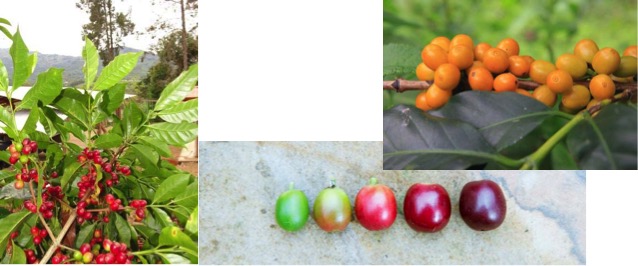
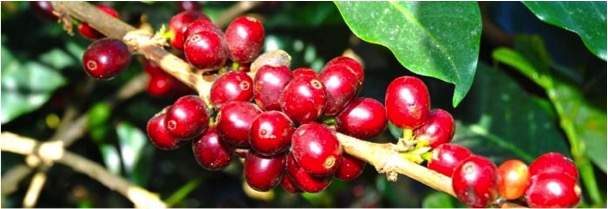
Casiopea (Interspecific Hybrid Variety from Caturra)
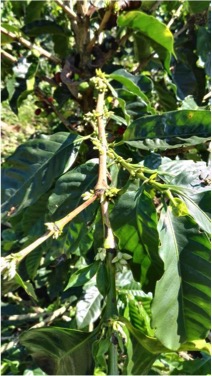
A hybrid of Caturra and the Ethiopian wild variety ET41, dwarf, green top, medium to large beans, excellent cup quality, producing the best quality and quantity at 1200 meters altitude.
High yield but susceptible to leaf rust, berry disease, and nematode infections, with high nutrient requirements.
H3 (Interspecific Hybrid Variety from Caturra)
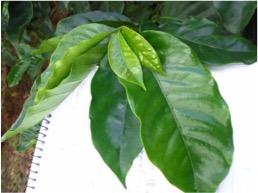
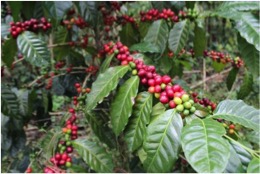
A hybrid of Caturra and the Ethiopian wild variety E531, dwarf, green top, large beans, medium to upper cup quality, suitable for cultivation above 1200 meters altitude.
High yield but susceptible to leaf rust, berry disease, and nematode infections, with high nutrient requirements.
Coffee Tasting Notes
Dry Aroma: rum, papaya, raisins, berries
Wet Aroma: tropical fruits, Asian pear, pineapple, black cherry
Slurping: rich wine aroma, wild berry jam, dried mango, muskmelon, with a mix of some dry spices and floral notes.
Costa Rica Tobosi Estate
Coffee Bean Region: Copey
Estate Established: 2010
Estate Size: approximately 91 hectares
Cultivation Area: approximately 67 hectares
Annual Rainfall: 2000-3000 mm
Average Annual Temperature: approximately 19°C
Cultivation Altitude: 2000 meters
Coffee Varieties: Villalobos
Grading Standard: SHB
Soil Type: volcanic soil
Coffee Processing Method: natural process
Harvesting Method: manual harvesting
Tobosi Estate
Tobosi Estate in Costa Rica has always focused on providing high-quality specialty coffee. Its cultivation and production are based on the founder's environmental protection principles, insisting on high-quality manual picking, with excellent management of cherry maturity and tracking.
Honey Processing Method
The key to the honey processing method lies in the amount of pulp retained. The more retained, the more obvious the honey characteristics, but the higher the risk of over-fermentation. The characteristics of various coffees marketed as "Honey Coffee" vary with conditions such as the local climate (sunshine, rainfall probability, air humidity) or the processor's preferences.
Red Honey: about 25% of the mucilage is removed; compared with yellow honey, drying time is longer and direct sun exposure is reduced, even using shade nets, lasting about 12 days.
Flavor Profile
Honey, lime, orange blossom, white chocolate, with good sweetness, gentle fruit acidity, a round and full body, and a persistent aftertaste.
Pour-Over Brewing Parameters
15g coffee, medium grind (Fuji Royal's burr grinder #4), V60 dripper, 88-89°C water temperature. First pour 30g of water for a 27-second bloom, then pour to 105g and pause. Wait until the water level drops to half before continuing to pour slowly until reaching 225g. Discard the tail section. Water-to-coffee ratio 1:15, extraction time 2:00.
FrontStreet Coffee Recommendation
To taste the red honey process at its best, FrontStreet Coffee recommends its Costa Rica Mozart, which uses an innovative raisin honey method that keeps 100% of the mucilage and brings out osmanthus, pineapple, and raisin notes. It works beautifully as a pour-over, cold brew, or moka pot coffee. For a darker, berry-forward honey profile, FrontStreet Coffee's Costa Rica Blackberry, a black honey processed bean, offers grape and ripe blackberry flavors.
Important Notice :
FrontStreet Coffee is a long-established specialty coffee roaster in Guangzhou China, selling freshly roasted beans from its own farm in Yunnan as well as dozens of carefully selected single-origin beans from around the world for both pour-over and espresso. The products deliver consistently excellent quality and great value, with shipping within 24 hours. Guangzhou's FrontStreet Coffee shop is recommended by many coffee lovers, and the beans are now available online at the Tmall 。
FrontStreet Coffee has moved to a new address:
FrontStreet Coffee Address: 315,Donghua East Road,GuangZhou
Tel:020 38364473
 Scan and follow the En Gafei WeChat official account. Please indicate that the reprint comes from "En Gafei".