What is "Golden Mandheling"? And What Kind of Bean is Aged Golden Mandheling?
When it comes to Mandheling coffee, everyone knows that Indonesia's most famous beans are the Golden Mandheling produced by the PWN company. Yet this bean was not originally a PWN product at all — it was the creation of the Japanese. So why, when people hear "Golden Mandheling," does their first reaction point to Indonesia's PWN rather than a Japanese company? In this article, FrontStreet Coffee answers these questions one by one.
The Origin of Mandheling Coffee Bean and Golden Mandheling Coffee Bean Names
As the representative coffee of Sumatra, Mandheling was originally a tiny place name that gradually evolved into the name of an ethnic group — the Mandheling people. Today it stands among the most famous single-origin coffees in all of Indonesia. Many people have heard the story of how the name came about; although it remains a "rumor" whose exact path into coffee vocabulary nobody knows for certain, its enormous popularity in Japan is an indisputable fact.
The fame of Mandheling coffee stems from the successful marketing of the Pawani Coffee Company (abbreviated as PWN) in Japan. Pawani is a trading company specializing in export business, founded by a Chinese family from Quanzhou, Fujian. Based in the key Sumatran port city of Medan, it has traded since 1957 — rubber, cassia seed, cloves, patchouli oil, and of course Sumatran coffee beans bound for Japan. Unlike many local Indonesian green-bean merchants, Pawani is an exclusive supplier of high-grade Mandheling, and every lot it produces is of superior quality.
The quality of FrontStreet Coffee's Golden Mandheling lies in PWN's three rounds of manual hand-selection of G1-grade Mandheling green beans. G1 grade means bean size is strictly held above screen 18, with fewer than 3 defective beans per 300-gram sample of green beans. The repeated screenings drive the defect rate down to a minimum, yielding cleaner sweetness and more intense aroma.

Back then, having recognized the potential of Sumatran coffee, the Japanese intended to buy it long-term but found the bean quality inconsistent. They therefore paid close attention to the production process, establishing strict screening and defect-removal standards — including density, size, shape, and color. All green beans passed both machine and manual sorting to remove defects, ensuring complete, uniform, large, translucent beans with reduced earthy and grassy flavors. This top-graded product was named Golden Mandheling.
However, because Golden Mandheling had been registered as a trademark by Pawani ahead of time, every Japanese company importing this coffee had to drop the name. The Japanese importers accordingly renamed their product "Gold Top Mandheling" — known in Chinese as Top Golden Mandheling.

How Does Indonesian Top Golden Mandheling Taste? And What's the Difference from PWN Golden Mandheling?
As FrontStreet Coffee understands it, both Top Golden Mandheling and the PWN Golden Mandheling on our menu come from strictly selected premium lots in northern Sumatra, where harvesting is limited to fully manual, single-berry picking of fully ripe cherries to guarantee quality from the start. The cherries are processed by the wet-hulled method, followed by further drying refinement, two rounds of green-bean cleaning, and four rounds of manual selection — so both beans qualify as meticulously sorted premium Mandhelings.
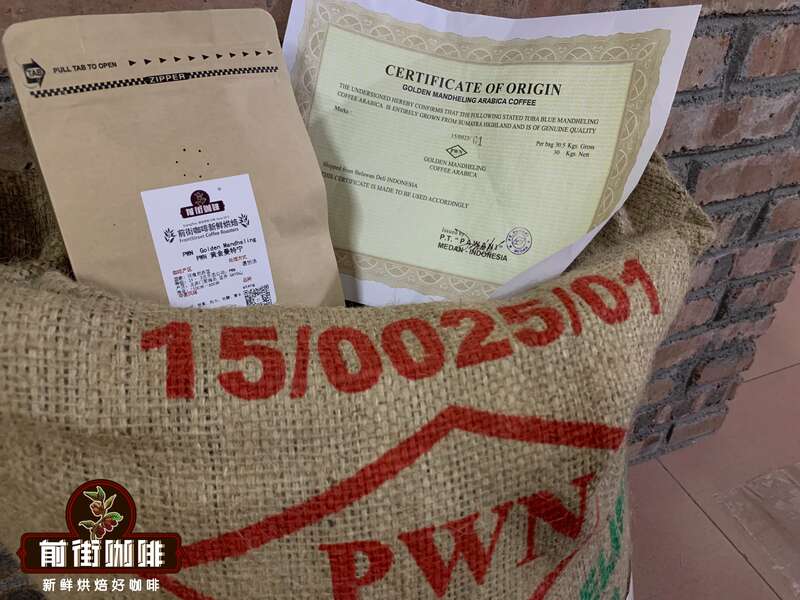
The only real distinction is the trademark: "Golden Mandheling" belongs exclusively to Indonesia's Pawani Coffee Company, so apart from the brand, the flavor difference between the two beans should not be significant. Next, FrontStreet Coffee shares the details and flavor of the PWN Golden Mandheling we carry in our store.

FrontStreet Coffee PWN Golden Mandheling Coffee Beans
Country: Indonesia
Region: Sumatra, Aceh, Mount Gayo
Altitude: 1100-1600m
Variety: Ateng
Processing: Wet-Hulled Method
Flavor: Toasted bread, nuts, pine, caramel, herbal
FrontStreet PWN Golden Mandheling Production Region
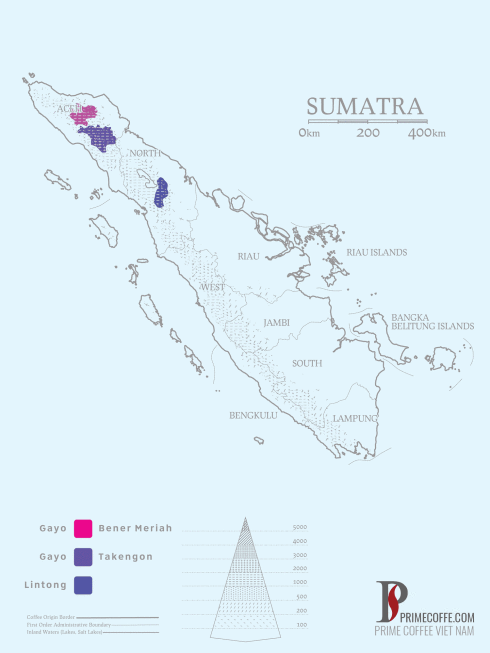
According to the information on FrontStreet Coffee's latest PWN Golden Mandheling, PWN selected a new production region in 2020: Mount Gayo in the Aceh region at the northernmost tip of Sumatra. Coffee cultivation there centers on the town of Takegon and the slopes beside Lake Tawar, at altitudes averaging 1,100–1,600 meters, and its coffee quality has always been excellent.
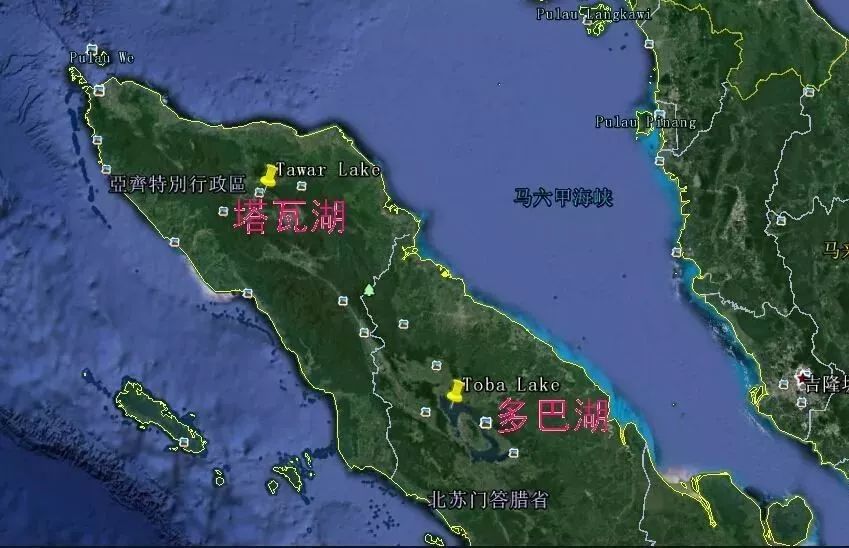
Previously, political instability in the region made its coffee difficult to export. In recent years the situation has stabilized, cultivation in Aceh has developed, and quality now surpasses even the traditional Lintong region — clear recognition of the quality of Mount Gayo's cherries. As Indonesia's top coffee brand, FrontStreet's PWN Golden Mandheling will not disappoint coffee enthusiasts.
FrontStreet PWN Golden Mandheling Coffee Variety
Mandheling coffees are generally pure Arabica, but Arabica's pest resistance is weak. Therefore, in October 2020, Indonesia's PWN company abandoned the original Typica variety for Golden Mandheling and switched to the Ateng variety — which is what is commonly known in China as Catimor.

Ateng (Catimor)
Catimor is a hybrid of Timor (a Robusta subspecies) and Caturra, first developed in 1959 and promoted in Brazil through the 1970s and 1980s. Its disease resistance and high yield have earned it a firm place among Central and South American varieties, and the recurring coffee leaf rust crises there have only boosted its adoption. Its characteristics: high yield, short plants suited to dense planting, and reddish-brown new leaves. Because it matures fast and yields heavily, it demands ample fertilizer and shade — and, as FrontStreet Coffee understands, its lifespan is short, averaging only ten years.
FrontStreet PWN Golden Mandheling Processing Method
The green-bean processing for FrontStreet's Golden Mandheling is Indonesia's most characteristic method: wet-hulling (giling basah) — the very process that creates the unique earthy, herbal, and spice aromas of Indonesian Mandheling.

The method arose because the local climate is often rainy with continuous typhoons — never the reliable weather sun-drying requires — and the local economy could not afford the more expensive washed process. Wet-hulling is thus a rapid green-bean process: the cherry's skin and pulp are removed, followed by brief fermentation, partial drying, removal of the mucilage and parchment layer while the beans are still semi-dry, and continued drying until moisture reaches 12%. Wet-hulled Mandheling beans show varying degrees of compression cracks; FrontStreet Coffee considers this not a defect but an inherent characteristic of Mandheling.

Beyond Golden Mandheling, another Mandheling on the market draws attention: "Aged Mandheling." It is said to originate from Indonesia's Dutch colonial period, when people discovered that aging good coffee beans for several years would gradually eliminate acidity, leaving a solid aftertaste and sweet characteristics with flavors as captivating as Pu'er tea.
But aged beans cannot be produced by "accident" — that only adds risk to the quality. Let us be clear: "aged beans" are not simply beans left in a warehouse for years, since beans stored too long rot, mold, or suffer insect damage. Those are not aged beans — they are bad beans. The production of aged Mandheling has accordingly become standardized and mature over time.

FrontStreet Coffee Golden Mandheling Brewing Recommendations
Back to the main point: since quality Golden Mandheling is hard to come by, how do you brew its essence? Using FrontStreet's Golden Mandheling as a demonstration, here is how to extract a rich, robust cup at home.
Dripper: Kono dripper
Water Temperature: 86°C
Coffee Dose: 15 grams
Coffee-to-Water Ratio: 1:15
Grind Size: Medium-fine (EK43s grinder setting 11)
Why the Kono dripper: its few ribs sit near the bottom and the filter paper fits tightly against the wall, restricting airflow and lengthening the contact between water and grounds, so the coffee steeps fully and the mouthfeel turns rich. This dripper suits not only FrontStreet's Golden Mandheling but also medium-dark roasts like the FrontStreet Brazil Queen Estate and FrontStreet Jamaica Blue Mountain No. 1.

Brewing Method: segmented extraction
Use 30g of water for a 30-second bloom, then continue pouring in small circles to 125g and pause. When the water level is about to expose the coffee bed, pour again to 225g and stop. Once the level is about to expose the bed, remove the dripper (timing starts from the bloom). Extraction time: 2'00".
FrontStreet Coffee Golden Mandheling Flavor Description: Multi-layered, rich and clean, with high balance, strong nutty and chocolate flavors, intense spice and caramel aromas, fruity notes, and a persistent aftertaste.
FrontStreet Coffee Recommendation
If this Golden Mandheling becomes your daily cup, FrontStreet Coffee's Sumatran range has the companions to match. The PWN company behind it has traded since 1957 out of Medan and supplies mostly the Japanese and American markets, which makes genuine PWN Golden Mandheling scarce — one reason FrontStreet's lots, complete with PWN certificates and marked jute sacks, stand apart from imitations. Brewed as pour-over at 87–88°C with 15 grams of coffee, a 1:15 ratio, a coarse-sugar grind, and three pours of 30 ml, 100 ml, and 95 ml, its medium-dark roast reveals herb, black chocolate, and toasted-bread aromatics in a thick, low-acid body.
For the wilder side of Sumatra, the FrontStreet Lintong Mandheling from the traditional zone around Lake Toba is fragrant and bittersweet, with clove and woody aromatics, low acidity, minty spice, and a strong, lasting sweetness — the earthy-herbal character that wet-hulling and local microorganisms create. And when you want that Mandheling intensity in espresso or milk drinks, the FrontStreet Classic Blend layers medium-dark Mandheling over Brazil's creamy nut base — butter, roasted chestnut, and caramel — with a touch of Robusta for richer crema, making latte art or a layered Dirty effortless for beginners and veterans alike.
Important Notice :
FrontStreet Coffee is a long-established specialty coffee roaster in Guangzhou China, selling freshly roasted beans from its own farm in Yunnan as well as dozens of carefully selected single-origin beans from around the world for both pour-over and espresso. The products deliver consistently excellent quality and great value, with shipping within 24 hours. Guangzhou's FrontStreet Coffee shop is recommended by many coffee lovers, and the beans are now available online at the Tmall 。
FrontStreet Coffee has moved to a new address:
FrontStreet Coffee Address: 315,Donghua East Road,GuangZhou
Tel:020 38364473
 Scan and follow the En Gafei WeChat official account. Please indicate that the reprint comes from "En Gafei".