Coffee Flavor Profile: Costa Rica Tarrazú Dota Goddess Estate Natural Geisha Coffee
Product Information
Manufacturer: FrontStreet Coffee
Ingredients: House-roasted coffee beans
Shelf Life: 60 days
Net Weight: 100g
Packaging: Bulk coffee beans
Processing: Roasted coffee beans
Sugar Content: Sugar-free
Origin: Costa Rica
Roast Level: Light roast
Coffee Details
Country: Costa Rica
Variety: Geisha
Region: Tarrazú
Roast Level: Light roast
Processing Method: Natural process
Estate: La Candelilla Estate
Flavor Notes: Green apple, cream, vanilla, berries
The Geisha Story
Geisha is pronounced the same as the Japanese word for "geisha," which is why it is also called Geisha coffee. Because the Geisha tree grows taller than typical coffee trees, it was originally planted in a small corner of the estate and used as a windbreak. The owner's son, looking for the finest varieties to enter the annual Best of Panama competition, tested every coffee variety on the estate, and that gave Geisha its chance to shine. Since then it has competed around the world and won a total of eleven championships.
The Geisha variety was discovered in the Geisha forest of Ethiopia in 1931 and then sent to the Coffee Research Institute in Kenya. In 1936 it was introduced to Uganda and Tanzania, and in 1953 Costa Rica took it in, though it drew little attention until Don Pachi brought it from the small town of GESHA in southwestern Ethiopia to Costa Rica. Later Geisha traveled the southern route into Panama, where Hacienda La Esmeralda separated it from the other varieties and won the national coffee championship.
Geisha has full sweetness, an extremely clean cup profile, and rich aromas running from berries and citrus to mango, papaya, and peach. A very distinct bergamot-like aftertaste is also one of its typical cupping characteristics. To this day Geisha remains the champion among coffee varieties.
About La Candelilla Estate
La Candelilla lies in the Dota area within Costa Rica's most famous coffee region, Tarrazú, which is known specifically for producing micro-batch Geisha.
As early as 1865 the Dota area already had a reputation for excellent Costa Rican coffee. Because highway construction reached from the capital down to the Dota valley through the Tarrazú area, when the Costa Rican Coffee Institute later designated growing regions it habitually marked the area as Dota Tarrazú. The terrain is classic highland, which makes it an excellent choice for coffee in both soil and temperature and humidity terms.
La Candelilla Estate was established in the 1960s. Its owner and Pachi Serracin, now famous as the father of Panamanian Geisha, were good friends at the time. Pachi Serracin brought the Geisha variety from CATIE, the world's largest coffee species and variety research station, in Costa Rica to Panama. Because Geisha could resist two types of coffee rust, the fungus that harms coffee trees, he planted it on his own estate and distributed it to other estates (including Hacienda La Esmeralda). Geisha's yield was very low, though, with poor economic returns, so it could only be sold blended with other beans. Many estates had a few Geisha trees, and some even used them as windbreaks in the coffee fields. Only after 2000, when Peterson of Hacienda La Esmeralda discovered Geisha's charm, did it become an overnight success.
La Candelilla grows its coffee organically, using local native trees and fruit trees as shade. The fertilizer is made from coffee cherry pulp mixed with honey, combined with mineral-rich soil from nearby mountains and fermented with microorganisms to create an organic fertilizer that strengthens the coffee's disease resistance. The estate also uses California earthworms to make potting soil, which serves as the main nutrient source for the trees during fertilization periods, while several coffee varieties are grown intermixed.
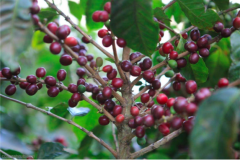
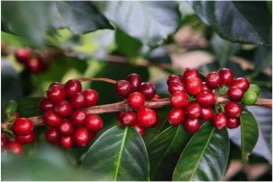
All coffee is hand-picked, selecting only fully ripe red-purple berries. In post-processing, the soaking and fermentation are strictly controlled to develop a very particular humidity-based processing method. The precise degree of fermentation, not too much and not too little, achieves an excellent balance between clarity and complexity, letting the flavors show better stability and revealing Geisha's very special characteristics layer by layer. It is genuinely intoxicating.
Flavor Description
Green apple, cream, vanilla, berries, and dark berry flavors with a multi-layered sweet-and-sour resonance.
Pour-over Parameters
Pour-over. 15g of coffee, ground to medium-fine (Komachi Fuji 3.5 grind setting), V60 dripper, water temperature 91-93°C. First pour 30g of water, bloom for 27 seconds. Pour to 105g, then pause. Wait until the water level in the coffee bed drops to half, then continue pouring slowly until you reach 225g in total. Avoid the tail end. Water-to-coffee ratio 1:15. Extraction time 2:00.
FrontStreet Coffee Recommendation
For anyone drawn to Geisha's jasmine-and-citrus profile, FrontStreet Coffee's Panama Boquete Geisha is the easiest entry. Panama's Boquete region is where Geisha first became famous, and this estate-level lot is planted at 1600 meters, where the misty mountains, humid days, cool nights, and the fertile volcanic soil of Volcán Barú feed the trees. In the cup it shows Geisha's signature jasmine, green tea, honey, citrus, and orange.
For the estate that started it all, FrontStreet Coffee's Esmeralda Red Label Geisha is the highest tier: formally Esmeralda Special, picked from a single plot above 1700 meters, cupping above 90 points, and carrying its own batch number so buyers can follow the fine differences between plots. FrontStreet's Red Label comes from the Jaramillo plot and shows a refined orange-blossom honey character with strong aromatic layering. The Esmeralda Green Label, formally "Private Collection," is blended from several plots instead and focuses on the estate's signature high-altitude Geisha style, which makes it the value option in the range while keeping the classic Panama Geisha character intact.
If you want to explore Geisha at its Ethiopian origin, FrontStreet Coffee's Geisha Village Gold Label is worth the step up. Geisha Village grows three Geisha lines, Gori Gesha, Geisha 1931, and Illubabor Forest, and grades its coffee into Gold Label Rarities, Red Label Growers Reserve, Green Label Single-Terroir, and Chaka lots. The Gold Label is the Geisha 1931 variety and accounts for about 10% of the village's production. Made with a refined natural process, it delivers a complex, layered cup that is striking in the dry aroma, on the slurp, and in the lingering finish.
For something more everyday, FrontStreet Coffee's Strawberry Candy is a Geisha alternative that blends Costa Rican honey processing with Panama Geisha, so the cup carries both delicate florals and sweet fruit. It is good as pour-over and equally at home in a moka pot, an espresso machine, or as a cool, refreshing cold brew.
Important Notice :
FrontStreet Coffee is a long-established specialty coffee roaster in Guangzhou China, selling freshly roasted beans from its own farm in Yunnan as well as dozens of carefully selected single-origin beans from around the world for both pour-over and espresso. The products deliver consistently excellent quality and great value, with shipping within 24 hours. Guangzhou's FrontStreet Coffee shop is recommended by many coffee lovers, and the beans are now available online at the Tmall 。
FrontStreet Coffee has moved to a new address:
FrontStreet Coffee Address: 315,Donghua East Road,GuangZhou
Tel:020 38364473
 Scan and follow the En Gafei WeChat official account. Please indicate that the reprint comes from "En Gafei".