The Complete Guide to Espresso Blend Roasting
The Art of Coffee Blending: FrontStreet Coffee's Approach
In coffee blending, post-roast blending is generally more stable than pre-roast blending, but many roasters now blend before roasting in order to solve problems with their espresso beans or single-origin blends. Some green bean suppliers even sell pre-blended lots, so roasters can simply roast them as they are. As a rule, pre-roast blending is more consistent and saves far more labour time, which is why more roasting workshops lean that way.
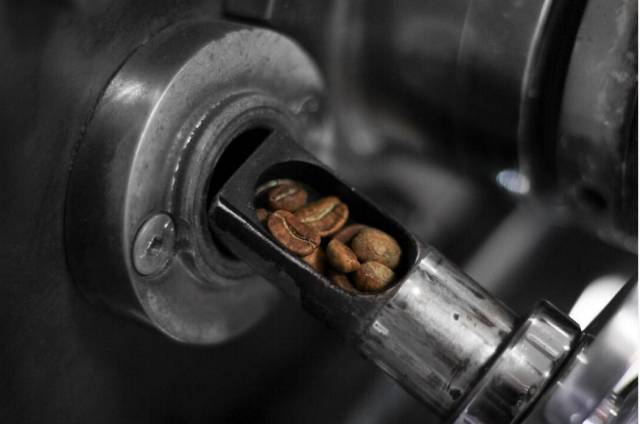
FrontStreet Coffee's "Procrastination" Blend
Take our own shop's "Procrastination" blend, built from a combination of Colombian and Ethiopian beans. We chose a high-sweetness Colombian as the base, from the Sierra Nevada de Santa Marta region near Medellín, grown between 1,300 and 2,000 meters. Before roasting we noticed it consists of Caturra and Typica, and that wide altitude range plus two different varieties suggests the green beans will vary in density. Fortunately the Supremo grade guarantees relatively round, full beans. Shapes like that make it harder for heat to reach the core during roasting, which sets up the need for a longer roast.
Although this FrontStreet Coffee Colombian Medellín is sweet and has a good mouthfeel, its aroma and front-end flavours are relatively weak and its aftertaste is only medium to short. Those two shortfalls pushed us to add another bean to fill the gap in aroma, flavour and finish. That bean is FrontStreet Coffee's Ethiopian YEKI G2, a washed coffee from Ethiopia's KAFA forest that uses greenhouse drying combined with mechanical drying, leaving beautiful, vibrant green raw beans of excellent quality. Grown at 1,600 meters, the beans look slightly longer than Yirgacheffe varieties and give a softer mouthfeel. Examine them before roasting and you see slightly outward-curving centre lines and a relatively small size, which experience tells us means heat reaches the core more easily.
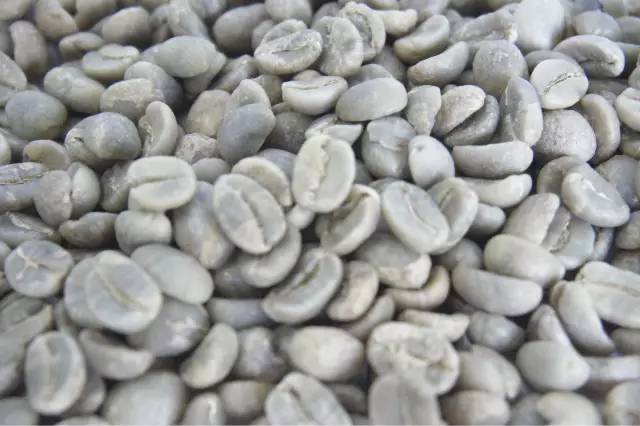
The Challenge of Raw Blending
Roasting two coffees with different heat-absorption capacity together effectively means roasting beans of three different varieties, densities, sizes and shapes at once, which is a real challenge for many beginners. Anyone who has not properly managed the relationship between water, fire and airflow can easily end up with underdeveloped beans or flat, lifeless flavour when roasting a blend like this.
Roasting Philosophy and Strategy
At this point trade-offs are unavoidable. As an espresso blend, I believe mouthfeel comes first and the beans absolutely cannot carry underdeveloped flavours, so that is what we prioritise above all when roasting. The difficulty is that we also need good front-end aromatics and a medium-to-long aftertaste, which is exactly why FrontStreet Coffee's Ethiopian YEKI went into the blend.
In our testing, the Colombian beans averaged a density of 788 kg/m³ while the Ethiopian beans measured 723 kg/m³. That large difference in green bean density means we use medium-low heat and a small air vent in the early stages for a long, gentle steaming phase, letting water molecules evaporate evenly from the beans. A small vent helps hold those water molecules inside the drum, and the drum needs to stay close to pressure balance so moisture remains stable. At this stage most of the beans' thermal energy comes from contact with the drum wall, which works better in roasters with thicker drums.
Once the beans turn completely white, we move to medium-high heat and open the vent wider, raising the proportion of hot air inside the drum so heat can pass quickly through the water molecules into the bean core. Note that the vent should not be opened too far: the more hot air you use, the harder it becomes to express the coffee's aromatics and flavours. Control too little hot air at this stage, on the other hand, and heat cannot move through the water molecules to the core quickly enough, which makes underdevelopment more likely. The vent has to be used sensibly, based on how your roaster behaves and how well you understand it.
From here, all you need to do is watch that your roasting curve does not drift far from your target first crack point. We usually enter first crack around 10 minutes 20 seconds to 10 minutes 30 seconds. Because we are dealing with three different varieties, densities, sizes and shapes, the first crack sounds come in somewhat scattered. We judge the point of dense first crack carefully, then apply high heat for about 30 seconds as the beans hit that dense cracking. This is the highest heat of the entire roast. The higher the heat at this point the better the aroma and flavour development, but heat that is too high or held too long easily scorches the ends of the beans. Better aroma and flavour development also means a shorter window in which the coffee tastes at its peak.
After this high-heat phase the dense first crack sounds stay intense, but remember that we are now at the end of first crack. At this point we cut all heat and open the vent to maximum, coasting for about one minute. We then judge how the roasted bean aroma is performing and drop the beans into cooling when the caramel aroma peaks. Note that throughout the maximum-vent coasting the beans should be in an exothermic phase, so bean pile temperature must not fall. If your roaster has a thin drum and poor insulation and the bean temperature drops, you might try not cutting the heat completely after the high-heat phase, instead reducing to low heat so the beans keep developing.
Development Rate and Espresso Performance
The stage from first crack to bean drop is normally called the development phase, and its length as a share of total roasting time is the development rate. In the roasting curve for this blend below, for example, the development time is 3 minutes 35 seconds, about 27.3% of total time, which is the development rate. For espresso blends we generally aim to control the development rate around 25%, so that even at a light roast level the oils and body suit espresso extraction well.
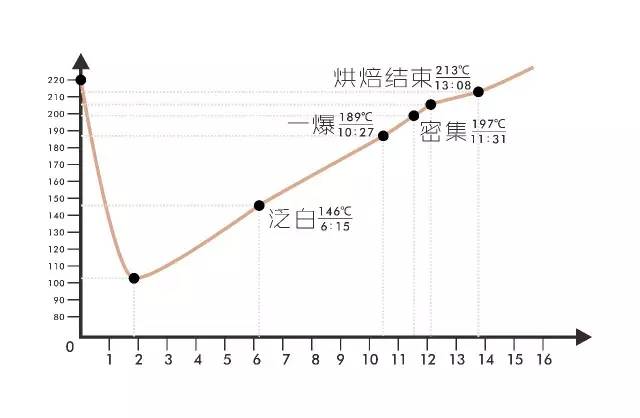
At the same time, because the roast runs medium to long, the two coffees develop along more similar lines and underdeveloped flavours are avoided. FrontStreet Coffee's Ethiopian YEKI gives up some flavour along the way, but it still keeps excellent floral and fruit notes for the espresso, while the Colombian base supplies higher body and a better mouthfeel.
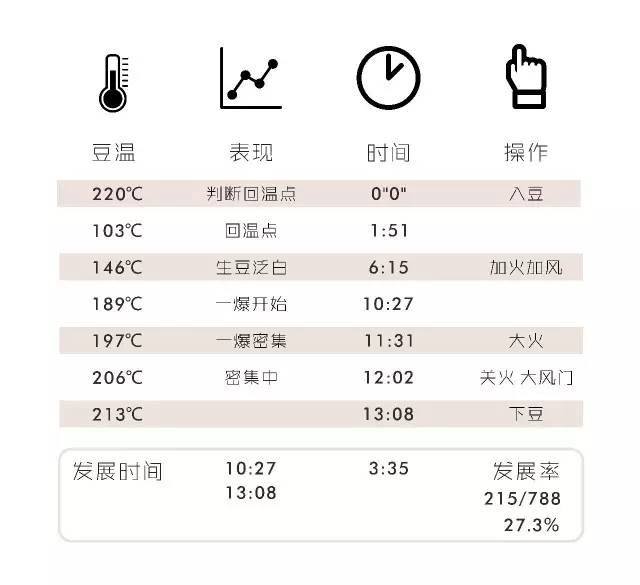
Espresso Extraction Results
Because the development rate is on the high side, this medium-roast espresso blend has good oils and thickness. Testing in our own shop on a Slayer espresso machine with a Mythos One grinder, an IMS distribution screen and a VST 15 g basket, using 14 grams of grounds at a brew head temperature of 91.6°C, pre-infusion of 3 seconds at a flow rate of 400 ml/min and 24 grams of liquid extracted in 25 seconds, the front section shows faint wild ginger florals, and the flavour carries not only caramel, roasted cocoa and chocolate but also bright, clear grapefruit and rum-like citrus acidity.
Roasting methods vary from roaster to roaster, of course, and all curves and recipes can only ever be a reference. In roasting, I believe the most important thing for a roaster is a personal roasting philosophy. Without one, a roaster's work is like a body without a soul - as the saying goes, rather sentimentally: "Be a roaster with a soul."
FrontStreet Coffee Recommendation
If this blend-building logic appeals to you and you would rather start from a single origin, FrontStreet Coffee's Colombia Huila is the natural first step. Huila province, in the southern Central Cordillera, is Colombia's best-known specialty region: a hilly landscape ringed by mountains, planted above 1,500 meters, where the country's most important rivers meet and bring abundant water and humidity. FrontStreet's washed Huila is roasted medium-dark, which brings out dark chocolate and nutty sweetness, moderate oils and a full body. It works as a pour-over or a French press, and it also makes a fine moka pot or espresso base, whether you are pulling an Americano or a latte.
For something built specifically as an espresso and latte blend, FrontStreet Coffee's Classic Blend is the workhorse. Its flavour mixes the creamy nuttiness of Brazilian coffee with the dark chocolate bittersweetness of Colombian coffee, and it shows fine golden crema during extraction. It is extremely friendly to newcomers, ideal with milk for a rich, smooth latte, and happy as the base of a standard Americano, cappuccino or mocha.
For a blend with more fruit on the palate, FrontStreet Coffee's Frontera Estate Sidra is processed as an anaerobic natural. Colombian coffee was once nearly all washed, but recent years have brought a wave of inventive processing, and anaerobic fermentation is one of them. The term is used loosely - some call it carbonic maceration - but it simply describes fermentation in a low-oxygen or oxygen-free environment, usually inside a pressure-resistant stainless steel tank where temperature, time and pH can all be controlled. The best-known variations are anaerobic natural and anaerobic washed. After fermentation the coffee develops far more tropical fruit aroma, and roasted medium-light it delivers a complex, intensely fragrant cup of passion fruit, grape, apricot and dried fruit through pour-over, cold brew, drip bags or a moka pot.
Important Notice :
FrontStreet Coffee is a long-established specialty coffee roaster in Guangzhou China, selling freshly roasted beans from its own farm in Yunnan as well as dozens of carefully selected single-origin beans from around the world for both pour-over and espresso. The products deliver consistently excellent quality and great value, with shipping within 24 hours. Guangzhou's FrontStreet Coffee shop is recommended by many coffee lovers, and the beans are now available online at the Tmall 。
FrontStreet Coffee has moved to a new address:
FrontStreet Coffee Address: 315,Donghua East Road,GuangZhou
Tel:020 38364473
 Scan and follow the En Gafei WeChat official account. Please indicate that the reprint comes from "En Gafei".