The History, Culture, Stories, and Allusions of Costa Rican Specialty Single-Origin Coffee Beans

Costa Rica Premium Single Origin Coffee: History, Culture, and Stories
As noted elsewhere, most of the coffee grown here is Red Catuai, a hybrid of Caturra and Mundo Novo. These green beans are not especially large, usually around screen size 15. I wonder whether that is simply a characteristic of the variety.
This batch was not roasted particularly light—about 3 minutes past the start of first crack. As a result the overall acidity is much milder and the aroma is not especially forward, which you can actually smell from the green beans. The cleanliness of the mouthfeel, however, is quite satisfying, with a gentle citrus acidity that even friends who normally avoid acidic coffee can accept. The black-sugar honey sweetness and cocoa notes linger for a long time before fading.
In recent years Costa Rica has never disappointed. Its value for money far surpasses Guatemala's. Whether enjoyed as a single origin or used in blends, it is an excellent choice.
Costa Rica, Tarrazu region, Montanas del Diamante Estate, coffee beans, green beans, Costa Rica Diamond Mountain.
Honey Processing in Coffee
Have you ever wondered what honey processing in coffee actually means? (This article discusses only red honey processing.) Is it better than the other processing methods you are used to drinking?
This article explores what honey processing is, its unique characteristics, and what it means for baristas and roasters.
Why is it called honey processing?
The main coffee processing methods fall into three categories: natural, washed, and honey. Natural processing dries the coffee cherries directly before the outer shell and mucilage layer are removed. Washed processing removes the pulp before drying and uses fermentation to eliminate the mucilage layer. Honey processing sits between the two: the pulp is removed while the mucilage layer is retained for drying.
So you might ask, where is the honey?
The term "honey processing" leads many people to believe the method uses honey, or that the resulting coffee tastes as sweet as honey—but neither reading is correct. The name comes from the very sticky mucilage layer on the beans before drying; the stickiness resembles honey. When the pulp separates from the beans, the surrounding mucilage layer absorbs moisture from the air during drying and becomes sticky.
When the pulp is removed, a mucilage layer remains around the coffee beans.
Why is honey processing popular among coffee farmers?
Honey processing began when people noticed that the method could consistently improve coffee quality. It originated in Costa Rica, and it is now a trend.
So why did Costa Rican coffee farmers first consider honey processing? When farmers want to improve their coffee quality or price, they have three options: change the variety, change the growing altitude, or change the processing method. Just as most people brewing coffee prefer to start with simpler adjustments such as grind size and dose before considering water volume, pressure, and temperature, most farmers also want to change their processing method first, before considering new varieties or relocating the farm, which demand time and money.
Honey processing is time-consuming and demands meticulous technique
Honey processing is not simple—it requires long hours and careful handling. So what does it involve?
First, farmers must select ripe cherries from the trees, then remove the outer pulp while retaining the mucilage layer around the beans, as described above. The mucilage layer contains high proportions of sugar and acidity, and these sweet and acidic components are the key to honey processing.
The next step is the most complex and crucial part: drying. Timing must be well controlled, and duration is critical. If drying is too short, the mucilage substances cannot transfer into the beans; but it cannot run too long either. You must act quickly to avoid internal fermentation and mold.
So how do you strike a balance? Place the beans on drying racks or cement patios. For the first few days, turn the beans several times every hour until the desired moisture content is reached—a step that typically takes 6-10 hours. For the next 6-8 days, turn them at least once a day. Time-consuming, is it not? The reason honey processing takes so long is that the beans absorb moisture from the air each night, requiring more drying time the next day.
Once drying is complete, the coffee is ready for dry milling and roasting, just like coffee from any other processing method.
Honey processed coffee drying on a cement patio.
Why is honey processing so wonderful?
Since honey processing is so difficult to execute well and so time-consuming, you might wonder whether it is really worth the effort.
Absolutely—without a doubt.
Honey processed coffee typically has an excellent balance between sweetness and fruit acidity. Its flavor is generally less intense than natural processed coffee but fresher and more mellow—what is not to like?
The key to these flavor differences lies in the sugar and acidity of the mucilage layer. During drying the mucilage's sugar becomes increasingly concentrated, and these sugars penetrate into the coffee beans.
Yellow, Red, and Black Honey Processing—What's the Difference?
When buying honey processed coffee, you usually choose between yellow, red, and black honey. You may have heard that these retain different percentages of mucilage, but what does that actually mean?
Farmers classify their coffee—some retain less mucilage for faster drying, while others retain more, requiring longer drying times. Yellow honey (retaining about 25% mucilage) needs minimal shade (clouds, shade trees) during drying to finish faster, resulting in a yellow appearance. Red honey (retaining about 50% mucilage) takes longer and needs some shade during drying. Black honey (retaining about 100% mucilage) is usually covered during drying to extend the time.
Yellow, red, and black honey processed coffee (from left to right).
Which is better: yellow, red, or black honey?
Black honey might be considered superior. Honey processed flavors are influenced more deeply and delicately by the residual sugars in the mucilage layer—the more mucilage retained, the more intense the flavor. (This is the original author's opinion. Here at Coffee Seedling we believe each processing method has its own flavor characteristics, and preferences vary from person to person.)
Coffee producers must nevertheless weigh another commercial consideration. Although black honey processing can produce better quality, higher-priced coffee, the risks and costs also rise significantly, which can affect farmers' willingness to use it. The longer the drying time, the more likely bacterial growth during fermentation will cause defective, moldy beans. More frequent turning is required, and it occupies more drying space—up to twice that of yellow honey. It is not only about producing high-quality coffee; it is about helping farmers produce the most profitable coffee.
Costa Rican Coffee
So what does honey processing mean to you?
Roasters: the key is maintaining consistency in mouthfeel and flavor
Roasters often face the challenge of adjusting blend formulations or keeping a specific blend's flavor as consistent as possible. That means understanding not only honey processing but other processing methods as well to help with blend creation. You can then substitute beans more accurately, develop new blends, and narrow your flavor choices when replacing beans.
However, many variables still shift with region, processing method, growing altitude, and other conditions. The final coffee should not be bought blindly just because it is honey processed. It might have wonderful sweetness, acidity, and fruity aftertaste, but it is not always the same.
Baristas: coffee knowledge is valuable
Baristas make good coffee for everyone daily, and understanding how coffee is grown, processed, harvested, and roasted from the beginning greatly helps them create better-flavored coffee. By integrating this knowledge, you can create delicious flavors you have never tasted before. Every cup is unique—a coffee shop's blend with rich chocolate and caramel notes might come from single origins with high sweetness and low acidity, such as natural Ethiopian coffee, before blending.
Know yourself and your coffee. Approach learning with a curious mind, not just for yourself but for your customers. If you can explain to a customer why a natural Ethiopian coffee is much sweeter than the washed Indonesian Sumatra they drank last week, they will be willing to return to your shop. People are curious—when they believe their barista understands what they want, they come back.
Full-bodied beans, ideal acidity, a unique and intense aroma.
Costa Rica's Tarrazú region is one of the world's major coffee-producing areas, turning out coffee with light, pure flavors and a pleasant aroma. Costa Rica's volcanic soil is very fertile and well drained, making it the first Central American country to grow coffee and bananas commercially; coffee and bananas are the country's main exports. Coffee was introduced to Costa Rica from Cuba in 1729, and today its coffee industry is one of the best organized in the world, with yields reaching up to 1,700 kg per hectare. Costa Rica has only 3.5 million people but more than 400 million coffee trees, and coffee exports account for 25% of the country's total export value. Costa Rica also benefits from the Central American Agricultural Research Institute (IAAC) in Turrialba, Tarrazú, an important international research center.
Premium Costa Rican coffee is called "Strictly Hard Beans" (SHB), grown at altitudes above 1,200 meters. Altitude has always been a challenge for coffee growers. Higher altitude produces better beans not only because it enhances acidity and flavor, but also because lower nighttime temperatures slow tree growth and concentrate flavor compounds. Altitude variations also create adequate rainfall for coffee trees. Yet while growing coffee at higher altitudes has many advantages, the added transportation costs must be considered, which could make production unprofitable. Costa Rica's coffee industry has adopted new technologies to increase efficiency, including "electronic eyes" for bean selection and for identifying irregularly sized beans.
Tarrazú lies south of the capital, San José, and is one of the country's most valued coffee-growing regions. "La Minita Tarrazú" coffee is a local specialty with limited annual production of about 72,600 kg, grown on land called "La Minita" owned by the British McAlpine family for three generations. In fact, this land can produce over 450 tons of coffee annually. La Minita Tarrazú is grown without artificial fertilizers or pesticides, and its harvesting and selection are done entirely by hand to avoid the damage that air-jet sorting might cause to the beans.
Other notable coffees include Juan Vinas (PR), H.Tournon, Windmill (SHB), Monte bello, and Santa Rosa. Premium coffee generally grows in Geredia and the Central Valley. Another remarkable coffee is Sarchí coffee (Sarchí is one of five towns representing Costa Rica's "Coffee Route"), grown on the slopes of Poás Volcano, 53 km from San José. The Sarchí company was founded in 1949 with 30,770 hectares of land growing sugarcane and coffee. The region is also famous for handicrafts, attracting tourists worldwide.
The country's coffee industry was originally controlled by the Costa Rican Coffee Industry Institute (ICAFE) and is now managed by the Coffee Official Office (Oficina del Café). Among exported coffee, products deemed unqualified are colored with blue plant dye and returned for domestic sale. Coffee consumed domestically (blue-dyed or undyed) accounts for about 10% of total production, with local per capita coffee consumption twice that of Italy or the United States.
About Costa Rican Coffee Beans (Central America)
Costa Rica's Tarrazú region is one of the world's largest coffee-producing areas, located in the country's central valley south of the capital, San José, with rich highland volcanic soil. Tarrazú is one of Costa Rica's four premium coffee-growing regions; the other three are Tres Ríos, Heredia, and Alajuela.
Coffee from Tarrazú has light, pure flavors with bright acidity and citrus or berry-like aromas, earning high praise in international coffee markets. Within Tarrazú is an extremely rare gourmet coffee—La Minita Tarrazú—with limited annual production of about 72,600 kg (160,000 pounds), grown on land called La Minita owned by the British McAlpine family for three generations. Its high reputation comes from being grown without artificial fertilizers or pesticides, with harvesting and selection done individually by hand (which avoids the damage that air-jet sorting might cause to the beans).
Other quality Costa Rican coffees include Juan Vinas (PR); H.Tournon; Windmill (SHB); Monte bellow; Santa Rosa; and FJO Sarchí. Note: premium Costa Rican coffee beans are called "Strictly Hard Beans," with the following classification standards:
- Strictly Hard Beans (SHB): Above 1,200 meters (3,900 feet)
- Good Hard Beans (GHB): 1,200-1,000 meters (3,900-3,300 feet)
- Medium Hard Beans (MHB): 1,000-500 meters (3,300-1,600 feet)
Sweet floral aroma.
Costa Rica Honey Process
If you like light, tea-like coffee with sweet flavors reminiscent of honeydew melon and subtle floral notes, plus lemon and nut flavors, Central American Costa Rican honey processed beans might suit your taste. Honey processing means using a depulper to remove the outer skin of the cherries, then placing the mucilage-covered parchment beans on racks for sun drying. This water-saving method makes coffee taste sweeter and more fragrant.
Located in Costa Rica's fertile, volcanic-soil Central Valley, Zamora Estate in San Isidro de Heredia was the champion farm of the 2012 Costa Rica C.O.E. coffee competition. The farm is owned by the Rodríguez Carballo family, who have been producing coffee since 1880. This coffee has complex flavors with floral notes and ripe, juicy fruit, and a very clean mouthfeel.
Costa Rica Finca Tres Milagros
In specialty coffee circles, whenever estate owner Camilo is mentioned, most agree that his extraordinary passion for coffee cultivation and his innovative, experimental spirit have made him a collaborator for many top baristas worldwide over the years. In 2013 the Facusse family, long active in food sales in Costa Rica through Dinant Corporation, decided to partner with Camilo based on his successful Colombian estate experience to launch a new estate project in Costa Rica named "Tres Milagros" (Three Miracles). The name comes from Camilo's belief that every successful estate requires three essential cooperating elements: coffee trees, farmers, and land.
When deciding on the Costa Rica estate project, location was the most crucial factor. After extensive discussion and land evaluation, they finally chose Costa Rica's highest-altitude region, Tarrazú. The estate sits at 1,450-1,750 meters, with volcanic ash soil from Irazú Volcano providing abundant nutrients for the coffee trees. Camilo also insisted on low-density planting to aid nutrient absorption and growth and enhance cup quality. Today Tres Milagros Estate has about 120 hectares planted, with annual premium micro-batch production of only about 300 bags. The estate's facilities follow four key principles:
- Green House System: Provides better humidity, temperature, and ventilation for green beans during sun drying.
- Intercrop System: Plants different crops to provide biodiversity while helping farmers manage the estate ecology.
- Shade Grown System: Mostly uses Inga trees with some other local species, ensuring coffee trees grow under proper shade.
- Correct Variety Selection: Camilo decided at planting to use traditional low-yield varieties with better flavor. Besides Bourbon and Gesha, F1 is a new variety developed in Costa Rica in recent years by the French research organization CIRAD. F1 is a hybrid of Villa Sarchi + Sachimor and Sudan Rume, combining the traditional Central American Villa Sarchi flavors with the citrus character of African Sudan Rume.
Finca Tres Milagros Bourbon Honey
- Country: Costa Rica
- Region: Dota, Tarrazú
- Altitude: 1,450-1,750 meters
- Processing: Honey Process
- Grade: SHB
- Variety: Bourbon
- Flavor Notes: Stone fruit, syrup, brown sugar, honey
Finca Tres Milagros F1 Natural
- Country: Costa Rica
- Region: Dota, Tarrazú
- Altitude: 1,450-1,750 meters
- Processing: Natural Process
- Grade: SHB
- Variety: F1
- Flavor Notes: Peach, fruit juice, cranberry juice, very clean
Finca Tres Milagros F1 Honey
- Country: Costa Rica
- Region: Dota, Tarrazú
- Altitude: 1,450-1,750 meters
- Processing: Honey Process
- Grade: SHB
- Variety: F1
- Flavor Notes: Syrup, apricot, grape, apple juice, smoky aftertaste
Finca Tres Milagros Gesha Natural
- Country: Costa Rica
- Region: Dota, Tarrazú
- Altitude: 1,450-1,750 meters
- Processing: Natural Process
- Grade: SHB
- Variety: Gesha
- Flavor Notes: Citrus peel, orange, clean, excellent sweetness
Finca Tres Milagros Bourbon Washed
- Country: Costa Rica
- Region: Dota, Tarrazú
- Altitude: 1,450-1,750 meters
- Processing: Washed Process
- Grade: SHB
- Variety: Bourbon
- Flavor Notes: Elegant floral notes, stone fruit, chocolate, hazelnut, citrus, herbal aromas
La Minita is considered a world-class estate. In the minds of some coffee professionals and baristas, it is top-tier. Last year's WBC champion, Denmark's Klaus Thomsen, used La Minita for his espresso base blend and creative beverage flavor structures. This year in Tokyo, competitors naturally continued to use it.
Starting this year, the McAlpine family uses "La Minita" as the common quality-control mark for all their green beans. All exported beans from the group carry a seal stamp across the burlap bags. Below are the newly arrived La Minita and its seal.
The McAlpine family began managing La Minita in 1967. You could say that when discussing specialty coffee estates, "La Minita" is always mentioned. In recent years, during SCAA cupping courses, instructors almost always bring up La Minita when discussing mouthfeel or specialty beans. La Minita has not only been popular in Europe for over 50 years but also enjoys a high reputation in the American market.
La Minita has long been famous for seven major characteristics:
- Superior geographical conditions and microclimate: Tarrazú is Costa Rica's most famous region, but La Minita has two major rivers—the Tarrazú and Alumbre—converging in the western mountain area, fully regulating temperature. The estate's western aspect provides favorable conditions, with mornings not too cold and evenings not cooling too quickly. Rainfall distribution is excellent, with moderate rainfall from flowering to fruiting. Quality clay layers provide sufficient nutrients. An average altitude of 4,000-6,000 feet creates hard beans with high sweetness.
The image below shows the estate's rivers and spectacular waterfalls.
- Careful variety selection: The estate grows Caturra, Catuai red, Catuai yellow, and Hibrido (hybrid) varieties. After cupping quality and statistical selection, they now primarily grow Caturra and small amounts of old Hibrido.
- Strict quality control (1): Crop rotation and tree replacement. All coffee trees follow a five-year rotation—after 4 years of harvest, the 5th year requires cutting back to 50cm stumps for rejuvenation before harvesting again. The farm has 1.5 million trees, with about 350,000 needing rotational cutting annually. Besides rotation, tree replacement is required. Each coffee tree is harvested for only 15 years before replacement with new stock to ensure quality. 150,000 trees are replaced annually, and shade trees are planted around the coffee trees for shade cultivation.
- Strict wet mill procedures: Very rigorous processing, with initial sun drying followed by machine drying.
Below is an aerial view of the wet mill and some of its equipment.
- Green bean rejection rate exceeds 70%: Only less than 29% of green beans qualify to be sold under La Minita estate labeling.
- Final selection stage: Requires 30,000 man-hours of meticulous selection. Only qualified beans receive the La Minita label.
The manual selection in the image below represents the final stage.
- Dedication: Great care is taken during the three major stages of Harvesting, Pruning, and Processing. During harvest, La Minita's coffee trees undergo about 5 rounds of selective harvesting because only the ripest cherries are picked. Selective harvesting means increased labor costs and requires great patience. Pruning refers to the rotation system that keeps the soil from becoming depleted and maintains peak bean quality without chemical fertilizers. Processing refers to post-harvest handling. In 2001 La Minita established its own wet mill to maintain consistently high quality standards.
The image shows the estate manager explaining coffee trees and pruning, with La Minita beans being bagged on the other side.
This year, La Minita's spicy sweetness and berry flavors remain outstanding. The clean, complex flavors generally keep their distinctive character. Especially this year, more Tokyo WBC competitors used it in their blends, each showcasing its charming, diverse flavors through creative approaches. This is La Minita.
Below is the 2007 La Minita cupping report (Osso M0 roast level, roasted on a Japanese Fuji 1kg roaster, discharged at 11 minutes):
- Country: Costa Rica
- Region: Tarrazú
- Estate: La Minita
- Harvest: February 2007
- Varieties: Caturra, old Hibrido
- Processing: Washed fermentation, initial sun drying then low-temperature drying
- Grade: SHB
- Appearance/Defects: Green, 0d/350g
- Dry Aroma: Subtle perfume-like notes, mountain tea aroma, candy sweetness, berry acidity with apple notes, grape, clean and elegant aroma
- Wet Aroma: Multiple berry notes, caramel, cream, floral notes, subtle spice notes
- Slurping: Berry-lime acidity, caramel, excellent body, subtle apple aroma in the nose, cantaloupe, tea notes, citrus sweetness, clean finish with a unique spicy sweetness, mouthfeel not astringent and pleasantly salivating
Price
Bulk discount pricing available.
Costa Rica Tarrazu Diamond Mountain—Costa Rica Tarrazu SHB Montanas del Diamante Estate
This Costa Rica Tarrazu Diamond Mountain Estate coffee arrived marked as high-altitude Strictly Hard Beans grown at 1,800 meters, packaged in burlap bags with multiple GrainPro inner bags, suggesting a certain quality standard. The price was reasonable, so I started with a 5kg small batch for roasting.
Meanwhile, here is the Costa Rica Diamond Mountain information found online:
- ORIGIN: Costa Rica
- REGION: Tarrazú
- SUBREGION: Dota Valley
- PRODUCER: Montanas Del Diamante Estate/Gutierrez Family
- PLANT SPECIES: Arabica
- PROCESSING METHOD: Washed
- PROCESSING DESCRIPTION: The coffee is fully washed and patio dried
- WET MILL NAME: Montanas del Diamante Mill
- COFFEE GRADE: SHB EP
- SCREEN SIZE: 15 Up
- GROWING ALTITUDE: 1750-1850m
- ANNUAL RAINFALL (MM): 250
- SOIL TYPE: Volcanic
- PLANT VARIETAL(S): Red Catuai
- TYPES: Estate Coffees, Grain Pro/Ecotact
Costa Rica Mozart Raisin Double Honey Process Tarrazú Canet Bahá Coffee Beans.
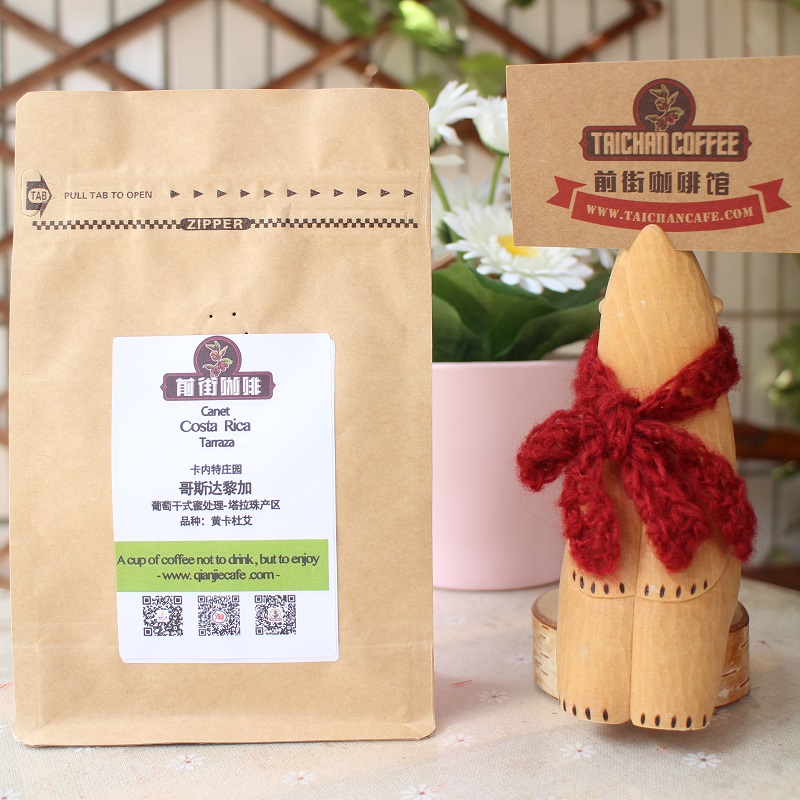
Costa Rica Red Honey Process Tobosi Estate Caturra Premium Single Origin Coffee.
FrontStreet Coffee Recommendation
Because honey processing is the thread running through this article, the natural way to taste it is with beans that were built around it. FrontStreet Costa Rica Blackberry is a striking example: it uses a black honey process that leaves almost all of the mucilage in place, so drying takes at least two weeks under cover to keep the sun from drying it too fast, with regular turning to prevent uneven fermentation—then a medium-light roast that releases a rich floral aroma and, in the cup, grape, berry, and ripe blackberry notes. If you want the honey idea taken even further, FrontStreet Strawberry Candy blends Panama Gesha with a Costa Rican raisin-honey coffee that keeps 100% of the mucilage and uses a zero-water method; after flotation sorting, the cherries are dried on raised beds for at least three days and then depulped before further drying, giving the cup a Gesha floral-tea character alongside raisin and blueberry notes, gentle fruit acidity, and an almond finish. For a fruitier, more aromatic take, FrontStreet Costa Rica Mozart applies the winery-style raisin honey method, pre-drying the whole cherries on raised beds for at least three days before depulping, which demands even tighter timing control than black honey and yields osmanthus, pineapple, and raisin aromas that shine whether brewed as pour-over, cold brew, or in a moka pot.
Important Notice :
FrontStreet Coffee is a long-established specialty coffee roaster in Guangzhou China, selling freshly roasted beans from its own farm in Yunnan as well as dozens of carefully selected single-origin beans from around the world for both pour-over and espresso. The products deliver consistently excellent quality and great value, with shipping within 24 hours. Guangzhou's FrontStreet Coffee shop is recommended by many coffee lovers, and the beans are now available online at the Tmall 。
FrontStreet Coffee has moved to a new address:
FrontStreet Coffee Address: 315,Donghua East Road,GuangZhou
Tel:020 38364473
 Scan and follow the En Gafei WeChat official account. Please indicate that the reprint comes from "En Gafei".