An Introduction to World-Renowned Colombian Coffee: Origin, Varieties, and Characteristics
Colombian coffee is known for its soft, smooth mouthfeel and excellent balance, earning countless praise. As one of the few single-origin coffees in the world named after a country, it is also considered the gateway for specialty coffee enthusiasts. Many people equate "Colombian coffee" directly with "high quality" and "good taste."
So what makes Colombian coffee so special?
Like many agricultural crops, coffee-bean quality is influenced by variety, climate, altitude, management and harvesting, and post-processing. Coffee is a tropical economic crop suited to growing in high-altitude areas without frost. For every 100 meters of elevation gain, the temperature drops by 0.6°C. Lower temperatures and oxygen levels cause coffee beans to mature more slowly. In this state, most of the tree's nutrients go to the fruit, resulting in denser beans with a harder texture and more time to absorb and store nutrients as sugars. The Andes Mountains within Colombia meet these demanding conditions precisely.
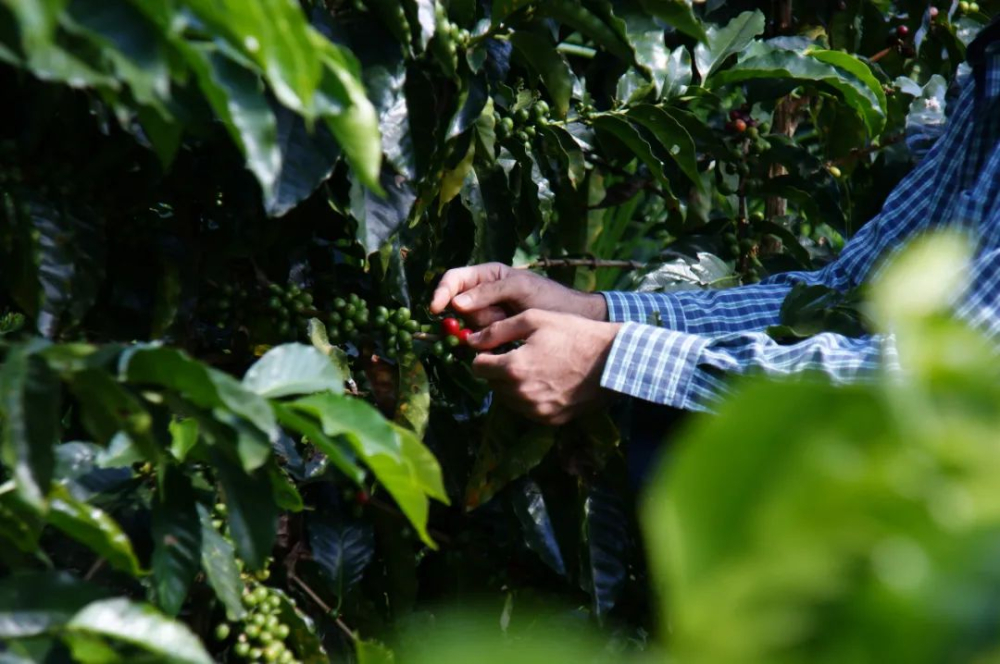
The Andes lie in western Colombia, divided into three continuous high mountain ranges. Each has fertile soil rich in organic matter, with coffee trees planted on land between 800-2300 meters, nourished by sunlight and appropriately shaded by clouds. The varied climate between the ranges means the harvest season occurs year-round, with different types of coffee ripening at different times, so busy pickers can be seen in the forests across the seasons. Local growers typically plant coffee under shade trees, mostly tall trees or banana trees, and provide seedlings with shade structures to ensure the cool, humid environment coffee needs. Because humidity is high and temperature differences are small in the coffee forests, the beans mature slowly, which favors the accumulation of caffeine and aromatic substances and results in the best quality.

The secret to Colombian coffee's success goes beyond its unique geography. Coffee is the local national beverage, and growers' love, research and dedication to it are unmatched by other producing regions. In recent years, with the industry's development, Colombian coffee has combined manual fruit selection, refined fermentation and professional cupping knowledge to show excellent, rich flavors, naturally becoming the preferred choice for coffee friends.

Colombian Specialty Coffee Growing Model
Early Colombian coffee was exported under the name of its production area. At that time, even specialty-grade beans appeared as local micro-batches. The scale of small-scale farming in Colombia is not large, and few small farmers have their own processing equipment. From the twentieth century the local coffee industry flourished, thanks to the establishment of the Federación Nacional de Colombia (FNC, the Colombian National Coffee Federation).
FNC is Colombia's only official professional coffee association, representing over 560,000 coffee farmer families, and has become one of the world's largest agricultural non-governmental organizations. FNC promotes the brand image of Colombian coffee globally, through the coffee farmer Juan and his loyal mule, and supervises the quality of every coffee bean exported from Colombia. It not only promotes in international markets but also invests significant human and material resources in farmer planting, production, management and sustainable operations within Colombia.
Thanks to FNC's management and guarantees, Colombia now has approximately 875,000 hectares of coffee planted across 590 cities and 14 coffee-growing regions, mostly on small coffee farms. The basic planting area for Colombian small farmers is around 2-3 mu. Small farmers take their coffee to community processing stations for washing, or set up green-bean processing equipment at home, and finally send it for quality-grade testing.
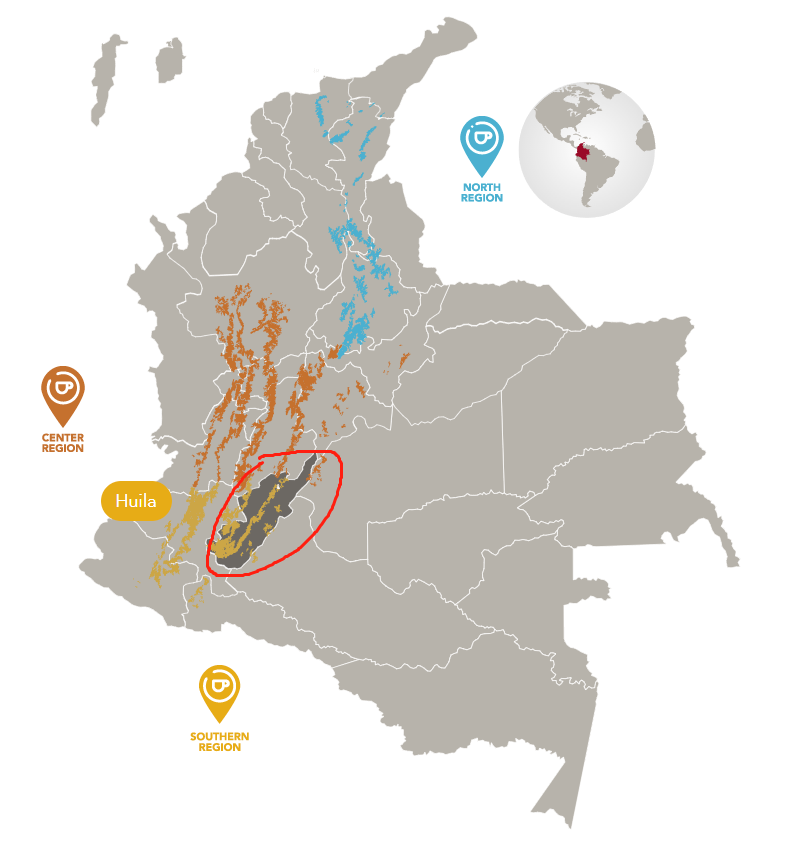
The map shows that Colombia's coffee production-region boundaries are quite distinct, divided into three major regions from south to north: northern, central and southern. The specialty-bean regions are mainly in the south, at altitudes above 1500 meters, including San Agustin in Huila, Popayan in Cauca, Nariño and Tolima. Products from these places have a delicate acidity and berry aromas, with caramel notes and full sweetness.
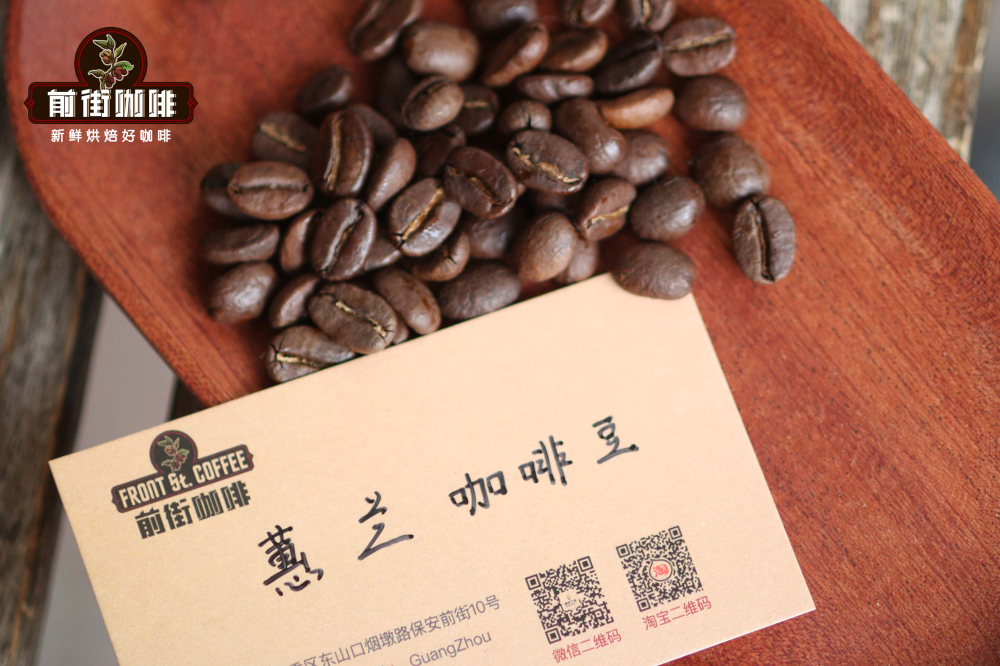
Colombia grows numerous coffee varieties, predominantly traditional Arabica varieties such as Caturra, Bourbon, Typica and Pacamara. There are also some popular rare varieties, such as Geisha, which has appeared in small batches on the market in recent years. FrontStreet Coffee's selected Colombian daily bean is produced in Huila, with Caturra, which is widely planted locally, using natural washed processing, and it has a balanced sweet, sour and bitter taste after roasting.
What Processing Methods Are Used for Colombian Coffee?
Traditionally, most Colombian coffee was processed by the washed method. With the development of specialty coffee, many farms have introduced finely processed natural and honey-processed micro-batches as well as special processing methods. FrontStreet Coffee's very popular Rose Valley Coffee and Flower Moon Night Coffee, for example, have rich floral and fruit aromas that are acceptable even to those drinking coffee for the first time. FrontStreet Coffee believes, however, that to taste the natural aroma of Colombian coffee it is best to choose the natural washed method, which highlights the clean taste of high-altitude coffee.
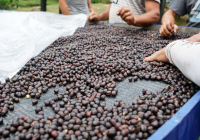
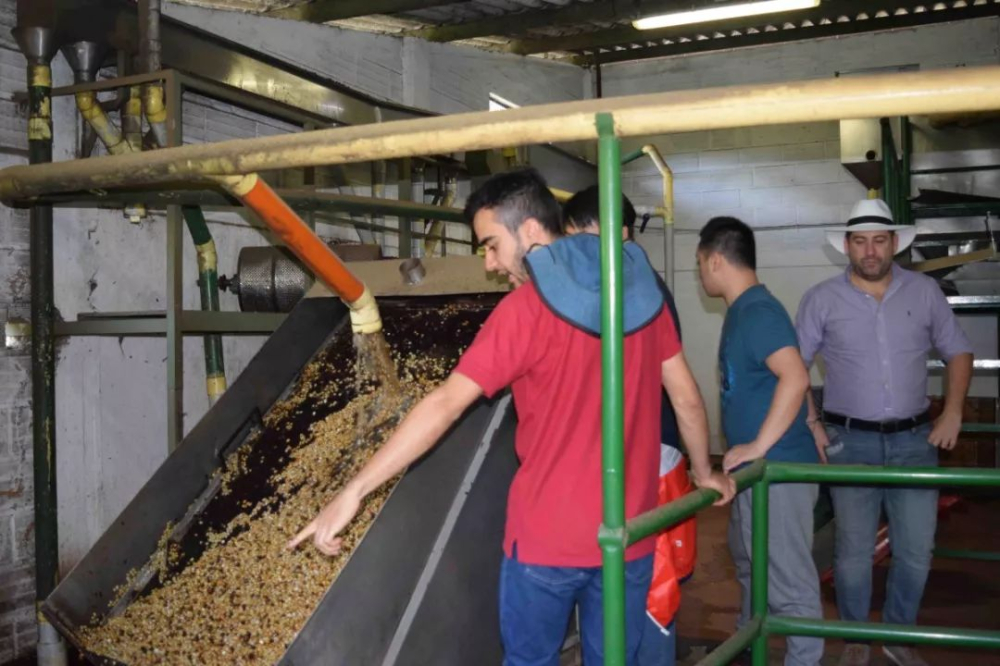
Colombia's coffee regions have abundant water, making them very suitable for washed processing. Family-unit farms are equipped with specialized green-bean processors (Ecomill or Eco-Pulper). Farmers pour the harvested cherries into them, which removes the skin and pulp while using very little water to remove most of the mucilage. The parchment beans, with a small amount of residual mucilage, enter a small pool or container, perhaps a tiled pool, for overnight fermentation that loosens the remaining mucilage. The next day they are washed clean with clear water and finally spread under the sun to dry to the target moisture content.

How Is Colombian Coffee Graded?
Colombian green beans are graded by screen size before export, generally using fixed-size screens whose specifications correspond to different hole sizes. For example, with a 17-mesh screen, beans larger than that size cannot pass through, so larger screen numbers mean larger beans remaining on the screen. The most common export grades are UGQ, EP and Supremo.
Regardless of the green-bean screen-size grade, as long as green beans are exported they belong to the Excelso grade. In other words, most Colombian green-bean bags exported worldwide today must carry the Excelso designation. Excelso is currently the most widely used export standard adopted by FNC and is the optimal grade for Colombian green-bean exports. Excelso-grade coffee must meet the following: in 500 grams of green beans, the size must be above 14 mesh, with no more than 5% of green beans between 12 and 14 mesh and at least 50% of the beans larger than 15 mesh overall; free from pests, uniform in color, with no off-flavors and a clean flavor; moisture content no higher than 12.5%; and cumulative defects no more than 24 points.

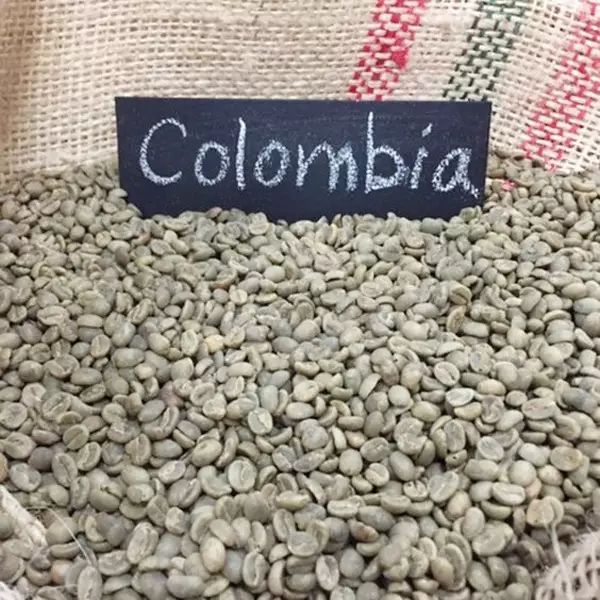
Each farmer reports their number and enters green-bean information, which facilitates future traceability. Colombian exported green-bean names typically follow the format country + region + grade + other information. For example, FrontStreet Coffee's Huila daily bean's green beans are Colombia Huila Supremo SC17/18 FNC.
How to Brew Colombian Coffee for Great Taste?
FrontStreet Coffee's flavor descriptions for each coffee are based on freshly roasted beans. If beans have been stored for more than a month, some aroma may have been lost, making the flavor hard to reproduce during brewing. FrontStreet Coffee also understands the importance of freshness, so it ships only beans roasted within 5 days, letting everyone enjoy the fullest flavor period on receipt.
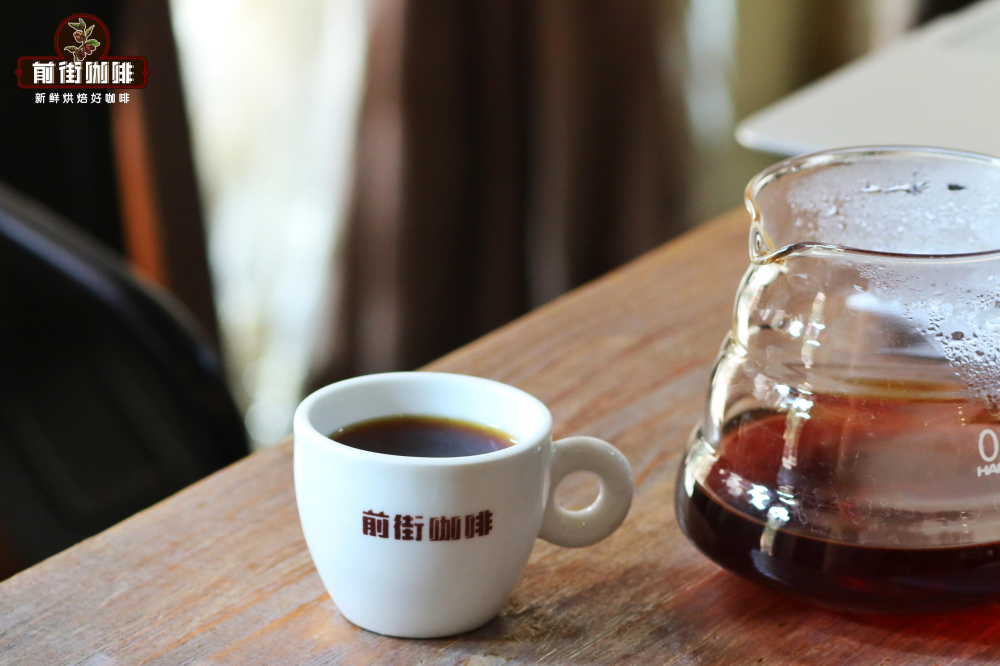
Because the Huila daily bean uses a medium-dark roast with flavors leaning toward nuttiness, rich chocolate and mellow tones, and because the darker roast makes the bean texture more porous and the grounds more absorbent, a medium grind is chosen. To avoid extracting too many off-flavors, FrontStreet Coffee slightly lowers the water temperature to a medium 90°C, paired with a KONO dripper.
Unlike the V60 dripper, the KONO dripper's only exhaust area is its quarter ribs. When the water level passes the rib area, the water keeps rising and pressure increases through the weight of the water. Because the outlet is relatively small, the contact time between coffee particles and water is extended, bringing out soluble substances more effectively as water flows and thus enhancing the coffee's rich, mellow taste.
Brewing parameters: KONO dripper, 90°C water temperature, a grind of 75% passing the No. 20 standard sieve, a 1:15 coffee-to-water ratio, 15 grams of coffee, three-stage extraction.
Pour the coffee grounds into the KONO dripper, use twice the weight of the grounds in water to wet the coffee bed, forming a dome, and bloom for 30 seconds, then use a small stream to pour in circles from inside to outside to 125g for the first stage. Wait for the coffee bed to drop to half the dripper's height, then continue with the same fine stream to 225g, until all the coffee liquid filters through; remove the dripper, for a total of about 2 minutes.
This Colombian Huila daily bean has distinct roasted aromas of chocolate, nuts and caramel on entry, smooth and sweet, with a moderate body and a clean taste. As the temperature drops, you can experience a pleasant, soft acidity.
FrontStreet Coffee Recommendation
Colombian coffee has a wide range of uses: it works both in Italian-style blends and as a pour-over single origin, and it offers fruity-acidic profiles, full-bodied profiles and aroma-forward profiles alike, making it a good fit for a broad range of tastes. Huila, in the southern part of Colombia's Central Cordillera, is the country's most famous specialty coffee region; it is a hilly land surrounded by mountains, planted above 1,500 meters, where the meeting of Colombia's most important rivers brings abundant water and humidity.
To understand the Colombian origin, buy FrontStreet Coffee's washed Huila coffee beans. Roasted medium-dark, they bring out the sweetness of black chocolate and nuts, a moderate oil and a full body, and they suit not only pour-over and French press but also moka pot and espresso machine, making Americanos and lattes with ease.
In the past, Colombian coffee was generally washed, but in recent years innovative processing has become popular. Anaerobic fermentation is one such new taste experience, sometimes called carbonic maceration; simply put, it is fermentation in a low-oxygen or oxygen-free environment, usually in a pressure-resistant stainless-steel tank where temperature, time, pH and other data can be controlled. The best-known forms are anaerobic natural and anaerobic washed. FrontStreet Coffee's Sidra uses anaerobic natural processing; after oxygen-free fermentation the coffee develops more tropical fruit aroma, and with a medium-light roast it can be brewed as pour-over, cold brew, drip bag or moka pot, delivering the complex, intense flavors of passion fruit, grape, apricot and dried fruit.
Important Notice :
FrontStreet Coffee is a long-established specialty coffee roaster in Guangzhou China, selling freshly roasted beans from its own farm in Yunnan as well as dozens of carefully selected single-origin beans from around the world for both pour-over and espresso. The products deliver consistently excellent quality and great value, with shipping within 24 hours. Guangzhou's FrontStreet Coffee shop is recommended by many coffee lovers, and the beans are now available online at the Tmall 。
FrontStreet Coffee has moved to a new address:
FrontStreet Coffee Address: 315,Donghua East Road,GuangZhou
Tel:020 38364473
 Scan and follow the En Gafei WeChat official account. Please indicate that the reprint comes from "En Gafei".