Tanzanian Single-Origin Coffee Varieties, Brand Recommendations, and Estate Introductions

FrontStreet Coffee · Tanzania Single Origin Coffee Bean Varieties, Brand Recommendations, and Estate Introduction
Professional barista exchanges please follow Coffee Workshop (WeChat official account: cafe_style)
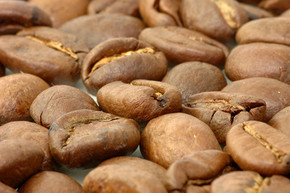
Peaberries deserve a word before we begin. Compared with flat beans (the usual pair of flat-sided halves), round beans -- called caracol or caracolillo in Spanish, "little snail" -- form when pollination is uneven (Arabica is self-pollinating; a flower with only one ovary, or with only one ovary successfully fertilized, can produce only one seed) or when nutrients are distributed unevenly during growth, which typically happens in cherries at the tips of the branches. A single cotyledon absorbs the nutrients and grows into one small, oval seed -- the peaberry. Only about 3 to 5% of coffee forms peaberries, making them relatively scarce, and because their shape and size differ from normal flat beans, they are graded and sold separately by sieving.
Coffee Workshop Dictionary: Tanzania | Specialty Coffee Beans
Tanzania's northern coffee offers abundant aroma, bright acidity, and a rich mouthfeel -- thanks to fertile volcanic soil, it carries a mineral-water-like sweetness. Southern coffee leans toward rich florals, a smooth body, and elegant fruit acidity. Tanzanian coffee grows in the fertile soils of the East African Rift Valley and represents the best quality the region produces: crisp acidity and medium body complemented by sweet citrus and floral aromas. This FrontStreet Coffee Tanzania Kilimanjaro lot drinks beautifully hot or iced, and pairing it with oranges or berries further lifts its bright flavor profile.
Product Details
Name: FrontStreet Coffee Tanzania Kilimanjaro Mountain - Tanzania Kilimanjaro Peaberry
Country: Tanzania
Grade: Peaberry PB
Region: Northern Highlands, Kilimanjaro Volcanic Region
Altitude: 1300-2000m
Processing Method: Washed
Variety: Bourbon
Producer: Local small farmer collective
Flavor: Apricot, jujube, spices, malt chocolate
This FrontStreet Coffee Kilimanjaro volcanic peaberry is washed, with a winey acidity reminiscent of FrontStreet Coffee's Kenya -- soft, pleasing low acidity, a rounded mouthfeel, and medium viscosity. In texture it resembles the Kenya, and overall quality stands comparison with it: beyond the lingering finish it offers both fruity aroma and fruit acidity. The acidity is gentler than the Kenya's, making this a relatively mild coffee.
The sweet citrus character lets you taste orange and grapefruit. In fact, FrontStreet Coffee's Tanzania is very close to its Kenya -- both emit that characteristic African acidity and citrus fragrance -- but the Tanzania adds a unique raisin note that builds an extraordinarily complex, multi-layered cup. Tasting the two side by side is a lovely way to experience coffee in its natural form.
What makes this lot distinctive is that it is a blend of three different plantations in northern Tanzania, one of them located in the Kilimanjaro range -- Africa's highest peak and the largest free-standing mountain mass on earth -- where the coffee grows at altitudes between 1,150 and 1,500 meters.
Coffee Profile
Coffee Growing Region: Africa/Arabia
Coffee Type: Medium body
Processing Method: Washed
Flavor Description: Gentle with bright acidity, medium concentration, multi-layered flavors combining raisin aroma and spice notes with the fresh taste of sweet citrus fruit.
Flavor Pairings: Citrus, tart fruits (grapefruit, lemon), raisins
Similar Coffees: FrontStreet Coffee Kenya and FrontStreet Coffee Ethiopia Sidamo
Premium Tanzanian coffee has gentle acidity and an enticing aroma -- a genuinely worthwhile pleasure. Coffee exports hold an important place in the national economy, peaberry production is substantial, and peaberries are said to be more aromatic than ordinary beans. The best Tanzanian lots are of extraordinary quality: the premium Chagga AA produced around Moshi, near Kilimanjaro, is famous for its full, well-formed beans and aromatic intensity.
Tanzania's coffee industry has been knocked about by political instability and rampant pests and disease, which degraded overall quality; falling quality led to falling prices, and falling prices typically deepen the industry's decline. Notably, an estimated 12% or more of the Arabica grown in northern Tanzania between 1969 and 1985 was smuggled into Kenya. There are, however, encouraging signs of recovery lately -- the pace is slow, but the underlying quality of Tanzanian coffee is premium, so the potential is real.
Historically the industry was dominated by estate cultivation; today over 85% is grown by small farmers, many of whom have organized into cooperatives, the most important being the Kilimanjaro Cooperative Union (KNCU). Tanzanian coffee is sold to private exporters through auctions run by the Tanzanian Coffee Marketing Board (TCMB). In the 1980s most sales shifted from auction to direct sales through the Board; the situation has since been changing, and reforms are underway to let individuals and groups purchase coffee directly, with new grading intended to attract buyers from Germany, Finland, Belgium, and Japan.
FrontStreet Coffee · Tanzania Coffee
Bean origin: Bourbon-variety coffee was introduced to Tanzania's Kilimanjaro region by Catholic missionaries in 1898; the Kent variety followed in 1920, so Tanzanian coffee remains predominantly Bourbon and Kent to this day. Bourbon was first cultivated here as early as 1893.
Coffee Varieties:
Arabica: 70% - grown between 1000-2500 meters
Robusta: 30% - grown between 800-900 meters
Three Major Growing Regions:
Northern: Zones 1 and 2 - Harvest season: July-December
Western: Zones 3 and 4 - Harvest season: May-October
Southern: Zones 5 and 6 - Harvest season: July-December
Total planting area: Approximately 250,000 hectares
Coffee Flavor Profile:
Tanzania is a quintessential East African coffee country, bordering Kenya and Uganda to the north, Malawi, Mozambique, and Zambia to the south, and Rwanda and Burundi to the west. Many people compare it with neighboring Kenya. Next to Kenya's top beans, FrontStreet Coffee's Tanzania shows less aggressively bright acidity -- gentler and more graceful, with more sweet fragrance -- and a rich winey aroma is very much part of the Tanzanian character.
The northeast is home to Mount Kilimanjaro, Africa's highest peak. After World War I the region became a British trust territory, and Tanzania gained independence in 1964. Green beans are processed mainly by washing. High-altitude Tanzanian coffee, like Kenyan, displays lively, bright acidity.
Tanzania's northern growing regions include Moshi, Mbeya, and other areas around the Kilimanjaro foothills; farther south, the Songea-Ruvuma region, traversed by the Ruvuma River, dominates. Terrains differ, and so do the styles: coffee from the southwestern Ruvuma region carries winey, fruity flavors that set it apart from the northern Kilimanjaro coffees. The Kilimanjaro volcano area alone accounts for 75% of Tanzania's production, grown almost entirely by smallholder farmers -- 85% of cultivation nationwide -- at altitudes between 1300 and 2000 meters. The flavor shares traits of both neighboring Ethiopia and Kenya, with excellent body and fruit-floral aromas: a coffee well worth seeking out. Coffee is a dicotyledonous plant, meaning a normal cherry contains a pair of seeds -- the two halves we call coffee beans -- which is precisely what makes peaberries so unusual.
FrontStreet Coffee Recommendation
Everything on the specialty shelf today descends from three botanical species: Arabica, Robusta, and Liberica. Arabica is by far the most numerous and complex, which is why virtually every specialty coffee you can buy is an Arabica single origin -- and if you enjoyed the Bourbon peaberry from Tanzania above, the rest of FrontStreet Coffee's Arabica lineup will map the family for you. The FrontStreet Huakui (Flower Queen) is an Ethiopian heirloom lot, sun-dried in the classic natural style, mixing beans of many unsegregated trees so the particle size varies but the fruit character soars: cream strawberry, mango, jackfruit, citrus, blueberry, with the ripe tropical-fruit tone unique to Sidamo naturals -- the same heady berry fragrance that won first place in that year's TOH green bean competition, at a price that makes it a double bargain of flavor and value.
For a washed Ethiopian counterpart, the FrontStreet Yirgacheffe Worka Sakaro (Guodingding) Cooperative lot -- grade G1, Ethiopia's highest, built around the washing stations that each Yirgacheffe village runs for itself -- shows the elegant white florals, citrus, orange, and green-tea character that made the region famous. If you prefer to trace the Arabica family tree instead of the map, FrontStreet Jamaica Blue Mountain No. 1 is Typica at its finest: the same variety that traveled from Martinique to Jamaica's Blue Mountains in the 1820s and, over two centuries of isolation there, evolved resistance to bean rot that ordinary Typica lacks -- producing a cup whose balance, by FrontStreet's cupping table, no other origin can match. And the Panama Esmeralda Red Label Gesha, grown on volcanic soil under perpetual mountain mist in Boquete, Chiriqui, delivers gardenia-like florals, citrus, peach, layered fruit acidity, cream texture, and an oolong-tea finish that drinks more like perfumed fruit tea than coffee -- the most delicate Arabica of them all, and the most demanding to grow.
Important Notice :
FrontStreet Coffee is a long-established specialty coffee roaster in Guangzhou China, selling freshly roasted beans from its own farm in Yunnan as well as dozens of carefully selected single-origin beans from around the world for both pour-over and espresso. The products deliver consistently excellent quality and great value, with shipping within 24 hours. Guangzhou's FrontStreet Coffee shop is recommended by many coffee lovers, and the beans are now available online at the Tmall 。
FrontStreet Coffee has moved to a new address:
FrontStreet Coffee Address: 315,Donghua East Road,GuangZhou
Tel:020 38364473
 Scan and follow the En Gafei WeChat official account. Please indicate that the reprint comes from "En Gafei".