Introduction to Brazilian Coffee Beans: Flavor Characteristics of Brazilian Cerrado and Brazilian Queen Coffee
Brazilian Coffee: The Foundation of Exceptional Blends

As the foundational bean in a blend, Brazilian coffee offers no dramatic high point and no glaring fault. It is mild and smooth, with low acidity, moderate body and a subtle sweetness — without the intense lemon-citrus bite of Yirgacheffe or the density of Indonesian Mandheling. Free of excess acidity or bitterness, Brazilian beans hold a major position in the world of blends. FrontStreet Coffee's three blends — Basic Blend, Premium Blend and Commercial Blend — all take Brazilian coffee as their base.
Brazil: The Coffee Kingdom
Brazil is the world's largest producer of Arabica coffee, supplying both commercial and specialty beans to the global market. It sits in the Western Hemisphere, in Latin America, on the eastern side of South America along the western Atlantic coast, and shares a land border with every South American country except Ecuador and Chile. One-third of its territory has a tropical rainforest climate and two-thirds a tropical savanna climate. Those tropical conditions suit coffee — a tropical cash crop — exceptionally well, and Brazil has put them to full use, focusing on coffee production and sales until its output, exports and per-capita consumption all ranked at the top of the world for many years running, earning it the name "Coffee Kingdom."
Brazilian Geographical Conditions
We know that higher-altitude coffee usually tastes better, but Brazil's growing regions generally sit at lower elevations, which is why Brazilian coffee tends to be moderate and balanced. When a customer asks FrontStreet Coffee for a coffee without acidity, FrontStreet Coffee recommends Brazilian coffee. Brazilian coffee is generally grown on relatively flat terrain, and to adapt to local conditions Brazilian estate owners cultivated improved Arabica trees decades ago that need neither high altitude nor shade. These can be planted on plains or grassland in direct, bright sunlight, unlike traditional high-altitude shade-grown methods.
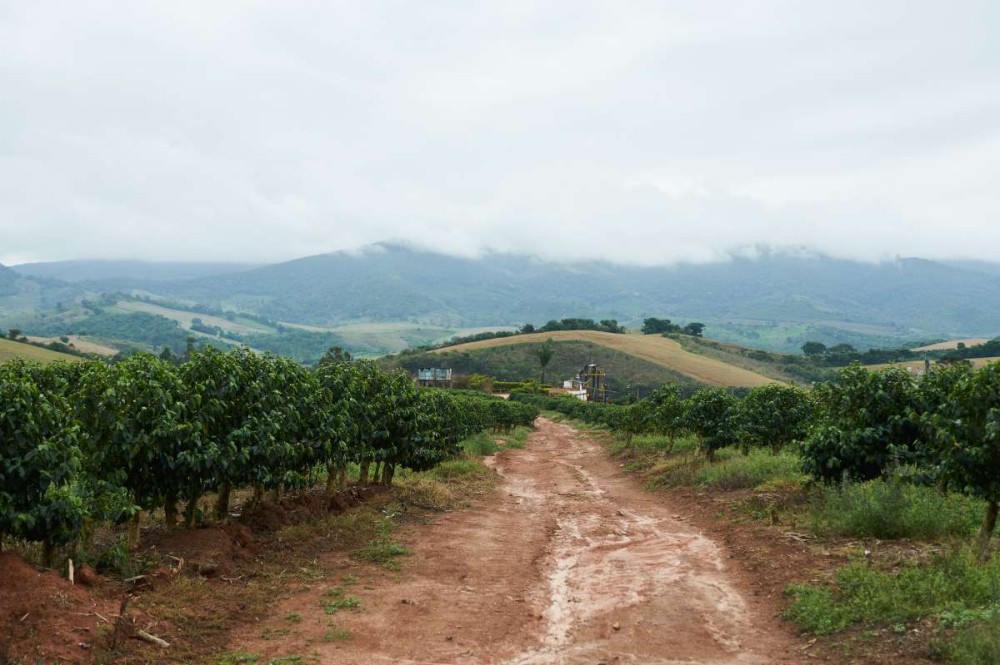
Brazilian plantations often sit at only a few hundred meters, or even grow on flat ground without difficulty. This sun-exposed cultivation lets the cherries ripen faster, at the cost of less complete flavor development. Bean density — what we call hardness — is also inferior to high-altitude beans. Fruit acidity is noticeably lower and the flavor is rather simple. Coffee from coastal Rio can even carry an iodine or salty note, believed to come from certain microbial activity. FrontStreet Coffee holds that even on the same soil this flavor may not appear every year, because coffee is an agricultural product that shifts with the annual climate, though the general profile stays consistent. Most coffee lovers dislike that flavor, but a few Middle Eastern countries with a tradition of adding sugar and boiling their coffee find it especially suited to Rio-style coffee.
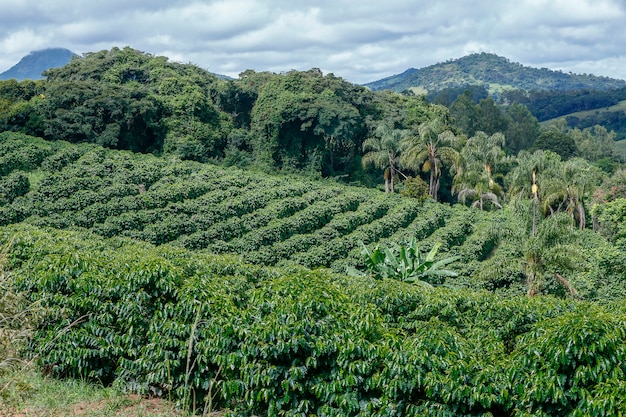
Brazil's terrain divides into two major parts: the Brazilian Plateau above 500 meters, spread across central and southern Brazil, and plains below 200 meters in the northern and western Amazon basin. Because the lower-altitude growing regions are flat, they cannot form diverse microclimates. Coffee is planted over large areas without shade, producing the character of so-called soft beans. Soft beans grow at low altitude, where fruit ripens faster, bean density is lower, and the flavor leans toward mellow, balanced chocolate and nutty notes rather than the rich fruit acidity of high-altitude hard beans. Panama Geisha, for example, is harder than Brazilian coffee precisely because it grows higher.
Cerrado Growing Region
Brazil has 21 states, 17 of which produce coffee, but 7 states account for 98% of total production: São Paulo, Paraná, Bahia, Espírito Santo, Minas Gerais, Rondônia and Rio de Janeiro. Specialty coffee growing is concentrated mainly in Minas Gerais and São Paulo. The market has identified a pattern: whether Brazilian production is plentiful or scarce depends on whether Minas Gerais has a good or poor harvest, and Minas Gerais' harvest depends on South Minas, Cerrado and Mogiana.
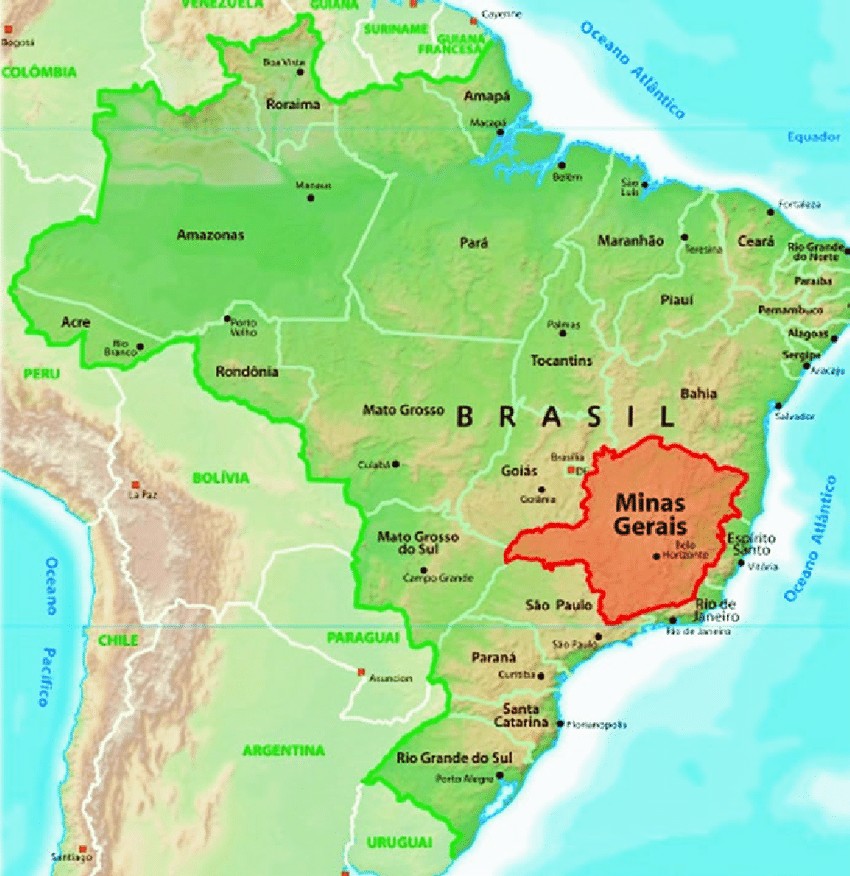
South Minas (Sul de Minas)
South Minas is Brazil's oldest coffee-growing region, a sub-region of Minas Gerais state. The climate here is mild and comfortable, with higher elevations than most Brazilian regions, averaging around 1,400 meters. Coffee trees are planted on gently sloping forestland. The region's unique terrain creates two distinct seasons — rainy periods with abundant rainfall and dry winters — which is very good for fruit development and quality.
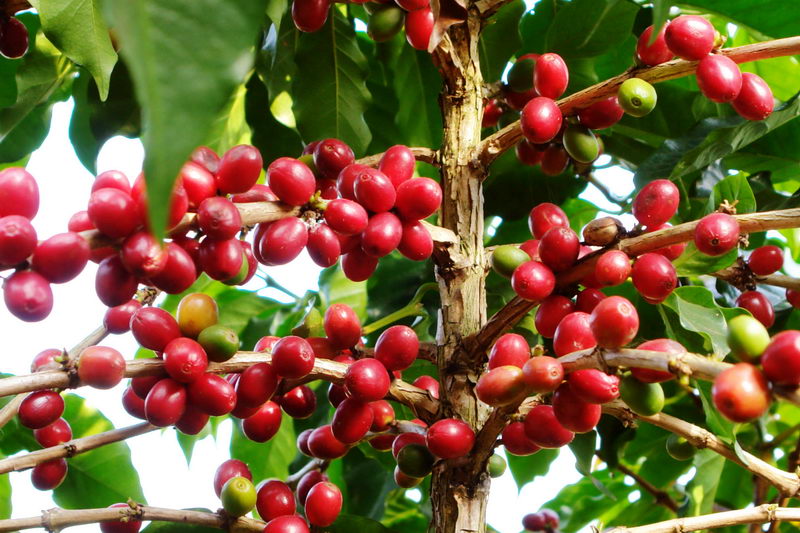
Because of heavy local investment in coffee-production manpower, extensive infrastructure and research, many exporters have established large plantations in South Minas, where all output is produced commercially.
São Paulo
São Paulo state lies in southeastern Brazil. Most of Brazil's high-quality coffee comes from large plantations in the São Paulo and Minas Gerais regions. The climate is more humid and mild here, not as dry as the north, so coffee needs no additional irrigation. The state also holds Brazil's largest and most historic port, Santos — also the world's largest coffee export port. Green coffee bags exported from here all bear the "SANTOS" seal.
São Paulo has two main coffee areas: Centro-Oeste (Central-West) and Mogiana. FrontStreet Coffee's Brazil Queen Estate coffee comes from Mogiana.
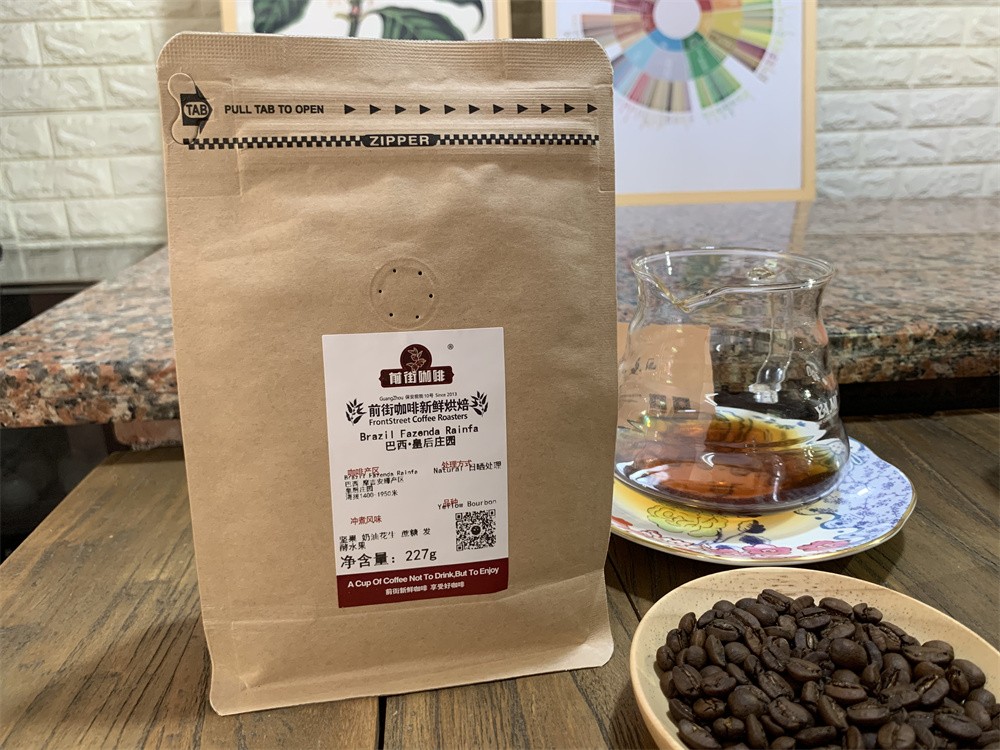
Mogiana, near South Minas, grows coffee mostly among shrubs, grassland and vegetation at a growing altitude of 1,400 m, making it one of Brazil's few high-altitude areas. The fertile red volcanic soil lets the cherries absorb abundant nutrients and develop full aroma. Here some farms keep traditional practices while others have adopted modern, standardized management, greatly improving local quality. The Queen Estate (Fazenda Rainha) is managed by José Renato G. Dias, an agricultural engineer specializing in coffee production. The farm covers 280 hectares, 200 of which are planted primarily with Yellow Bourbon.
Cerrado
The Cerrado growing region sits on Brazil's vast central savanna, where large plantations with their own processing facilities spread across open, flat terrain. Cerrado was Brazil's first coffee region to receive Brazilian Designation of Origin certification, and its quality beans give it a pivotal position in the country.
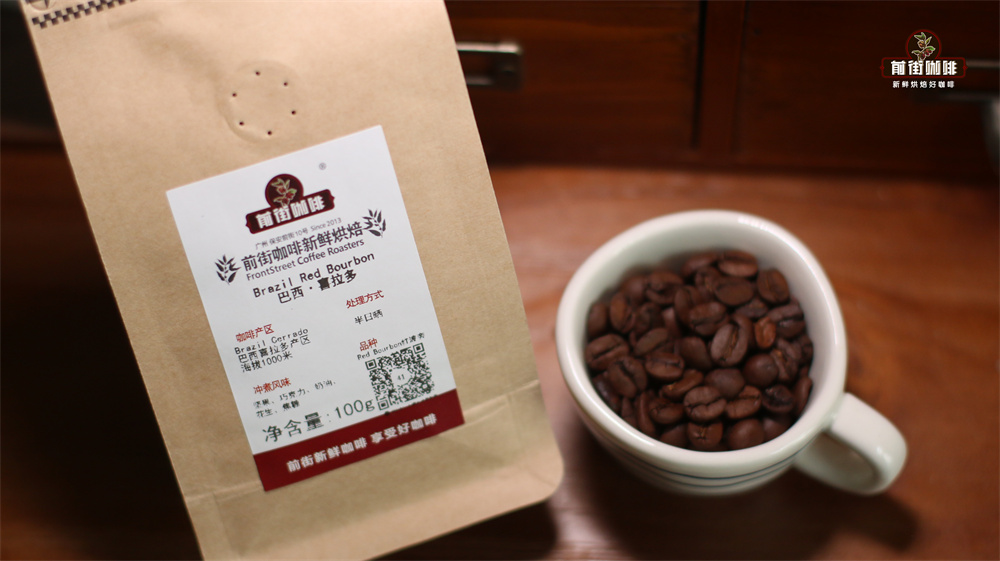
Cerrado's coffee trees are planted on mountainous terrain around 1,000 meters. The soil is rich in minerals, and the flat land makes mechanical harvesting common, with processing mostly semi-washed. Its unique soil and abundant groundwater are essential ecological conditions for producing high-quality coffee here. Cerrado is also Brazil's only growing region with a Designation of Origin system, strictly controlling the authenticity of origin. Once a bag carries Cerrado certification, it represents quality-guaranteed coffee.
For that reason, FrontStreet Coffee selected beans from Brazil's Cerrado region as its representative Brazilian coffee.
Brazilian Coffee Varieties
Bourbon, Mundo Novo and Catuai are Brazil's main varieties today, with Bourbon the oldest, derived from a genetic mutation of Typica.

Bourbon
When people discuss Bourbon they often mention its color variants — Red Bourbon, Yellow Bourbon and Pink Bourbon. Bourbon is a subspecies that arose from a Typica mutation, and along with Typica it belongs to the oldest surviving coffee varieties. Its green fruit ripens to a bright red. Bourbon grown at high altitude generally has better aroma and brighter acidity. Red Bourbon is probably the most common type, because under normal conditions cherries ripen gradually from green to slightly yellow, then orange, showing red when optimal for picking and finally dark purple when overripe.
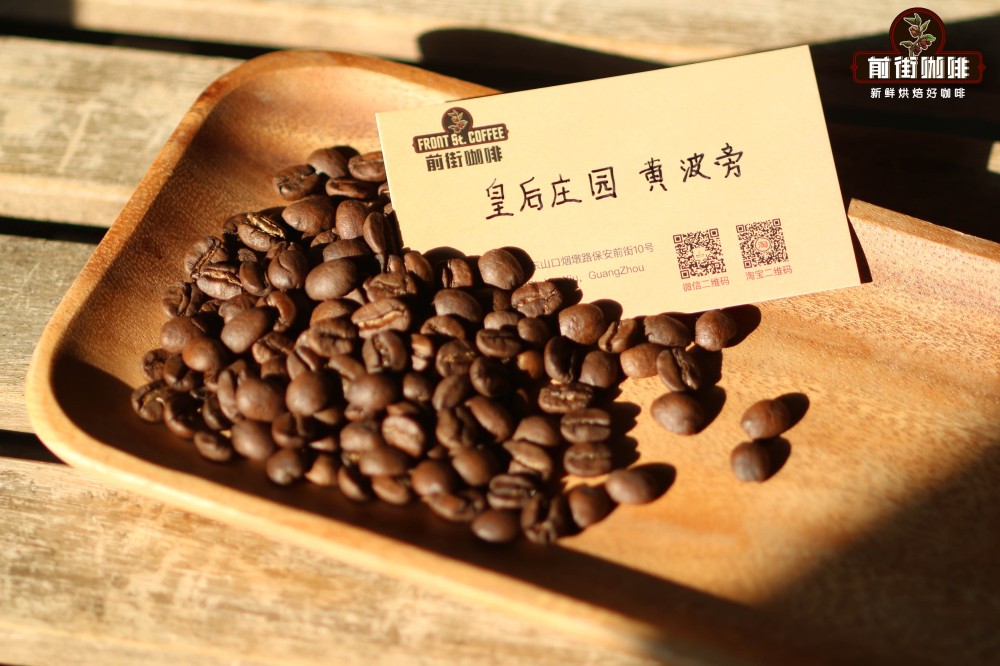
Red Bourbon takes its name from the red color of its fruit; the same logic applies to Yellow and Pink Bourbon. Yellow Bourbon is generally considered a hybrid of Red Bourbon and other varieties, and its fruit ripens yellow. It was first discovered in Brazil, which remains its main producer. Besides its yellow fruit, Yellow Bourbon has relatively low yield and poor resistance to wind and rain, so it has not been widely planted. Pink Bourbon is rarer still, a hybrid of Red and Yellow Bourbon; it is rare because the pink color is determined by recessive genes that are easily disrupted, making the pink fruit hard to maintain.
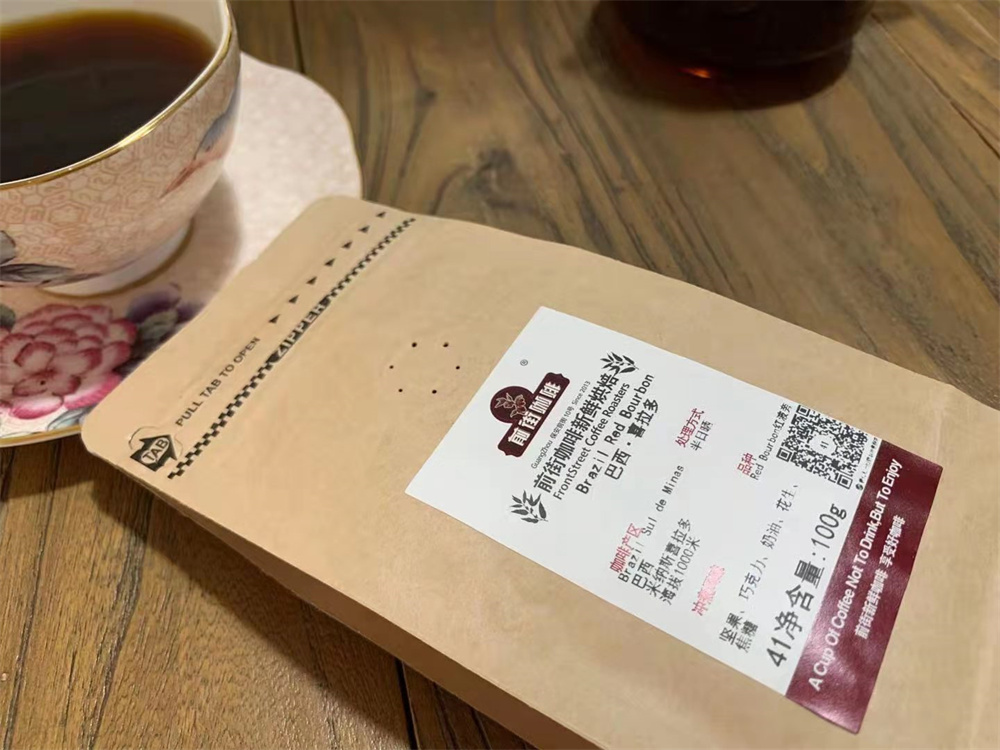
FrontStreet Coffee's everyday Brazilian coffee is Red Bourbon, while Brazil Queen coffee is Yellow Bourbon.
Mundo Novo
Mundo Novo is a hybrid of Bourbon and Typica, first appearing in the 1940s and still widely welcomed by Latin American producing countries today. Its disease resistance and yield beat Bourbon and Typica, at the cost of insufficient flavor complexity.
Catuai
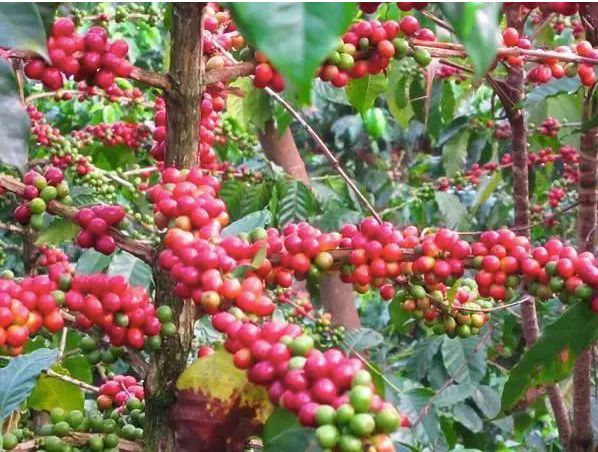
Brazil developed Catuai in the 1950s. It is a hybrid of Caturra and Mundo Novo with strong disease resistance and high yield. Like Caturra, Catuai's ripe fruit naturally splits into red and yellow types (I personally prefer the former). Catuai is known for its rich acidity and is a common variety across most Central American countries.
Caturra
In the 1930s a genetic mutation of Bourbon was discovered near Caturra town in Brazil, and the variety took its name from the place. Caturra yields very heavily and its compact form makes harvesting easy, but in low-altitude environments that trait becomes its own worst enemy — the coffee there becomes so light that the weight of the fruit itself can crush the plant. Grown at high altitude (above 1,200 meters), Caturra's quality and yield are far better assured. Caturra is common throughout the Central American coffee belt.

The varieties behind FrontStreet Coffee's Colombian Huayuenuo and Colombian Rose Valley are Caturra.
Brazilian Coffee Processing Methods
Brazil's green-bean processing methods include natural, pulped natural and washed, chosen according to local climate conditions.
Before 1990, Brazil used almost exclusively crude natural processing — dumping cherries onto concrete floors to dry in the sun. This easily produced earthy off-flavors and unpleasant over-fermentation, badly hurting Brazilian coffee quality. In 1990, Brazilian coffee research institutions developed the pulped natural method around the country's arid climate. Before drying, the pulp and skin are removed, leaving only a thin mucilage layer to sun-dry for 1-3 days, followed by machine drying to 12% moisture and then maturation in storage containers. This shortened processing time and cut the negative flavors, greatly improving Brazilian beans.

Although the methods look similar, the absence of the fermentation step makes the flavors entirely different. In pulped natural processing, ripe pulp comes away easily while the skin of unripe green cherries is hard to remove, so a second screening can filter out unripe fruit and standardize ripeness. Compared with natural processing, FrontStreet Coffee believes this selection produces beans with improved cleanliness and ripeness, and more consistent tasting coffee.
Brazilian beans also have their own standards for flavor and mouthfeel, described from cupping results as Strictly Soft, Soft, Softish, Hard and Rioy. SC stands for Strictly Soft (very smooth), the best mouthfeel. Cupping flavors are graded Fine Cup, Good Cup, Fair Cup, Poor Cup and Bad Cup, with Fine Cup the best and highest-quality, followed by Good Cup.
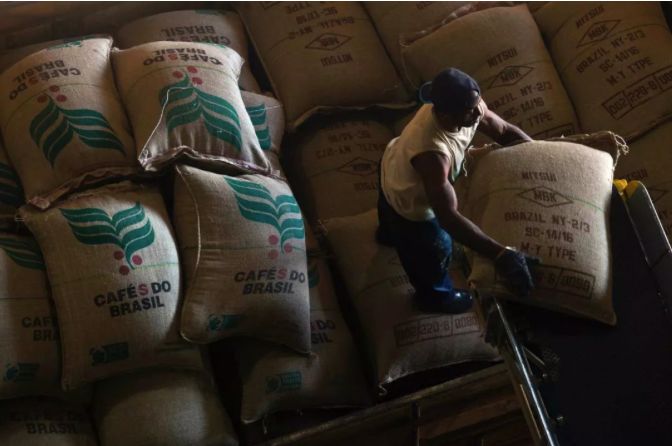
On FrontStreet Coffee's Brazilian everyday green-bean bags, the relevant grade information is printed as Country + Defect Grade + Cupping Mouthfeel + Size + Flavor + Region. "Brazil NY.2 SC – 17/18 FC Cerrado" refers to coffee from Brazil's Cerrado region, screen size 17-18, SC for Strictly Soft (very smooth mouthfeel), FC for Fine Cup (excellent cupping flavor), with a defect grade of NY.2.
FrontStreet Coffee's Brazilian Brewing Parameters
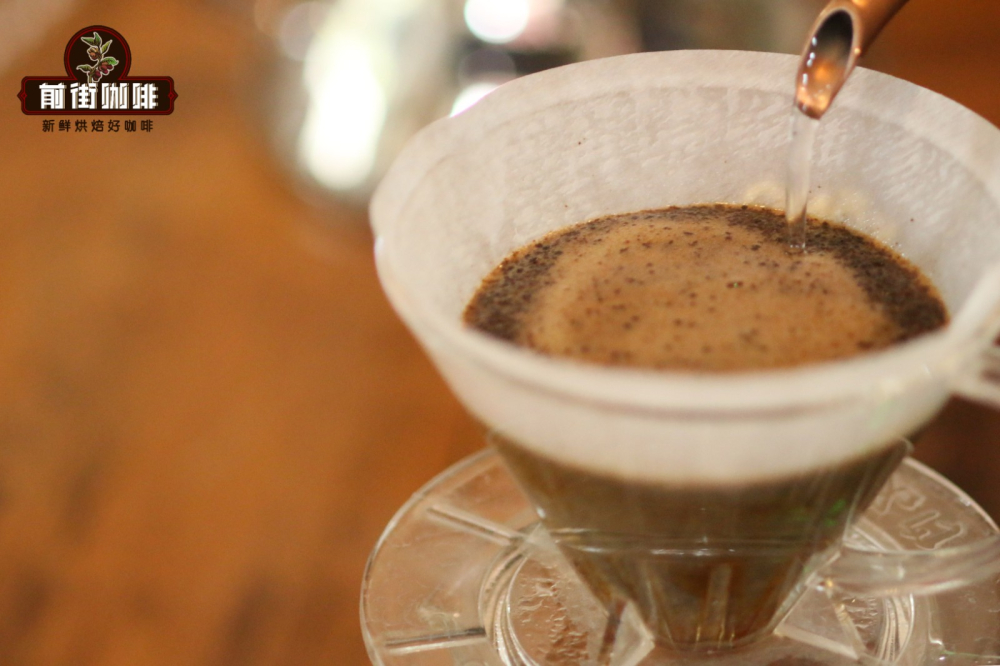
To showcase the balanced, rich character of Brazilian coffee, FrontStreet Coffee recommends pour-over. The shop's brewing parameters: a Kono dripper, water temperature 88°C, 15 grams of coffee, a 1:15 ratio, and a medium-fine grind (75% pass-through on a China standard #20 sieve).
FrontStreet Coffee's Brazilian Cerrado flavor profile: nuts, caramel, peanuts, smooth, low acidity, chocolate.
FrontStreet Coffee's Brazilian Queen flavor profile: a subtle lemon aroma, rich nuttiness, distinct dark chocolate on the aftertaste, and overall rounder and cleaner than Brazilian Cerrado.
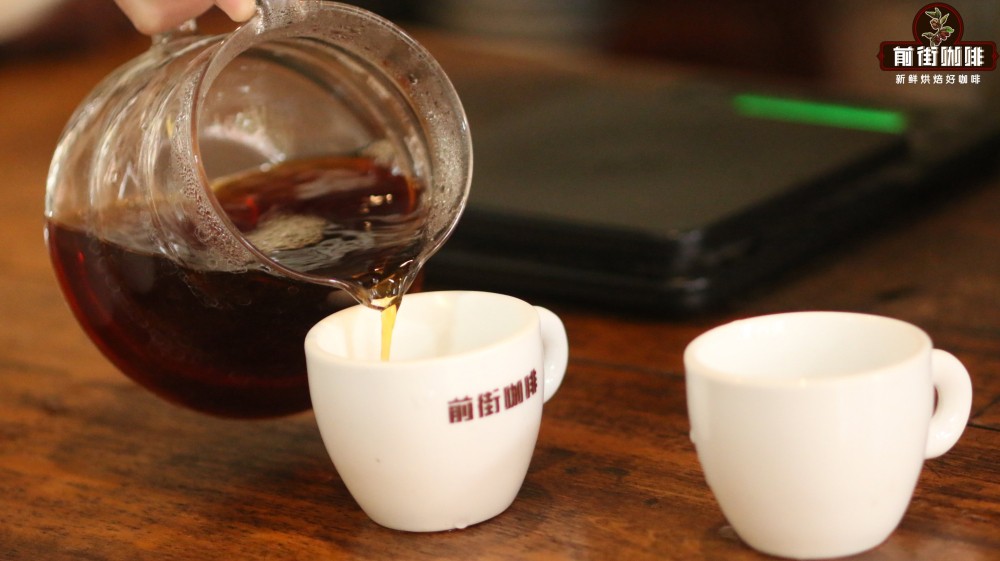
FrontStreet Coffee's Brewing Suggestions
Whatever the variety, freshness is essential to a delicious cup. FrontStreet Coffee has always held that freshness greatly affects flavor, so it ships beans roasted within 5 days. Its roasting philosophy is "Freshly Roasted Good Coffee," ensuring every customer receives the freshest coffee. The degassing period is about 4-7 days, so by the time customers receive their coffee it is at peak flavor.
For those who need ground coffee, a gentle reminder: pre-ground coffee needs no degassing, because during shipping the pressure from carbon dioxide building up in the packaging also helps round out the flavor, so you can brew and enjoy the grounds the moment they arrive. Grounds must be brewed promptly, however, since they oxidize quickly on contact with air and their flavor fades fast, leaving a less enjoyable cup. FrontStreet Coffee therefore recommends buying whole beans and grinding fresh before brewing to experience the coffee at its best.
FrontStreet Coffee Recommendation
If Brazilian coffee is your everyday base, FrontStreet Coffee's washed Yirgacheffe is the classic way to explore the other side of the flavor spectrum. Widely known for white jasmine, bright citrus and lemon acidity and a tea-like body, it is the first specialty bean many drinkers ever buy — an affordable, approachable entry into Ethiopia.
From the Gediding (Gedeb) cooperative in Yirgacheffe, FrontStreet Coffee sources a washed single-lot coffee from the Worka area at the southeastern edge of Yirgacheffe. Once part of the Worka cooperative under the Yirgacheffe union YCFCU, Gediding became independent as a single origin in 2012 and now has around 300 member farmers. Because the pulp is removed before drying, the coffee's own aromatics come through cleanly, showing citrus and lemon with elegant white florals — bright, fine and delicate.
For a natural counterpart, FrontStreet Coffee's Yirgacheffe Red Cherry is made from fully ripe red cherries dried whole on raised beds. It keeps the classic Yirgacheffe profile while adding the tropical fruit of natural processing: citrus-like acidity, a berry-juice quality, honeyed sweetness and a creamy smoothness.
To brew these, FrontStreet Coffee suggests a V60 at 90-91°C, 15 g of coffee, a 1:15 ratio, and a grind of EK43s setting 10 or granulated-sugar texture (about 80% passing a #20 sieve). Bloom with 30 g of water for 30 seconds, then pour to about 125 g over roughly one minute; when the water level drops to two-thirds of the bed, pour the remaining 100 g (to roughly 225 g) and finish the pour at about 1 minute 35 seconds. Drawdown completes in 2:00-2:10; remove the dripper and the brew is done.
Important Notice :
FrontStreet Coffee is a long-established specialty coffee roaster in Guangzhou China, selling freshly roasted beans from its own farm in Yunnan as well as dozens of carefully selected single-origin beans from around the world for both pour-over and espresso. The products deliver consistently excellent quality and great value, with shipping within 24 hours. Guangzhou's FrontStreet Coffee shop is recommended by many coffee lovers, and the beans are now available online at the Tmall 。
FrontStreet Coffee has moved to a new address:
FrontStreet Coffee Address: 315,Donghua East Road,GuangZhou
Tel:020 38364473
 Scan and follow the En Gafei WeChat official account. Please indicate that the reprint comes from "En Gafei".