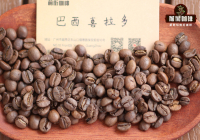
The History, Culture, and Legendary Stories of Brazil's Fazenda Rainha Premium Single-Origin Coffee

The History, Culture, and Stories of Brazil's Queen Estate
Brazil Mogiana Region COE Champion Farm Queen Estate 100% Yellow Bourbon Pulped Natural
Brazil Fazenda Rainha Yellow Bourbon Pulped Natural
Flavor Description
The raw beans have subtle orange peel and spice aromas. When ground, they release rich roasted hazelnut, cinnamon, and pumpkin pie sweet aromas. The entry features delicate lemon acidity, plum, guava, and fresh sugarcane juice sweetness. The mid-section reveals flavors like freshly cut vanilla pods, black tea, and unsalted butter. Overall the profile combines complexity with a persistent aftertaste aroma and a smooth, delicate consistency.
Region: Mogiana
Producer: Rainha Farm, Queen Estate
Processing Method: Pulped Natural (PN)
Variety: Yellow Bourbon
Queen Estate Award Records
- 2014 COE Cup of Excellence 13th Place
- 2013 COE Cup of Excellence 2nd Place
- 2012 COE Cup of Excellence 8th Place
- 2011 COE Cup of Excellence Champion
- 2010 COE Cup of Excellence 20th Place
- 2009 COE Cup of Excellence 6th Place
- 2008 COE Cup of Excellence 14th Place
The Carvalho Dias family, founding members of the Brazilian Specialty Coffee Association, has operated Queen Estate since 1890. The owner's nephew, Gabriel de Carvalho Dias, now manages operations. The estate is located near Minas Gerais, with high terrain and rolling hills. Because of geographical limits, mechanized cultivation and harvesting are impossible, so planting and picking are done entirely by hand. The altitude ranges from 1200 to 1400 meters, with average annual rainfall of 1800-2000 millimeters and an average annual temperature of around 19°C, ideal conditions for coffee cultivation. The raw beans have a solid texture and excellent flavor expression. Queen Estate pours all its energy into carefully controlling every operation, from planting, care, and harvesting to post-processing, to produce excellent-quality green coffee.
Under the management of Regina Helena Mello de Carvalho Dias and family members, the estate maintains excellent quality and a distinctive flavor performance, making it a consistent winner in Brazil's COE cupping competitions. It appeared on the list in 2000, 2001, and 2005, and even won the honor of Brazil COE champion in 2011.
Brazil
Population: 201,033,000
Brazil cultivates many different coffee varieties, many of which were bred and evolved domestically, such as Yellow Bourbon, Caturra, and Catuai.
SUL DE MINAS
Historically, this region was the birthplace of large-scale coffee production in Brazil, with many generations of small farmers. Perhaps for that reason, there are more cooperatives here. Despite mostly small farms, it remains a well-industrialized region with mechanized harvesting. Recently, certain areas have attracted more attention, such as Carmo de Minas, located around the village of Carmo, where producers use soil and climate to grow coffee.
Altitude: 700-1,350m (2,300-4,400ft)
Harvest: May to September
CERRADO
"Cerrado" means tropical savanna. Although usually used for the entire savanna that stretches across many Brazilian states, when it comes to coffee it specifically refers to the Cerrado region in western Minas Gerais. This is a newer coffee-producing region, which may explain why it is dominated by large, mechanized farms. In fact, ninety percent of farms in the area are over 10 hectares (24 acres).
Altitude: 850-1,250m (2,800-4,100ft)
Harvest: May to September
BAHIA
Bahia on the eastern side of Brazil is the country's northernmost coffee-growing region. In recent years, more and more interesting coffees have emerged from this region, attracting attention. In the 2009 Cup of Excellence competition, five of the top ten came from Bahia.
Everyone's preferred taste may differ, so consider buying small quantities to try different roast levels.
Roast Level Guidelines
- Drop at early first crack
- Drop at end of first crack
- Drop between end of first crack and second crack
- Drop at second crack onset
- Drop 10-15 seconds into second crack
- Drop at dense second crack
We hope every roasting master can find their preferred flavors.
Yellow Bourbon beans are naturally sweet and clean. The pulped natural method makes their acidity slightly bright yet balanced, with tropical fruit aromas, and the overflowing aroma during brewing is particularly delightful.
Fazenda Rainha (Queen Estate) belongs to the Carvalho Dias family and has been operating for over 116 years. It is located in the high-altitude mountainous area of São Paulo state near the Minas border, at altitudes of 1200-1400 meters. It receives abundant annual rainfall of over 1800mm without excessive downpours, and an average annual temperature of only 19°C. This causes the coffee cherries to grow slightly slower, resulting in dense beans. Although production is smaller, the aroma and flavor are unmatched by typical Brazilian highland coffees. The estate mainly grows Bourbon varieties, including some over 110-year-old Bourbon trees. Beyond cultivating Bourbon, Queen Estate's meticulous processing methods are another key to its excellent quality.
Brazil Queen Estate
Country: Brazil Region: Mogiana (Fazenda Rainha)
Estate Name: Queen Estate (Fazenda Rainha)
Owner: Regina Helena Mello de Carvalho Dias of the Carvalho Dias family
Variety: Yellow Bourbon
Processing Method: Hand-picked, then pulped natural processing
Harvest Period: Latest harvest arriving May 2006
Mogiana (Fazenda Rainha) Coffee Bean Details
Origin: Brazil Queen Estate (Mogiana) Region
Variety: Yellow Bourbon
Related Knowledge
The Cup of Excellence (COE) program and its trademark are currently owned and managed by the Alliance for Coffee Excellence (ACE), a non-profit organization based in the United States. ACE collaborates annually with COE host countries to complete specialty coffee cupping selection and online auctions, and also recommends and promotes anything related to coffee quality improvement. The goal is to select exemplary specialty coffees in host countries and exchange experiences for industry learning.
Flavor: Sweet, clean beans. Pulped natural processing makes their acidity slightly bright yet well balanced with sweetness, with some even showing tropical fruit aromas, and the overflowing aroma during brewing is particularly delightful. Delicate lemon acidity, fresh sugarcane juice sweetness, black tea, and a smooth, delicate texture.
Hand-pour brewing of Brazil Queen Estate: 15g of coffee, medium grind (Fuji Royal grinder #4), V60 dripper, 88-89°C water temperature. First pour 30g water for a 27-second bloom, then pour to 105g and pause. Wait until the water level drops to half, then continue pouring slowly to 225g total. Avoid the tail end. Water-to-coffee ratio 1:15, extraction time 2:00.
Queen Estate (Fazenda Rainha) is located in the Alta Mogiana region of São Paulo state, north of São Paulo city. This estate is highly renowned in Brazil and owned by the Carvalho Dias family. The family's four major estates have won awards every year since the first Brazil COE competition in 1999, winning more than 12 times in 7 years. In 2004 they even swept champion, 9th place, and 11th place. Many Brazilian estates of various sizes have hoped over the years to qualify for awards but found it difficult. This family's four major estates, however, have consistently won multiple awards. Queen Estate boasts an impressive record: 2000 runner-up, 2001 third place, and 2005 29th place. To date, Queen Estate has won awards 3 times.
Estate Introduction
This Queen Estate (Fazenda Rainha) belongs to the renowned and respected coffee family, the Carvalho Dias family. The family's four major estates have won awards every year since the first Brazil COE competition in 1999, more than 12 times in 7 years. In 2004 they swept champion, 9th place, and 11th place. Many Brazilian estates of various sizes have hoped over the years to qualify for awards but found it difficult, yet this family's estates have consistently won multiple awards.
The Carvalho Dias family are also founding members of the Brazilian Specialty Coffee Association. Their commitment to coffee quality and environmental protection is evident to all. Within their farms, they use natural waterfalls to develop pollution-free hydroelectric power, becoming self-sufficient in electricity (another of their award-winning estates is named after this waterfall, Waterfall Estate). They build churches, classrooms, nurseries, and medical stations, and insist on maintaining original native forests and continuous reforestation. Taking Queen Estate as an example, environmental protection is quite thorough. Because of higher terrain and non-flat topography, mechanical harvesting is impossible, so all fruit is harvested entirely by hand. They also cultivate low-yield, high-quality Bourbon varieties, representing the essence of premium Brazilian coffee.
Manufacturer: FrontStreet Coffee
Shelf Life: 90 days
Net Weight: 227g
Packaging: Bulk
Coffee Bean State: Roasted coffee beans
Sugar Content: Sugar-free
Origin: Brazil
Roast Level: Medium roast
Brazil Fazenda Rainha COE Natural Yellow Bourbon
Country: Brazil
Grade: COE
Region: Mogiana (Fazenda Rainha)
Located in the high-altitude mountainous area of São Paulo state near the Minas border, at altitudes of 1200-1400 meters. It receives abundant annual rainfall of over 1800mm without excessive downpours, and an average annual temperature of only 19°C. This causes the coffee cherries to grow slightly slower, resulting in dense beans. Although production is smaller, the aroma and flavor are unmatched by typical Brazilian highland coffees. The estate mainly grows Bourbon varieties, including some over 110-year-old Bourbon trees.
Roast Level: Medium roast
Processing Method: Natural
Variety: Yellow Bourbon
Estate: Queen Estate
Flavor: Lemon, sugarcane, black tea, smooth and delicate
Queen Estate's Pulped Natural Processing System
Ripe cherries are hand-picked into cloth bags to avoid contact with the ground. Cherries harvested on the same day are always sent to the estate's processing facility the same day for pulped natural processing. Hand-picking into cloth bags avoids earthy flavors and any improper fermentation. When the cherries arrive at the facility they immediately undergo "washing": they are cleaned thoroughly, and unqualified or dried fruits (bóia beans) are filtered out by bean size. The qualified beans continue to the pulping stage, using a pulper machine.
After removing the pulp, the coffee fruits still have some mucilage layer attached to the parchment. At this stage, these fruits with mucilage are placed on patios to dry until moisture content drops to around 20%. This stage lets the coffee fruits absorb their own starch components while avoiding the uncontrolled drying that can occur in fully natural processing. These residual mucilage starch components provide a special sweetness without turning into uncontrolled off-fruit or moldy flavors.
Afterward, the beans are sent to drying machines for final drying, bringing moisture content to 11%, then transported to storage for resting. Before export, hulling and grading are performed. This segmented pulped natural method is one of the main reasons for Queen Estate's stable flavor, and of course, insisting on Bourbon varieties is another reason for its excellent flavor reputation.
From Brazil's Queen Estate estate-grade Yellow Bourbon, featuring full, mature sweetness with rich fruity notes and a persistent aftertaste that makes people praise it endlessly. Whether used as a single origin in American coffee makers or as the main sweet component in espresso blends, professionals are satisfied and list it as essential for their bean buying list.
FrontStreet Coffee Recommendation
If this Yellow Bourbon has made you curious about Brazil's softer, sweeter side, FrontStreet Brazil Cerrado Red Bourbon is the classic place to begin. This well-known Cerrado single origin shows medium-roasted notes of creamy peanut, toasted bread, caramel, and hazelnut, with a rounded, low-acid cup and a gentle bitter edge, and it works for pour-over, moka pot, espresso SOE, siphon, or French press.
For the more delicate, higher-grown expression of Brazilian Bourbon, FrontStreet Brazil Queen Estate Yellow Bourbon comes from the Mogiana area near South Minas. Its rare yellow Bourbon varietal and fine processing bring a sugarcane-like fresh sweetness alongside fruit and chocolate notes, with a rich, smooth body whether brewed black or with milk.
And since Brazil is the backbone of so many espresso recipes, FrontStreet's espresso blend line is worth exploring: the crema-rich Classic Espresso Blend, the nutty Premium Espresso Blend, the balanced Black Cocoa Blend, and the shop-focused Commercial Espresso Blend all rely on Brazilian beans for the chocolate-and-cream aromas and the soft sweet-bitter balance that keeps extraction stable.
Important Notice :
FrontStreet Coffee is a long-established specialty coffee roaster in Guangzhou China, selling freshly roasted beans from its own farm in Yunnan as well as dozens of carefully selected single-origin beans from around the world for both pour-over and espresso. The products deliver consistently excellent quality and great value, with shipping within 24 hours. Guangzhou's FrontStreet Coffee shop is recommended by many coffee lovers, and the beans are now available online at the Tmall 。
FrontStreet Coffee has moved to a new address:
FrontStreet Coffee Address: 315,Donghua East Road,GuangZhou
Tel:020 38364473
 Scan and follow the En Gafei WeChat official account. Please indicate that the reprint comes from "En Gafei".