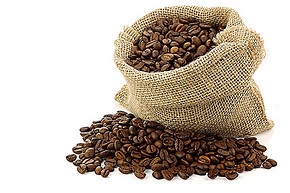
Differences, Distinctions, and Awards of Panama Hartmann Estate Single-Origin Coffee Beans

For those who want to go deeper into professional barista knowledge and bean selection, this piece is a useful reference.
Panama Hartmann Estate Single Origin Bean Differences, Distinctions, and Award Status
This batch is a red-wine-processed Caturra, releasing an extremely rich fruit-wine aroma the moment it is ground, accompanied by fresh smoked-wood spice and the particular berry sweetness of natural-style processing. Just smelling it is intoxicating. On the palate it opens into rich tropical fruit, like a cocktail carefully blended from passion fruit, mango, orange, and berry juices with a splash of peach wine. No, it's better than that: it's a cocktail from nature itself.
Among all the coffee regions on Earth, very few have successfully experimented with wine-like processing. After years of testing, this method can finally manage the acid structure in coffee. Coffee fermented this way gains greatly in sweetness, cleanliness, and a layered acidity that is complex yet elegant, significantly raising both quality and distinctiveness.
The wine method is also called controlled fermentation, or lactic/acetic acid fermentation.
The experimental team is led by American Felipe Sardi and made up of biological scientists and ecologists who apply technologies such as solar energy to cultivation and green bean processing.
A specialized hand-harvesting team is trained and strictly follows specialty harvesting requirements: unripe fruit <2%, defective beans <3%, floaters <5%.
Acetic Acid Fermentation Method—Aerobic Fermentation
Lactic Acid Fermentation Method—Anaerobic Fermentation
Flavor Expectations:
Acetic Acid Fermentation Method: Cleaner, lively acidity, brighter acid quality, citric acid
Lactic Acid Fermentation Method: More rounded mouthfeel, slightly lower cleanliness than acetic fermentation, higher body, malic/tartaric acid
Previously, processing plants relied on traditional hand methods passed down through generations, such as biting a bean to gauge fermentation. That approach is uncontrollable and variable.
Controlled fermentation monitors the degree of fermentation by controlling pH values, achieving predictable results and consistent production batch after batch.
Hartmann Estate Washed
Country: Panama
Region: Volcan
Altitude: 1250-1800 meters
Processing Method: Washed
Grade: SHB
Variety: Arabica
Flavor Description: Drupaceous fruits, cream, vanilla, and herbal plant aftertaste
Hartmann Estate Natural
Country: Panama
Region: Volcan
Altitude: 1250-1800 meters
Processing Method: Natural
Grade: SHB
Variety: Arabica
Flavor Description: Wine aroma, fruit juice, grape, longan
Hartmann Estate Pacamara Natural
Country: Panama
Region: Volcan
Altitude: 1250-1800 meters
Processing Method: Natural
Grade: SHB
Variety: Pacamara
Flavor Description: Dried fruit, smoky, cardamom-like spices, onion, melon fragrance
Hartmann Estate Geisha Natural
Country: Panama
Region: Volcan
Altitude: 1250-1800 meters
Processing Method: Natural
Grade: SHB
Variety: Geisha
Flavor Description: Citrus, melon fragrance, tropical fruits
Hartmann Estate is a coffee estate run jointly by the Hartmann family.
The founder of the estate was Alois Strasil Hartmann.
He came to the Boquete area of Panama around 1918 to start his cultivation business.
Today, Hartmann Estate has two coffee farms: Ojo de Agua and Palo Verde.
They sit about two miles apart from each other. Coffee at Ojo de Agua is grown under shade trees.
Many areas within the estate are primary forest.
It is also one of the buffer zones of the famous La Amistad Forest Reserve that spans Costa Rica and Panama.
The average altitude falls between 1220 to 1828 meters.
Dirt roads within the estate lead to various native wildlife habitats.
Perfect for bird watching, hiking, and exploration.
The Palo Verde farm is what we commonly know as Hartmann Estate.
Coffee grown here is also cultivated under rainforest shade trees.
The average altitude is 1250 meters with an annual average temperature between 12.7 to 26.6 degrees Celsius.
Annual rainfall is 4500 millimeters.
There are extensive dirt roads within the estate.
There is also a small museum collecting insect specimens and local handicrafts.
Panama
Population: 3,406,000
Panama's coffee definitions are based on how coffee is produced, not on geographic divisions. Previously, when coffee was more widely cultivated and when the regions listed below were smaller and more tightly clustered, the beans produced could be combined as one unit.
BOQUETE
The Boquete region is Panama's most famous producing area. Its mountainous terrain creates many microclimates. Relatively cool weather and frequent fog help slow the ripening of the cherries, which some compare to high-altitude conditions.
Altitude: 400-1,900m
Harvest: December—March
Varieties: Typica, Caturra, Catuai, Bourbon, Geisha, San Ramon
VOLCAN-CANDELA
This region around Candela Volcano produces most of Panama's food and some remarkable coffee. It is named after Baru Volcano and Piedra Candela city and borders Costa Rica.
Altitude: 1,200-1,600m
Harvest: December—March
Varieties: Typica, Caturra, Catuai, Bourbon, Geisha, San Ramon
RENACIMIENTO
Renacimiento is a producing region in Chiriqui province, bordering Costa Rica. The area itself is relatively small, so it is not a major specialty coffee region in Panama.
Altitude: 1,100-1,500m
Harvest: December—March
Varieties: Typica, Caturra, Catuai, Bourbon, Geisha, San Ramon
Panama Hartmann Estate
When people talk about Panama's coffee traditions, most are familiar with the specialty regions around Boquete, but in recent years coffee from the Volcan region has gradually emerged in the specialty market, with quite a few estates entering the Best of Panama competition and even winning. Volcan generally gets less annual rainfall than Boquete, and its position on the west side of Baru Volcano gives the coffee more intense dried-fruit flavors, sweetness, and aroma than Boquete. In the early days, Volcan mostly grew crops like fruits and vegetables, with very few coffee farmers. Among the pioneers of coffee cultivation there was the well-known Hartmann family.
The Hartmann family's story in Panama is a long saga of European immigration. Alois Strasil Hartmann was born in what was then the Austro-Hungarian Empire, now part of the Czech Republic. With his country politically unstable, he decided to start over abroad. He first stayed in New York, then traveled to Panama. After a few months, Alois found he couldn't adapt to city life in Panama City, and the adventurer in his blood told him to move on. He quit his job and followed the mountains to the Volcan region to work and settle. He also married his first wife, Susana Troetsch, and they had Hartmann Troetsch, the founder of Hartmann Estate. Starting in 1940, Hartmann Troetsch inherited his father's farmland and began preparing the land, establishing the history of Hartmann Estate that continues today. During the initial clearing, the elder Hartmann decided to preserve most of the original forest within the estate, a conservation ethos that has passed down to the current third-generation managers. The estate still keeps the tradition, with coffee cultivation covering only about 20% of the whole property. Thanks to that forest protection, the estate is rich in native birds, and the locally famous toucan naturally became its logo.
Hartmann Estate is currently managed by Hartmann Troetsch's five children, who share the various duties. The eldest, Ratibor and Kelly, mainly handle coffee quality work such as cultivation, breeding, and fertilization within the estate areas, making them the soul of the operation. Beyond their own estate, the family also provides management services for farms near Volcan; for example, Ninety Plus' Panama estate has long worked closely with the Hartmann family.
Within Hartmann Estate, Ojo de Agua has always been a favorite section. It sits at a higher altitude within the estate, with very limited annual production, and currently grows only a few varieties such as Geisha, Caturra, and Catuai. The estate totals 120 hectares, of which only 20 hectares are cultivated. Another property, Santa Clara, serves as both a coffee farm and a nursery garden and houses Hartmann Estate's washed processing plant. It is also where the owner experiments with the flavor of different varieties; more than ten are currently under trial, and promising ones may be planted at larger scale.
Caturra is a single-gene variant of Bourbon, discovered in Brazil in 1937. Its yield and disease resistance are better than Bourbon's, and the plant is shorter, making harvest easier. Unfortunately, like Bourbon, it suffers from biennial production cycles. It is highly adaptable, though, needs no shade trees, and thrives under full sun, which earned it the name "Sun Coffee." It tolerates high-density planting but needs more fertilizer, raising costs, so farmers initially accepted it slowly.
When coffee prices soared in the 1970s, however, farmers switched to Caturra to raise yields. With strong promotion from Brazilian and Colombian authorities, results were abundant. Farmers' acceptance of Caturra meant a major change in cultivation technique, and Brazil and Colombia adopted high-yield, high-density sun cultivation. By 1990, one million hectares could harvest 14 million bags of coffee, a 60% increase in production. No wonder high-yield, high-quality Caturra became the variety so many producing countries rely on.
Caturra suits cultivation from low altitudes of 700 meters to high altitudes of 1700 meters, showing strong altitude adaptability. The higher it grows, the better the flavor, but the lower the yield, which is the fate of specialty beans. Some academics call Caturra the intensive, sun-exposed version of Bourbon, and that hits the nail on the head. There is also a yellow Caturra variant (Caturra Amarello) in Central and South America, but its reputation is not as good as Yellow Bourbon's.
When lightly roasted, Caturra shows an obvious acidic aroma and overall brightness, and with proper processing its sweetness comes through very well. Its body, however, is relatively low compared with Bourbon, and mouthfeel cleanliness is somewhat lacking.
Usually Caturra has red berries, but in a very few regions there is yellow Caturra; Hawaii, for instance, cultivates a very small amount of yellow Caturra.
Pour-over Hartmann: 15g of coffee, medium grind (Fujiyama serrated blade 4 grinding), V60 dripper, 88-89°C water. First pour 30g of water for a 27-second bloom, pour to 105g and stop, wait until the bed's water drops to half before pouring again, then slowly pour to 225g and discard the tail end. Water-to-coffee ratio 1:15, extraction time 2:00.
Country: Panama
Grade: SHG
Region: Volcan Region
Altitude: 1250-1700 Meters
Processing Method: Wine Processing Method
Variety: Caturra
Estate: Hartmann Estate
Flavor: Smoked wood spices, berries, fruit wine aroma
Panama Hartmann Estate Caturra Wine Processing Method
Manufacturer: FrontStreet Coffee (FrontStreet Coffee)
Roasted and packed in-house by FrontStreet Coffee.
Ordering and product inquiries are handled through FrontStreet Coffee's official channels.
Ingredients List: Self-roasted
Shelf Life: 30 days
Net Content: 227g
Packaging Method: Bulk
Taste: Neutral
Coffee Bean Raw/Roasted Degree: Roasted Coffee Beans
Sugar Content: Sugar-free
Origin: Panama
Coffee Type: Other
Roast Degree: Medium Roast
Hartmann Estate Introduction
Hartmann's story, like its coffee, is legendary. Hartmann Estate is located in Santa Clara, Chiriqui. Its founder was Mr. Alois St. Hartmann (Luis Hartmann). He was born on June 20, 1891, in the Moravia region of Austria-Hungary, now the Czech Republic, and died on May 25, 1970, at the age of 78.
After World War I began, he was abandoned as a young boy. Thanks to his mother, he managed to hide on a ship bound for Pennsylvania, USA, and survived; both of his brothers died in the war after joining the army. Luis Hartmann traveled through several countries with friends until he came to Panama in 1911 and settled in Chiriqui Province in 1912, mainly active in the Candela region. He built the first small cabin in that primeval forest.
Today's Hartmann Estate is a family enterprise founded in 1940 by Ratibor Hartmann, son of Alois. In 1966, Ratibor married Dinora Zúñiga of Costa Rica. They had five children together: Ratibor Jr., Allan, Alexander, Alicia, and Kelly. Each family member takes on responsibilities from coffee cultivation and management to harvesting, processing, and estate tours. A family estate that has grown coffee for over 100 years is itself a legendary story.
This family enterprise has a state-level cupping laboratory and sample roasting room. They rigorously cup every batch of cherries, which ensures stable quality and a continuous pursuit of improvement. Their scientific approach to coffee and nearly 100 years of family experience guarantee their excellent coffee.
A legendary estate with a state-level cupping laboratory and sample roasting room, its rigorous attitude and strict standards ensure the stable quality of Hartmann Estate coffee.
FrontStreet Coffee Recommendation
Panama's Volcan and Boquete regions are the heart of its specialty scene, and FrontStreet's Panamanian selections show the range of what that terroir can do.
FrontStreet Boquete Washed Geisha
The first Panamanian coffee many baristas suggest you try. Boquete's mountain valleys are often cloaked in mist, humid by day and cool by night, and Baru Volcano brings fertile soil, all ideal for Geisha. This estate-level entry Geisha is grown at 1600 meters, and its volcanic ash soil feeds the plants rich nutrients that become a full aroma. Brewed, it shows Geisha's signature jasmine, green tea, honey, citrus, and orange flavors.
FrontStreet Panama Washed Butterfly
Geisha is a rare wild variety and a regular champion at tasting competitions, with slender green beans, an unexpectedly citrus-fresh roasted cup, and a fruity, floral finish. Butterfly carries half of Geisha's fine pedigree, made up of Geisha, Caturra, and Catuai grown in Boquete's Baru Volcano area. Panama's unusual microclimate brings abundant rainfall and a large day-night temperature swing, and the volcanic rock soil plus careful picking and processing give the cup outstanding overall body, citrus acidity, and Geisha's jasmine aroma. It suits both pour-over and cold brew.
FrontStreet Esmeralda Diamond Mountain
A star-level brand under Hacienda La Esmeralda, made mainly of Catuai with some Typica and Bourbon. The green beans are harvested from Jaramillo and Canas Verdes, two of the estate's four independent farms, whose volcanic soil and original-forest shade give the beans rich fruit aroma and sweetness, making Diamond Mountain another popular independent brand from the estate besides Geisha.
Important Notice :
FrontStreet Coffee is a long-established specialty coffee roaster in Guangzhou China, selling freshly roasted beans from its own farm in Yunnan as well as dozens of carefully selected single-origin beans from around the world for both pour-over and espresso. The products deliver consistently excellent quality and great value, with shipping within 24 hours. Guangzhou's FrontStreet Coffee shop is recommended by many coffee lovers, and the beans are now available online at the Tmall 。
FrontStreet Coffee has moved to a new address:
FrontStreet Coffee Address: 315,Donghua East Road,GuangZhou
Tel:020 38364473
 Scan and follow the En Gafei WeChat official account. Please indicate that the reprint comes from "En Gafei".