Panama Hartmann Estate Single Origin Coffee: Flavor Profile, Growing Region, and Brewing Parameters
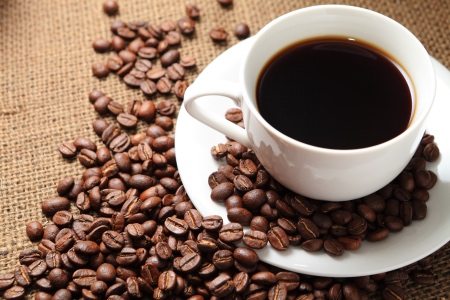
Panama Hartmann Estate Single Origin Bean Flavor Characteristics, Growing Region, and Brewing Parameters
Hartmann Estate Introduction
Hartmann's story is as legendary as its coffee. Hartmann Estate is located in Santa Clara, Chiriqui Province. The founder was Alois St. Hartmann (Luis Hartmann). He was born on June 20, 1891, in the Moravia region of Austria-Hungary, now the Czech Republic, and died on May 25, 1970, at the age of 78.
After World War I began, he was abandoned as a young boy. Thanks to his mother, he managed to hide on a ship bound for Pennsylvania, USA, and survived. His two brothers both died in the war after joining the military. Luis Hartmann traveled through several countries with his friends until he arrived in Panama in 1911 and settled in Chiriqui Province in 1912, mainly active in the Candel area. He built the first small cabin in this pristine forest.
Today's Hartmann Estate is a family business founded in 1940 by Ratibor Hartmann, son of Alois Luis. In 1966, Ratibor married Dinorora Sandi from Costa Rica. They had five children: Ratibor Jr., Allan, Alexander, Alicia, and Kelly. Each family member takes on different responsibilities in coffee cultivation management, harvest processing, and estate tours. A family estate that has been growing coffee for over 100 years is itself a legendary story.
This family business has a state-level cupping laboratory and sample roasting room. They rigorously cup each batch of coffee cherries. This ensures consistent quality of Hartmann Estate coffee and a continuous pursuit of improvement. Their scientific approach to coffee and nearly 100 years of family experience guarantee their excellent products.
A legendary estate with a state-level cupping laboratory and sample roasting room. A rigorous attitude and strict standards ensure consistent quality of Hartmann Estate coffee.
This batch is a red-wine-processed Caturra variety. From the moment it is ground, it releases an extremely intense fruity wine aroma, accompanied by fresh smoky wood spice notes, plus the special sweet berry aroma of natural processing. Smelling its fragrance is already intoxicating. Upon tasting, it presents rich tropical fruit flavors, like a cocktail carefully blended from passion fruit, mango, orange, and berry juices with peach wine. No, this is a cocktail from nature itself.
Among all coffee growing regions on Earth, very few have successfully experimented with red-wine-like processing methods. After years of testing, this processing method can finally control the acidity structure in coffee. Coffee fermented through red-wine-like processing greatly enhances the sweetness, cleanliness, and multi-layered, complex yet elegant acidity in coffee. This fermentation method significantly improves the quality and uniqueness of coffee production.
The red wine processing method is also called the controlled fermentation method, or the lactic/acetic acid fermentation method.
The experimental team is led by American Felipe Sardi, composed of biological scientists and ecologists who apply technologies such as solar energy to cultivation and green bean processing.
The specialized hand-picking team is trained and strictly follows specialty coffee bean picking requirements: unripe berries under 2%, defective beans under 3%, floaters under 5%.
Acetic Acid Fermentation Method - Aerobic Fermentation
Lactic Acid Fermentation Method - Anaerobic Fermentation
Expected Flavor Profiles:
Acetic Acid Fermentation Method:
Cleaner, lively acidity, brighter acidity, citric acid.
Lactic Acid Fermentation Method:
Rounder mouthfeel, slightly lower cleanliness compared with acetic acid fermentation, higher body, malic and tartaric acid.
Previously, processing plants used traditional manual methods passed down through generations, such as biting beans to feel their fermentation degree. This fermentation method is uncontrollable and variable.
The controlled fermentation method uses pH control to monitor fermentation degree, achieving predictable results and consistent batches.
Hartmann Estate Washed
Country: Panama
Region: Volcan
Altitude: 1250-1800 meters
Processing Method: Washed
Grade: SHB
Variety: Arabica
Flavor Description: Drupaceous fruits, cream, vanilla, and an herbal plant finish
Hartmann Estate Natural
Country: Panama
Region: Volcan
Altitude: 1250-1800 meters
Processing Method: Natural
Grade: SHB
Variety: Arabica
Flavor Description: Wine aroma, fruit juice, grapes, longan
Hartmann Estate Pacamara Natural
Country: Panama
Region: Volcan
Altitude: 1250-1800 meters
Processing Method: Natural
Grade: SHB
Variety: Pacamara
Flavor Description: Dried fruit, smoky, cardamom-like spices, onion, melon-like aromas
Hartmann Estate Geisha Natural
Country: Panama
Region: Volcan
Altitude: 1250-1800 meters
Processing Method: Natural
Grade: SHB
Variety: Geisha
Flavor Description: Citrus, melon-like aromas, tropical fruits
Hartmann Estate is a coffee estate jointly operated by the Hartmann family. The estate founder was Alois Strasil Hartmann, who came to Panama to start his cultivation business. Currently, Hartmann Estate has two coffee farms: Ojo de Agua and Palo Verde, located about two miles apart. Coffee at Ojo de Agua is grown under shade trees, and many areas of the estate remain pristine forest. It is also one of the buffer zones of the famous La Amistad Forest Reserve, which spans Costa Rica and Panama. The average altitude ranges from 1220 to 1828 meters, and dirt roads on the estate lead to various native wildlife habitats, perfect for birdwatching, hiking, and exploration.
The Palo Verde farm is what we commonly know as Hartmann Estate, where coffee is also grown under rainforest shade trees, with an average altitude of 1250 meters and annual temperatures between 12.7 and 26.6 degrees Celsius. Annual rainfall is 4500 cm, and the estate has well-developed dirt roads as well as a small museum displaying insect specimens and local handicrafts.
Panama
Population: 3,406,000
Panama's coffee regions are defined by how coffee is produced, not by geographical divisions. Previously, when coffee was more widely cultivated and the regions listed below were smaller and more clustered, coffee beans from these areas could be combined as a single unit.
BOQUETE
The Boquete region is the most famous coffee-growing area in Panama. Its mountainous terrain creates many microclimates. Relatively cool weather and frequent fog help slow the maturation of coffee cherries, which some believe resembles high-altitude climates.
Altitude: 400-1,900m
Harvest: December - March
Varieties: Typica, Caturra, Catuai, Bourbon, Geisha, San Ramon
VOLCAN-CANDELA
The Volcan-Candela region produces most of Panama's food and some amazing coffees. The region is named after Baru Volcano and the city of Piedra Candela, and borders Costa Rica.
Altitude: 1,200-1,600m
Harvest: December - March
Varieties: Typica, Caturra, Catuai, Bourbon, Geisha, San Ramon
RENACIMIENTO
Renacimiento is a coffee-producing region in Chiriqui Province, bordering Costa Rica. The area itself is quite small, so it is not a major specialty coffee-producing region in Panama.
Altitude: 1,100-1,500m
Harvest: December - March
Varieties: Typica, Caturra, Catuai, Bourbon, Geisha, San Ramon
Panama Hartmann Estate
When discussing Panama's coffee traditions, most people are familiar with specialty coffee regions from Boquete, but in recent years coffees from the Volcan region have gradually emerged in the specialty market, with quite a few estates entering the Best of Panama competition and even winning championships. The Volcan region generally has less annual rainfall than Boquete, and its geographical location on the west side of Baru Volcano gives coffees more intense dried fruit flavors, sweetness, and aroma compared with Boquete region coffees. In the early days, the Volcan area mostly grew economic crops like fruits and vegetables, with very few farmers cultivating coffee. Among the pioneers of coffee cultivation in the Volcan region was the well-known Hartmann family in Panama.
The Hartmann family's story in Panama is quite a long history of European immigration. Alois Strasil Hartmann was born in what was then the Austro-Hungarian Empire, now the Czech Republic. Due to political instability, he decided to start a new life elsewhere. Initially, Alois stayed in New York, USA, before traveling to Panama. However, after a few months, Alois found he didn't adapt well to urban life in Panama City. Adventure DNA always ran in his blood, and shortly after quitting his job, he decided to follow the mountain lines to the Volcan region to work and settle down. He married his first wife, Susana Troetsch, and they had Hartmann Troetsch, who would later found Hartmann Estate. Beginning in 1940, Hartmann Troetsch inherited his father's farmland and began land preparation work, starting the history of Hartmann Estate that continues today. During the early land clearing, old Hartmann decided to preserve most of the estate's original forest land, and this concept of native forest protection continues to influence the current third-generation estate managers. Today, Hartmann Estate still maintains this tradition, with coffee cultivation areas accounting for only about 20% of the entire estate. Due to successful forest conservation, the estate has numerous native birds, and the locally famous toucan has naturally become the estate's standard logo.
Hartmann Estate is currently managed by five children of Hartmann Troetsch, who handle various estate matters. Primarily, the eldest siblings Ratibor and Kelly are responsible for important work related to coffee quality, including cultivation, breeding, and fertilization within the estate. They are the soul figures of Hartmann Estate. Besides their own estate, the Hartmann family also provides management services for estates near Volcan, such as Ninety Plus's Panama estate, which maintains close cooperation with the Hartmann family on various estate management matters.
At Hartmann Estate, Ojo de Agua has always been one of our favorite sections. This area is located at a higher altitude within the estate, with very limited annual production. This section currently grows only a few varieties: Geisha, Caturra, and Catuai. The total estate area is 120 hectares, with only 20 hectares used for cultivation. Another estate is named Santa Clara, which serves as both a coffee estate and a nursery garden, as well as the location of Hartmann Estate's washed processing plant. This area is also where the estate owner experiments with different variety flavor performances. Currently, more than ten varieties are being tested, and promising varieties may be planted on a larger scale in the future.
Caturra is a single-gene variant of Bourbon, discovered in Brazil in 1937. It has better yield and disease resistance than Bourbon, with shorter plants that facilitate harvesting. Unfortunately, like Bourbon, it suffers from biennial production cycles. However, it has strong adaptability, doesn't require shade trees, and can thrive under direct sunlight, earning it the name "Sun Coffee." It can adapt to high-density planting but requires more fertilization, increasing costs, so initial farmer acceptance was low.
But in the 1970s, when coffee prices soared, farmers switched to Caturra to increase yields. With strong promotion from Brazilian and Colombian authorities, results were abundant. Farmer acceptance of Caturra meant a major transformation in cultivation techniques. Brazil and Colombia adopted high-yield, high-density sun cultivation. By 1990, one million hectares could harvest 14 million bags of coffee beans, increasing production by 60%. No wonder high-yield, high-quality Caturra has become a variety relied upon by various producing countries.
Caturra is suitable for cultivation from low altitudes of 700 meters to high altitudes of 1700 meters, with strong altitude adaptability. The higher the altitude, the better the flavor, but relatively lower the yields. This is the destiny of specialty beans. Some academics call Caturra the intensive, sun-grown version of Bourbon, which is quite insightful. There are also yellow Caturra variants (Caturra Amarello) in Central and South America, but their reputation doesn't match that of Yellow Bourbon.
When lightly roasted, Caturra has obvious acidity and overall brightness. With proper processing, sweetness can perform very well, but coffee body is relatively low compared with Bourbon, and mouthfeel cleanliness is somewhat lacking.
Usually, Caturra has red berries, but in very rare areas there are yellow Caturras, such as the very few yellow Caturras grown in Hawaii.
Pour-over Hartmann: 15 g of coffee, medium grind (Fuji Royal hand grinder with ghost teeth, setting 4), V60 dripper, water temperature 88-89°C. First pour with 30 g of water for a 27-second bloom, then pour to 105 g and pause. Wait until the water level drops to halfway before pouring again. Slowly pour until reaching 225 g total. Avoid the tail end. Water-to-coffee ratio 1:15, extraction time 2:00.
Country: Panama
Grade: SHG
Region: Volcan Region
Altitude: 1250-1700 Meters
Processing Method: Red Wine Processing
Variety: Caturra
Estate: Hartmann Estate
Flavor: Smoky wood spices, berries, fruit wine aroma
Panama Hartmann Estate Caturra Red Wine Processing
Ingredients: In-house roasted
Shelf Life: 30 days
Net Content: 227g
Packaging: Bulk
Taste: Neutral coffee beans
Raw/Roasted Degree: Roasted coffee beans
Contains Sugar: No
Origin: Panama
Coffee Type: Other
Roast Level: Medium roast
FrontStreet Coffee Recommendation
Hartmann Estate's experimental red-wine processing shows how far fermentation can push a Caturra, and if you enjoy Panama's bright, elegant style, FrontStreet Coffee's Panama selections are a natural next step. The FrontStreet Boquete Washed Geisha is a classic estate-level Geisha grown at 1600 meters, with jasmine florals, green tea, honey, citrus, and orange in a delicate, expressive cup. The FrontStreet Panama Washed Butterfly combines Geisha, Caturra, and Catuai grown around the Baru Volcano in Boquete, delivering a full body, bright citrus acidity, and the signature jasmine aroma of Geisha, and it works well as pour-over or cold brew. For the highest grade, the FrontStreet Esmeralda Red Label Geisha is picked from a single plot above 1700 meters and cupped at 91 points, showing refined orange-honey and floral elegance.
Important Notice :
FrontStreet Coffee is a long-established specialty coffee roaster in Guangzhou China, selling freshly roasted beans from its own farm in Yunnan as well as dozens of carefully selected single-origin beans from around the world for both pour-over and espresso. The products deliver consistently excellent quality and great value, with shipping within 24 hours. Guangzhou's FrontStreet Coffee shop is recommended by many coffee lovers, and the beans are now available online at the Tmall 。
FrontStreet Coffee has moved to a new address:
FrontStreet Coffee Address: 315,Donghua East Road,GuangZhou
Tel:020 38364473
 Scan and follow the En Gafei WeChat official account. Please indicate that the reprint comes from "En Gafei".