Introduction to Chinese Yunnan Estate Geisha Variety - How is Yunnan Geisha Coffee Bean Quality and Grade?

Ask any coffee lover to name the first thing that comes to mind when they hear "specialty coffee," and the answer is usually Geisha — above all, Panamanian Geisha. The variety carries enormous prestige, delivers an elegant and layered cup, and constantly makes headlines with auction prices that stun people outside the industry. In recent years, however, FrontStreet Coffee has watched another player enter the market: Geisha grown in China's Yunnan province. Are these genuinely Geisha, and what do they actually taste like?
What is Geisha?
The Geisha we know today traces back to the primary forests of the Gesha region in Ethiopia. It is an Arabica variety with respectable disease resistance but a notoriously low yield. When the variety was first collected, botanists gathered coffee plants from across the area, named them after the collection site — Gesha mountain — and shipped them to British plantations in Kenya for study and propagation.

In 1936 the material moved on to Tanzania for further research, and in 1953 it reached Costa Rica, where it was cataloged as T2722. Panama acquired the T2722 Geisha in the 1960s. Over decades of local adaptation, the variety refined itself into the delicate floral and fruity profile we recognize today. After winning the Best of Panama competition in 2004, it ushered in the global "Geisha era."
According to FrontStreet Coffee's understanding, Geisha is exceptionally demanding about where it grows: it needs high altitude, fertile soil, and cloud cover or shade trees — it cannot tolerate direct, unfiltered sunlight. The owner of Hacienda La Esmeralda has noted that the estate relies on numerous shade trees to shield the delicate Geisha from the sun, and that traditional pruning methods must be used during the early years of planting; otherwise the plants easily die. At higher elevations, Geisha cherries take longer to mature, and the resulting flavors become more complex and distinctive.

Unlike most other coffee varieties, Geisha trees have very thin leaves, which means their photosynthetic efficiency is low. Their root systems are also fragile and slow to take up water and nutrients, so yields are very low. Combined with the late maturation that comes with high-altitude growing, a single Geisha tree produces only about half the cherries of a Caturra tree — one of the main reasons Geisha commands such high prices.
Once Geisha made its name, coffee farmers far beyond Central and South America rushed to plant it. But every origin has its own terroir, altitude, and farming practices, all of which shape quality and flavor, so Geisha now expresses itself differently from region to region. For anyone tasting Geisha for the first time, FrontStreet Coffee usually points to the two most representative origins: Ethiopia, the variety's birthplace, and Panama, where it rose to fame.

Panama · Geisha
Boquete is, strictly speaking, the name of a valley tucked in a narrow strip of land between the Baru Volcano and the Cerro Pila mountains. The scenery alone draws travelers from around the world — cool, quiet dry seasons and steady drizzle through the rainy season. Longtime residents have taken advantage of the setting, building restaurants, villas, resorts, and other leisure projects along the Rio Caldera, making the valley a favorite destination for visitors.

Looking at the map, FrontStreet Coffee notes that Panama sits between two ocean currents: air masses from the Caribbean Sea and the Pacific converge above the Boquete valley at around 6,500 feet, creating a unique and changeable microclimate. The result is moderate temperature and humidity, and under near-constant cloud cover, abundant rainfall, and rich volcanic soil, coffee trees here enjoy naturally superb growing conditions — ideal for developing a broad range of aromatic characteristics.
Before 1989, Panamanian coffee prices were governed by the International Coffee Agreement. Through much of the 19th and 20th centuries, Panama exported only small quantities of green coffee to Western Europe. When the agreement collapsed in 1989, international green coffee prices plunged — at one point falling from $1.20 per pound to $0.74 per pound. In the early 1990s, as commercial prices slid, Panama turned its attention to the emerging specialty coffee market. In 1996, seven local estate owners jointly founded the Specialty Coffee Association of Panama (SCAP) and staged the country's first green coffee competition and online auction, aiming to jointly promote high-quality Panamanian coffee by organizing small-scale growers across the nation.

With SCAP established and Geisha propelled to industry fame through the Best of Panama, the country began winning praise from international coffee professionals. In FrontStreet Coffee's view, Panama's reputation today rests not only on its naturally ideal growing environment but also on the skill of its coffee farmers.
FrontStreet Coffee's bean list includes several Panamanian Geisha coffees. If we could recommend just one to start with, it would be FrontStreet Coffee's washed Geisha from the Boquete region: a renowned origin, traditional washed processing, a very approachable price, and the classic citrus and honey sweetness of Geisha — a quality representative not to be missed.

Ethiopia · Geisha
After Panamanian Geisha rose to prominence, some coffee researchers returned to the variety's original collection site, following old records in search of T2722's wild descendants — hoping to harvest wild Geisha beans that could serve as an alternative. The researchers did find such trees, though the genetic relationship turned out not to be especially close; they merely share some identical genes.
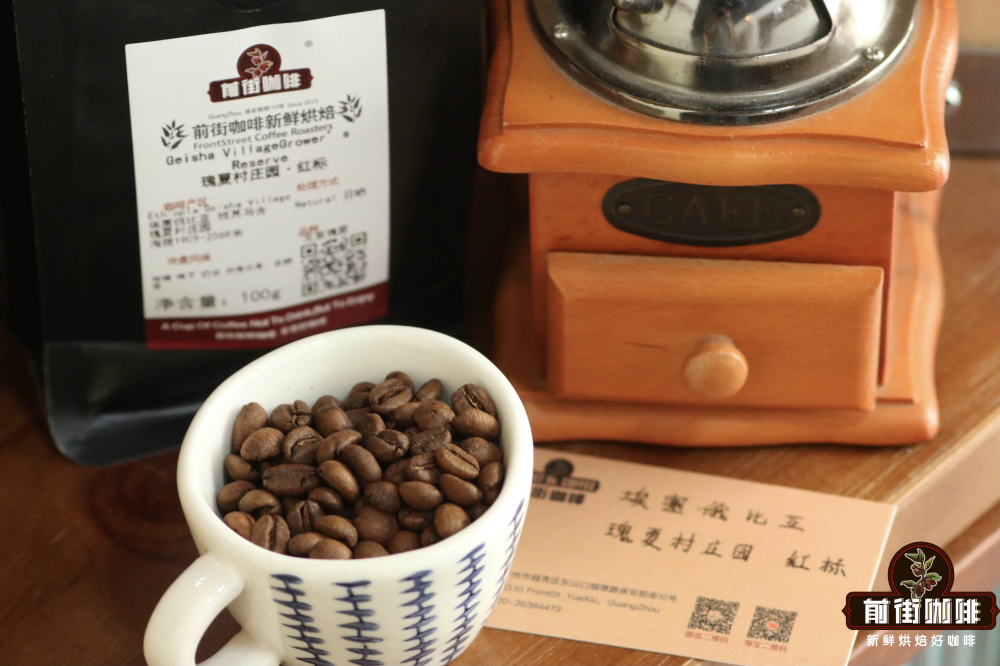
In flavor terms, Ethiopian Geisha is not as polished — after all, these are wild trees whose genes were never shaped by human selection, only by differing natural environments. They do carry floral and fruity aromatics, but the brightness is muted, an almond note often shows up, and the mouthfeel is not as rich as that of Panamanian Geisha.
The same logic applies to Yunnan's Geisha. Whether a farm plants the T2722 line or Ethiopian Geisha, once the variety settles into Yunnan its flavor changes. One reason is that the planting altitude does not match that of Africa or Central and South America, and the soil composition and climate differ significantly as well.
When did Yunnan start planting Geisha?
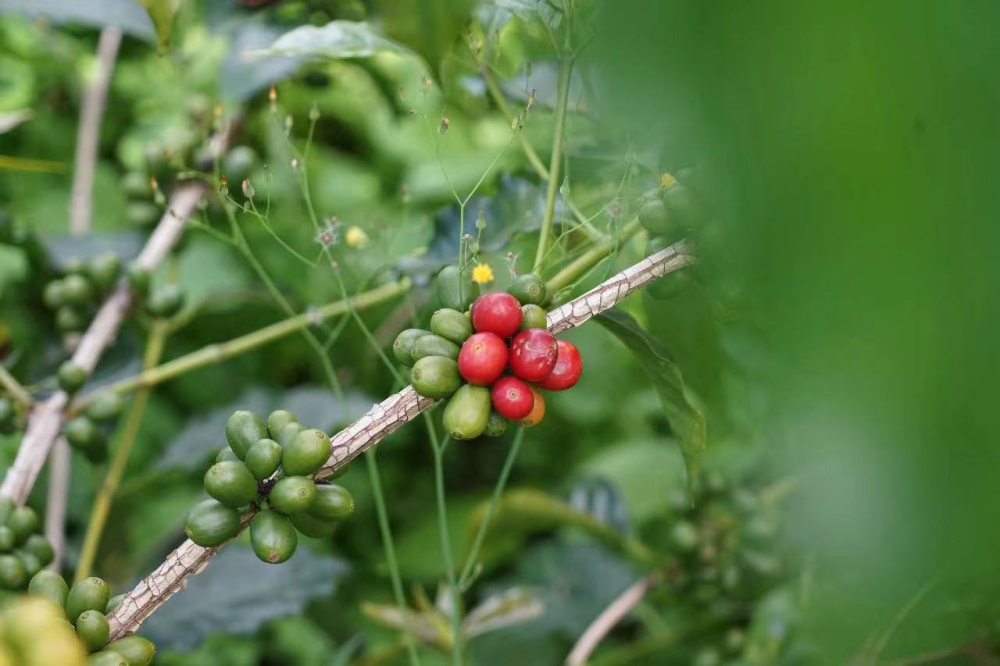
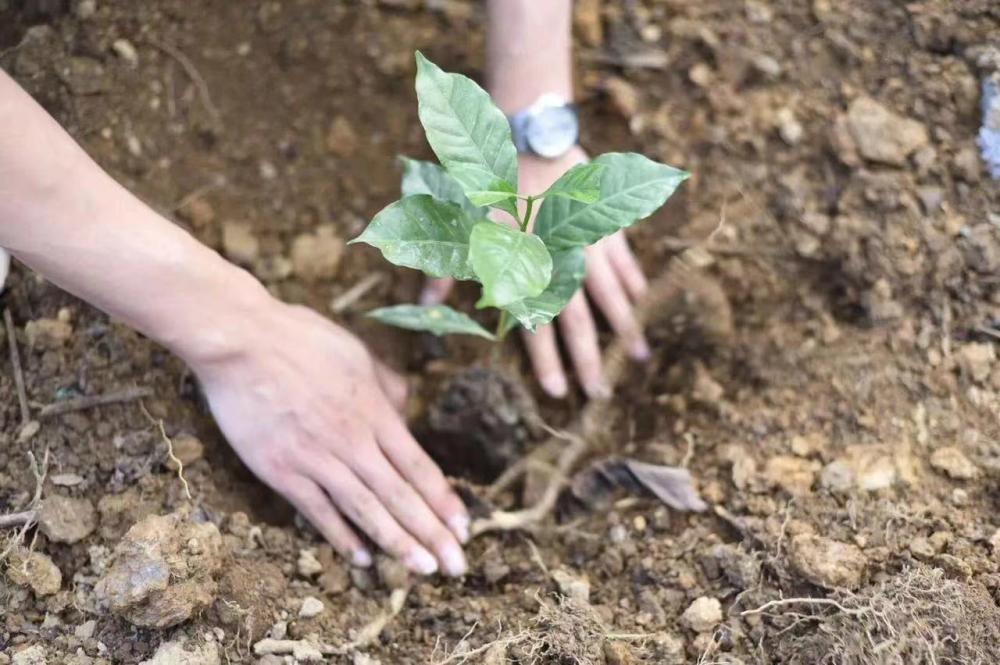
With the Panamanian and Ethiopian stories told, let's turn back to Yunnan. The planting history of Yunnan Geisha is short. It is grown mainly in the "Zuo Garden" of the Baoshan region, where, around 2011, the garden's owner began researching Geisha cultivation and set aside a dedicated plot of the estate for Yunnan Geisha planting trials.
The Geisha at China's Yunnan Aini Estate was introduced from Panama in 2012. After nearly five years of cultivation across the two estates, Geisha grown in Yunnan produced mature, stable-quality green beans that adapted well to the local climate and soil, showing strong rust resistance, good yields, and excellent cold tolerance — with particularly impressive performance in the cup.
Even though many countries began planting Geisha after it became famous, the flavors rarely match the refinement of beans grown in Panama's high-altitude regions. Even using already "domesticated" Panamanian Geisha varieties, growers elsewhere cannot replicate the same cup.
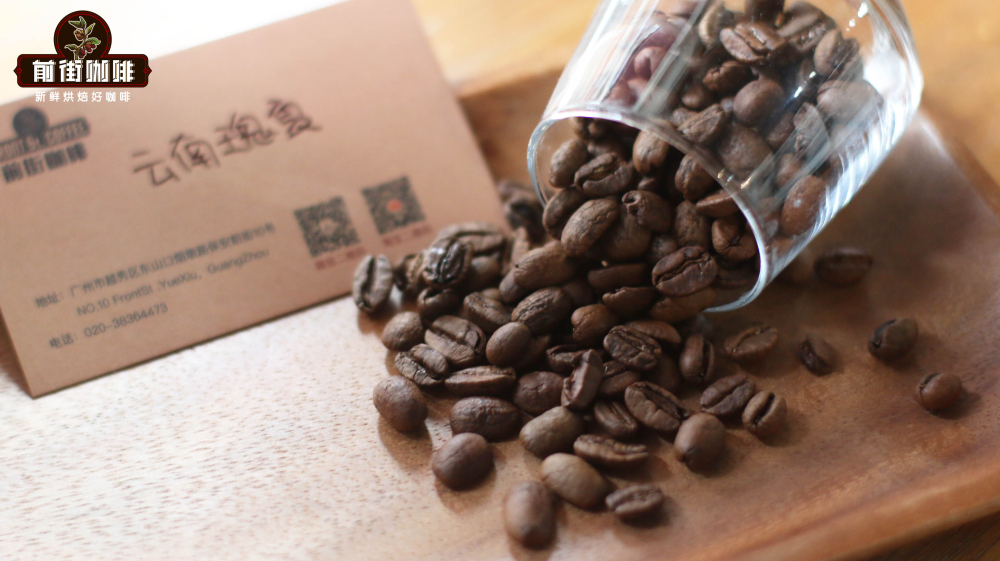
Today Yunnan Geisha is grown mainly in Baoshan, Pu'er, Xishuangbanna, and nearby areas, mostly on high mountains between 1,300 and 1,800 meters. Planting area remains a small share of total production, so yields are low and prices comparatively high. To taste Yunnan Geisha firsthand, FrontStreet Coffee imported a natural-process Geisha from Baoshan, roasted it medium-light, and evaluated it by cupping.
FrontStreet Coffee typically cup-tests its Yunnan-grown Geisha varieties first: a plum-like acidity, the sweet freshness of red berries, a faint tea-like sensation, and a nutty aftertaste. The florals are not prominent, and the flavor leans toward balance — overall a fairly restrained cup.
FrontStreet Coffee Recommendation
If this article has whetted your appetite for Geisha, the best starting point is FrontStreet Coffee's Panama lineup. At the top sits the Esmeralda Red Label Geisha, officially known as "Esmeralda Special": grown at 1,600-1,800 meters, with every batch required to score above 90 points on the cupping table. Each batch carries its own independent lot number, and all beans in a batch come from a single small plot — FrontStreet Coffee's Red Label, for example, comes from the Jaramillo plot — so buyers can choose lots according to their preference for subtle flavor differences. The Green Label Geisha, "Private Collection," blends batches from multiple plots to express the estate's signature high-altitude Geisha profile; because it is not tied to a single terroir, it sells for less, making FrontStreet's Green Label an outstanding value.
For newcomers who simply want a first taste of the legendary "Geisha flavor," FrontStreet Coffee recommends the entry-level Panama Boquete Geisha. At a friendly price it delivers the classic orange-blossom-and-honey character of fine Panamanian Geisha, with an oolong-tea body, delicate fruity acidity, and clearly defined layers. Brewed as a pour-over, these coffees show their most captivating aromatics: FrontStreet Coffee grinds for a 78% pass rate on a #20 sieve (about the texture of fine granulated sugar), uses 91°C water, and brews 15 g of coffee in a small Hario V60 at a 1:16 ratio in three pours — 30 g of water for a 30-second bloom, then to 125 g, then to 225 g, finishing in roughly 2 minutes 10 seconds to 2 minutes 20 seconds.
On the Ethiopian side, start with the FrontStreet Genlana Estate Geisha from the Yirgacheffe zone. The Genlana processing station, founded in 2014 and run by Mr. Israel Degefa, sits near the border of the Kochere and Genji Abaya areas, where coffee grows across some 700 hectares of largely uncultivated, fertile land shaded by forest trees. Only fully ripe cherries are hand-picked and dried on raised beds for 14 to 20 days depending on the weather. Roasted medium-light, it offers bright citrus acidity, an elegant ginger-flower aroma, the full sweetness of ripe fruit, and the silky, refined finish typical of the variety. For a step up, FrontStreet Coffee's Gesha Village Gold Label (the Gesha 1931 variety, just 10% of the estate's output and regularly chosen by competition baristas) and Red Label (Gori Gesha, 15% of production, scoring 88 or above on the SCA 100-point scale, with fully traceable single-terroir lots) are a must for advanced drinkers.
Important Notice :
FrontStreet Coffee is a long-established specialty coffee roaster in Guangzhou China, selling freshly roasted beans from its own farm in Yunnan as well as dozens of carefully selected single-origin beans from around the world for both pour-over and espresso. The products deliver consistently excellent quality and great value, with shipping within 24 hours. Guangzhou's FrontStreet Coffee shop is recommended by many coffee lovers, and the beans are now available online at the Tmall 。
FrontStreet Coffee has moved to a new address:
FrontStreet Coffee Address: 315,Donghua East Road,GuangZhou
Tel:020 38364473
 Scan and follow the En Gafei WeChat official account. Please indicate that the reprint comes from "En Gafei".