How to Brew Brazilian Coffee: Flavor Description of Medium Roast Single-Origin Brazilian Coffee Beans

Scan a single-origin menu and you will rarely see Brazil listed — Brazilian beans mostly live in espresso blends, and the reason lies in their flavor profile. Yet Brazil appears in almost every espresso blend on the market — some contain as much as 90% Brazilian coffee — and in countless well-known blend brands and canned coffees, which says a great deal about Brazil's weight in the coffee industry. That ubiquity in the commercial market does not mean Brazil cannot compete in specialty. Coffee is one of Brazil's most important economic sectors: it is the world's largest producer, and in recent years it has also carved out a serious place in specialty. Varieties grown across Paraná, Espírito Santo, São Paulo, Minas Gerais, and Bahia include Bourbon, Typica, Caturra, and Mundo Novo.
At FrontStreet Coffee, two Brazilian beans anchor the menu: one representing Brazil's everyday producing regions — the Cerrado — and one representing its specialty estates — Queen Farm Yellow Bourbon.

Brazilian Coffee Bean Producing Regions
Altitude and flavor are deeply linked. Panama Geisha proves the point: the higher and harsher the environment, the finer the cup. Brazil's growing regions sit at comparatively low altitude by Central and South American standards, and that low altitude defines the flavor. The terrain is flat and uniform, short on microclimates, and farms here favor unshaded, full-sun cultivation. The result is Brazil's signature soft bean character: low acidity, heavy nutty notes, chocolate sweetness, and excellent body — with faint woody and earthy edges and subtle floral and orange aromas. In short, Brazilian coffee is mild and balanced, rarely showing the wild, soaring acidity and citrus of African beans, which makes it a superb blending base. Every one of FrontStreet Coffee's blend beans is built on Brazilian coffee.

Brazil's coffee regions cluster in the central and southern parts of the country, spread across 7 states with roughly 14 producing regions: Sul de Minas, Serra da Mantiqueira, Chapada de Minas, Matas de Minas, Mogiana, Centro-Oeste de São Paulo, Montanhas do Espírito Santo, Conilon Capixaba, Cerrado, Planalto da Bahia, Atlântico Baiano, Paraná, Rondônia, and Cerrado. The most representative of all is undoubtedly Cerrado, and it is fair to say Sul de Minas and Cerrado together made Brazil's rise possible.
Sul de Minas (South Minas):
Sitting between 700m and 1200m, this hilly region is Brazil's oldest coffee-producing area. Rising labor costs have made mechanical harvesting the norm, and it was also the first region to be commercially organized — home to many of the large exporters. Sul de Minas owes its specialty standing to terrain and climate: much of its altitude exceeds 1100 meters, the terrain is varied, wet and dry seasons are distinct, day-night temperature swings are significant, and microclimates abound — conditions well suited to Bourbon and Yellow Bourbon.
Cerrado:
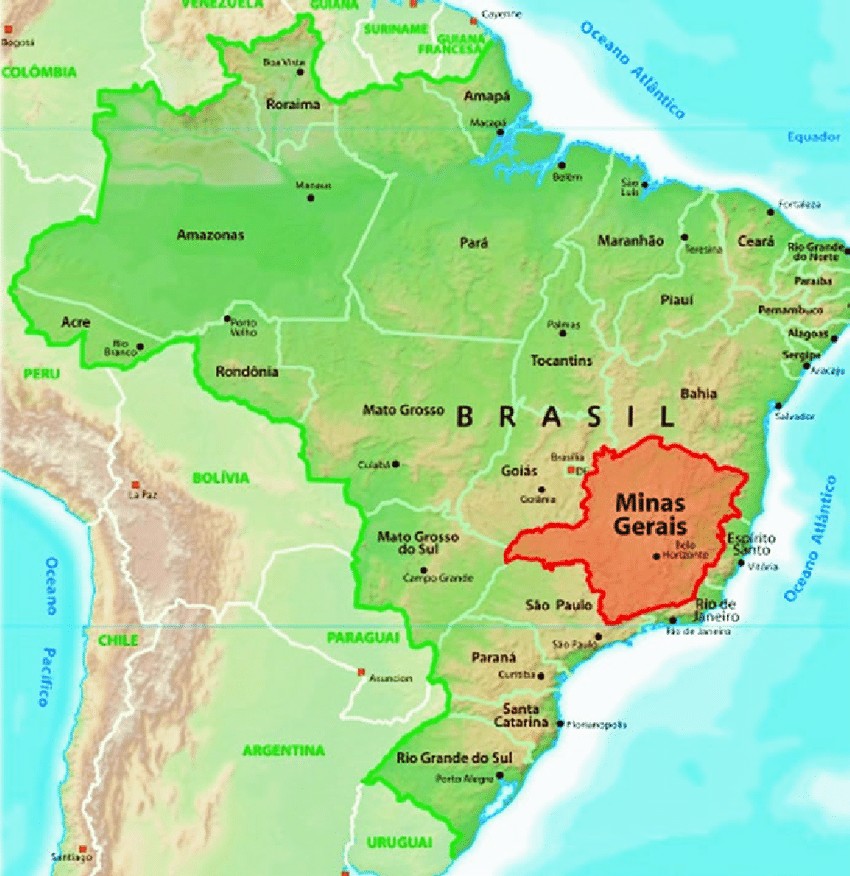
FrontStreet Coffee's daily-drinker Brazilian coffee comes from Cerrado, a region whose coffee is rich and free of earthy flavors — a gift of its climate. The Cerrado coffee region lies in the southern reaches of Brazil's central "Cerrado Savannah Climate Zone," a belt spanning eight provinces and roughly two million square kilometers, or 22% of Brazil's total area. Deep in the interior, "Cerrado" is Portuguese for "closed place." The savannah originates in Mato Grosso province in the southwest, extends through central-western Minas, and reaches western Bahia. The Cerrado Coffee Region proper refers to where the savannah crosses into Minas at plateau elevations of 850∼1200 meters — distinct from Sul de Minas, which sits in the same state. The flat, open terrain is ideal for large estates, and combined with distinct wet and dry seasons and a relatively cool plateau climate, this is the essence of the Cerrado: high altitude and fertile soil that make it possible to grow specialty beans with sweetness, high body, and high cleanliness.
Mogiana:
This region sits very close to southern Minas, with coffee grown among bushes, grassland, and other vegetation. It is a land of farming families — some running traditional large farms, others small modern operations — and the meeting of modern technique with mountain coffee culture produces some of the finest green coffee in Brazil.

FrontStreet Coffee's Brazilian Queen coffee comes from the Mogiana region.
Brazilian Coffee Bean Varieties
Varieties differ, and so do their flavors. When the FrontStreet Coffee packaging reads "Variety: Red Bourbon," what does that mean — and how do Red and Yellow Bourbon relate? Here is a quick introduction:
Red Bourbon:
Red Bourbon is a sub-variety born from a Typica mutation and, alongside Typica, counts among the oldest coffee varieties still in cultivation. It generally bears red fruit — hence the name — though Yellow Bourbon and Pink Bourbon exist as well. The name describes the color progression after flowering and fruiting: green > light yellow > light orange > mature red > darker red when fully ripe. In the cup it offers excellent aroma, bright acidity, and even wine-like notes. Red Bourbon is currently the most widely planted variety across Brazil's producing regions.
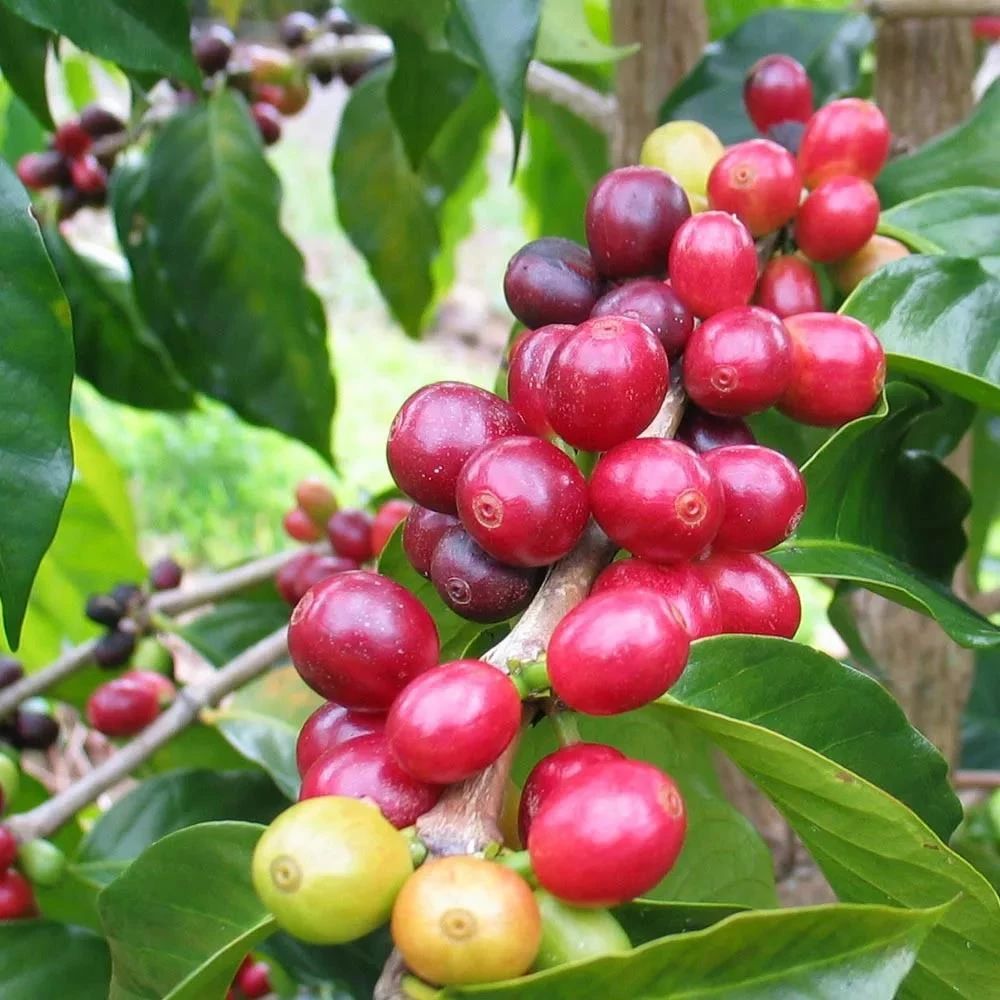
FrontStreet Coffee's daily-drinker Brazilian coffee is the Red Bourbon variety.
Yellow Bourbon:
Yellow Bourbon is another genetic mutation of Bourbon, a variety long ranked among the very best for its yield and quality. It is a Bourbon variant native to São Paulo state: unlike Red Bourbon's ripe red, Yellow Bourbon's cherries turn orange-yellow at maturity. Grown at very high altitude, its flavor is exceptional.

Yellow Bourbon typically shows nuts and chocolate, with balanced, smooth acidity and a faint, clean bitterness — an overall bright and refreshing profile. FrontStreet Coffee's Brazilian Queen coffee, a Yellow Bourbon, is exactly this.
Brazilian Coffee Bean Natural Processing Method
Before 1990, Brazil relied almost entirely on crude natural processing, and the beans paid for it. Coffee cherries had to sun-dry for two to three weeks with skin and pulp intact, and any rain causing moisture rebound could easily produce woody, earthy, or moldy flavors. To escape this dependence on the weather, Brazil leveraged its relatively dry climate and in 1990 developed the pulped natural method to shorten processing time.
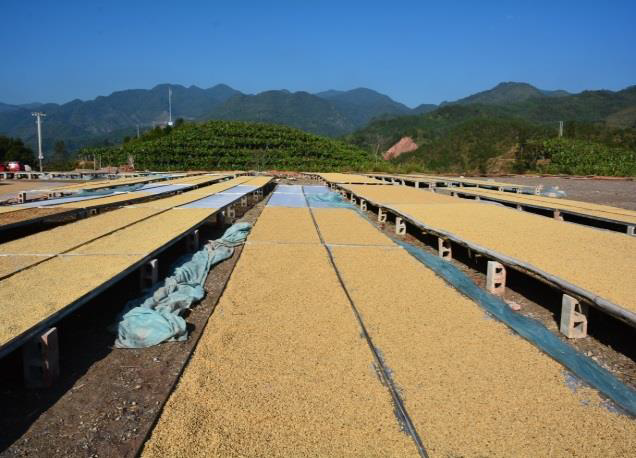
Pulped natural processing removes the skin and pulp of the cherries, giving producers control over how the mucilage ferments after depulping. Traditional naturals dry the whole cherry, leaving the mucilage fermentation impossible to monitor. Pulped natural sits between natural and washed — but skips the tank fermentation and clean-water rinsing of washed processing, sun-drying the beans directly instead. Similar as the steps may look, without that fermentation stage the flavor is entirely different. And there is a hidden benefit: during depulping, ripe pulp slips off easily while unripe green skins resist, allowing a second screening that filters out underripe fruit and standardizes cherry maturity. Compared with natural processing, FrontStreet Coffee finds this selection step improves cleanliness and maturity, yielding more uniform flavor.

FrontStreet Coffee's daily-drinker Brazilian coffee uses the pulped natural method. The Brazilian Cerrado processed this way shows balanced flavor that suits a wide range of extraction methods — moka pot, Americano, siphon, drip bag, and beyond.

FrontStreet Coffee's Brazilian Coffee Brewing Parameters:
So how should Brazilian coffee be brewed to show its best? Here are FrontStreet Coffee's pour-over parameters:
Brazilian coffee's flavor profile leans on nuts, chocolate, and caramel, so FrontStreet Coffee's roasters take it dark. The darker the roast, the more porous the bean structure and the stronger its water absorption — extraction comes easier. FrontStreet Coffee therefore lowers the water temperature and coarsens the grind to avoid the bitter flavors of over-extraction.

FrontStreet Coffee's recipe: KONO dripper, 88°C water temperature, 1:15 coffee-to-water ratio, 15g of coffee, grind size of 75% passing through the China No. 20 standard sieve, and segmented brewing. Brewed this way, the cup shows rich caramel, nut, peanut, and cream flavors.

For the dripper, FrontStreet Coffee chose the KONO Meimon. Its signature feature is the rib design: ribs run from the base to the midpoint, while the upper walls stay smooth. When the filter paper clings to the dripper, water cannot sneak around the coffee grounds — which deepens the body.
The dose stays at 15g. There is no universally "right" amount; it depends on the dripper. FrontStreet Coffee uses a 1-2 person dripper, for which 15-20g is a reasonable brewing dose — outside that range, things get difficult.

On ratio: FrontStreet Coffee recommends 1:15. Some argue for 1:13 or even tighter, but concentration and body do not necessarily rise together, and over-concentration turns uncomfortable. A 1:15 ratio still expresses Brazilian coffee's caramel and chocolate sweetness well — and if you prefer it milder, adjust the ratio slightly to taste.
On grind size: 75% passing a No. 20 sieve. Brazilian coffee should be ground slightly coarser than light roasts, because the dark roast's porous structure absorbs water and releases its solubles readily. Grind as fine as you would for a light roast and bitterness creeps in; grind coarser still and the cup turns thin, watery, and tasteless.

On water temperature: brew with 88°C water. The logic mirrors the grind — too hot pulls out bitterness, too cool flattens the cup and can stir up unpleasant sourness.

On technique: FrontStreet Coffee pours in three stages, which best expresses the nut, peanut, cream, and caramel sweetness. Bloom with twice the coffee's weight in water — 30g of water for 30 seconds — to wet the grounds fully and let them degas, setting up a more stable extraction. Second stage: pour in small circles to 125g and stop; when the grounds are exposed, move to the third stage. Third stage: continue to 225g and stop, removing the dripper once dripping finishes. Timed from the first pour, total extraction is 2'00". Swirl the full pot, pour, and taste.
FrontStreet Coffee's Brewing Recommendations:
Across everything above, one factor matters more than any parameter: freshness. Fresh beans express their full flavor, and every bag FrontStreet Coffee ships is roasted within 5 days — the degassing period runs about 4-7 days, so coffee arrives right at peak. The roasting philosophy is simple: "Freshly Roasted Good Coffee."
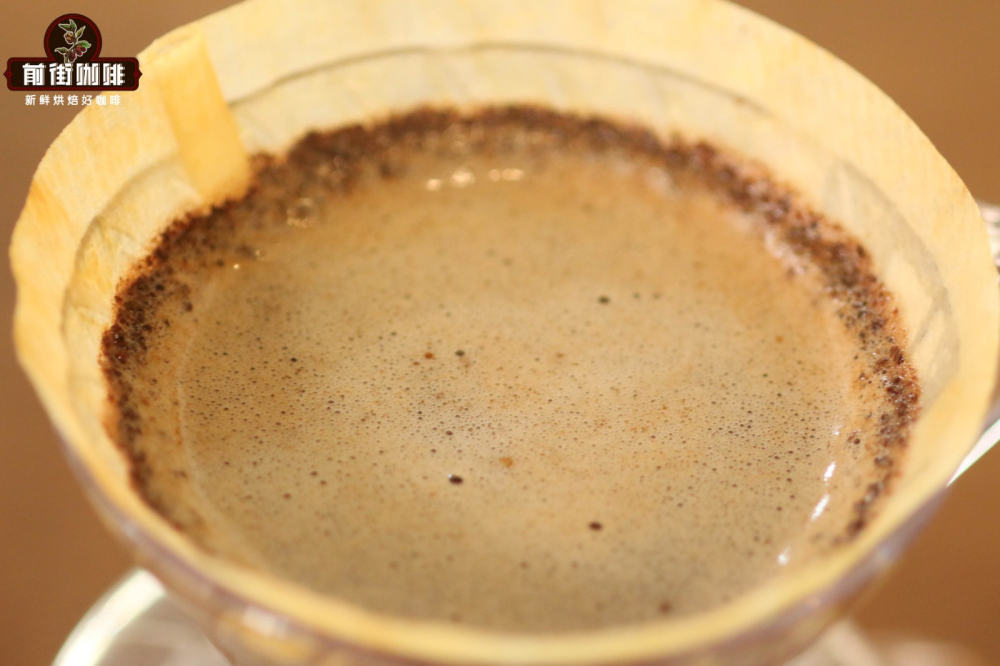
If you need your beans pre-ground, that is fine — just note that ground coffee skips the resting period, since the carbon dioxide pressure in the sealed packaging rounds out the flavor during transit; you can brew immediately on arrival. But brew it promptly: grounds oxidize fast, flavor dissipates quickly, and the cup fades. Whole bean, ground fresh per brew, is always the better call.
FrontStreet Coffee's Brazilian Coffee Brewing Parameters (Recap):
FrontStreet Coffee's recipe in brief: KONO dripper, 88°C water temperature, 1:15 coffee-to-water ratio, 15g of coffee, grind size of 75% passing through the China No. 20 standard sieve.
Segmented extraction: bloom with twice the coffee's weight — 30g of water for 30 seconds. Pour in small circles to 125g, then continue to 225g and stop. Remove the dripper when dripping finishes; timed from the first pour, extraction runs 2'00". Swirl the pot, pour into cups, and enjoy.
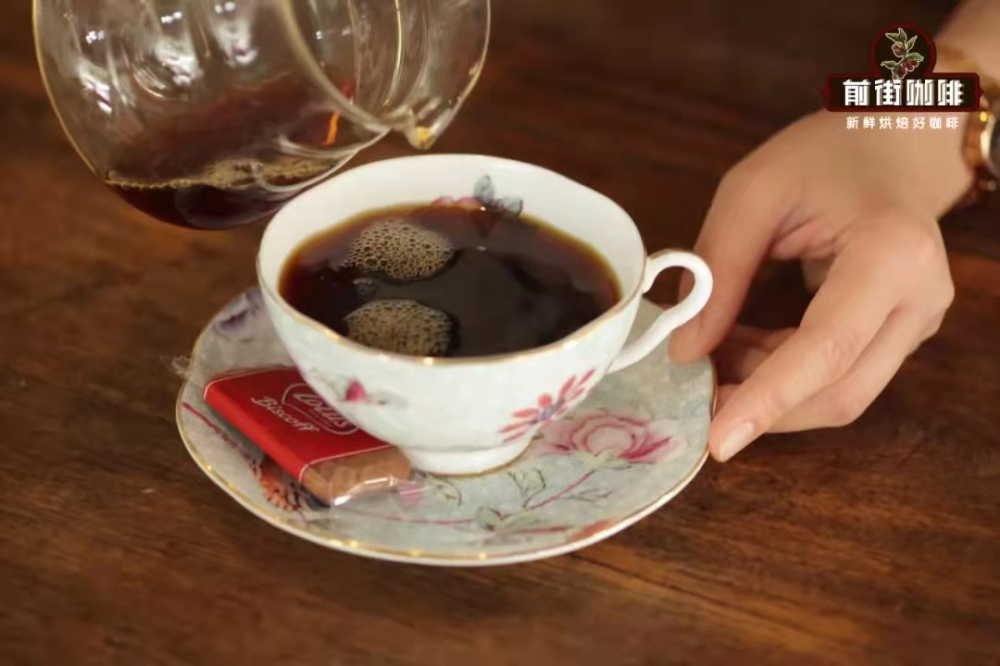
Pulped Natural Brazilian Cerrado flavor: distinct sweetness on entry with a light lemon aroma, rich nutty flavors throughout, and prominent dark chocolate in the finish — round and cohesive from start to end.
Natural Process Brazilian Queen Farm flavor: balanced mouthfeel built on almond and cocoa, with cane sugar sweetness front and center — a full-bodied coffee abundant in sweetness.
FrontStreet Coffee takes pour-over seriously because different beans and roast levels demand different equipment and water temperatures — which is why the cups poured at the bar so often taste better than the ones brewed at home. And if blends are more your speed, FrontStreet Coffee offers basic, premium, and commercial blends; single-origin drinkers are covered too, with over fifty single origins from around the world on the menu.
FrontStreet Coffee Recommendation
If the low-acid, chocolate-and-nut comfort of these Brazils is your style, two more FrontStreet Coffee picks belong on the shelf. The FrontStreet Granana Gesha SOE is a natural-processed Ethiopian roasted medium — no bitterness, just berry, orange, and persimmon notes that turn to milk-candy sweetness against steamed milk; as espresso, FrontStreet Coffee extracts it with 20g of coffee at a 1:2 ratio for 40g of yield in 25 seconds. For a blend with the same easy sweetness, the Strawberry Candy espresso blend pairs Costa Rica honey process with Panama Geisha, offering delicate florals and sweet fruit whether you pull espresso, brew pour-over, moka pot, or cold brew.
Important Notice :
FrontStreet Coffee is a long-established specialty coffee roaster in Guangzhou China, selling freshly roasted beans from its own farm in Yunnan as well as dozens of carefully selected single-origin beans from around the world for both pour-over and espresso. The products deliver consistently excellent quality and great value, with shipping within 24 hours. Guangzhou's FrontStreet Coffee shop is recommended by many coffee lovers, and the beans are now available online at the Tmall 。
FrontStreet Coffee has moved to a new address:
FrontStreet Coffee Address: 315,Donghua East Road,GuangZhou
Tel:020 38364473
 Scan and follow the En Gafei WeChat official account. Please indicate that the reprint comes from "En Gafei".