Introduction to Uganda's Premium Coffee Varieties: Character Stories and Brewing Guide

Ugandan coffee is almost unheard of in the specialty coffee industry, and very few Ugandan specialty coffees reach the market. In the early days Uganda grew mainly commercial Robusta, but in recent years it has also begun small-scale specialty cultivation. FrontStreet Coffee has brought in some Ugandan coffee for evaluation as well.
Country Overview
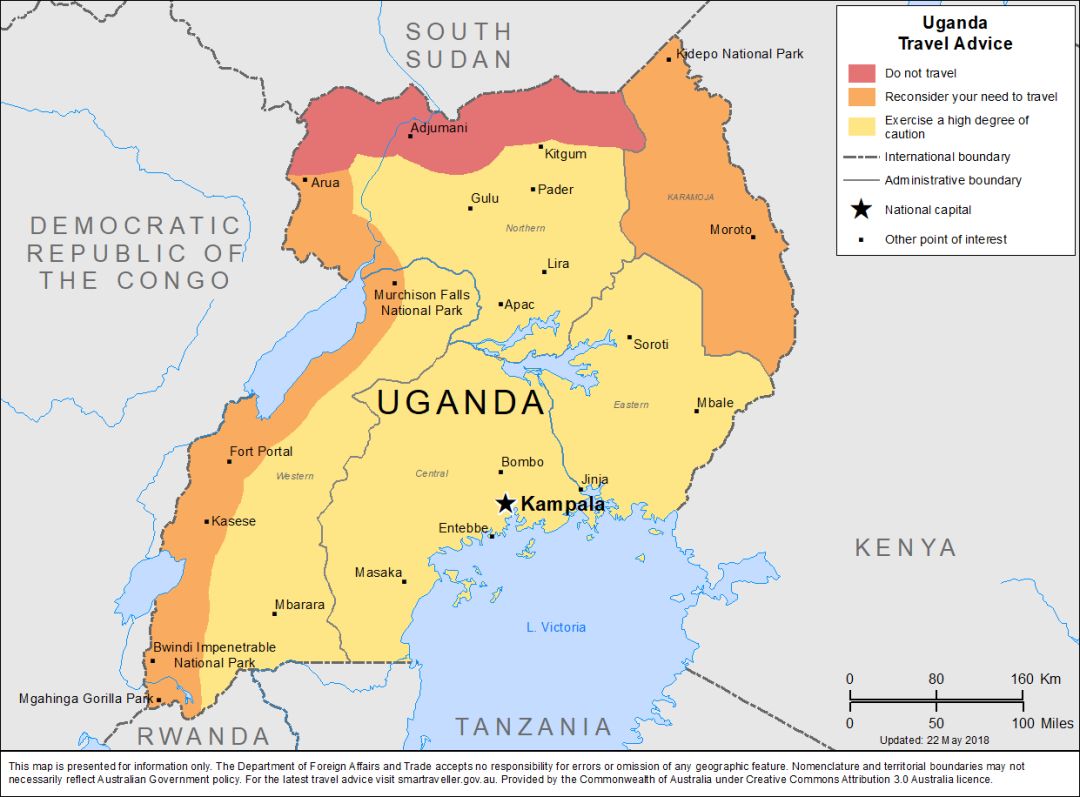
Uganda sits at the source of the Nile, a landlocked country in Africa with no coastline. The land is fertile, with volcanic soils in both the east and west and abundant rainfall. Some areas have two harvest seasons: April to June and October to February. FrontStreet Coffee finds that Ugandan coffee offers notes of black plum and ripe fruit, a full-bodied, juicy mouthfeel, and a rich, robust character.
Although it shares a long coffee-growing history with other East African countries, wars driven by ethnic conflict have repeatedly held back quality improvements. Most of the fine coffee here is grown in areas bordering Kenya, and some high-quality beans are even transported into Kenya to be blended and sold as Kenyan coffee.
Uganda is an excellent location for coffee cultivation. Over the past few decades, armed conflict damaged the industry—particularly in the West Nile production region in the 1990s. Only after the war ended 15 years ago did Uganda emerge as a rapidly developing coffee nation.
Uganda Improves Coffee Quality Through Coffee Cultivation Methods
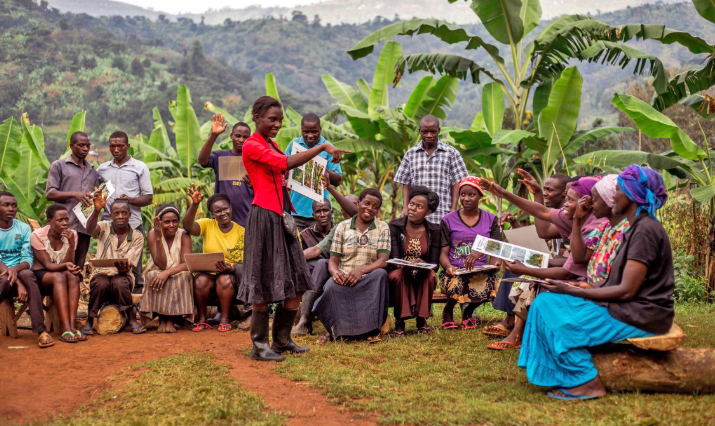
According to Financial Network, under new laws all coffee growers will be registered starting in 2020 and receive identification numbers showing their land area, number of trees, and whether they are coffee buyers, sellers, or nursery operators. The new law is now awaiting the president's approval.
The legislation aims to reform laws so the Uganda Coffee Development Authority can regulate, promote, and supervise the coffee industry, and standardize all farm and non-farm activities along the coffee value chain. Parliament stated it will also help farmers and buyers connect, build irrigation systems, and provide planting materials and extension services.
Coffee Growing Regions
Uganda has always been famous for Robusta, a native species that still grows wild in the country's rainforests. Arabica coffee, meanwhile, is found in three regions: Mount Elgon in the east, the Rwenzori Mountains in the southwest, and the West Nile in the northwest. Each origin is unique, with different coffee characteristics and production methods.
Mount Elgon
Located on the country's eastern border with Kenya, it is actually the oldest volcano in East Africa. Coffee farms nestle on its slopes under forest cover, drawing essential moisture from steep ravines. At lower altitudes the harvest runs from June to December; higher up it does not begin until July and continues to February.
West Nile
The West Nile region lies in northwestern Uganda, with farm elevations from 1,300 to 1,600 meters. Indigenous trees such as fig are used as shade for multi-generational farms. Coffee from this region is typically washed and known for its citrus aromatics.
Rwenzori Mountains
These mountains, often called the "Mountains of the Moon," sit on Uganda's southwestern border with the Democratic Republic of Congo. Coffee grows on slopes from 1,500 to 2,300 meters. The nitrogen-rich volcanic soil creates terroir perfectly suited to coffee. Natural processing is most common here, though washed processing can also be found.
Common Processing Methods for Ugandan Coffee
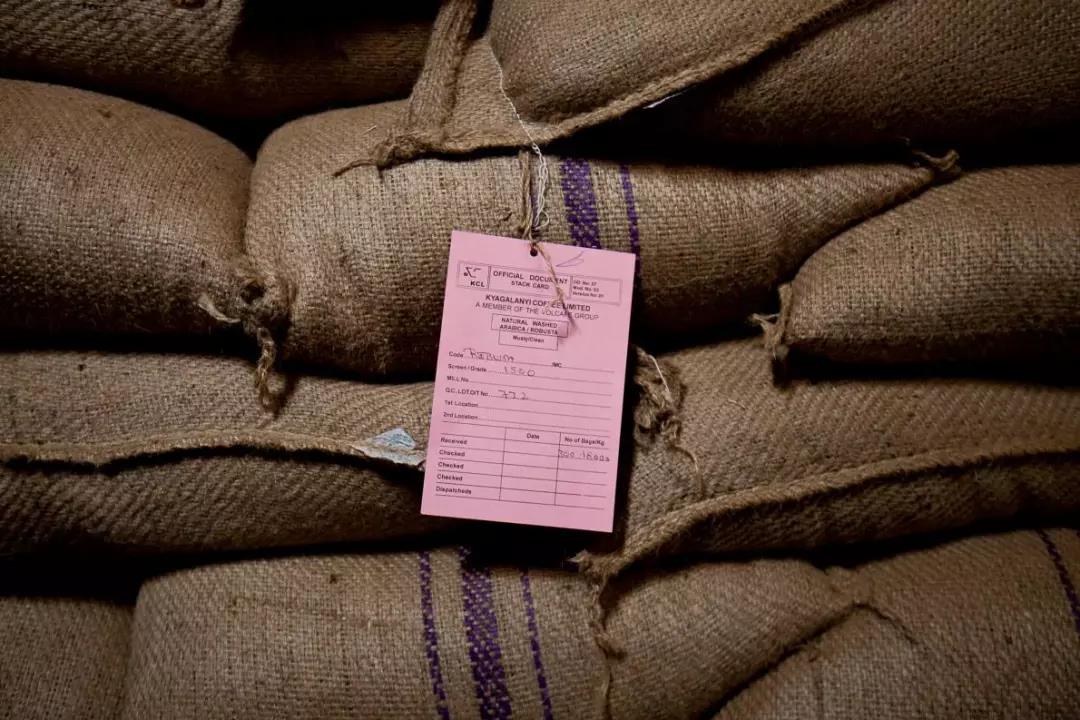
The common processing methods for Ugandan coffee are natural and washed.
Washed processing uses a depulper to separate the outer skin and most of the pulp from the beans after harvest. The parchment-covered beans are then placed in a clean water tank and soaked to ferment off the remaining pulp layer.
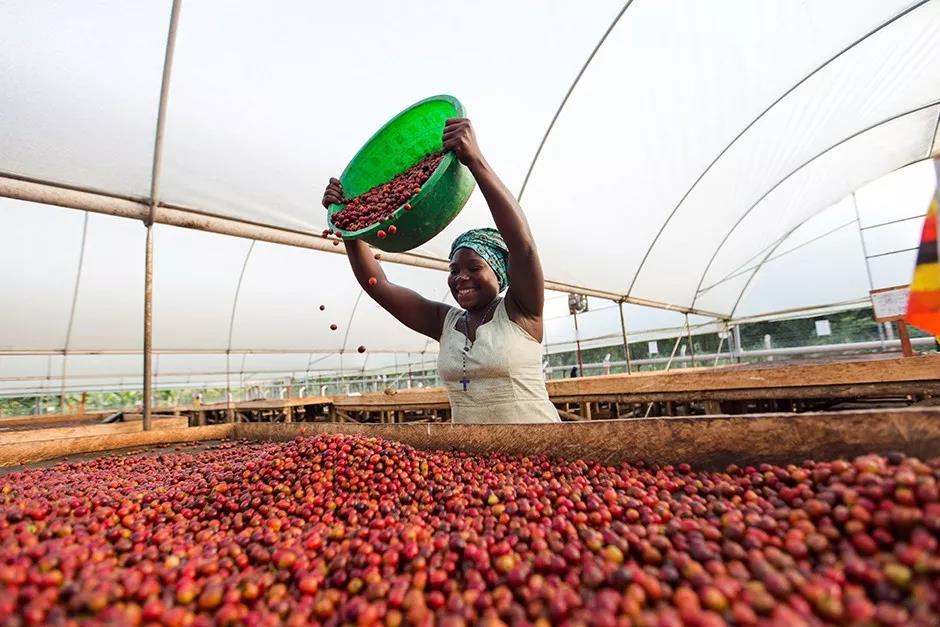
Natural processing first removes unqualified floating beans, then dries the cherries in the sun. Throughout, the fresh cherries are constantly turned to avoid fermentation or mold, achieving very clean, rich flavors.
Uganda Coffee Grading
Uganda's coffee grading is similar to Kenya's, based on size and density.
AA Plus (AA+): AA grade with particularly excellent cup quality (flavor, mouthfeel)
AA: Screen Size 17–18
AB: Screen Size 15–16, accounting for the majority of production
C: Smaller than AB screen size
TT: Lighter-weight beans blown out from AA and AB grade beans using air classifiers
T: Lighter-weight beans blown out from C grade beans using air classifiers
E: Elephant Bean—large mutant beans where two beans merge, also called elephant-ear beans
UG: Those that do not meet the above standards
PB: Peaberry, classified by shape, unrelated to flavor or weight
FrontStreet Coffee Uganda Putti
Region: Mount Elgon, Uganda
Altitude: 1600–1850 meters
Processing Method: Anaerobic Fermentation Natural
Varieties: SL14 & SL28
Processing Method
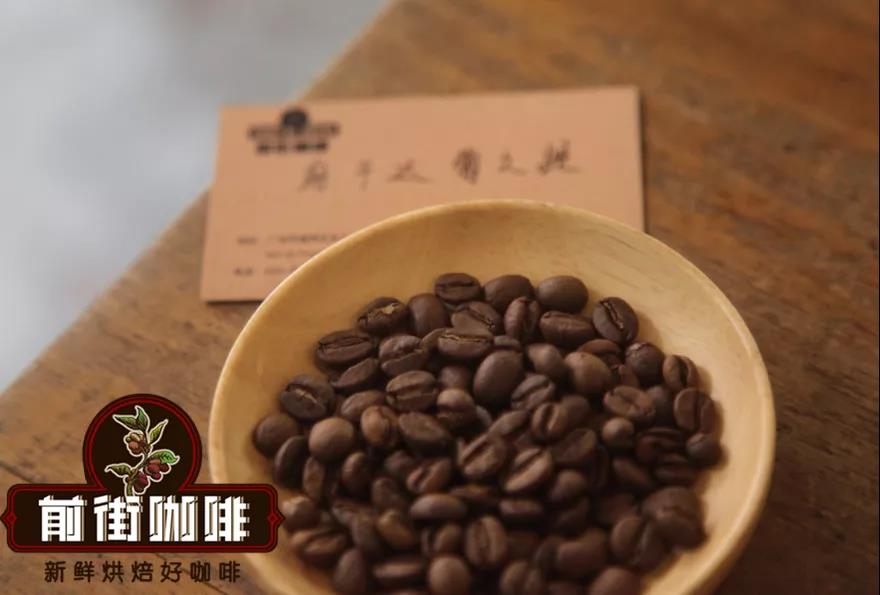
This bean's processing method is anaerobic fermentation natural: the whole cherry first undergoes anaerobic fermentation, then natural processing. Broadly, the anaerobic process makes coffee more uniform and easier to monitor, while the aerobic process is more complex and harder to control. In an anaerobic environment the breakdown of pectin sugars slows and pH falls more slowly, extending fermentation time to develop better sweetness and more balanced flavors. The temperature for anaerobic fermentation must be kept below 10–15°C. In a sealed, clean stainless-steel fermentation tank, the beans ferment for three days in an oxygen-free state, then are placed on racks for natural processing.
FrontStreet Coffee Green Bean Analysis
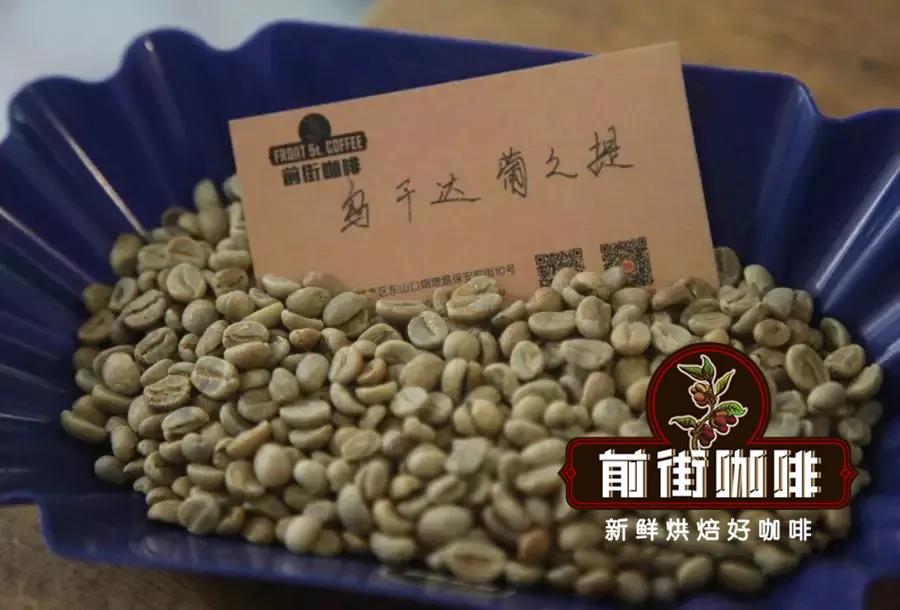
This bean is composed of SL14 and SL28, both quite common varieties in Uganda.
The SL varieties come from research and selection by Scott Labs. Kenyan coffee became world-famous because of SL28 and SL34, so the Ugandan government heavily promoted and distributed SL seeds to farmers. Among them, SL14 not only has excellent flavor but also resists drought, and it can be harvested just two years after planting—which fits farmers' needs well.
FrontStreet Coffee Roasting Analysis
To express this bean's acidity and fruit aromatics, FrontStreet Coffee uses a light to medium roast. During roasting, the dehydration time is extended so the bean surface and core heat evenly.
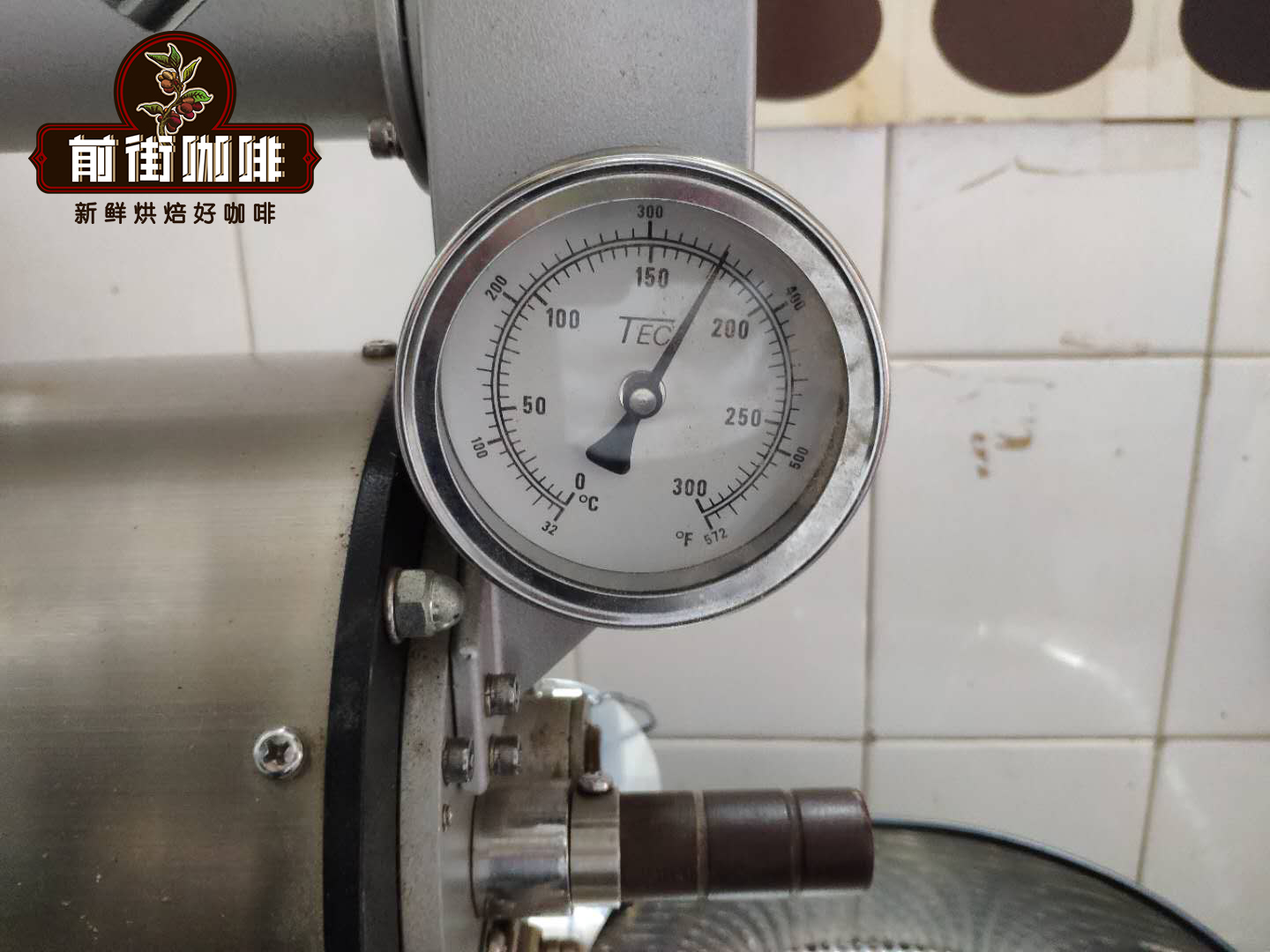
Heat at 160°C, firepower 100, damper opened to 3; return to temperature at 1'36", and when the drum reaches 140°C, open the damper to 4 with firepower unchanged; when the drum reaches 146.1°C the bean surface turns yellow and the grassy aroma disappears completely, entering the dehydration stage. When the drum reaches 166°C, adjust firepower to 80, damper unchanged; at 8'27" ugly wrinkles and black spots appear on the bean surface and the toast aroma clearly shifts to coffee aroma, which can be defined as the prelude to first crack, so listen carefully for the sound. At 9'10" first crack begins; open the damper to 5. Develop for 1'30" after first crack, then drop at 194°C.
FrontStreet Coffee Brewing Guide
To brew this Uganda Putti coffee, FrontStreet Coffee chooses 15 grams of beans with a 1:15 coffee-to-water ratio, 90°C water, a grind of BG grinder #6M (normal pour-over grind), and a V60 dripper.

Use 30g of water for a 30-second bloom, then pour in a small circular stream to 125g for a segmented extraction. When the water level drops and is about to expose the coffee bed, continue pouring to 225g and stop. When the level again drops and is about to expose the bed, remove the dripper (timing starts from the bloom). Extraction time is 2'00".
Flavor: Aromas of fermentation, with notes of citrus, black plum, dried fruit, caramel, and nuts when sipped.
FrontStreet Coffee Recommendation
Coffee comes in three main species—Arabica, Robusta, and Liberica—the three original types from which every coffee grown anywhere descends. Arabica is the most varied and has the most complex, refined flavor, which is why it is the most popular; Robusta is intense and rich in crema, used mostly in espresso blends and in the instant coffee many people first meet; Liberica has low commercial value and survives today mainly in research. Nearly all the specialty coffee on the market is Arabica, and because each region shapes its own flavor signature, there is a huge range of single-origin Arabica to choose from.
FrontStreet Coffee's Huakui is one example: an Ethiopian heirloom that mixes several unidentified trees, so the beans vary in size; it carries a delicate floral note with especially prominent fruit, and the classic natural process brings out creamy strawberry, mango, jackfruit, citrus, and blueberry, with the ripe tropical-fruit character of a Sidamo natural. That same dense berry aroma won it first place in that year's TOH green-bean competition, and it balances great flavor with a fair price. If Huakui is the natural-process standard-bearer, FrontStreet Coffee's Yirgacheffe Gedebdingding is the washed counterpart, rated Ethiopia's top G1 grade and showing elegant white florals, citrus, orange, and green tea.
For a more classic, balanced profile, FrontStreet Coffee's Jamaica Blue Mountain No. 1 is a Typica—one of the archetypal Arabica varieties and the first to spread from Yemen to India, Indonesia, and Central and South America. It is even, mild, and silky, with soft rather than sharp acidity and a full, pure aroma. And for something more dramatic, FrontStreet Coffee's Panama Red Label Geisha from Hacienda La Esmeralda in Boquete, Chiriqui—with its fertile volcanic soil, old forest, and near-permanent mist—shows jasmine florals, citrus, peach, and complex fruit acidity, a creamy body, and an oolong-tea sweetness on the finish.
Important Notice :
FrontStreet Coffee is a long-established specialty coffee roaster in Guangzhou China, selling freshly roasted beans from its own farm in Yunnan as well as dozens of carefully selected single-origin beans from around the world for both pour-over and espresso. The products deliver consistently excellent quality and great value, with shipping within 24 hours. Guangzhou's FrontStreet Coffee shop is recommended by many coffee lovers, and the beans are now available online at the Tmall 。
FrontStreet Coffee has moved to a new address:
FrontStreet Coffee Address: 315,Donghua East Road,GuangZhou
Tel:020 38364473
 Scan and follow the En Gafei WeChat official account. Please indicate that the reprint comes from "En Gafei".