What are the Differences in Variety Classification Systems and Flavor Characteristics Between Mandheling and Gesha Coffee Beans
If you are new to specialty coffee, labels like G1 or AA on coffee bean packaging can be baffling. Today, FrontStreet Coffee will walk you through what these specialty coffee labels actually mean.
Understanding Coffee Bean Grading Systems
In short, the labels on specialty coffee describe how the beans are graded. But every country grades coffee differently. Tanzania, Rwanda, Colombia, and Jamaica, for example, grade by bean size. Kenya has eight grades: E (Elephant bean), AA, AB, C, PB, TT, T, and MH/ML. AA is the highest grade for Kenyan beans — though that does not necessarily mean the best flavor.
Jamaican Coffee Grading
Jamaican green beans are graded from high to low as NO.1, NO.2, NO.3, and PB, where PB stands for Peaberry. Under CIB standards the defect rate must be below 3%, with moisture content around 13%. NO.1 Blue Mountain green beans must be above 17 mesh, NO.2 above 16 mesh, NO.3 above 15 mesh, and PB around 14 mesh or above. Jamaican High Mountain coffee shares the Blue Mountain grades but without a PB peaberry grade, while plain Jamaican coffee has only the prime grade, at 15-17 mesh.
Defect-Based Grading Systems
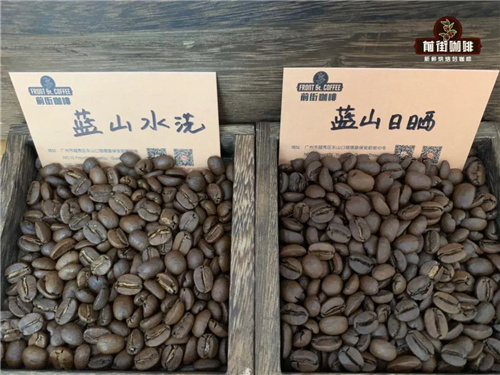
Ethiopia and Indonesia's Sumatra, by contrast, grade by the proportion of defective beans. Take FrontStreet Coffee's Indonesian Sumatra lots as an example. Regular drinkers of FrontStreet Coffee's Indonesian Mandheling know its very full-bodied texture: herbal notes flooding the palate on entry, sweetness in the aftertaste, low acidity, and a subtle herbal aroma — none of the lemon-citrus acidity of an Ethiopian Yirgacheffe.
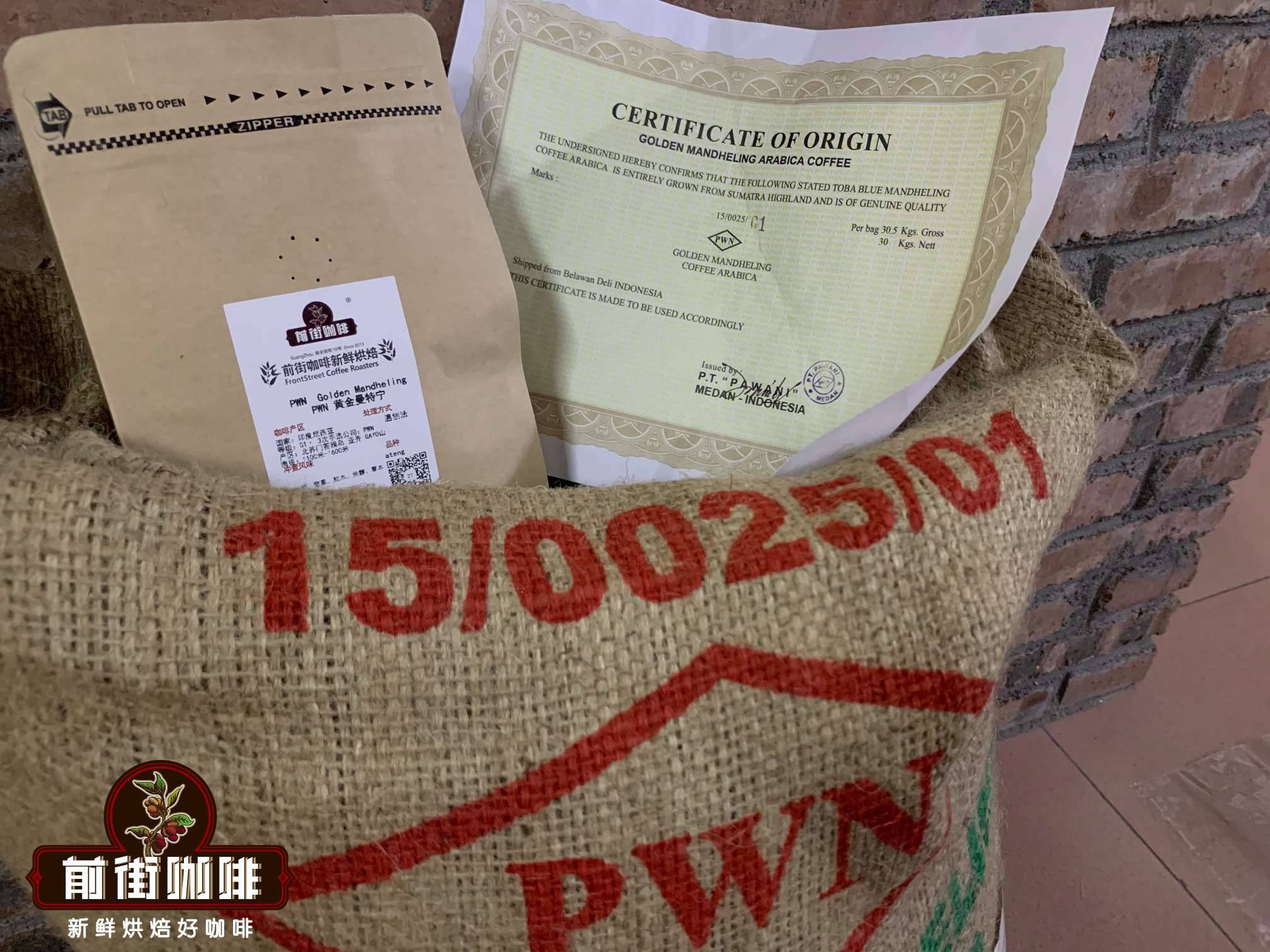
This distinctive profile comes largely from Indonesia's unique wet-hulling method for green beans. Wet hulling is used partly because Indonesia's high humidity and heat make drying green beans extremely difficult — poorly dried beans mold quickly.
The wet-hulling process: machines remove the cherry skin first, then drying proceeds, which shortens drying time and boosts the coffee's body. Indonesians also favor it because it shortens processing and cuts labor costs, improving economic efficiency. The trade-off is that wet-hulled Mandheling typically carries earthy and smoky flavors, though most drinkers describe it simply as low-acid and very full-bodied.

After wet hulling, Indonesian Mandheling still undergoes drying, and mold can easily appear during this stage. Yet surface mold is not necessarily a bad thing — some believe part of Mandheling's unique flavor actually derives from the fungi on the beans, though opinion on this varies.
Indonesian Grading System (G1-G6)
Because processing is so fast, wet-hulled Indonesian green beans carry a higher defect rate than other methods. Wet hulling inevitably drags in debris or small stones, or produces moldy beans during drying, so a batch bound for export will contain some defective beans — which strongly affect flavor. How many defects appear in a given weight therefore becomes the basis for grading. By the number of defects per 300 grams, Indonesian green beans are sorted into six grades, G1 through G6, from highest to lowest quality. Specialty coffee bags usually also state the origin information.
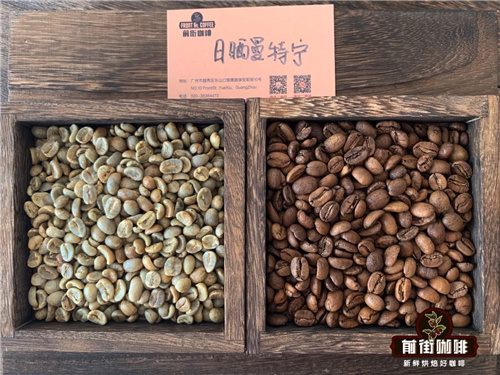
To be more specific: randomly sample 300 grams of green beans and spread them on black paper, which makes inspection easier for professional graders. In that 300-gram sample, 3 or fewer defects means G1; 4-12 defects is G2; 13-25 is G3; 26-45 is G4; 46-100 is G5; and 101-153 defects is G6.
Quality and Processing Impact
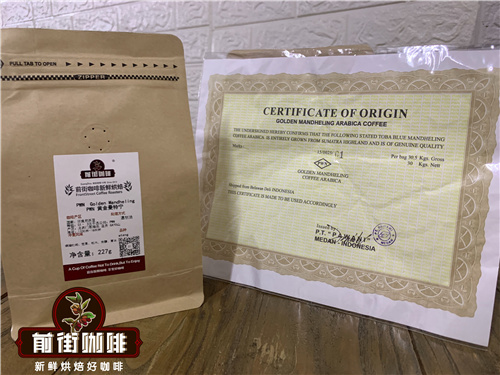
Generally, the smaller the number in the grade, the better the green beans, since higher-grade coffee receives more even heat during roasting. Roasted FrontStreet Coffee Mandheling beans are larger and harder in texture, and the brewed coffee tastes better — more aromatic and smooth. Take this year's PWN Golden Mandheling: three rounds of machine sorting plus careful hand selection guarantee the quality of the green beans, so FrontStreet Coffee's Golden Mandheling tastes cleaner than its Lindong Mandheling, with extremely high sweetness.

Altitude-Based Grading Systems
Guatemala and Costa Rica grade very differently from Indonesian Mandheling: they classify by the altitude of the growing region. The higher the altitude, the cooler the climate and the harder the beans — which benefits flavor development. Coffee from high-altitude regions therefore generally brews up more aromatic and rich.
Geisha Coffee Grading Systems
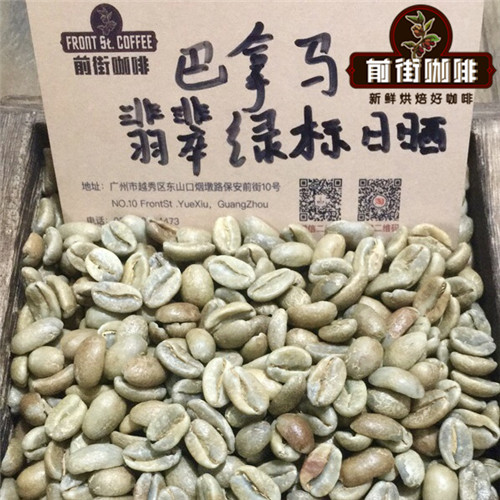
Then there is the famous Geisha. La Esmeralda has its own system, classifying beans with colored labels. The Red Label is auction-level, sourced from the Jaramillo and Cañas Verdes growing regions, generally planted at 1600-1800 meters with cupping scores above 90 points. The Green Label represents micro-lots, also planted at 1600-1800 meters, that do not go to auction, drawn mainly from different lots in Jaramillo and Cañas Verdes. The Blue Label, also known as Geisha 1500, is planted at 1400-1500 meters, does not participate in auctions, and comes mainly from three areas: Jaramillo, Cañas Verdes, and El Velo.
Conclusion
Every country grades its green beans differently — not all use defect counts the way Indonesian PWN Golden Mandheling does. When buying coffee, it pays to learn which classification method a given green bean actually uses.
For more specialty coffee knowledge sharing, follow the WeChat Official Account: FrontStreet Coffee
FrontStreet Coffee Recommendation: PWN Golden Mandheling, G1 at Its Purest
If this exploration of defect-based grading has you curious, the definitive expression is FrontStreet Coffee's PWN Golden Mandheling. From the PWN company in Indonesia, it starts with beans above screen 18, requires fewer than 3 defects per 300 grams of green beans — the highest G1 standard — and adds three rounds of hand sorting to eliminate flawed beans entirely, delivering exceptional cleanliness and sweetness in a full-bodied, herbal, deeply aromatic cup. To brew it: 15g of coffee at a coarse-sugar grind, water at 87-88°C, a 1:15 ratio, and a three-stage pour — 30ml to saturate and degas, 100ml to lift the bed and draw out the golden crema, then a gentle 95ml center pour — yielding thick body, caramel sweetness, and notes of chocolate and nuts.
Important Notice :
FrontStreet Coffee is a long-established specialty coffee roaster in Guangzhou China, selling freshly roasted beans from its own farm in Yunnan as well as dozens of carefully selected single-origin beans from around the world for both pour-over and espresso. The products deliver consistently excellent quality and great value, with shipping within 24 hours. Guangzhou's FrontStreet Coffee shop is recommended by many coffee lovers, and the beans are now available online at the Tmall 。
FrontStreet Coffee has moved to a new address:
FrontStreet Coffee Address: 315,Donghua East Road,GuangZhou
Tel:020 38364473
 Scan and follow the En Gafei WeChat official account. Please indicate that the reprint comes from "En Gafei".