Which Country's Brand is Blue Mountain Coffee? What Are Its Most Distinctive Characteristics?

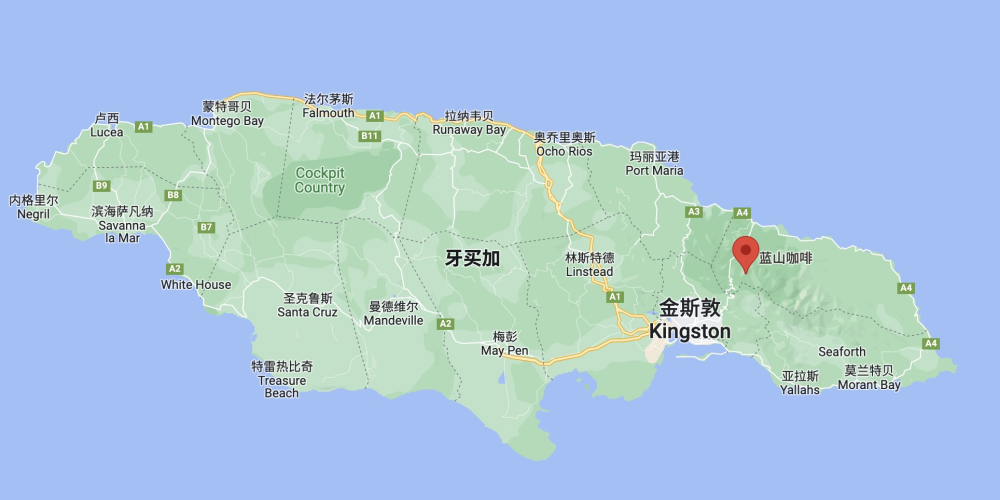
As one of the representatives of high-quality coffee, Blue Mountain Coffee owes its ideal growing environment to the unique combination of weather, geological structure, and terrain found in Jamaica's Blue Mountain range.
The mountain range stretches across Jamaica and rises in the eastern part of the island, with the Blue Mountains climbing above 2,100 meters. Blue Mountain Coffee, however, is cultivated only at elevations between 910 and 1,700 meters, because everything above 1,700 meters is designated a nature reserve. There the weather is cool and foggy with frequent precipitation; fertile soil and rainfall are perfectly balanced; and coffee is grown by mixed cultivation, sharing terraces with banana and avocado trees that shade the coffee plants naturally.
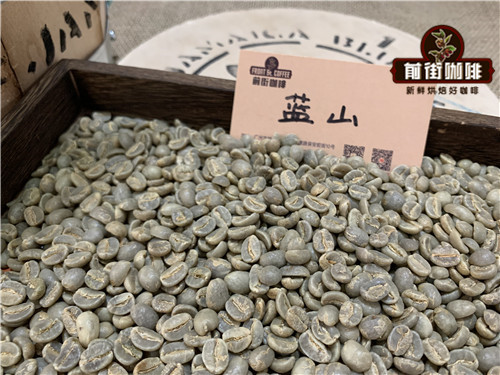
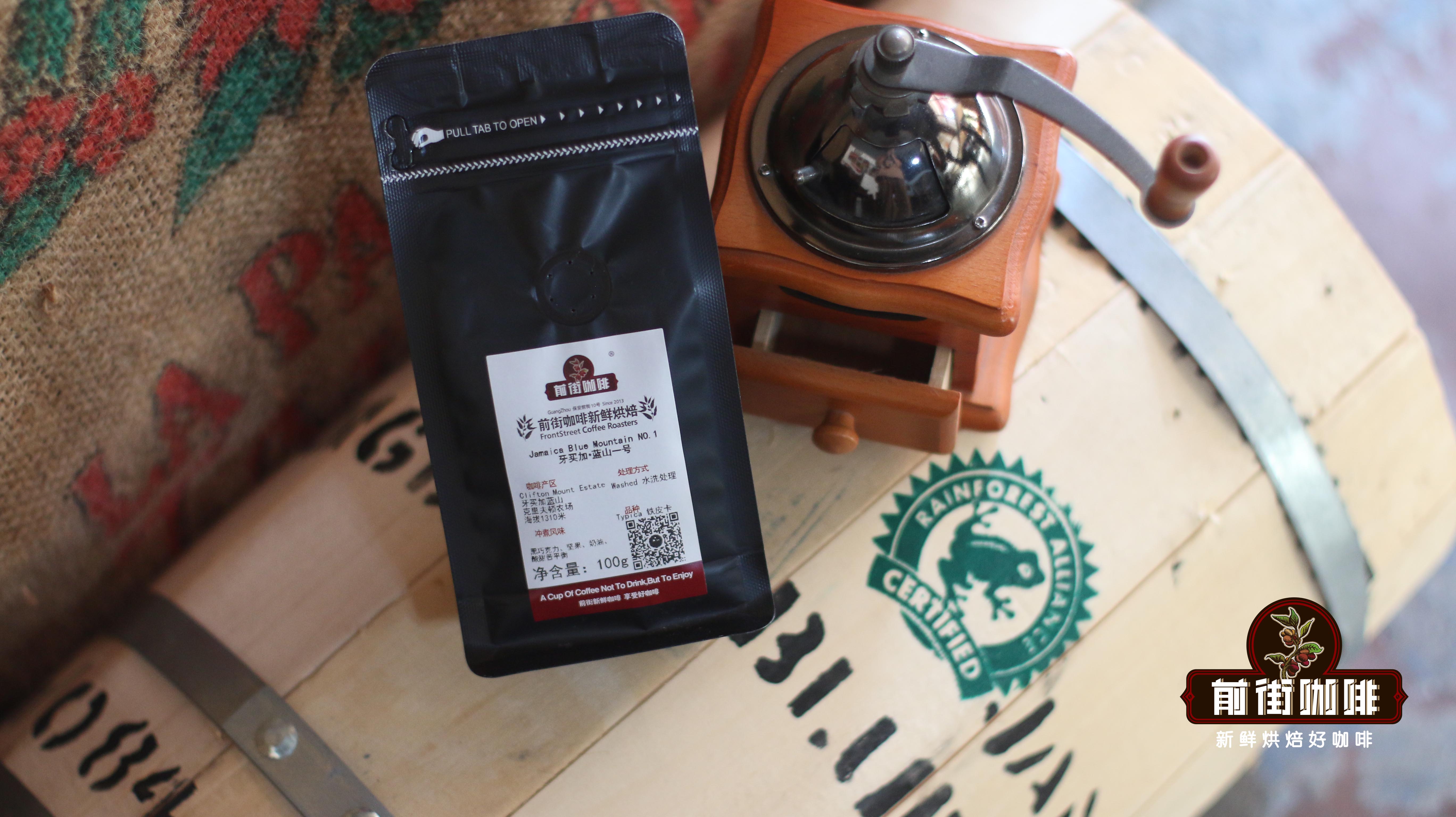
The excellent growing environment, fertile volcanic soil, and the ancient Typica variety combine to give Blue Mountain Coffee an exceptionally balanced and clean flavor profile. FrontStreet Coffee offers a washed Blue Mountain bean from Jamaica's oldest coffee estate—Clifton Hill Estate, grown at 1,310 meters. After medium-dark roasting and cupping, we find that Blue Mountain Coffee strikes perfect balance among acidity, sweetness, and bitterness. Its rich dark-cocoa body carries subtle bright fruit acidity and a distinct sweet aftertaste—an unforgettable impression for everyone who tries it.
Why is Blue Mountain Coffee so expensive?
First, Jamaica's coffee industry faces many challenges: hurricane impacts, rising labor costs, and the difficulty of mechanizing work on terraced fields. Many small estates struggle with rational cultivation practices, so annual Blue Mountain production remains limited.

Second, thanks to Japan's sustained investment in Jamaica's coffee industry, most Blue Mountain Coffee was controlled by Japanese interests before 2012, who also held priority purchasing rights. In 1992, Jamaica sold 688 tons of Blue Mountain Coffee to Japan, 75 tons to the United States, and 59 tons to the United Kingdom. Today, 90% of Blue Mountain Coffee is bought by Japan. Since the rest of the world competes for the remaining 10%, Blue Mountain Coffee is perpetually in short supply at any price.
Only in 2012 did the Jamaican government cancel Japan's priority purchasing rights, opening more opportunities for other countries to import. The Jamaican harvest runs from June to November, picked by hand. After picking, the beans go through washing, pulping, fermentation, dehydration, drying, hulling, and roasting before becoming finished Blue Mountain Coffee.
At every step of green bean processing, dedicated personnel oversee quality. For its precious Blue Mountain Coffee, the Jamaican government also mandates unique packaging and transport: unlike other coffees shipped in 60kg burlap bags, Blue Mountain Coffee travels in wooden barrels holding 15, 30, or 70kg.

Jamaica is also the last country still using traditional wooden barrels for coffee packaging and transport. Jamaican Blue Mountain beans must receive certification from the Jamaica Coffee Industry Board (CIB), the only institution authorized to issue it. And for each export batch, specialized quality supervisors sample, roast, grind, and brew the coffee to determine whether it meets the standard.
Although Blue Mountain prices sit above those of many origins, they are now significantly cheaper than a decade ago. FrontStreet Coffee sells Jamaican Blue Mountain No. 1 for 158 yuan per 100g.
How to identify authentic Blue Mountain Coffee
Many friends ask FrontStreet Coffee: Blue Mountain beans are so expensive that they fear spending big money on fakes. How can you tell authentic Blue Mountain from impostors, and which sellers can be trusted? Here are several identifying characteristics.
(1) Blue Mountain No. 1 beans are exported in whole wooden barrels, so when buying, check whether the seller has whole Blue Mountain barrels—this helps prevent sellers from passing off other beans as Blue Mountain;
(2) First-hand buyers of Blue Mountain green beans can obtain certification documents from Jamaica's CIB or from the estate, which also prove authenticity;
(3) Inspect the roasted beans—Blue Mountain No. 1 beans should be uniform in size, full, and plump.

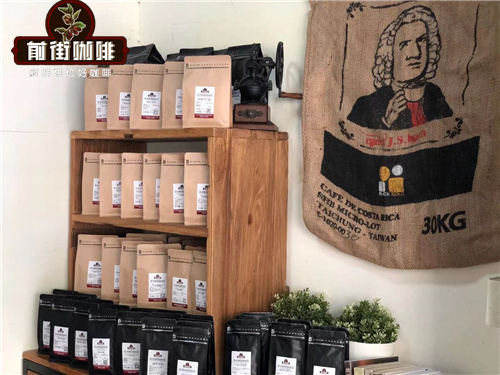
Currently, authentic Blue Mountain beans available in China are all of Blue Mountain No. 1 grade. At FrontStreet Coffee's physical store you can see the wooden barrels required by the Jamaican government for export, along with the certificate of origin from the beans' source—Clifton Hill Estate.
Blue Mountain Coffee Brewing Recommendations
To highlight the balanced nutty character of Blue Mountain's acidity-sweetness-bitterness profile and restore a more classic flavor, FrontStreet Coffee uses several medium and dark roast curves. Cupping comparisons show that medium-dark roasting best brings out the chocolate sweetness.
To make sure everyone enjoys freshly roasted beans, FrontStreet Coffee ships all coffee within 5 days of roasting. After receiving your Blue Mountain Coffee, keep the bag sealed in a cool, dry place until 6–7 days after the roast date printed on the back label, letting the beans release some of their internal carbon dioxide naturally and stabilizing extraction.

Blue Mountain is a relatively dark roast with flavors leaning toward richness and body. FrontStreet Coffee's baristas use the KONO dripper, whose close fit between filter paper and dripper creates an immersion-style extraction during pour-over, producing higher concentration. To avoid over-extraction and excess bitterness, we use slightly cooler water and a coarser grind.
FrontStreet Coffee's in-store parameters: KONO dripper, 88°C water, 1:15 coffee-to-water ratio, 15g dose, grind size at 70–75% pass-through on a #20 standard sieve.
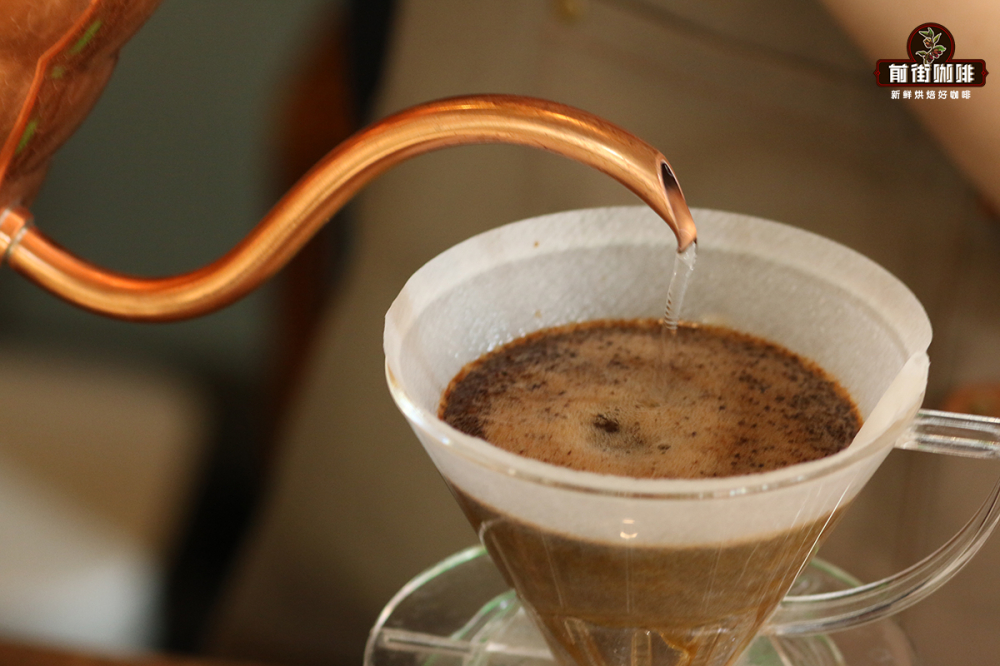
Specific technique: first pour 30g of water for a 30-second bloom; second stage, pour in small circles to 125g and wait until the water level in the bed drops to half; then continue in small circles to 225g. Total extraction time should be around 2 minutes 10 seconds once dripping finishes.
Pour-over Blue Mountain flavor profile: rich nutty and dark chocolate flavors, full-bodied mouthfeel, and a sweet, clean aftertaste.
FrontStreet Coffee Recommendation
For drinkers who want the definitive Blue Mountain experience, FrontStreet Coffee's Jamaica Blue Mountain No. 1—the highest grade—comes from the historic Clifton Estate, where coffee has been grown since around 1750 at an average of about 4,300 feet (1,310.64 meters), where altitude, mild afternoon mists, ample sunshine, and mineral-rich soil extend the cherry-ripening season. The beans are roasted medium-dark within 5 days of shipping, and rested 4–7 days from roast date before brewing, so the classic balance unfolds layer by layer: nuts, dark chocolate, cream and caramel, and a soft sweetness, with acidity, sweetness, bitterness, and aroma all in harmony.
Beyond pour-over, Blue Mountain's balance shines in other methods too. In a moka pot, use a slightly finer grind, start with hot water, heat over medium-low, and remove from heat just as the coffee finishes flowing—the pot amplifies the chocolate, caramel, and nut tones for a thicker, fuller cup that also takes milk beautifully in a latte or flat white. Whether as a daily specialty coffee or a premium gift, Blue Mountain No. 1 remains the classic that has defined balanced coffee for decades.
Important Notice :
FrontStreet Coffee is a long-established specialty coffee roaster in Guangzhou China, selling freshly roasted beans from its own farm in Yunnan as well as dozens of carefully selected single-origin beans from around the world for both pour-over and espresso. The products deliver consistently excellent quality and great value, with shipping within 24 hours. Guangzhou's FrontStreet Coffee shop is recommended by many coffee lovers, and the beans are now available online at the Tmall 。
FrontStreet Coffee has moved to a new address:
FrontStreet Coffee Address: 315,Donghua East Road,GuangZhou
Tel:020 38364473
 Scan and follow the En Gafei WeChat official account. Please indicate that the reprint comes from "En Gafei".