Varietal Characteristics of Yunnan Arabica Coffee Beans and How to Brew Them - Pour-Over Brewing Guide for Yunnan Coffee
Yunnan's rolling mountains are renowned for tea. But with the rapid growth of China's coffee market, those dense forests now give off rich coffee aromas. More and more enthusiasts visit FrontStreet Coffee stores to ask about Yunnan small-bean coffee—and as tastes have grown more refined, people have begun asking about Yunnan's coffee varieties and how things got this way.
Coffee, as an agricultural crop, is bound to its environment. It is no surprise that so many growing regions cluster along what FrontStreet Coffee calls the golden coffee belt—and Yunnan's coffee regions happen to sit near the Tropic of Cancer. For China, tea is the native habit; coffee is the import.
Historical Development of Coffee in China
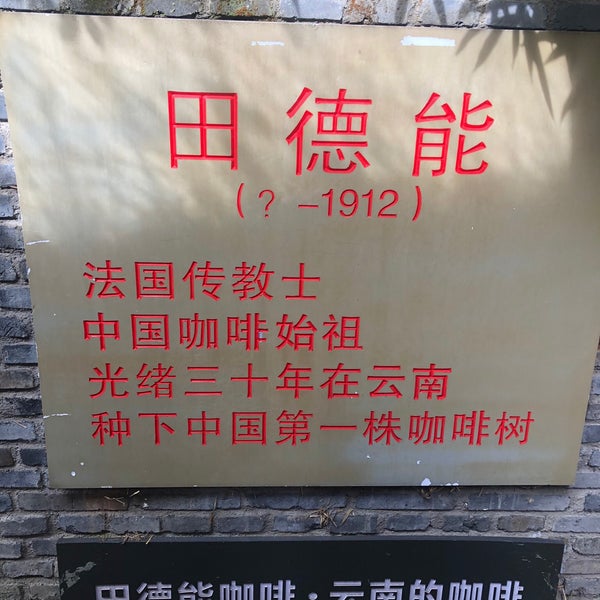
China's earliest coffee cultivation traces back to 1877, when the Qing government had indigenous people of the Ryukyu Islands plant a series of economic crops—including coffee. Then, in the 30th year of the Guangxu era (1904), a French Catholic missionary sent by the church built a church in Zhukula Village and planted coffee for his own consumption.
With the founding of New China, large-scale coffee production began, with Yunnan beans primarily exported to the Soviet Union to offset debt.
The Rise and Challenges of Coffee Varieties
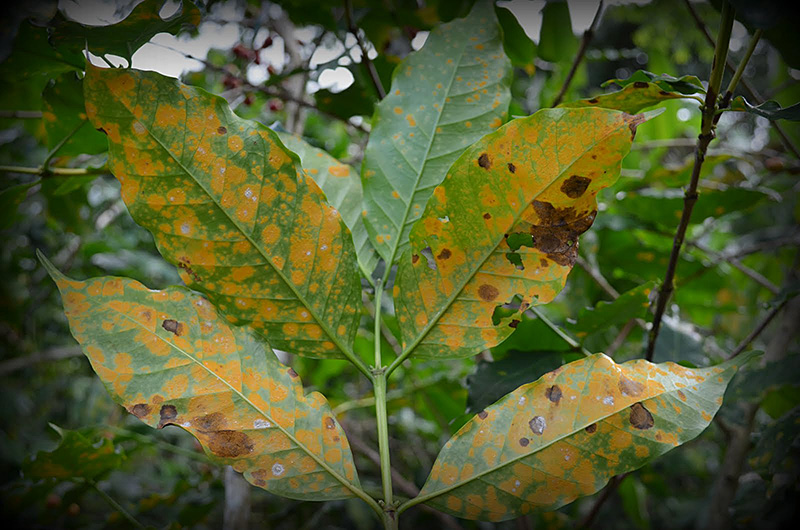
In the 1970s, severe coffee leaf rust swept through Yunnan. Typica, for all its elegant flavor, has poor disease resistance, and batch after batch of Arabica trees fell to the disease. To contain the emergency, local agricultural institutions introduced and promoted Catimor, whose high rust resistance triumphed in this "massacre" and became the mainstay of Yunnan coffee.
At the end of the 1980s, cooperation among the United Nations Development Programme, the Yunnan government, the World Bank, and Nestlé expanded training for local farmers and modernized the industry. In the 1990s, high coffee prices led more farmers to replant Catimor, with most of the crop bought by foreign companies like Nestlé. Catimor eventually accounted for 90% of Yunnan's coffee production.
Yunnan small-bean coffee takes its name from Typica: Typica beans are small, hence "small bean." Catimor, however, offered high yield and strong disease resistance—and became sought-after for its profitability.
The Flavor Challenge of Catimor
The unavoidable fact is that Catimor is a hybrid of the Timor and Caturra varieties. It inherited Robusta genes from the Timor line—resistance to coffee berry disease, leaf rust, and other diseases, but also some undesirable Robusta flavors.
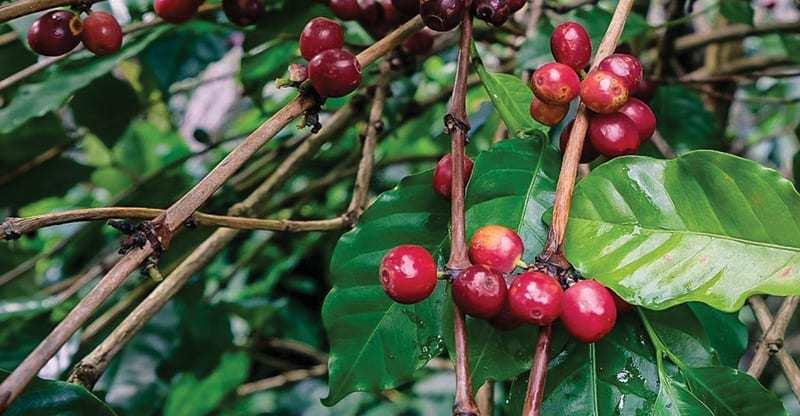
Because of that Robusta component, Catimor can show earthy, fishy notes. The Taiwanese specialty coffee expert Han Huaizong once described it as having a "devil-like aftertaste." The same expert also noted that specialty coffee is seventy percent variety and thirty percent environment.
FrontStreet Coffee's Yunnan Journey
While studying coffee, FrontStreet Coffee has experienced the whole "seed to cup" chain firsthand. Since Yunnan is China's key specialty coffee region, FrontStreet naturally had to go there in pursuit of Yunnan's terroir.
Yunnan's famous regions—Dehong, Baoshan, Pu'er, and Xishuangbanna—each have their own character. Every Yunnan enthusiast has a personal ranking of them; FrontStreet Coffee chose to establish its own estate in Lincang.
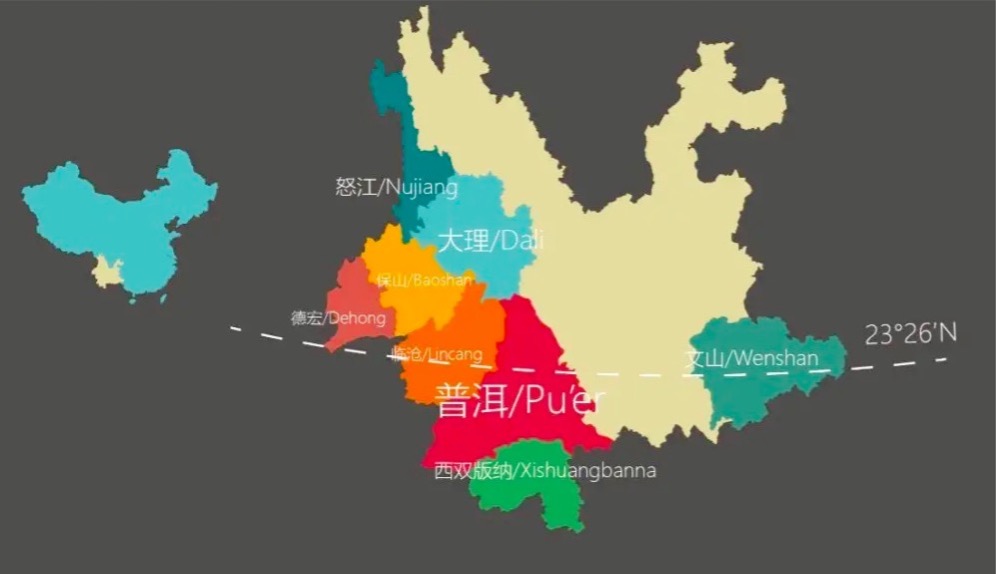
The estate sits above 1,000 meters, with annual temperatures around 17°C, distinct wet and dry seasons, and ample sunlight—excellent conditions for planting Typica. To compare Yunnan's varieties, FrontStreet has also trial-planted other Arabicas, such as Bourbon.
From Harvest to Roast
Since the estate's first small harvests in 2021, FrontStreet has used all harvested red cherries for natural processing to maximize flavor expression. Bright red cherries are spread evenly on raised beds and turned regularly; while drying evenly, as much of the fruit's sugar as possible seeps into the beans, making the natural Typica aromatic with solid body and strong sweetness.

When developing the roast curve for the estate's natural Typica, FrontStreet's roasters chose a medium roast to express its rich aromas.
With each new harvest, FrontStreet's baristas taste the "first sip" first, cupping the new beans: soft berry acidity, strong caramel sweetness, a creamy aftertaste, and a persistent black-tea finish.

Brewing Recommendations
Different roast levels call for different grinds, and FrontStreet often gets questions about grinder settings. Because every machine differs in calibration and maintenance, the same setting yields different coarseness, so FrontStreet states grind recommendations by standard sieve. For Yunnan beans, which roast darker, FrontStreet recommends a 75% sieve pass rate.
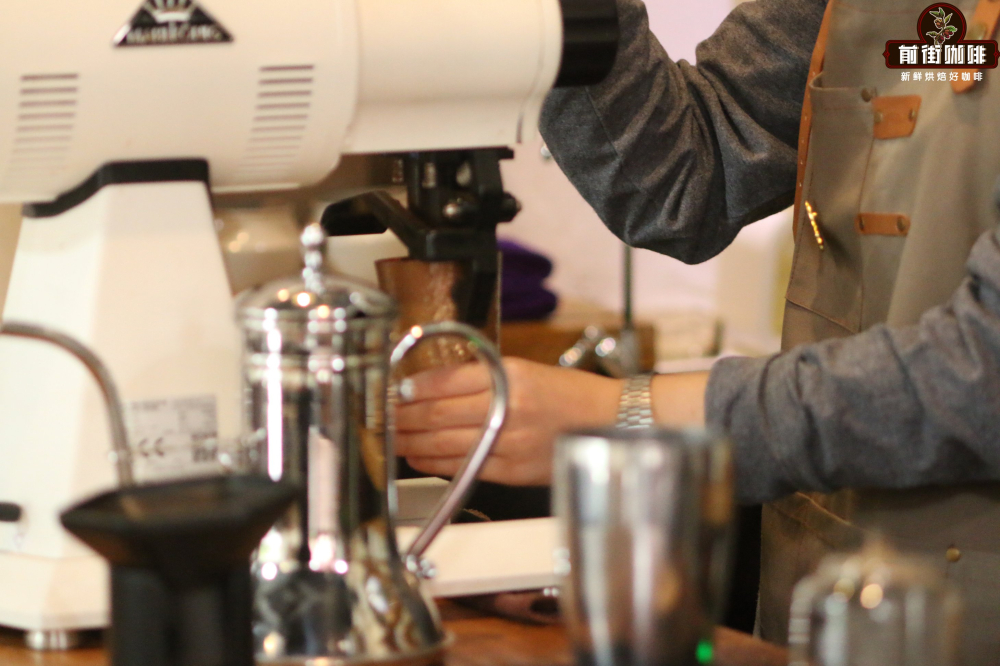
Dripper: Hario V60
Water Temperature: 88°C
Dose: 15 grams
Ratio: 1:15
Grind: 75% pass rate through China standard #20 sieve
For pouring, FrontStreet recommends a three-stage method. Comparing three-stage pours against a single pour, the single-pour cup came out thinner-bodied, lighter, and one-dimensionally flavored, while the three-stage method extracts acidic, sweet, and flavorful compounds evenly over time, building richer layers.
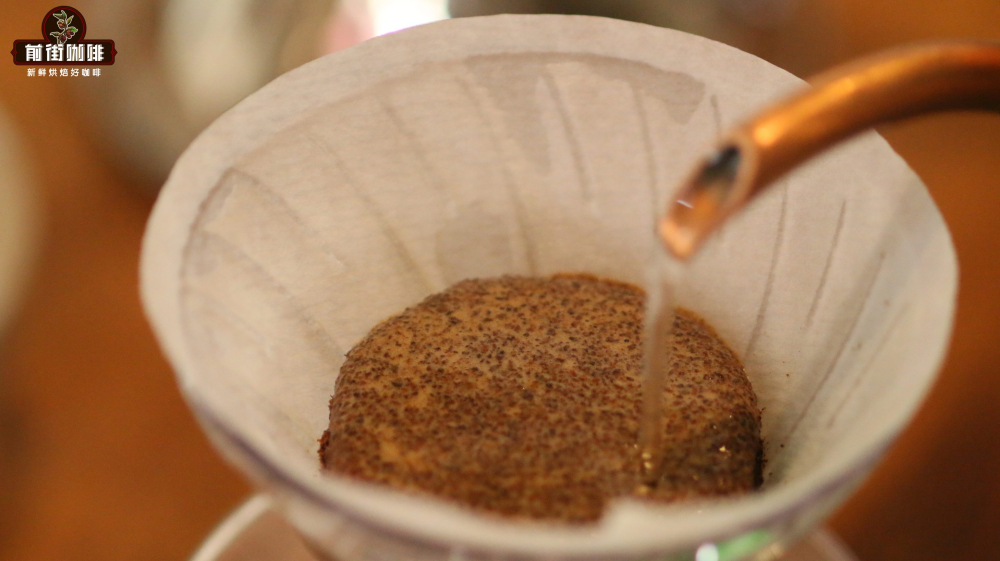
Also note: FrontStreet ships freshly roasted beans within 5 days; after 4-7 days of transit and degassing they reach their peak. Freshly roasted beans are full of carbon dioxide, which dissipates over time and smooths the flavor. Excess gas blocks hot water from entering the coffee's structure to extract flavor compounds, so a bloom step is recommended to release the gas.
First pour 30 grams of hot water and bloom for 30 seconds, then pour a fine stream from the center, spiraling slowly out to 125 grams. When the water level drops to just above the coffee bed, continue spiraling to 225 grams. Total extraction time is about 2 minutes.
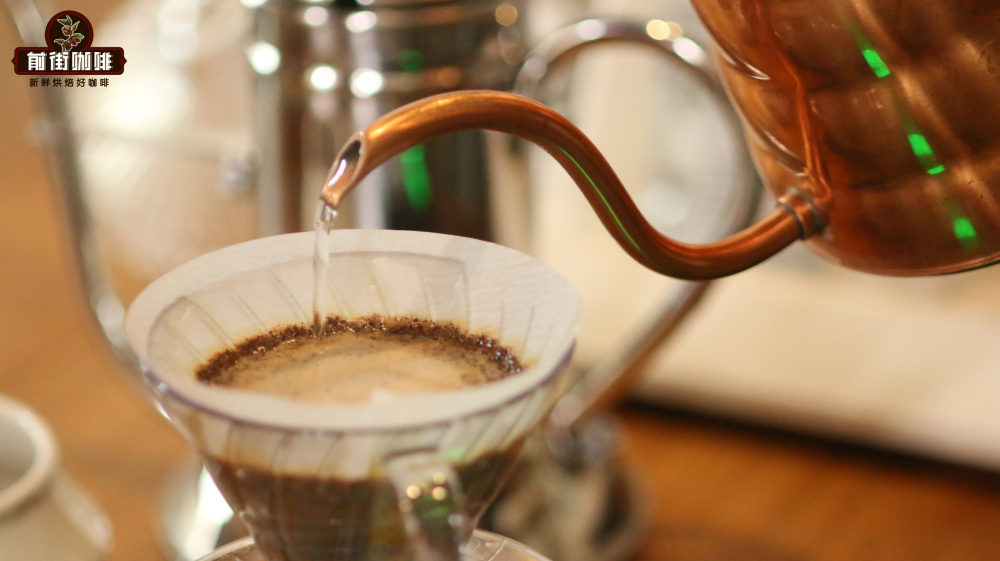
One caution: in the third stage, start with a fine stream at the center and spiral gently—don't wash down the walls of the grounds. Otherwise the water will race through easier channels straight to the server, producing a lighter flavor and a watery cup.
For professional coffee knowledge exchange and more coffee bean information, please follow Coffee Workshop (WeChat public account: cafe_style)
For more specialty coffee beans, please add FrontStreet Coffee's private WeChat account: qjcoffeex
FrontStreet Coffee Recommendation
Want to taste Yunnan for yourself? FrontStreet Coffee's Yunnan Small Bean from Baoshan is the ideal first step. Yunnan small bean is simply another name for Arabica—the smallest-fruited of the three coffee species—and coffee reached Yunnan in 1904, when the French missionary Tian Deneng brought Typica seeds from Vietnam and planted the first tree in Zhukula Village, Binchuan County. The Baoshan lot is washed and medium roasted, showing soft nutty and chocolate notes with a touch of plum acidity—an affordable introduction to Yunnan coffee.
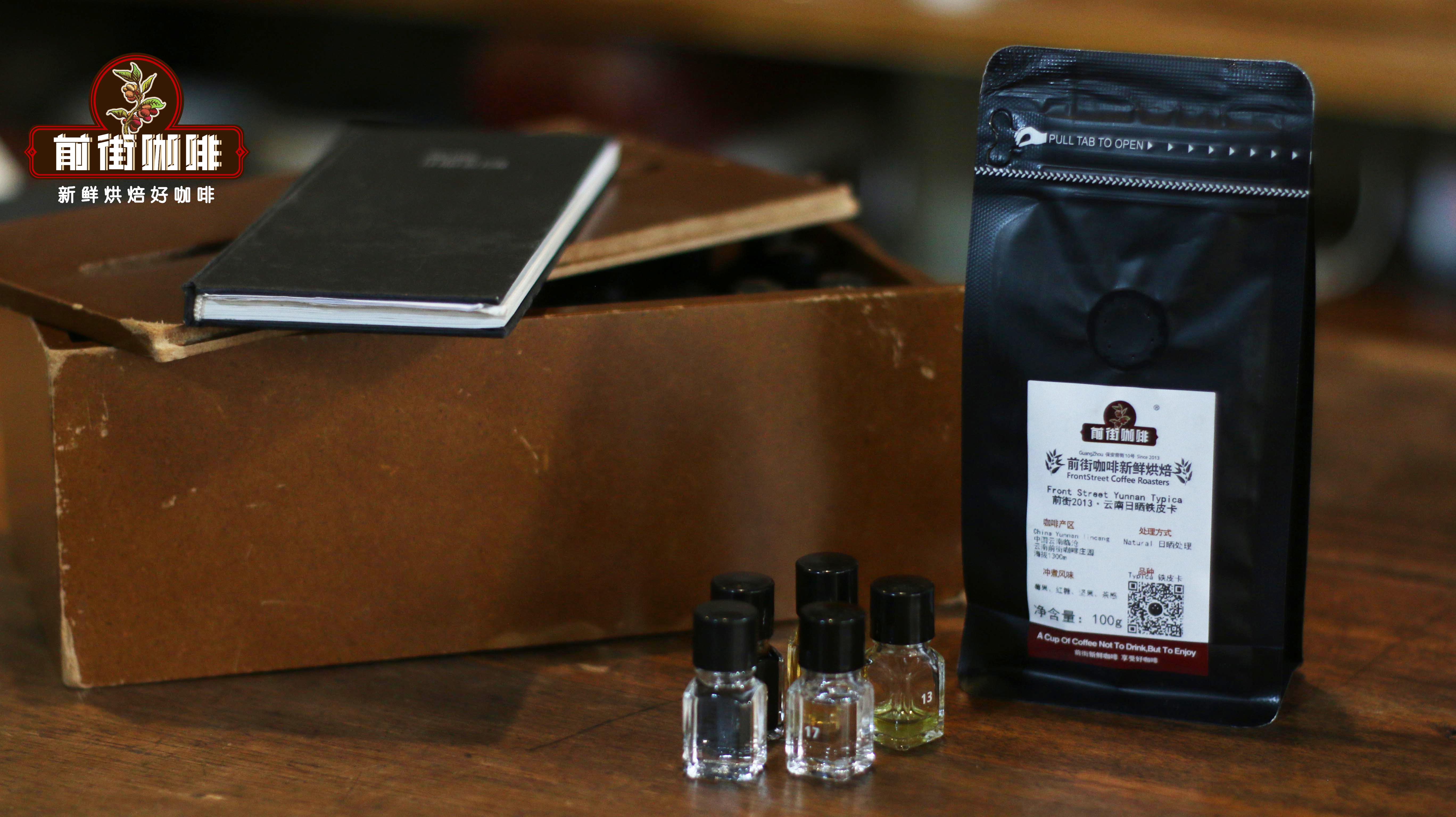
If you want a clearer view of the region's potential, choose the FrontStreet 2013 sun-dried Typica from FrontStreet's own estate, planted in 2013. Typica is among the oldest and purest Arabica varieties, and the natural processing brings out a fuller body with more pronounced sweet-tart character: citrus and berry tones, a whisper of fermented wine aroma, caramel sweetness, and a creamy finish.
For espresso drinkers, the FrontStreet Black Cocoa Blend combines Yunnan Small Bean with Brazil Cerrado: the Brazil supplies mixed-nut aroma and balance, while the Yunnan contributes chocolate and citrus. The resulting Americano balances sweet, sour, and bitter with nutty, brown-sugar notes, and the latte is silky with almond and cream—very beginner-friendly.
Important Notice :
FrontStreet Coffee is a long-established specialty coffee roaster in Guangzhou China, selling freshly roasted beans from its own farm in Yunnan as well as dozens of carefully selected single-origin beans from around the world for both pour-over and espresso. The products deliver consistently excellent quality and great value, with shipping within 24 hours. Guangzhou's FrontStreet Coffee shop is recommended by many coffee lovers, and the beans are now available online at the Tmall 。
FrontStreet Coffee has moved to a new address:
FrontStreet Coffee Address: 315,Donghua East Road,GuangZhou
Tel:020 38364473
 Scan and follow the En Gafei WeChat official account. Please indicate that the reprint comes from "En Gafei".