Flavor Profile Introduction to Yunnan's Three Major Coffee Growing Regions: Baoshan, Pu'er, and Lincang - Which Origin Produces the Best Yunnan Small Bean Coffee?

Coffee quality is shaped by a whole set of factors: growing environment, climate, and cultivation technique. The crop thrives at low latitude, high altitude, with ample rainfall and moderate sunshine — which is why the belt between the Tropics of Cancer and Capricorn (between 28°N and 38°S latitude) is the ideal coffee-growing zone.
Within China, parts of Yunnan, Guangxi, Guangdong, Taiwan, and Hainan offer conditions suitable for coffee, but only Yunnan and Taiwan meet the high-altitude requirement. Premium Yunnan coffee is typically grown at 1200-1600m in dry-hot valley regions. Only the day-night temperature swings that high altitudes create can slow the beans' maturation and develop more refined flavors.

Through cupping comparisons, FrontStreet Coffee has found that Yunnan beans grown at high altitude typically show soft acidity, nutty and caramel aromas, full body, and a rich, mellow flavor.
Today, Yunnan's arabica cultivation is spread across the cities and prefectures of Pu'er, Lincang, Baoshan, Dehong, Nujiang, Xishuangbanna, Dali, and Diqing. Among these, the arabica from Baoshan, Pu'er, and Lincang is the most renowned.
Pu'er City
Pu'er City is divided into nine counties and districts for Yunnan arabica cultivation: Simao, Ning'er, Mojiang, Jinggu, Jingdong, Zhenyuan, Jiangcheng, Lancang, Menglian, and Ximeng. Average annual temperatures range between 17°C and 20°C, with cultivation between 700m and 1600m. In cupping, FrontStreet has found that high-altitude arabica from Pu'er displays plum-like fruit acidity, nutty-caramel sweetness, and a distinct fermented-tea aftertaste.

Baoshan City
Baoshan City encompasses five counties and districts — Longyang, Longling, Shidian, Changning, and Tengchong — where coffee carries the Baoshan arabica coffee geographical indication designation. Baoshan has a low-latitude mountainous subtropical monsoon climate; its position on a low-latitude plateau with complex topography creates a three-dimensional climate where "one mountain experiences four seasons, and ten miles offer different weather."

Annual temperature variation is small while daily variation is large, with an average annual temperature of 14-17°C. Rainfall is abundant and seasons split distinctly into wet and dry, though unevenly distributed, with annual rainfall ranging from 700-2100mm. Coffee is cultivated between 1000m and 1500m.
Lincang City
Lincang's location is unique — it borders Myanmar to the west. Climate conditions here are exceptionally favorable: pronounced day-night temperature differences, abundant rainfall, mild average annual temperatures, and cultivation at 1000-1600m.

Lincang has a subtropical low-latitude plateau mountain monsoon climate; its complex terrain produces a region of multiple climate types. Shaped mainly by warm, moist air currents from the Indian Ocean and the southwest monsoon, the four seasons blur together, but wet and dry seasons are clearly separated. Rainfall is plentiful and sunshine is long — annual sunshine averages more than 2000 hours. The frost period is short, with some regions frost-free year-round. The three-dimensional climate is prominent, with mountain areas averaging 13-15°C annually.
Seeing Lincang's potential, FrontStreet Coffee established its own cultivation estate on a mountain at 1300m in the region, planting the most ancient arabica variety of all — Typica.
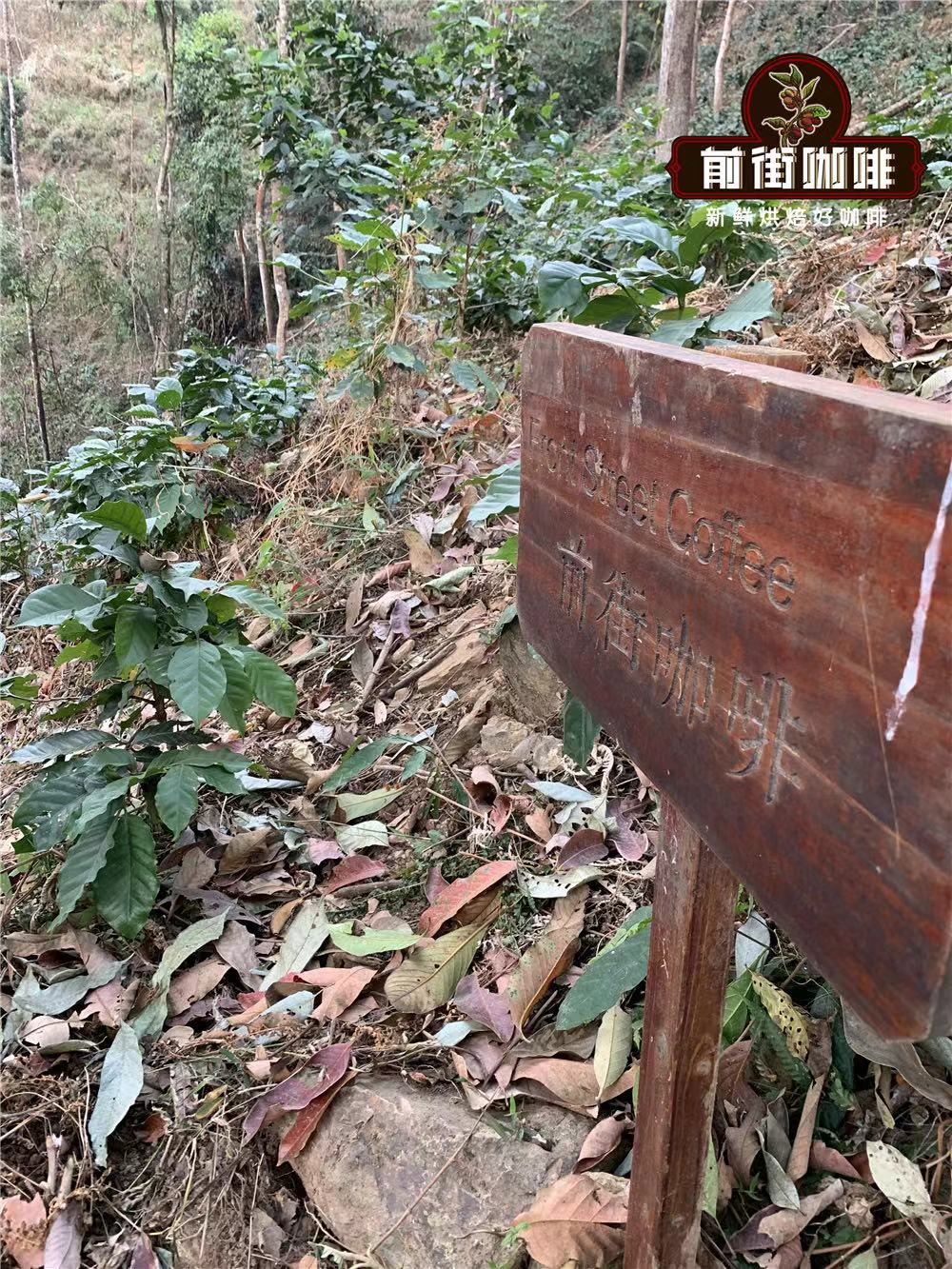
Typica was the deliberate choice: as one of the oldest coffee varieties it carries pure arabica genetics, and its elegant, clean flavor profile has long been recognized as a specialty coffee variety.
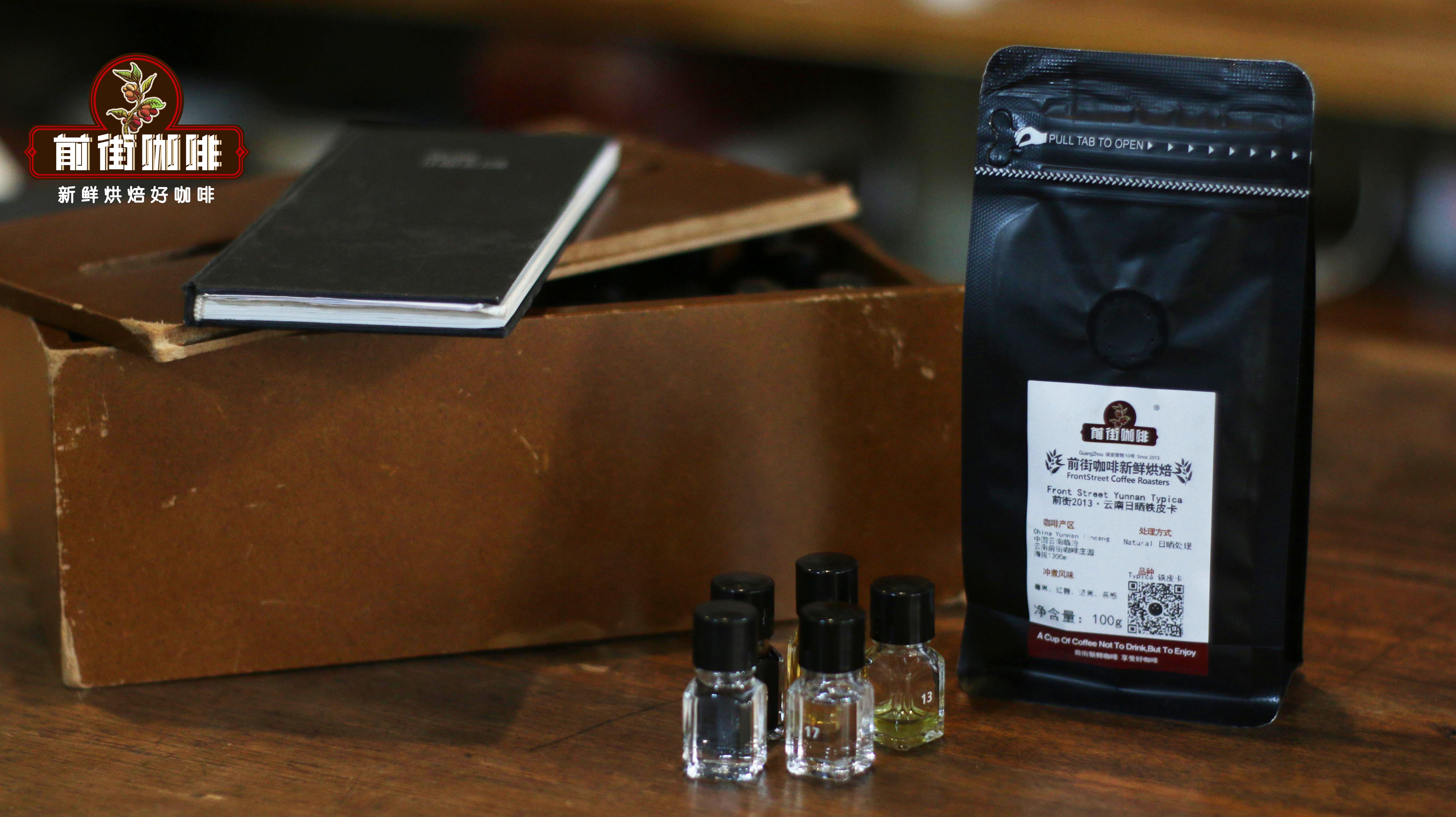
FrontStreet hopes that by starting at the variety level, everyone can enjoy Yunnan arabica with elevated flavors and superior quality. These homegrown Yunnan Typica beans are currently available at FrontStreet Coffee's flagship store and its physical locations.
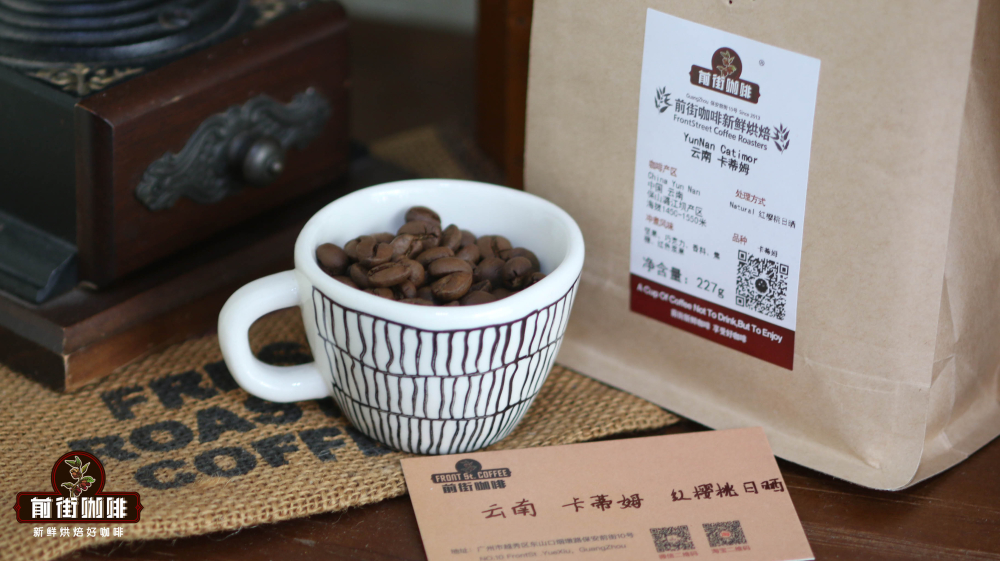
FrontStreet Coffee currently sells Yunnan coffee primarily from two growing regions, Lincang and Baoshan. The lineup includes its homegrown "FrontStreet Coffee 2013 Natural Typica Coffee Beans," the "Selected Regional Daily Coffee - Yunnan Baoshan Washed Catimor Coffee Beans," and the "Full Cherry Natural - Catimor Coffee Beans from Baoshan Lujiangba Region."
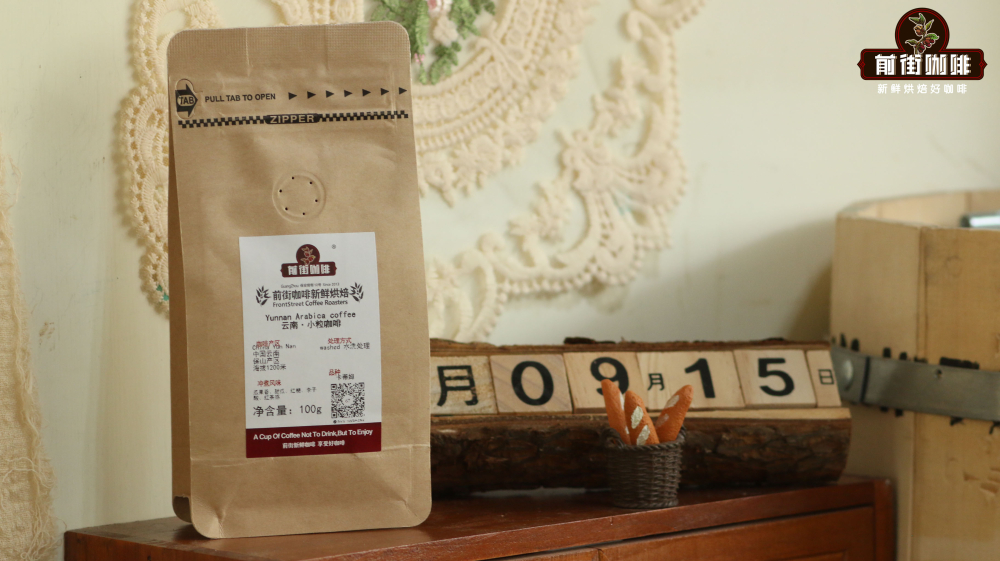
All three beans showcase Yunnan's characteristic flavors — nutty, caramel, and plum-like notes. To taste Yunnan coffee at its best, FrontStreet recommends brewing with freshly roasted beans, which brings out the richest expression of flavor. FrontStreet ships all coffee beans within 5 days of roasting.
For brewing Yunnan coffee, FrontStreet recommends a V60 dripper with a 1:15 coffee-to-water ratio, a medium grind (approximately raw sugar size / 75% retention rate on China #20 standard sieve), and water at 88-89°C.

Use a three-pour technique to bring out the coffee's complexity: first pour 30g of water and let it bloom for 30 seconds; second, pour in small circles up to 125g, wait until the water level drops to half, then continue pouring in small circles up to 225g. Total extraction time should be approximately 2 minutes and 10 seconds.
FrontStreet Coffee Recommendation
Yunnan coffee is often called "Yunnan small bean" — xiaoli kafei — simply the local name for arabica, so named because its cherries are the smallest of the three original coffee species. The story traces back to 1904, when the French missionary Tian Deneng carried Typica seeds from Vietnam into Yunnan and planted the first coffee tree in Zhugula Village, Binchuan County — the beginning of Yunnan coffee.
For an entry into Chinese arabica, start with FrontStreet Yunnan Small Bean from Baoshan. Washed processing removes the mucilage layer through fermentation and rinsing before drying, letting the origin's character shine through; a medium roast highlights a gentle caramel sweetness while keeping some acidity, giving soft nut and chocolate aromas with a light plum-like tang — at a friendly price, it is many people's first taste of Yunnan coffee.
For a clearer, more defined expression of Yunnan, move up to the FrontStreet 2013 Yunnan Natural Typica from FrontStreet's own estate. Only fully ripe, all-red cherries are picked and processed as naturals — the most traditional green-coffee method — then roasted medium for a more balanced cup with pronounced sweetness and acidity: dark berry tones alongside caramel sweetness, chocolate, a hint of dried apricot, and a black tea finish.
And for a Yunnan-flavored espresso, try the FrontStreet Black Cocoa Blend, which pairs Yunnan small bean with Brazilian Cerrado coffee. Brazil provides mixed-nut aromas and balance, while Yunnan takes on the chocolate and citrus notes. The resulting americano balances sweetness, acidity, and bitterness with nutty, brown-sugar aromas, and the latte shows the smooth texture of almond and cream — very beginner-friendly.
Important Notice :
FrontStreet Coffee is a long-established specialty coffee roaster in Guangzhou China, selling freshly roasted beans from its own farm in Yunnan as well as dozens of carefully selected single-origin beans from around the world for both pour-over and espresso. The products deliver consistently excellent quality and great value, with shipping within 24 hours. Guangzhou's FrontStreet Coffee shop is recommended by many coffee lovers, and the beans are now available online at the Tmall 。
FrontStreet Coffee has moved to a new address:
FrontStreet Coffee Address: 315,Donghua East Road,GuangZhou
Tel:020 38364473
 Scan and follow the En Gafei WeChat official account. Please indicate that the reprint comes from "En Gafei".