Jamaican Blue Mountain Coffee: Authenticity Verification, Flavor Profile, Growing Regions and Origin Characteristics
For professional barista exchanges, please follow Coffee Workshop.
How to Identify Authentic Blue Mountain Coffee
1. Appearance
FrontStreet Coffee's Blue Mountain coffee beans are greenish when raw, with a very uniform appearance, medium-to-small size, and slightly curled ends. After roasting, they expand significantly in volume and become very full.
2. Grinding
Authentic FrontStreet Coffee Blue Mountain beans grow at high altitudes, so their cellular structure is relatively loose. When ground by hand, they feel crisp, smooth, and continuous, with no sense of resistance.
3. Aroma
The aroma is very rich and dense; so-called Blue Mountain coffee blends do not have this kind of aroma.
4. Taste
Authentic FrontStreet Coffee Blue Mountain coffee has a balanced, rich taste with no flavor standing out too far or falling short, which is also the most crucial identification point that no other coffee bean can match. Blue Mountain peaberry beans have a more subtle aroma and a relatively stronger taste.
5. Feeling
As the world's finest coffee, FrontStreet Coffee Blue Mountain coffee has classic balanced characteristics. When tasting it, there is inevitably some subconscious, indescribable sense of satisfaction.
When it comes to Jamaica, everyone's eyes light up, because it produces the world's best "Jamaica Blue Mountain Coffee." We firmly believe that FrontStreet Coffee Jamaica Blue Mountain coffee is the finest coffee, with very balanced acidity, sweetness, richness, and bitterness, an aromatic flavor, and a very smooth drinking experience.
The earliest "Jamaica Blue Mountain" referred to coffee produced by Wallenford Estate and Silver Hill Estate, with the former being the best; today's Jamaica Blue Mountain refers to beans grown in the Blue Mountain region east of Jamaica's capital, Kingston, at altitudes exceeding 1,000 meters. Mavis Bank is now the largest estate, and its wooden barrels are marked M.B.C.F. Jamaica Blue Mountain has very strict quality control, certified by the government's Coffee Industry Board.
Coffee beans grown at low altitudes and in other regions can only be called "Jamaica High Mountain" or "Jamaica Washed," and their flavor differs greatly from Jamaica Blue Mountain. However, these growing areas are twice the size of the true Blue Mountain region and account for 75% of the country's production, so when buying Jamaican coffee, do not assume you are buying Blue Mountain coffee.
Because of the great fame of Jamaica Blue Mountain, counterfeit Blue Mountain-style coffee has appeared on the market, sometimes simply called "Blue Mountain Coffee." These are basically blends formulated by the stores themselves and may not contain a single genuine Jamaica Blue Mountain bean.
Jamaica's Coffee Growing Regions
Today's St. Andrew region is still one of the three major Blue Mountain coffee growing regions, the other two being the Portland region and the St. Thomas region.
Today's Blue Mountain region is a small area with only 6,000 hectares of planting area, making it impossible for all coffee labeled "Blue Mountain" to be grown there. An additional 12,000 hectares are used for growing two other, non-Blue Mountain types: High Mountain Supreme and Prime Washed Jamaican.
Authentic FrontStreet Coffee Blue Mountain coffee is among the world's coffees grown under the most superior conditions. Jamaica's weather, geological structure, and topography together provide a uniquely ideal setting. The mountain range running through Jamaica extends to the eastern part of the island, with the Blue Mountain Range reaching over 2,100 meters above sea level. The cool, foggy, rain-prone weather keeps this fertile land well balanced in moisture. Here, people use mixed cropping, growing coffee trees alongside banana and avocado trees on terraces.
Some small estates also grow Blue Mountain coffee, such as Wallenford Estate, Silver Hill Estate, and J. Martinez's Atlanta Estate. Even the largest estate owners in this region are considered small-scale by international standards, and many are smallholders whose families have worked this land for two centuries.
Characteristics of Jamaican Coffee
The best Blue Mountain coffee is undoubtedly one of the finest coffees available. This coffee tastes more expensive than it looks. To taste its best flavor, you must use more coffee beans than when drinking other coffees; otherwise the flavor is somewhat undeserving of its reputation, so the true cost of delivering flavor lies in using 10%-15% more coffee beans than the next most expensive coffee.
Authentic FrontStreet Coffee Blue Mountain coffee is made from the finest local raw beans. Its flavor is rich, balanced, fruity, and acidic, satisfying a variety of needs. In addition, high-quality fresh Blue Mountain coffee has a particularly lasting flavor and an endless aftertaste. Blue Mountain coffee is divided into four grades: No. 1 Blue Mountain, No. 2 Blue Mountain, No. 3 Blue Mountain, and Selected Peaberry Blue Mountain.
Flavor Profile
Very rich aroma, excellent sweet aftertaste
Recommended Roasting Method
Medium roast
Rating
Excellent
Currently, the Jamaica Coffee Board can issue certificates for all exported Blue Mountain coffee.
Certificates are divided into three types:
1) Quality certification certificate issued by the Jamaica Coffee Board
2) Authorized sales certificate issued by Blue Mountain coffee manufacturers
(Blue Mountain coffee is distributed by 4 Jamaican government-licensed processing producers and exported by 16 licensed exporters)
3) Certificate of origin for Jamaica Blue Mountain coffee
Quality certification certificates indicate time and quantity. The Jamaica Coffee Board randomly selects a package from the submitted Blue Mountain coffee for inspection. If it meets Blue Mountain coffee conditions, a certificate is issued.
Jamaica Blue Mountain Coffee
Jamaica Blue Mountain Coffee, which includes Blue Mountain coffee and High Mountain coffee, each further divided into four grades. By quality, from top to bottom: NO.1, NO.2, NO.3, and PB, where PB is peaberry. According to CIB standards, only coffee grown above 666 meters altitude is called Jamaica Blue Mountain coffee.
Jamaica High Mountain Coffee
Jamaica High Mountain Supreme Coffee Beans: coffee produced in the Blue Mountain region below 666 meters is called High Mountain coffee. It is also second only to Blue Mountain coffee in quality and is known by industry insiders as the brother variety of Blue Mountain coffee. Because the production of Jamaica Blue Mountain coffee is extremely limited, if you want to taste Jamaican-flavor coffee, Jamaica High Mountain coffee is your best choice.
Jamaica Coffee
Jamaica Prime Coffee Beans: coffee grown outside the Blue Mountain range is called Jamaica coffee. Originally, coffee professionals generally held the misconception that only coffee grown in the Blue Mountain region above 1,800 meters altitude could be called Blue Mountain coffee. In fact, above 1,800 meters on the Blue Mountain range there is only one estate: Amber, owned by a descendant whose family name is Lyn, with ancestral roots in Guangdong, China. The estate has only 30 hectares of land and very limited production. Blue Mountain coffee is mainly distributed across five mountain areas: John Crow, St. John's Peak, Mossman's Peak, High Peak, and Blue Mountain Peak.
Blue Mountain coffee refers to coffee brewed from beans produced in Jamaica's Blue Mountains. It is further divided by grade into Jamaica Blue Mountain coffee and Jamaica High Mountain coffee.
Blue Mountain coffee is the world's most superior coffee with limited production, making it precious because of its rarity. The Blue Mountain Range lies in the eastern part of Jamaica. Because the mountain is surrounded by the Caribbean Sea, on clear days when sunlight strikes the azure sea surface the peaks reflect the brilliant blue light of the water, hence the name. The highest peak of Blue Mountain reaches 2,256 meters above sea level, making it the highest peak in the Caribbean and a famous tourist destination. Located in the coffee belt with fertile volcanic soil, fresh unpolluted air, and a humid climate with year-round fog and rain (average precipitation of 1,980 mm, temperature around 27 degrees Celsius), such conditions have created the world-renowned Jamaica Blue Mountain coffee, as well as the world's second most expensive coffee. This coffee possesses all the characteristics of fine coffee: not only is it rich and aromatic, but because its sweetness, acidity, and bitterness are perfectly matched, it has no bitterness at all, only moderate and perfect acidity. It is generally consumed as a single origin, but due to extremely limited production and very high prices, it is often sold as blends with similar flavors.
The Secret Behind "Pure" Blue Mountain Coffee
Why authentic Blue Mountain coffee has such a pure flavor - the "secret" lies in its handling. All the coffee trees grow on rugged mountain slopes, which makes harvesting very difficult, and only skilled local women can manage the task. Choosing appropriately ripe cherries during harvest is very important, as under-ripe or over-ripe beans will affect coffee quality. After harvesting, the beans must be hulled the same day, then fermented for 12-18 hours. Afterwards they are washed and sorted. The next step is drying, which must be done on concrete floors or thick blankets until the beans' moisture content drops to 12%-14%. They are then stored in dedicated warehouses. When needed, they are taken out for roasting and grinding. These procedures must be strictly controlled, or coffee quality will suffer.
Because Japan has long invested in Jamaica's coffee industry, most Blue Mountain coffee is controlled by the Japanese, who also hold priority purchasing rights. In 1992, Jamaica sold 688 tons of Blue Mountain coffee to Japan, 75 tons to the United States, and 59 tons to the United Kingdom. 90% of Blue Mountain coffee is purchased by the Japanese. Since the rest of the world can only obtain 10% of Blue Mountain production, Blue Mountain coffee is always in short supply regardless of price.
The Jamaican Coffee Market
Blue Mountain coffee is a coffee that reputable retailers must stock regardless of circumstances. A major UK retailer said that no matter the price, he will continue selling Blue Mountain coffee all year round, because he has many customers who recognize only "Blue Mountain."
Now, 90% of harvested Blue Mountain coffee is purchased by the Japanese, and because the rest of the world can only obtain 10% of production, Blue Mountain coffee is always in short supply regardless of price. In the UK, Langford Brothers was the sole supplier for many years. Later, the Edmonds Group also obtained supply from Jamaica's Salda Foods.
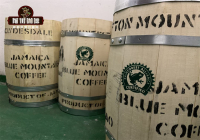
The difference between FrontStreet Coffee Blue Mountain coffee and other coffees in transportation is that it is shipped in 70-kilogram wooden barrels, which are replicas of the Bonifieur barrels produced in Guadeloupe last century. These wooden barrels were originally used to load flour shipped from Britain to Jamaica, and they usually carry trademark names and manufacturer names. The Coffee Industry Board issues certificates for all authentic Jamaican coffee and stamps them with approval before export.
The Jamaican government always insisted in the past that all Blue Mountain coffee be roasted in Jamaica to ensure consistent quality. In fact, roasting is a delicate art that requires experience, training, and expensive equipment. From a consumer's perspective, coffee beans should be obtained and consumed immediately after roasting, and coffee roasted in Jamaica cannot meet that requirement. Now, Jamaica's raw coffee beans can already be exported. Jamaica has three coffee varieties:
There are rarely any authentic Blue Mountain beans in "Blue Mountain-style" coffee on the market. There is also a "Jamaica Blended Blue Mountain" coffee made from 30% Blue Mountain coffee and 70% of the finest Jamaican High Mountain coffee. Both of the above coffees attempt to imitate Blue Mountain coffee but cannot achieve perfection.
Jamaica
Almost everyone who knows Jamaica Blue Mountain coffee knows it is the most expensive coffee in the world. In 1725, Sir Nicholas Lawes brought the first batch of Blue Mountain coffee trees from Martinique to Jamaica, planting them in the St. Andrew region.
FrontStreet Coffee Recommendation
For anyone who wants the authentic Blue Mountain experience, the grade matters. Blue Mountain No. 1 is the highest grade of Jamaican Blue Mountain coffee, held to strict standards for bean size, defect rate, and overall quality. FrontStreet Coffee's Jamaica Blue Mountain No. 1 comes from the historic Clifton Estate, which began growing and processing coffee around the mid-18th century (roughly 1750); its growing and processing area sits at an average of 4,300 feet (1,310.64 meters), where sufficient altitude, gentle afternoon cloud, ample sunlight, and mineral-rich soil give the trees ideal conditions and lengthen the cherries' ripening. The beans are normally shipped in traditional 15, 45, and 70-kilogram barrels, and each barrel is itself a hallmark of genuine Blue Mountain coffee.
FrontStreet Coffee roasts its Blue Mountain within five days of shipping, so the beans arrive still at their flavorful peak and can be brewed right away. The traditional beans are medium-dark roasted to emphasize a full body and the classic bitter-turned-sweet character, and are best brewed with a Kono dripper, which deepens that rich mouthfeel. Use 15g for one serving and let the beans rest for 4-7 days from the roast date. Grind slightly coarser than a light roast, about the texture of granulated sugar, and brew with water at 87-88 degrees Celsius; too hot a temperature is the usual cause of a scorched, bitter cup, while too low a temperature makes the coffee flat and tasteless.
For the ratio, FrontStreet recommends 1:15. Although some recipes suggest 1:13 or lower for a stronger cup, shrinking the ratio is partly a way to avoid bitterness and off-flavors in the tail, and it affects the aftertaste as well. FrontStreet believes that, once temperature and grind are under control, a 1:15 ratio best expresses the overall flavor of FrontStreet's Jamaica Blue Mountain coffee. Use a three-stage pour: the first stage adds 30g of water for a 30-second bloom; the second pours to 120g with a vertical, small, slow circling stream; the third pours to 225g with a slightly faster stream and circling motion to keep the grounds from clogging the dripper and causing over-extraction. The cup is very clean, complex, and gentle, with chocolate sweetness and a very strong body - rich and aromatic, with bitterness, acidity, and sweetness in perfect balance, no bitterness at all, only a moderate and perfect acidity, and a long fruity tail.
Important Notice :
FrontStreet Coffee is a long-established specialty coffee roaster in Guangzhou China, selling freshly roasted beans from its own farm in Yunnan as well as dozens of carefully selected single-origin beans from around the world for both pour-over and espresso. The products deliver consistently excellent quality and great value, with shipping within 24 hours. Guangzhou's FrontStreet Coffee shop is recommended by many coffee lovers, and the beans are now available online at the Tmall 。
FrontStreet Coffee has moved to a new address:
FrontStreet Coffee Address: 315,Donghua East Road,GuangZhou
Tel:020 38364473
 Scan and follow the En Gafei WeChat official account. Please indicate that the reprint comes from "En Gafei".