Differences Between Costa Rica Yellow, Red, and Black Honey Process Coffee | Characteristics of Costa Rica Honey Process Coffee Beans
FrontStreet Coffee - Costa Rica Honey Process Coffee Beans and the Differences Between Yellow, Red, and Black Honey Processing
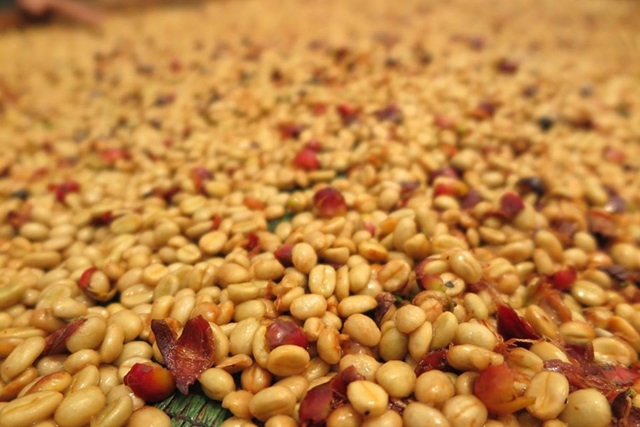
When you go looking for Costa Rica honey process coffee beans, you will usually find three choices: yellow honey, red honey, and black honey. You may have heard that each one leaves a different share of the mucilage layer on the bean, but what does that actually mean in the cup?
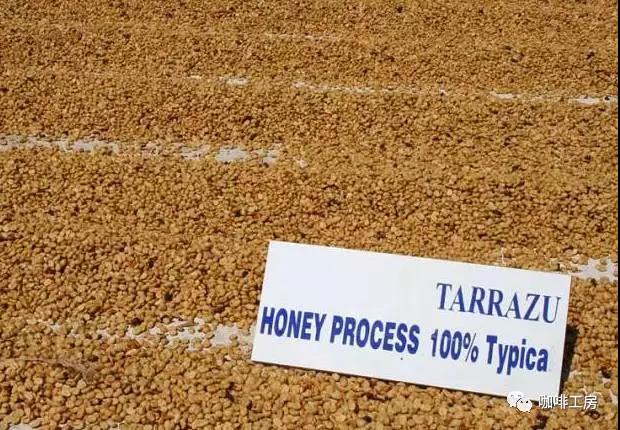
Coffee farmers sort their lots by how much mucilage they leave behind. Lots that keep less mucilage dry faster; lots that keep more need a longer drying time. Yellow honey keeps roughly 25% of the mucilage and is dried in a minimally shaded environment (cloud cover or shade trees) so it finishes quickly, which gives the parchment its yellow cast. Red honey keeps roughly 50% of the mucilage, dries more slowly, and needs some shade. Black honey keeps roughly 100% of the mucilage and is usually covered during drying to stretch the process out.
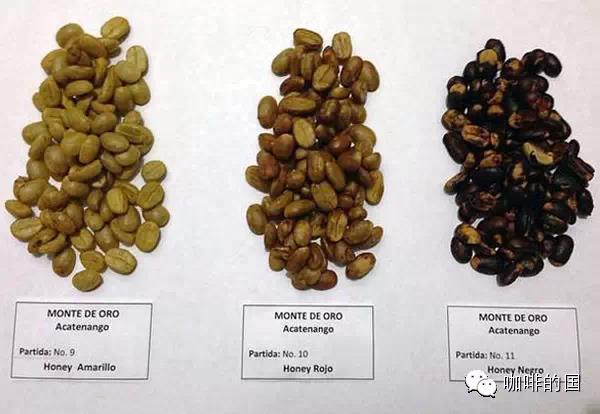
Which Is Better Among Costa Rica Honey Process Coffee Beans: Yellow, Red, or Black Honey?
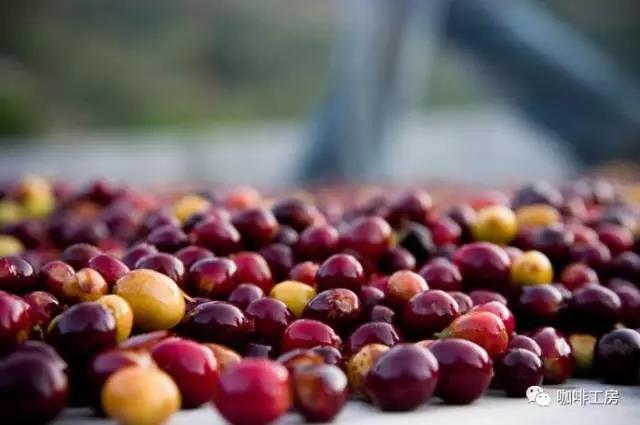
Black honey is often held up as the finest of the three. The sugars left in the mucilage shape the flavor in a more delicate and far-reaching way, so the more mucilage that remains, the richer the cup tends to be.
For producers, though, the choice is also a commercial one. Black honey can deliver better quality and a higher price, but the risks and costs climb sharply, which affects how willing farmers are to use it. The longer the coffee dries, the greater the chance that bacteria take hold during fermentation and produce moldy defective beans. Those lots have to be turned more often and they tie up more drying space, up to twice as much as yellow honey. The point is not only to make great coffee, but to let farmers grow the coffee that pays best.
Tarrazu Region
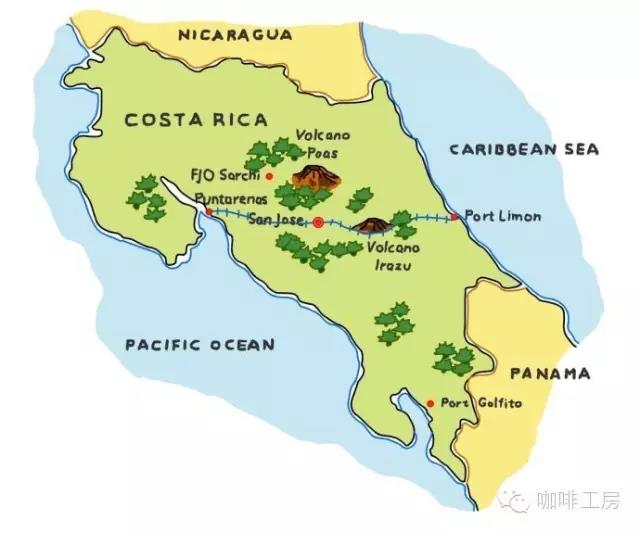
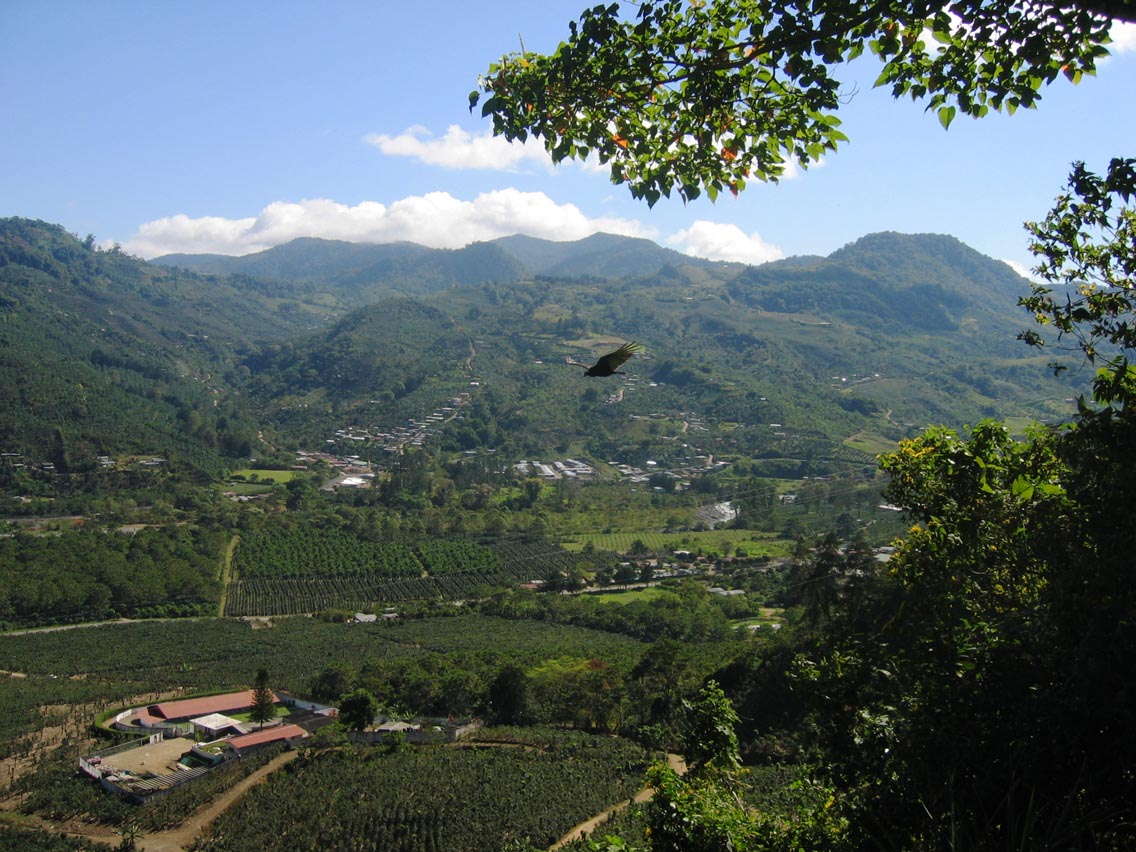
Costa Rica's Tarrazu is one of the world's great coffee regions, prized for a light, clean cup with a pleasing aroma. The country's volcanic soil is fertile and drains well. Costa Rica was the first country in Central America to grow coffee and bananas as commercial crops, and the two remain its main exports. Coffee reached Costa Rica from Cuba in 1729. Today the industry is among the best organized anywhere, with yields of up to 1,700 kg per hectare. A country of just 3.5 million people tends more than 400 million coffee trees, and coffee accounts for 25% of total exports. Costa Rica also benefits from the Central American Agricultural Research Institute (IAAc) in Turrialba, an important international research center.
Top Costa Rican coffee is graded "Strictly Hard Bean," and this class of coffee can grow above 1,500 meters. Altitude has always been a challenge for growers. Higher ground generally means better beans, not only because it raises the acidity of the coffee and lifts the flavor, but also because cooler nights at elevation slow the trees down and concentrate the flavors in the bean. The wide altitude range also brings ample rainfall, which helps the trees thrive. Higher ground does carry extra transport costs, which can make a farm unprofitable. The Costa Rican industry has adopted new technology to raise efficiency, including "electric eyes" that sort beans and flag irregularly sized ones.
Tarrazu lies south of the capital, San Jose, and ranks among the country's most valued growing areas. "La Minita Tarrazu" is a famous local coffee with a limited output of about 72,600 kg a year. It is grown on land called La Minita, held by the British McAlpine family for three generations. The land itself could produce over 450 tons of coffee a year. La Minita Tarrazu is grown without artificial fertilizer or pesticide, and every step of harvesting and sorting is done by hand to avoid the damage that air-jet sorting can cause.
Other coffees worth noting include Juan Vinas (PR), H. Tournon, Windmill (SHB), Monte bello, and Santa Rosa. Premium coffee generally comes from Geredia and the Central Valley. Another standout is Sarchi coffee (Sarchi is one of the five towns on Costa Rica's "Coffee Route"), grown on the slopes of Poas Volcano, 53 km from San Jose. The Sarchi company was founded in 1949 on 30,770 hectares growing sugarcane and coffee. The region is also known for its handicrafts, which draw visitors from around the world.
The country's coffee trade was once controlled by the Instituto del Cafe de Costa Rica (ICAFE) and is now overseen by the Oficina del Cafe. Among exported coffees, any lot judged unqualified is dyed blue with plant dye and returned for domestic sale. Domestically consumed coffee, dyed or not, accounts for about 10% of total production, and local per-capita consumption is twice that of Italy or the United States.
Coffee from Tarrazu has a light, clean flavor with bright acidity and citrus or berry aromas, and it earns very high marks on the international market. Other high-quality Costa Rican coffees include Juan Vinas (PR), H. Tournon, Windmill (SHB), Monte bello, Santa Rosa, and FJO Sarchi. Note that premium Costa Rican beans are called "Strictly Hard Bean," with the following grading standards:
Strictly Hard Beans (SHB): above 1,200 meters (3,900 feet)
Good Hard Beans (GHB): 1,200-1,000 meters (3,900-3,300 feet)
Medium Hard Beans (MHB): 1,000-500 meters (3,300-1,600 feet)
If you enjoy a tea-like, light-bodied coffee that is sweet, with honeydew melon notes, a touch of floral aroma, and lemon and nut flavors, Central American Costa Rica honey process beans may be just right for you. Honey processing means pulping away the outer skin of the cherry first, then spreading the mucilage-covered parchment beans on racks to sun-dry. This water-saving method leaves the coffee sweeter and more fragrant.
Set in the fertile volcanic soil of Costa Rica's Central Valley, Zamora Estate in San Isidro de Heredia was the champion farm of the 2012 Costa Rica C.O.E. competition. The farm is owned by the Rodriguez Carballo family, who have been growing coffee since 1880. The cup is complex, with floral notes and ripe juicy fruit, and a very clean mouthfeel.
Costa Rica Finca Tres Milagros
In specialty coffee circles, anyone who mentions Camilo, owner of the Santo Domingo estate, tends to agree on one thing: his extraordinary passion for coffee growing and his appetite for experiment have made him a long-time collaborator of top baristas around the world. In 2013 the Facusse family, who had long run food sales in Costa Rica through the Dinant company, decided to build on Camilo's success in Colombia and start a new estate project in Costa Rica, naming it Finca Tres Milagros. The name "Three Miracles" reflects Camilo's belief that every successful estate depends on three things working together: coffee trees, farmers, and land.
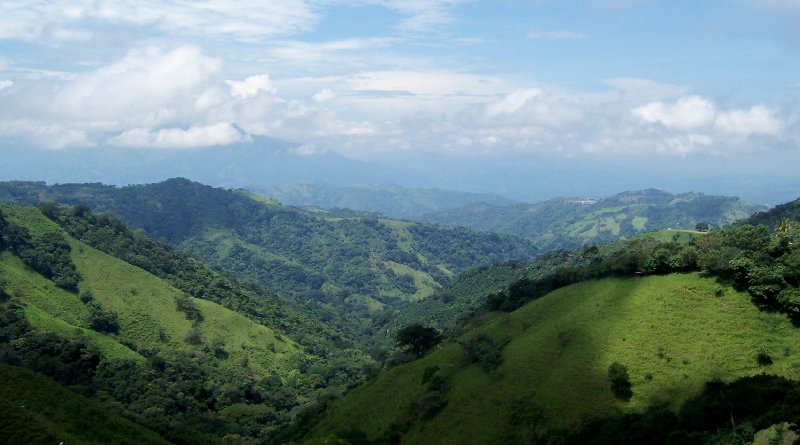
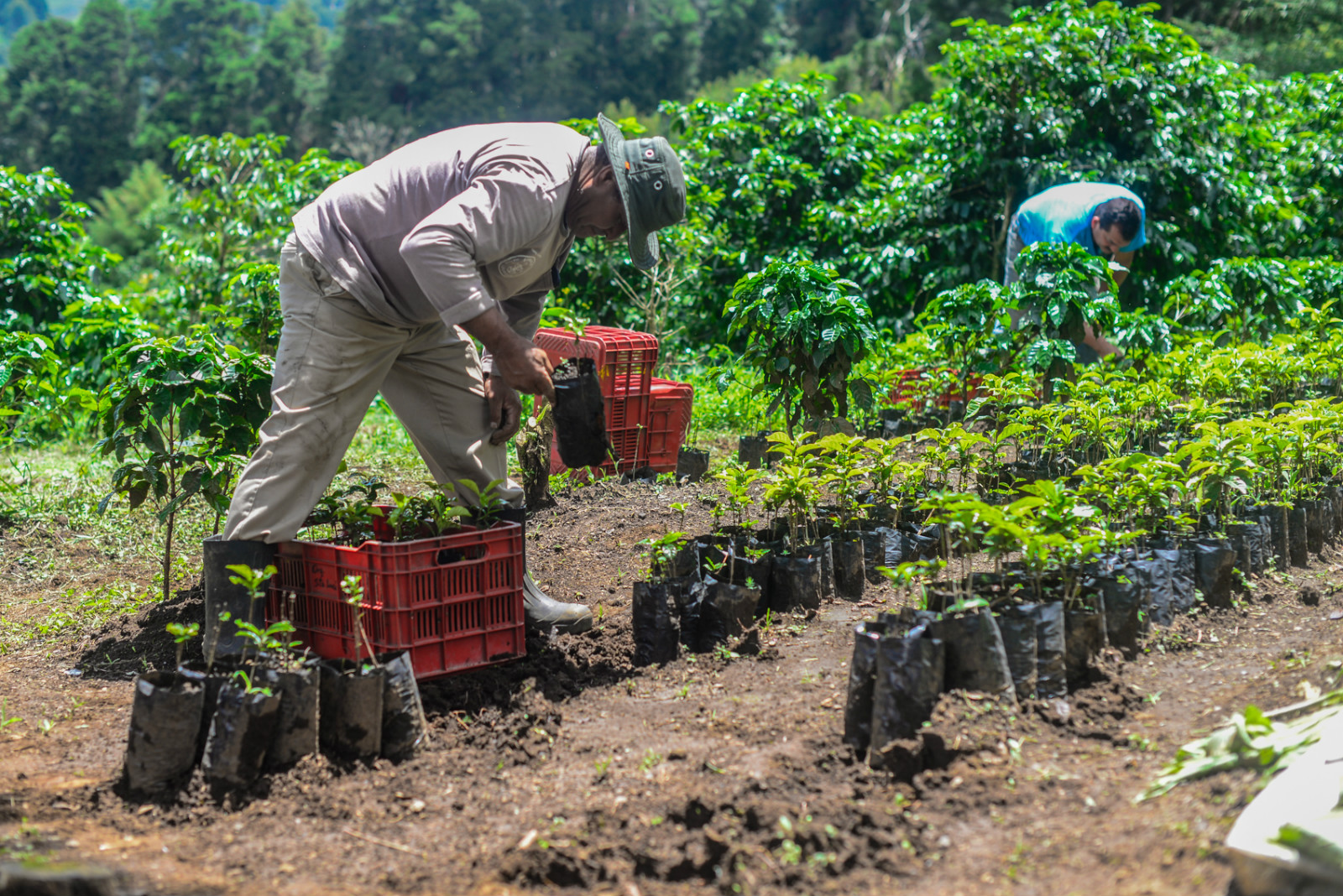
When the Costa Rica project was being planned, location was the most critical factor. After long discussions and land assessments, the team settled on Tarrazu, the country's highest-altitude region. The estate sits at 1,450-1,750 meters on volcanic ash soil from Irazu Volcano, which supplies the trees with plenty of nutrients. Camilo also insisted on low-density planting, which aids nutrient uptake and growth and lifts cupping quality. Tres Milagros today farms about 120 hectares and produces only about 300 bags of top micro-lot coffee a year. The estate's facilities were planned around four key principles:
First, a greenhouse system that gives the green beans better humidity, temperature, and ventilation during the sun-drying stage.
Second, an intercrop system for environmental symbiosis, planting different species to support biodiversity while helping the farmers manage the farm ecosystem.
Third, a shade-grown system. Most of the estate uses Inga trees together with other local species, so the coffee grows in full shade that protects it.
Fourth, the right varieties. From the start, Camilo chose traditional, lower-yielding but better-tasting varieties. Besides excellent types such as Bourbon and Geisha, the estate planted F1, a new variety recently developed in Costa Rica by the French research organization CIRAD. F1 is a hybrid of Villa Sarchi + Sachimor and Sudan Rume, so it carries both the traditional Central American Villa Sarchi character and the citrus notes of the African Sudan Rume.
FrontStreet Coffee - Tres Milagros Bourbon Honey Finca Tres Milagros Bourbon Honey
Country: Costa Rica
Region: Dota, Tarrazu
Altitude: 1450-1750 meters
Processing: Honey Process
Grade: SHB
Variety: Bourbon
Flavor Description: Stone fruit, syrup, brown sugar, honey
FrontStreet Coffee - Tres Milagros F1 Honey Finca Tres Milagros F1 Honey
Country: Costa Rica
Region: Dota, Tarrazu
Altitude: 1450-1750 meters
Processing: Honey Process
Grade: SHB
Variety: F1
Flavor Description: Syrup, apricot, grape, apple juice, smoky aftertaste
La Minita is a world-class estate, a superstar in the eyes of many coffee professionals and baristas. Last year's WBC champion, Klaus Thomsen of Denmark, used La Minita as the base of his espresso blend and for the structural flavors of his creative drinks, and this year in Tokyo competitors used it as well.
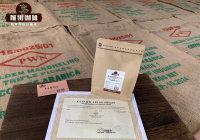
Starting this year, the McAlpine family uses "La Minita" as the shared quality-control mark for all of the estate's green beans. Every lot the group exports is marked with overlapping seals on the burlap bags. Below are the newly arrived La Minita and its seal:
The McAlpine family took over the management of La Minita in 1967. It is fair to say that any discussion of specialty coffee estates eventually comes around to "La Minita." In recent years, instructors in SCAA and SCAE cupping courses almost always bring up La Minita when they list reference examples of mouthfeel or specialty beans. La Minita has been popular in Europe for over 50 years and also enjoys a high reputation in the American market.
La Minita has been known over the years for seven major strengths:
[1] Superior geography and microclimate: Tarrazu is Costa Rica's most famous region, and La Minita has two major rivers, the Tarrazu and the Alumbre, which converge in the western mountains of the estate and fully regulate temperature. The estate's west-facing aspect is a further advantage: mornings are not too cold and evenings do not cool too quickly. Rainfall is well distributed, with moderate rain from flowering through fruiting that supplies enough moisture. High-quality clay layers provide ample nutrients. An average altitude of 4,000 to 6,000 feet ensures sufficient bean hardness and high sweetness.
[2] Good varieties: the estate grows Caturra, red Catuai, yellow Catuai, and Hibrido (a hybrid). After cupping evaluation and statistical selection, it now relies mainly on Caturra with small amounts of the older Hibrido.
[3] Strict quality control: (1) a rotation and replanting system. All coffee trees follow a five-year rotation, so after four years of harvest a tree is cut back to just 50 cm to rest and regrow before it bears again. The farm holds 1.5 million trees, and an average of 350,000 trees are rotated and rested each year. Beyond rotation, trees are replaced: each tree bears for only 15 years, after which new trees go in to protect quality. They replace 150,000 trees a year and plant shade trees around the coffee for shade cultivation.
[4] The wet mill follows very rigorous procedures, and after processing the beans are sun-dried and then machine-dried.
[5] The green bean rejection rate exceeds 70%, which means less than 29% of green beans can be sold under the La Minita estate label.
[6] In the final green bean sorting stage, 30,000 work hours go into careful selection. Only beans that qualify may carry the La Minita label.
[7] Dedication. For example, the three major stages of harvesting, pruning, and processing are all handled with great care. During harvest, La Minita's trees are picked an average of 5 times because only the ripest cherries are taken. Batch harvesting is labor-intensive and demands great patience. Pruning refers to rotation planting, which keeps the land from becoming barren and maintains peak green bean quality without forced feeding by chemical fertilizer. Processing refers to how the cherries are handled after harvest. In 2001 La Minita built its own wet mill to hold to the quality it insists upon.
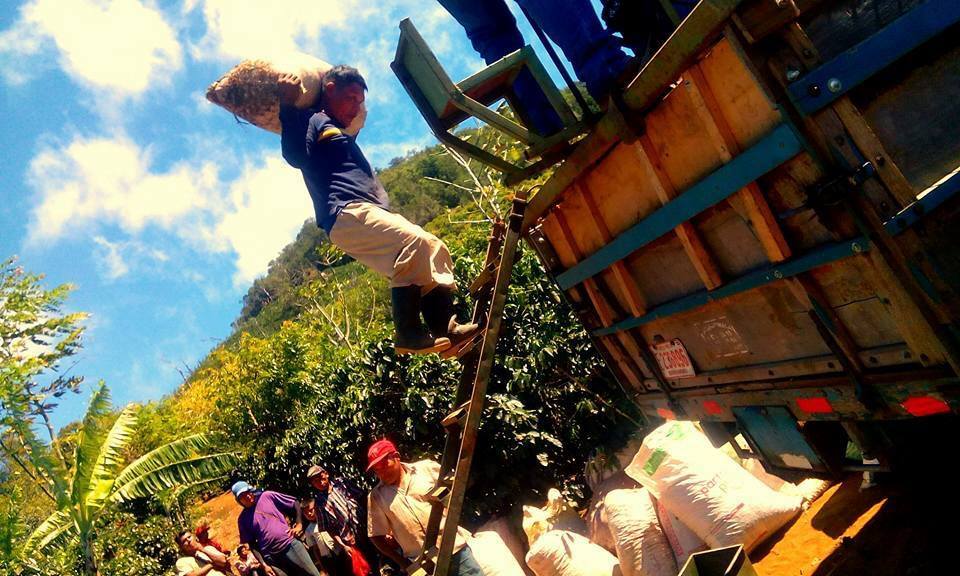
FrontStreet Coffee - Costa Rica Sumava de Lourdes
Costa Rica Sumava de Lourdes black honey
FrontStreet Coffee - Costa Rica Sumava de Lourdes Caturra Black Honey
Region: West Valley
Estate: Finca Sumava de Lourdes
Variety: Caturra
Altitude: 1700 meters
Processing: Black Honey
Soil: Volcanic geology
Harvest: December to March of the following year
Flavor Description: Brown sugar, floral, citrus, pomelo, sweet spices, rich sweet mouthfeel
Costa Rica's Sumava de Lourdes estate is very young. Francisco Mena, who came from the coffee trade, bought the land and kept most of the original forest, developing only a small part for coffee so that the estate keeps its natural ecological balance.
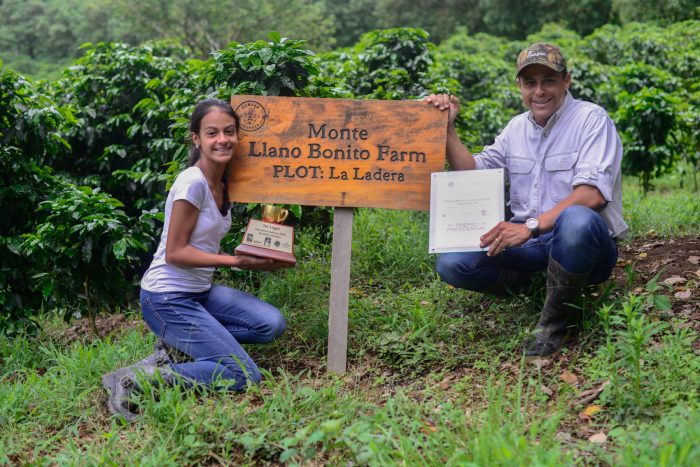
Sumava de Lourdes sits between 1,670 and 1,790 meters in another famous Costa Rican region, the West Valley, where wide temperature swings and fertile soil are very well suited to coffee.
The owner, Francisco Mena, brought in high-quality varieties that ranked in the top 13 of the Cup of Excellence, among them Villa Sarchi, a Bourbon mutation. This precious variety was bred by crossing red Bourbon trees. It stands up to strong winds, prefers high altitude, and offers excellent acidity with a range of fruit notes, high sweetness, bright and delicate citrus acidity, and deeper raisin and nut aromas, with high complexity and excellent balance.
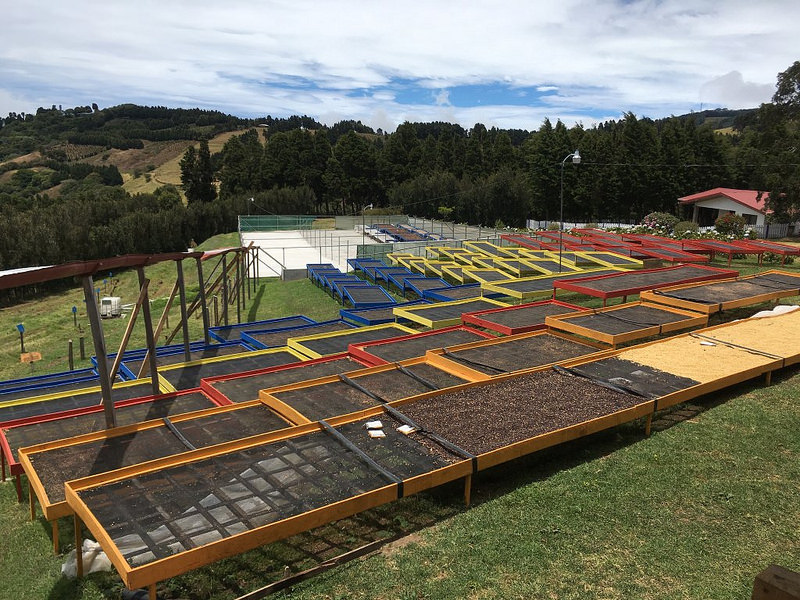
Most of the estate is left as forest to preserve the natural environment. Estate management is careful: broken wood, rotten wood, and weeds are not burned. Instead the wood is crushed into fragments and mixed with organic fertilizer for use on the farm. From the El Chayote reserve in the western valley, in fertile volcanic soil facing Pacific convection currents and moisture, and with large day-night temperature swings and an excellent microclimate, this small 1-square-kilometer area has produced 4 champion estates, a place truly blessed by nature.
Green Bean Analysis
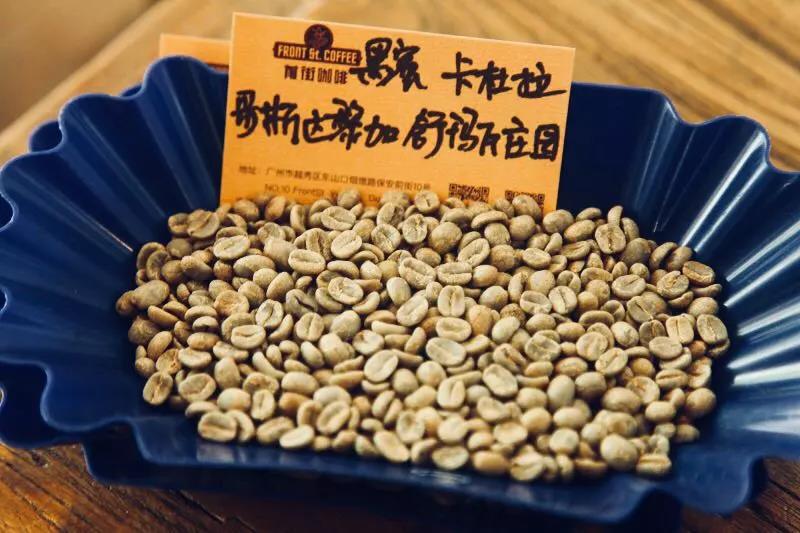
Caturra, varietal Caturra, Coffea arabica var. caturra.
First discovered in Sao Paulo state, Brazil in 1937, it is a natural mutation of Bourbon. It is now widely planted in Brazil, Colombia, and other parts of Central and South America.
FrontStreet Coffee Roasting Recommendations

Yangjia 800N, 550g green beans, specific operation:
Preheat the roaster to 200°C, add the beans, and set the damper to 3. After 1 minute of turning yellow, reduce heat to 160°C and keep the damper unchanged. At 160°C, reduce heat once more to 135°C. Bake to 5'40", temperature 154.9°C, when the bean surface turns yellow, the grassy smell disappears completely, and dehydration is complete, keeping the damper unchanged.
At 9 minutes, the bean surface shows ugly wrinkles and black spots, and the toast aroma clearly changes to coffee aroma, which can be defined as the prelude to first crack. At this point, listen carefully for the first crack sound. At 9'21" first crack begins, reduce heat to 80°C and fully open the damper to 5 (be very careful with heat adjustment, do not reduce to no crack sound) 50°C, unload at 193.4°C.
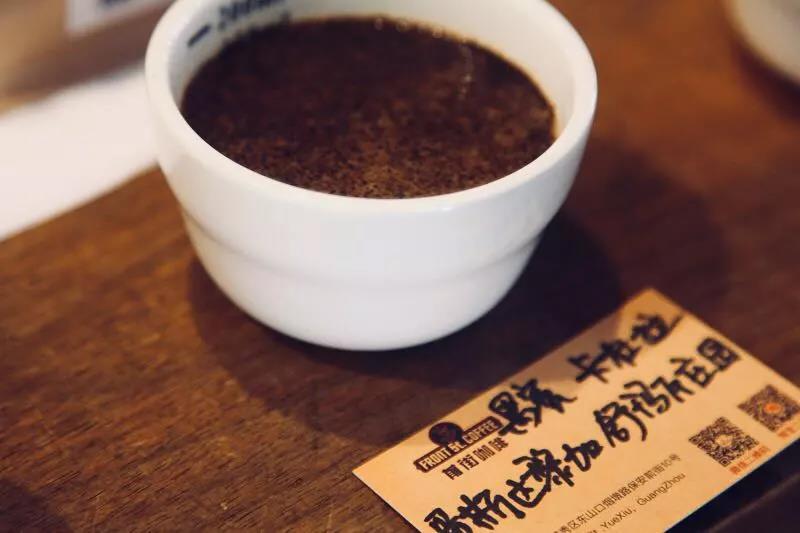
FrontStreet Coffee Cupping Flavor
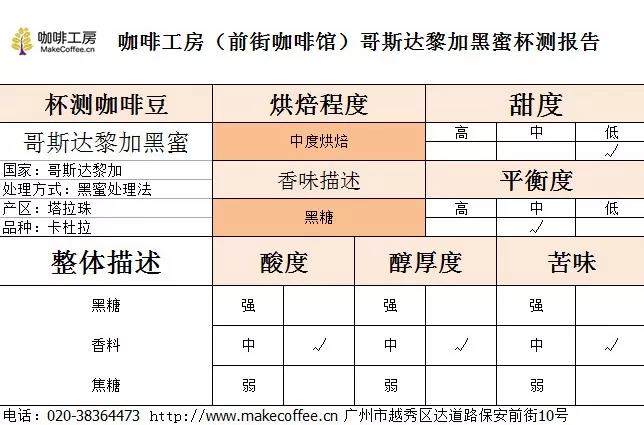
Flavor: Preserved plum, honey, brown sugar, orange blossom, white chocolate
Mouthfeel: Excellent sweetness, gentle fruit acidity, round and full, persistent aftertaste
FrontStreet Coffee Brewing Recommendations
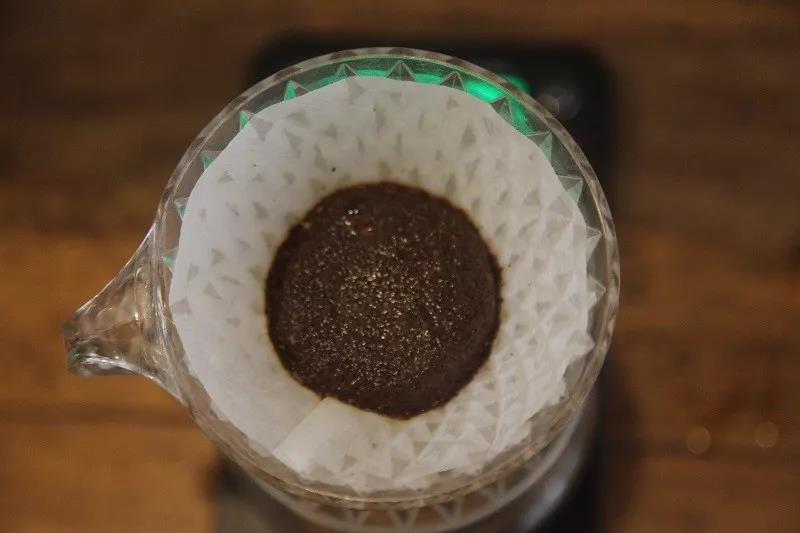
Use a KEY dripper, 16g coffee to 32g water, bloom for 30 seconds. Extract with 89-90°C water at a 1:15 ratio, medium-fine grind (Fuji 3.5). For the second pour, add water to 110ml then stop. Wait for the water level to drop, then slowly pour again at an even speed, keeping the water level not too high. Add water again to 233ml and stop. Extraction time 2:15 - rich sun-dried sweetness. Everyone can fine-tune according to their own taste.
FrontStreet Coffee Recommendation
Honey processing grew out of the semi-washed, or pulped natural, method: the skin is removed and the beans are dried in the sun, which shortens the drying time while steering clear of the off-flavors that come from careless fermentation. Brazil showed what the method could do, and Costa Rica adapted it, then split it into white, yellow, red, and black honey according to how much mucilage is left and how long the beans dry.
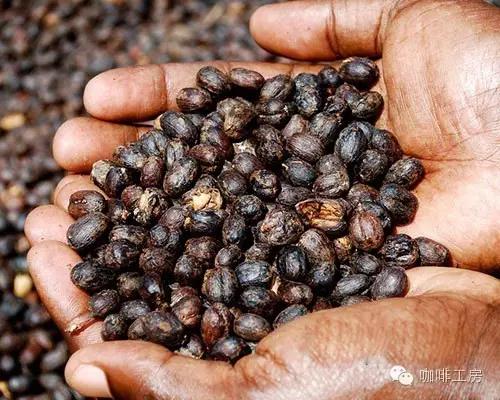
FrontStreet Coffee's Costa Rica Blackberry coffee is a good place to start. It uses a black honey process that removes almost none of the mucilage, so drying lasts at least two weeks under cover to keep the sun from drying the beans too fast and to let the sugars convert fully. The lots are turned at intervals so they do not over-ferment from uneven heat. The result is roasted medium-light, and the ground coffee releases a strong floral fragrance; brewed, it shows grape, berries, and ripe blackberry.
For a sweeter, fruitier cup, FrontStreet Coffee's Strawberry Candy blend pairs Panamanian Geisha with Costa Rican coffee processed as raisin honey, keeping 100% of the mucilage with a zero-water method. The cherries are floated to separate the dense ripe fruit from the underdeveloped and overripe, dried on raised beds for at least three days, then pulped and dried further while being turned constantly for evenness. It brings Geisha's floral-tea character together with raisin and blueberry notes, soft fruit acidity, an almond finish, and clear sweetness. FrontStreet Coffee's Costa Rica Mozart uses the same innovative raisin honey approach and is a versatile pick for pour-over, cold brew, or moka pot, with distinctive osmanthus, pineapple, and raisin aromas.
Important Notice :
FrontStreet Coffee is a long-established specialty coffee roaster in Guangzhou China, selling freshly roasted beans from its own farm in Yunnan as well as dozens of carefully selected single-origin beans from around the world for both pour-over and espresso. The products deliver consistently excellent quality and great value, with shipping within 24 hours. Guangzhou's FrontStreet Coffee shop is recommended by many coffee lovers, and the beans are now available online at the Tmall 。
FrontStreet Coffee has moved to a new address:
FrontStreet Coffee Address: 315,Donghua East Road,GuangZhou
Tel:020 38364473
 Scan and follow the En Gafei WeChat official account. Please indicate that the reprint comes from "En Gafei".