Origin, Variety, Planting History of Indonesian Mandheling Coffee Beans and the Story Behind Golden Mandheling's Name and Flavor Characteristics
Anyone who enjoys coffee has heard of Mandheling beans. They come from Indonesia — the country of a thousand islands — and to this day Indonesian Mandheling remains so distinctive that it draws in coffee lovers by the thousands.
The Origin of the Name Mandheling Coffee
The name itself is a wonderful accident — it is neither a producing region nor a coffee variety, but the product of a double misunderstanding. As FrontStreet Coffee has pieced together the story: during World War II, when Japan occupied Indonesia, a Japanese soldier tasted an incredibly aromatic coffee at a café and asked the owner what it was called. The owner, misunderstanding, thought he was being asked where he was from, and answered "Mandailing." The soldier misheard it as "Mandheling." After the war, remembering that fragrant "Mandheling" coffee from Indonesia, he wanted to start a coffee business in Japan, and commissioned an Indonesian coffee merchant to ship 15 tons to Japan — where it became wildly popular. That merchant went on to found the now-renowned PWN (Pawani Coffee Company).
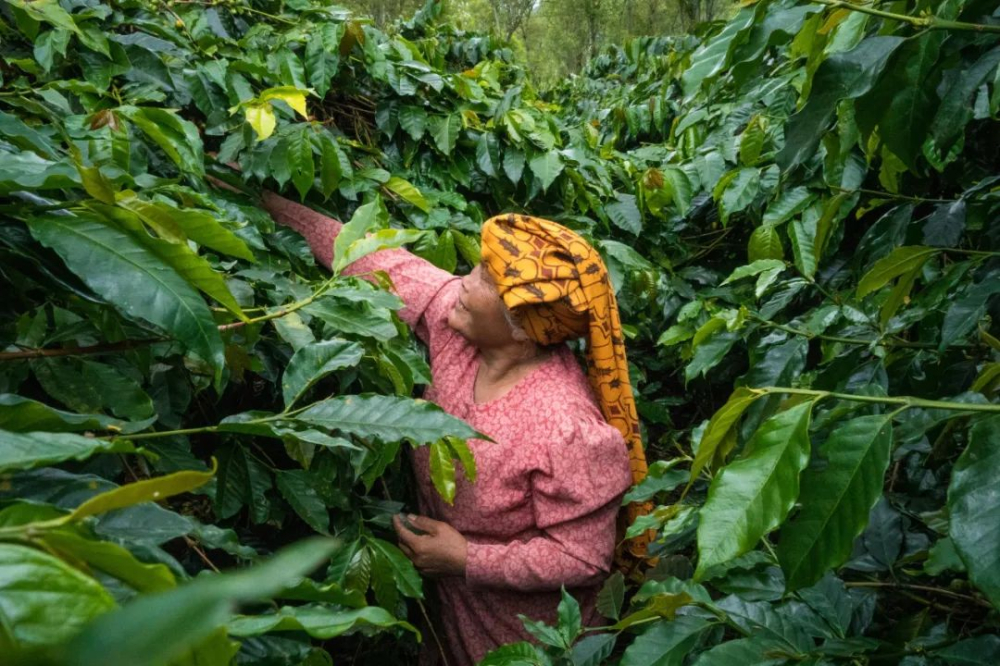
So a double misunderstanding made Mandheling famous worldwide. The bean's definition is equally specific: only Arabica beans from northern Sumatra may be called Mandheling. Robusta grown in southern Sumatra, or coffee from Java and Sulawesi, cannot carry the name.
Mandheling Coffee Growing Regions
Within North Sumatra, two areas excel at growing Mandheling: the Lintong production area centered on Lake Toba, and the Aceh production area centered on Lake Tawar.
Lintong Production Area
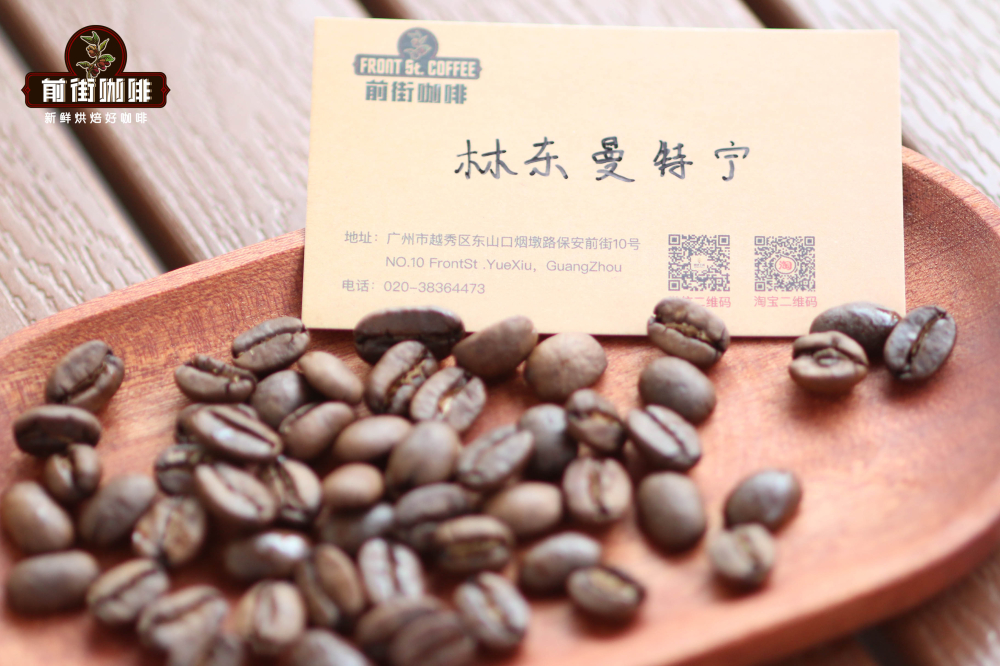
Lintong is the traditional, famous region. The high mountains here rise 1,000-1,500 meters, and multiple volcanoes enrich the soil. Lintong Mandheling has always been a sought-after quality product. FrontStreet Coffee's Indonesian everyday beans come from the Lintong area. After cupping through many Mandheling lots, FrontStreet Coffee found Lintong coffee mellow on the palate, rich in chocolate and nut tones with local herbal flavors — the definitive Mandheling profile.
Aceh Gayo Mountain Production Area
Aceh's early independence movements kept the region turbulent, and however good the coffee was, few merchants dared to source there. Only in 2005, as the situation eased, did the Aceh production area win back the trade's attention.
Aceh's Gayo Mountains sit at Sumatra's northernmost tip, with coffee growing around the town of Takegon and on the slopes around Lake Tawar at an average altitude of 1,100-1,600 meters. Pwani's famous Golden Mandheling beans come from here — evidence enough of Aceh's superiority over Lintong.
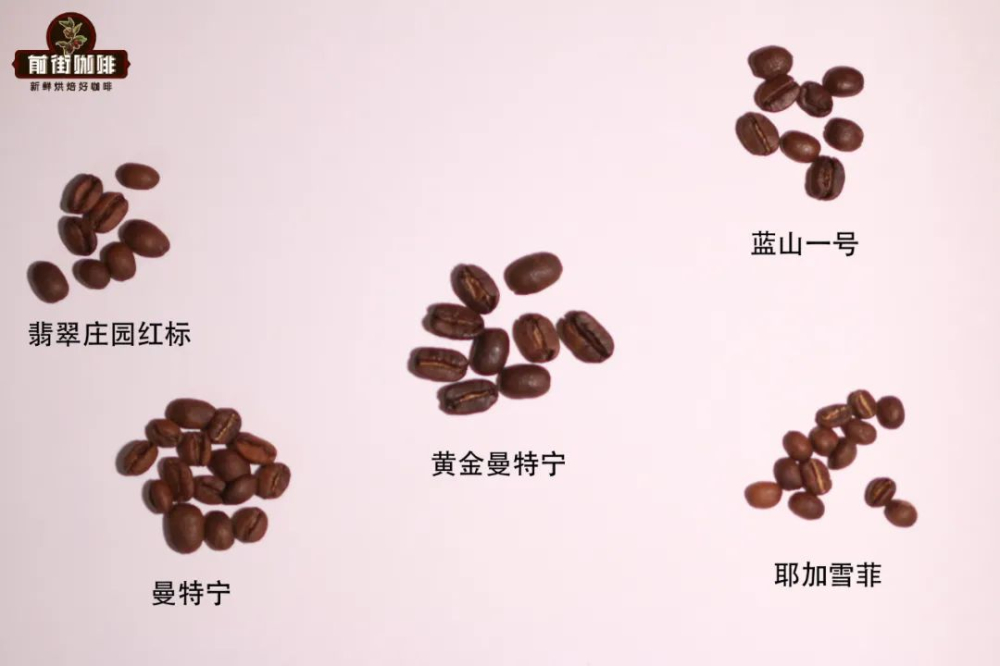
The local variety is called "Ateng" — an unfamiliar name, but Indonesian varietal naming simply differs: what Indonesians call Tim Tim is what we call Timor, and Ateng is their name for Catimor. The variety suits cultivation and flavor development in Aceh very well.
PWN's Golden Mandheling is famous for its exceptionally high green bean quality. Part of that guarantee comes from processing: three rounds of manual sorting afterward keep defective beans to a minimum, leaving full, uniform beans that glow with a golden radiance in the sun.
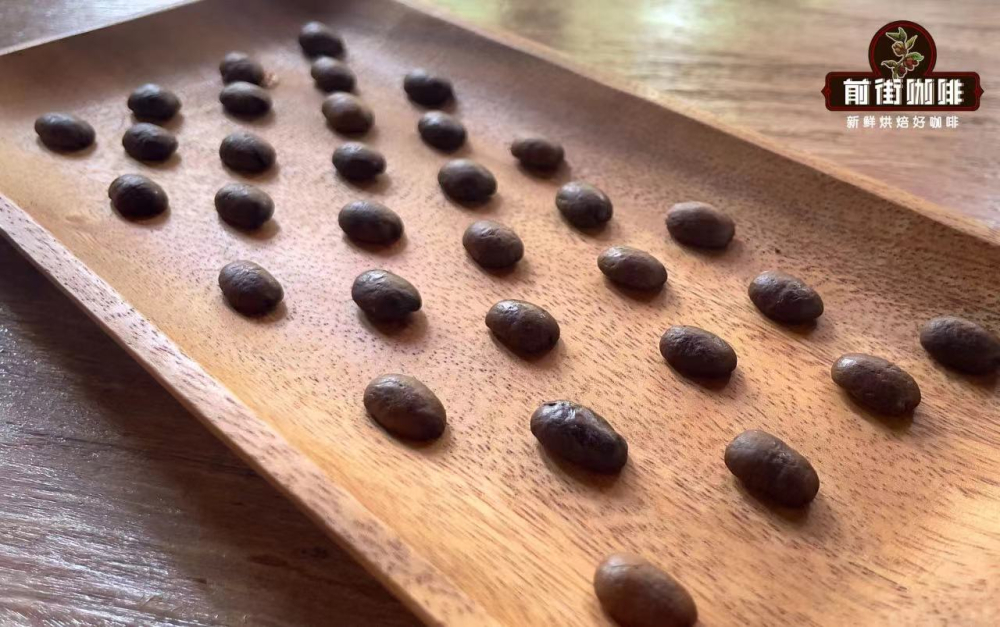
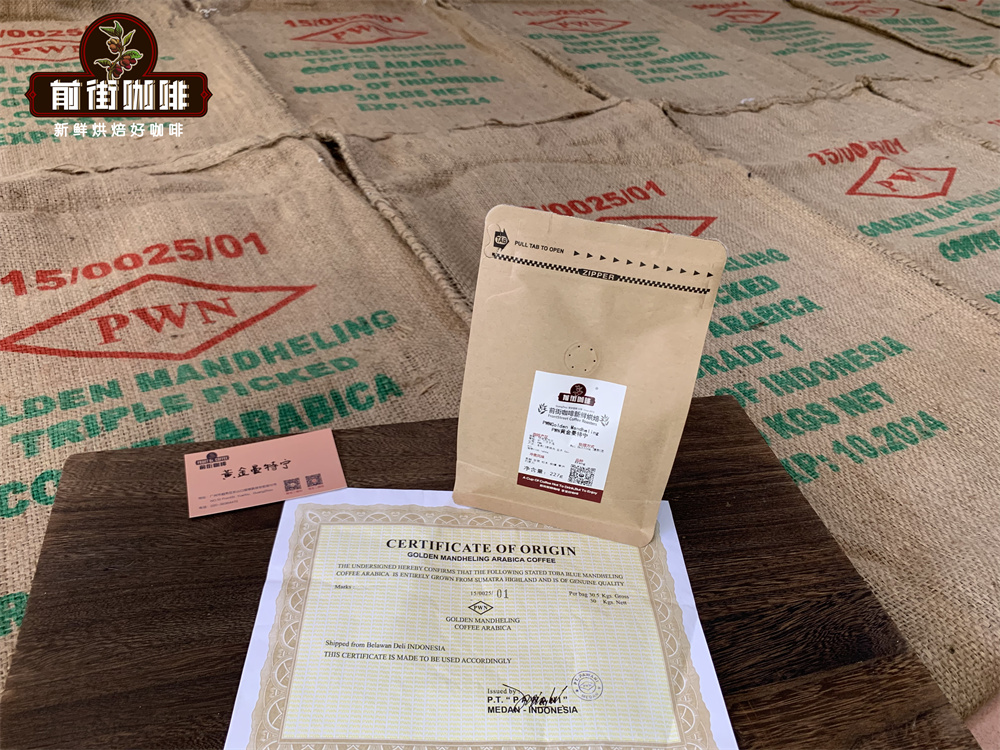
That quality commands a premium, and some dishonest merchants pass off ordinary Mandheling G1 as Golden Mandheling. The simplest verification: ask the seller to show the Golden Mandheling burlap bags along with the PWN certificate bearing the same serial number as the bags.
How to Brew Mandheling Coffee?
However good the bean, careless brewing pulls out bitterness and muddled flavors. If that's your trouble, follow FrontStreet Coffee's method.
For a dark roast like Mandheling, FrontStreet Coffee recommends a Kono dripper to enhance the coffee's mellow texture. No Kono? A V60 will do.
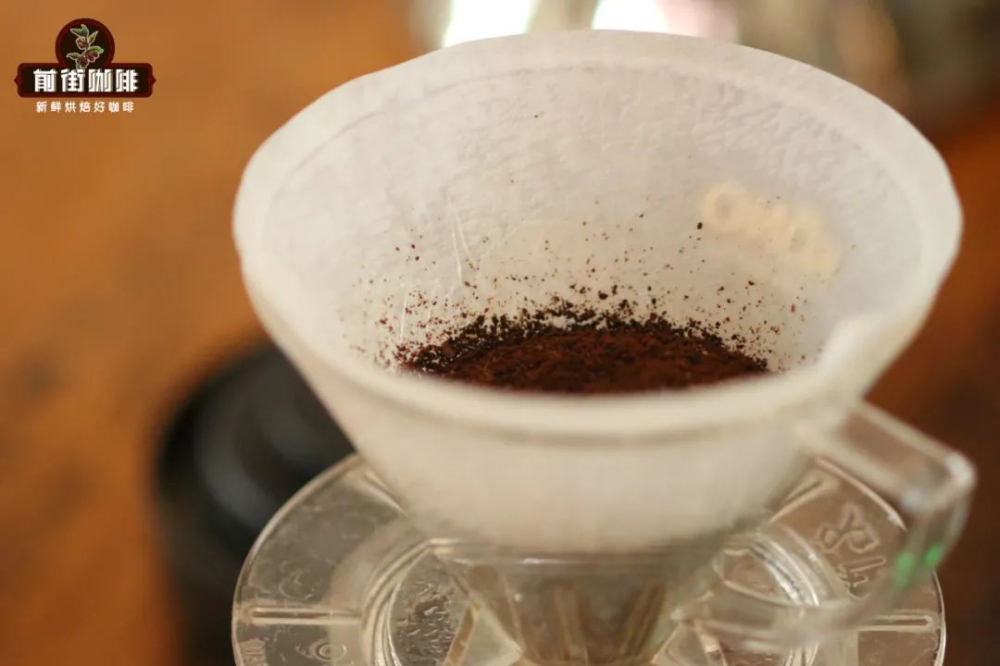
Use 15g as the single-serving standard, and rest the beans 4-7 days from roast date for better flavor in the cup. Grind Mandheling slightly coarser than light roasts: its dark roast leaves the bean structure loose, so it absorbs water and releases compounds readily. Grind as fine as a light roast and you'll extract burnt bitterness; go too coarse and the coffee turns thin and watery. Aim for a 70% pass-through rate on a #20 sieve.
For water, use 87-88°C. Many cases of burnt bitterness trace back to water that's too hot — though water that's too cool leaves the cup flat and lifeless.
For ratio, FrontStreet Coffee recommends 1:15. Some methods tighten to 1:13 or lower for intensity, but partly that's a dodge around bitter tail-section flavors, at the cost of the aftertaste. Master water temperature and grind, FrontStreet Coffee believes, and 1:15 shows Golden Mandheling's full profile.
Pour in the common three-stage pattern — dividing the pour best expresses Mandheling's mellow body and caramel sweetness. Stage one: bloom with 30ml of water, fully wetting the grounds so they degas and extract better afterward. Stage two: pour 100ml, mainly to bring up all of Mandheling's golden foam.
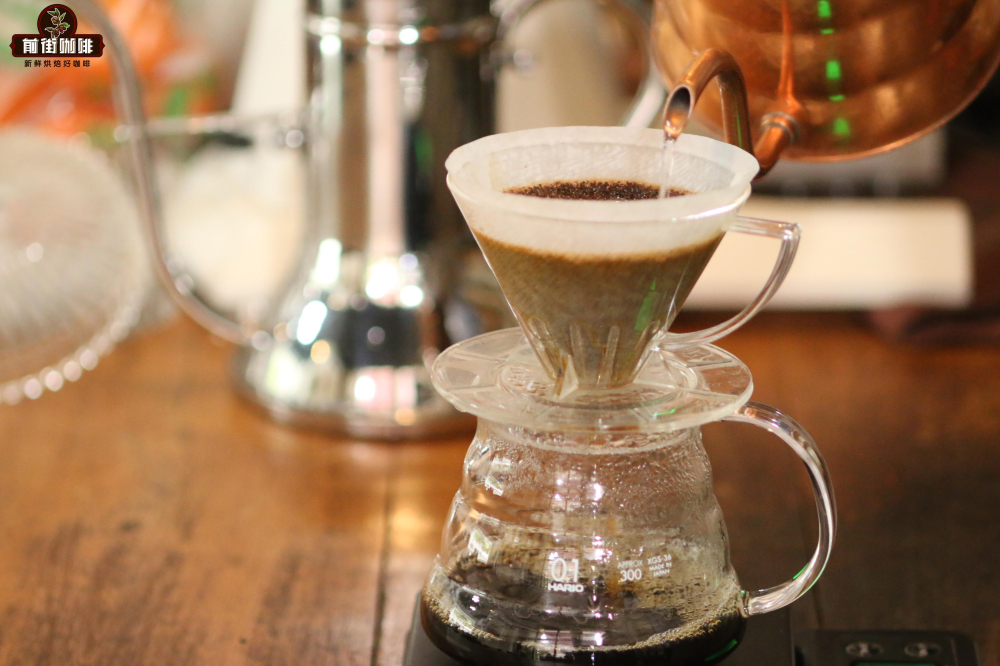
The final stage is a gentle center pour of 95ml, which lifts the coffee's sweetness and finishes the cup in a thick, mellow texture with caramel sweetness, chocolate, and nuts.
FrontStreet Coffee Recommendation
For the definitive Mandheling experience, choose the grade-topping FrontStreet PWN Golden Mandheling. Sourced by PWN from Sumatra's highland Aceh Gayo region, the beans are machine-selected once and hand-sorted three times to the strict G1 standard — 18 mesh and above, fewer than 3 defects per 300g sample — for an even, plump, translucent bean with a low defect rate. Roasted medium-dark, it opens with rich roasty aroma and brews into a black coffee of clean taste and full, mellow body — the natural choice for anyone who avoids acidic coffee. Brew it with 87-88°C water, 15g of coffee, a 1:15 ratio, a coarse-sugar grind, and three-stage pouring to bring out its caramel sweetness alongside chocolate and nut flavors.
Want the wilder, traditional side of the island? The FrontStreet Lintong Mandheling everyday bean, from the classic Lake Toba region, is deeply aromatic and mellow — strong and striking on entry with clove and woody notes, low acidity, spice and mint, and a powerful, persistent, thick sweetness. And for espresso, the high-repurchase FrontStreet Classic Blend adds medium-dark Mandheling to Brazil's creamy nut base — butter, roasted chestnut, and caramel standing out, with sandalwood, herbal, and spice accents plus a touch of robusta for crema-rich shots that make latte art or layered Dirty drinks easy.
Important Notice :
FrontStreet Coffee is a long-established specialty coffee roaster in Guangzhou China, selling freshly roasted beans from its own farm in Yunnan as well as dozens of carefully selected single-origin beans from around the world for both pour-over and espresso. The products deliver consistently excellent quality and great value, with shipping within 24 hours. Guangzhou's FrontStreet Coffee shop is recommended by many coffee lovers, and the beans are now available online at the Tmall 。
FrontStreet Coffee has moved to a new address:
FrontStreet Coffee Address: 315,Donghua East Road,GuangZhou
Tel:020 38364473
 Scan and follow the En Gafei WeChat official account. Please indicate that the reprint comes from "En Gafei".