Costa Rican Coffee Beans Flavor Characteristics Story - Honey Processed Coffee Beans Brewing Flavor Profile

FrontStreet Coffee has tasted a great many specialty coffees, and if we had to name one country whose coffee flavor stands for sweetness, Costa Rican honey-processed beans would surely come up. Honey processing is the most common method in Costa Rica, and because of the word "honey," many people assume honey is added during processing. It is not. The "honey" refers to the coffee's mucilage, and honey processing is simply a general umbrella term for a family of techniques.

Costa Rica is a classic Central American country. In 1949 it abolished all military forces, keeping only police organizations to maintain public order, and declared neutrality. More than 70 years on, Costa Rica has enjoyed flourishing development. As a leading country in Central America, it also treats coffee as an important part of its agriculture.
Starting in 1832, the local government passed a law: any coffee farmer who planted coffee on vacant, unoccupied land could own that land outright. The policy encouraged many people to plant coffee, drove the industry forward, and shaped the situation today in which most Costa Rican coffee comes from private estates.

When FrontStreet Coffee looks at Costa Rican beans, we find they not only keep the pure, clean taste of the Americas but also stand out for their admirable sweetness.
FrontStreet Coffee believes this comes from a unique environment: the extension of the Andes Mountains, abundant rainfall carried by sea breezes off the Pacific and the Caribbean, and rich volcanic soil. Together these provide everything needed to grow high-quality coffee. FrontStreet Coffee also believes the honey-like sweetness of Costa Rican coffee is inseparable from its special processing. Costa Rica treats coffee with the honey method, removing the fruit skin and then spreading the beans out on drying beds, so the coffee absorbs the sugars of the mucilage and the beans end up sweeter.

Costa Rican Coffee Regions
Costa Rica has eight major coffee regions: Western Valley (Valley Central Occidental), Central Valley (Valley Central), Tarrazu, Tres Rios, Orosi, Brunca, and Turrialba.
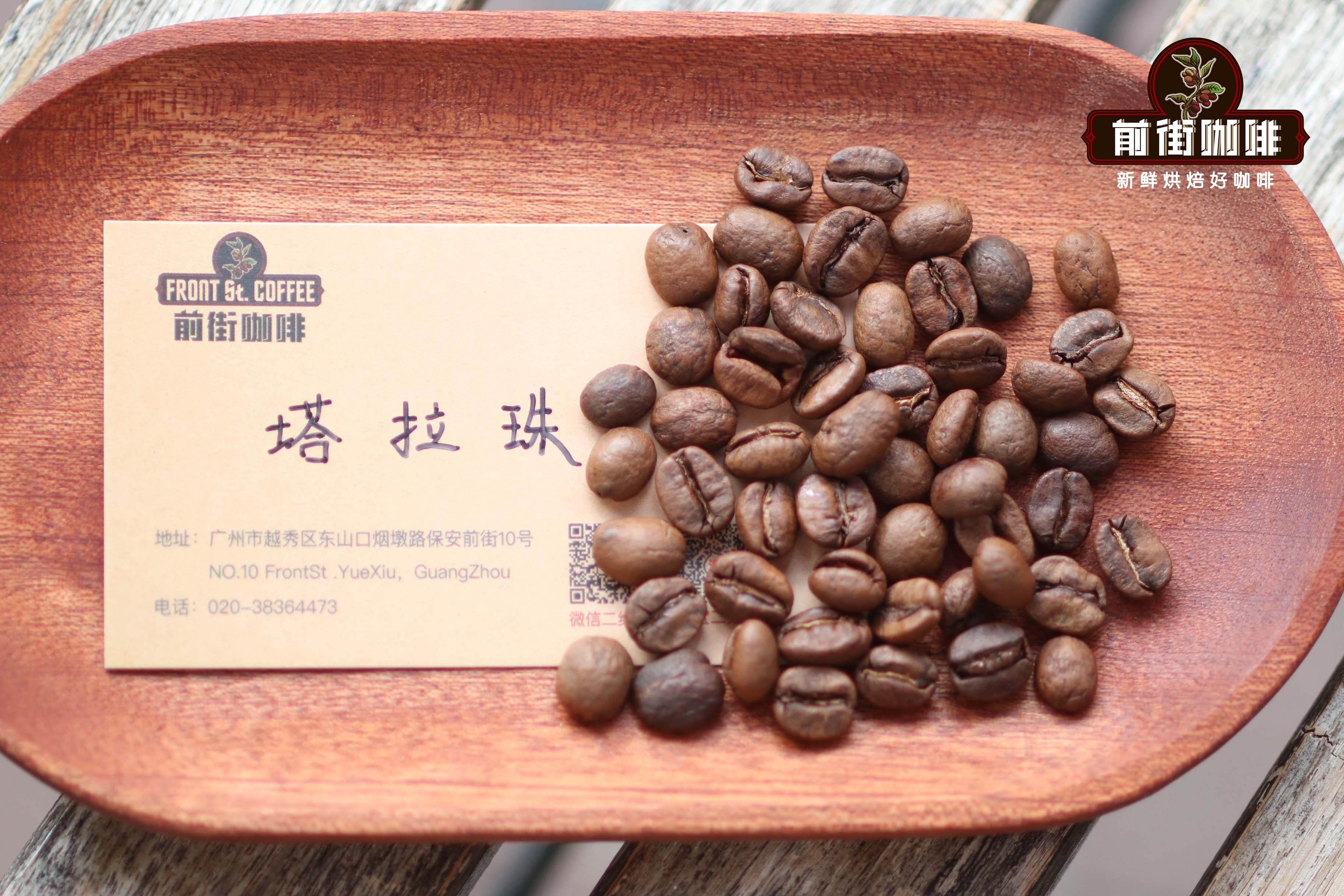
Among them, the most famous are Tarrazu and the Central Valley. FrontStreet Coffee's Costa Rican daily coffee beans come from the Tarrazu region.
Major Costa Rican Coffee Varieties
Like many Latin American countries, Costa Rica grows Bourbon-line coffee, such as Bourbon, Caturra, and Catuai. It also grows the famous Geisha variety, though based on FrontStreet Coffee's many bean-hunting trips, although Costa Rica is closely connected to Panama, Costa Rican Geisha performs differently from Panama's. Costa Rica also has two unique local varieties: Villalobos and Villasarchi.
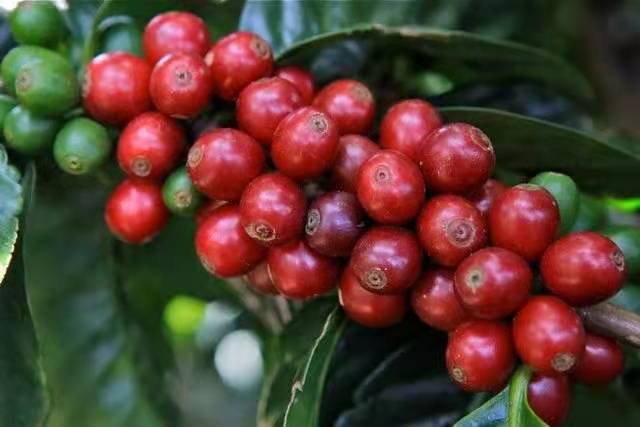
Villasarchi is a Bourbon variety. This green-tip dwarf natural mutant was discovered in Costa Rica in 1950 and subsequently underwent pedigree selection (choosing individual plants across successive generations). It was not, however, widely planted in Costa Rica; instead, in 1974 it was introduced to Honduras by the Honduran Coffee Institute (IHCAFE). Aromatically it is a highly complex coffee, suited to medium-dark roasting. Ground, its dry fragrance carries floral nectar and cherry, mixed with sweet spices such as cinnamon.
Villalobos originated in Costa Rica and is a Typica variety. Like Typica, the angle between its branches and trunk is 60 degrees, and its leaves are bronze-colored. It grows especially well at high altitude and has strong wind resistance. It can also grow in poor soil and does better under shade trees. Its most prominent flavor trait is excellent sweetness with pleasant acidity.

Costa Rican Coffee Grade Classification
Costa Rican coffee is graded by altitude:
SHB: Strictly Hard Bean, grown at 1500 meters altitude
GHB: Good Hard Bean, grown at 1100-1200 meters
HB: Hard Bean, grown at 1000 meters
High-quality Costa Rican coffee is called "Strictly Hard Bean" (SHB). It can grow above 1500 meters. In general, the higher the altitude, the better the beans, not only because higher altitude raises the coffee's acidity and thereby enhances flavor, but also because the lower night temperatures up high slow the trees' growth and concentrate flavor in the beans.
Basically, most Costa Rican single-origin beans bought at home are SHB grade.
Costa Rican Honey-Processed Coffee Beans
The honey method is called Honey Process or Miel Process, and the coffee it produces is called Honey Coffee. Plantations in Costa Rica, Panama, and Guatemala all use it, and Costa Rican honey-processed beans are especially well known. So-called honey processing means sun-drying the raw beans with the mucilage (also called mucilage) still intact. After the outer fruit flesh is removed from the coffee bean, a sticky, gelatinous layer of mucilage remains. Traditional washed processing rinses it away with clean water, but because water is limited in some high-altitude areas, this direct-drying approach was born.

The taste difference between honey processing and washed processing: honey processing has higher sweetness, higher sugar content, and a relatively fuller body.
Costa Rican honey-processed beans keep the cleanliness of washed processing. Although the coffee's brightness decreases, sweetness and caramel flavor increase. By how much mucilage is left on, Costa Rican honey-processed beans are divided into yellow honey, red honey, and black honey.
Yellow Honey: About 40% of the mucilage is removed; drying requires the most direct heat absorption, taking maximum sunlight, and about 8 days to reach stable moisture content.
Red Honey: About 25% of the mucilage is removed; compared with yellow honey, drying takes longer and direct sun exposure is reduced, even using shade nets, taking about 12 days.
Black Honey: Retains nearly 80% of the mucilage; drying takes the longest, at least 2 weeks, using coverings to avoid excessive sunlight, preventing too-fast drying and allowing more complete sugar conversion.
The advantage of honey processing is that it best preserves the original sweet flavor of ripe coffee cherries, so the coffee shows delicate brown sugar notes and stone-fruit sweetness, while berry flavors also bring out red-wine-toned aromas. These are considered very elegant coffees.

The biggest difference between honey processing and Brazilian semi-washed processing is that the former uses no water at all, because flawless red cherries must be selected to guarantee sweet mucilage. The mucilage remover used for honey processing demands higher precision and must accurately control the thickness of mucilage removed, much like a grinder.
Failed honey-processed coffee, however, will carry a strong defective natural flavor, reminiscent of onion, durian, or fermented tofu, and in worse cases an alcoholic, medicinal note. Normally honey-processed coffee has soft acidity. If the acidity in your mouth is so strong it makes you pucker, it is not a good product.
Simple summary:
Sweetness: Black Honey > Red Honey > Yellow Honey
Cleanliness: Yellow Honey > Red Honey > Black Honey
Balance: Red Honey = Yellow Honey > Black Honey
Flavor Comparison
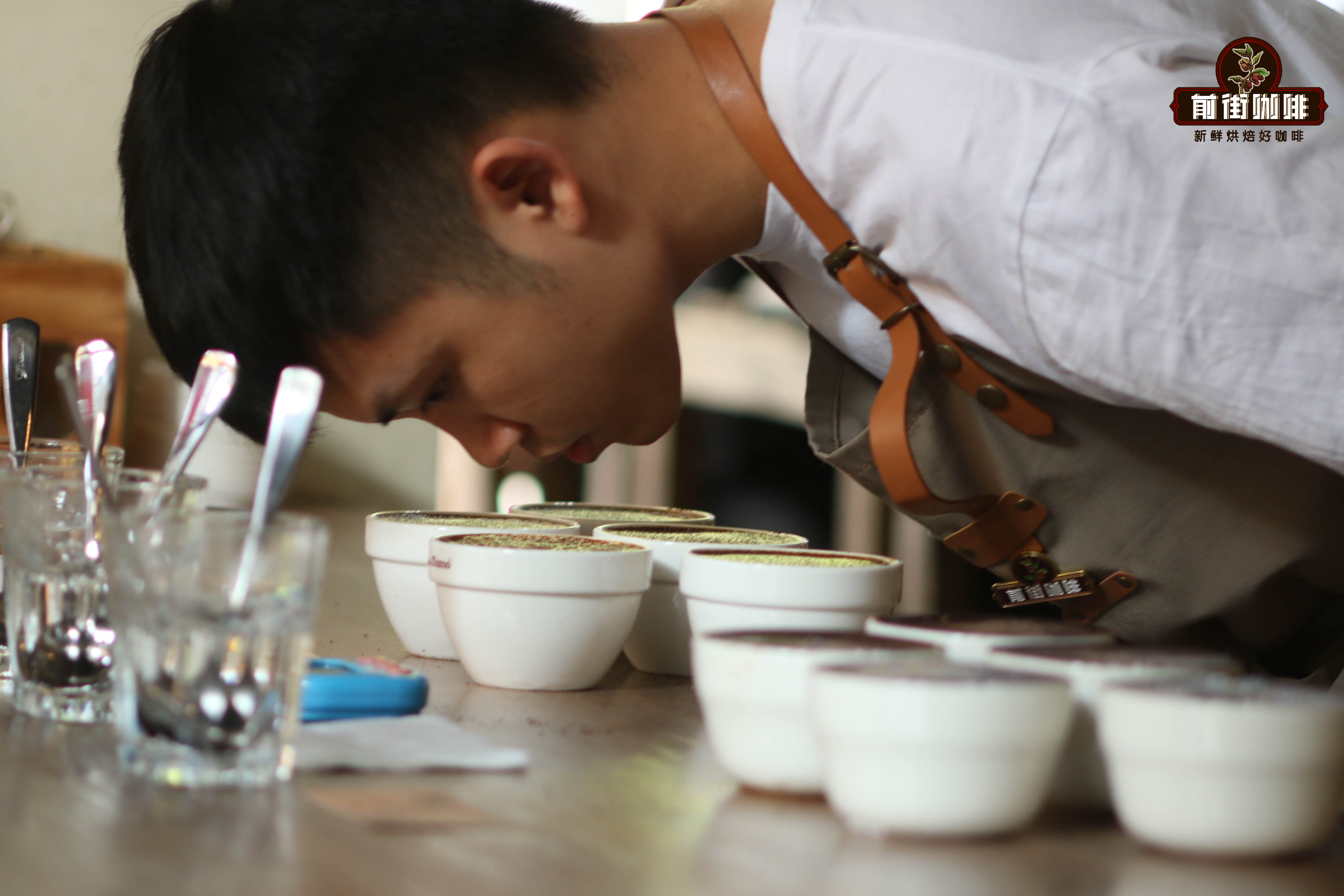
FrontStreet Coffee cupped the coffees 8 hours after roasting, using 11.3 grams of ground coffee, a grind passing through Chinese standard #20 sieve at 70-75%, water at 94C, pouring 200ml of water, and breaking the crust and removing grounds after four minutes.

[FrontStreet Coffee Costa Rican Yellow Honey Process Coffee Beans]: Smells of light fermented fruit, with flavors of citrus, cocoa, nuts, honey, and caramel on the sip. The overall flavor is relatively light.
[FrontStreet Coffee Costa Rican Red Honey Process Coffee Beans]: Has a rich fermented red-wine aroma, with flavors of pineapple, sweet orange, nectarine, grapes, cream, raisins, and maple syrup on the sip.
[FrontStreet Coffee Costa Rican Black Honey Process Coffee Beans]: Smells of rich jackfruit, raisins, and fermented wine, with flavors of plum, citrus, raisins, caramel, and spices on the sip.
Comparing these three honey-processed beans, FrontStreet Coffee could clearly feel that the [Black Honey] lots have a rich fermented aroma and more abundant fragrance, the [Red Honey] lots a slightly weaker aroma, and the [Yellow Honey] lots a relatively light fermented fruit aroma. On the palate, the [Black Honey] lots show obvious sweet-and-sour sensations, somewhat like juice; the [Red Honey] lots are relatively balanced with obvious grape flavor; and the [Yellow Honey] lots are cleaner with less fermented flavor, leaning toward citrus-like notes.
How FrontStreet Coffee Brews Costa Rican Coffee Beans
FrontStreet Coffee believes that to understand a producing country's coffee, you should start with its washed beans. For that reason FrontStreet Coffee launched the FrontStreet Daily Coffee Bean series, aiming to help more friends who want to understand coffee recognize coffee flavors. For Costa Rica's representative beans, FrontStreet Coffee chose a washed bean from the Tarrazu region.
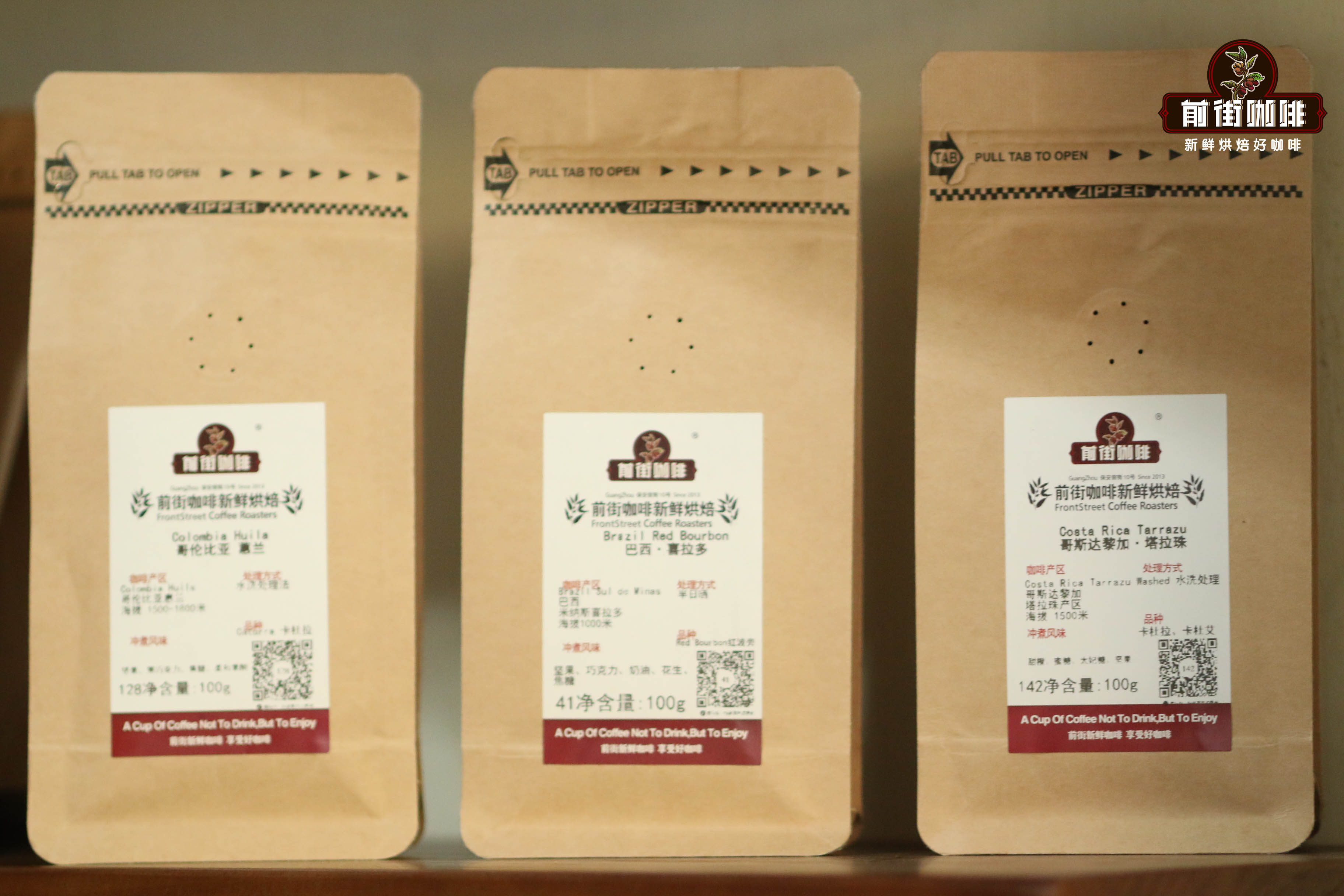
FrontStreet Coffee advocates freshly roasted beans. Some coffee shops use freshly ground coffee as a gimmick, and many people take that to mean freshness, but that is not the case. Freshly roasted beans still need a 4-5 day resting period so that, once brewed, they can fully release their flavor. Of course, if customers have no grinder at home, FrontStreet Coffee will grind the beans to their needs (pour-over or espresso), though ground coffee should be consumed quickly because its flavor dissipates fast.
Brewing Parameters for FrontStreet Coffee Costa Rican Tarrazu Coffee Beans
FrontStreet Coffee Brewing Parameters: V60 dripper, 15g coffee (one serving), water temperature 90C, 1:15 coffee-to-water ratio, grind size (Chinese standard #20 sieve passing rate 80%).
FrontStreet Coffee uses a segmented extraction, also known as the three-stage pour: 30g of water for a 30-second bloom, a second stage of circular pouring to 125g, a third stage of circular pouring to 225g, with a total extraction time (including the bloom) of 2'00".

FrontStreet Coffee Recommendation
Honey processing grew out of the older semi-washed (pulped natural) method: remove the coffee's fruit skin first, then dry the beans. This shortens the drying time on one hand and avoids the off-flavors of a botched fermentation on the other. FrontStreet Coffee's Cerrado is a classic Brazilian semi-washed coffee, carrying clear notes of cream, peanut, nut, and chocolate. Brazil's success caught Costa Rica's attention: growers borrowed the semi-washed idea and tuned it around how much mucilage to leave on and how long to dry, developing it into the honey process. That in turn branched into the finer black honey, red honey, yellow honey, and white honey styles.
FrontStreet Coffee's Blackberry coffee uses a distinctive black honey treatment, a method that removes almost none of the mucilage. Drying is longer, lasting at least 2 weeks, and coverings are used so the sun is not too strong and the beans do not dry too fast, ensuring the sugars convert fully. The cherries must be turned at odd intervals during drying to prevent uneven heat and over-fermentation, so black honey asks more of the producer. FrontStreet Coffee's Blackberry, given a medium-light roast, grinds into an intense floral fragrance and drinks with the distinctive flavors of grape, berry, and ripe blackberry.
FrontStreet Coffee's Strawberry Candy Geisha is, as the name suggests, a blend of a Panamanian Geisha and a Costa Rican coffee: the Geisha supplies the classic orange-blossom honey character, while the Costa Rican component is a raisin honey process that keeps 100% of the mucilage and uses a zero-water method. On the day the coffee cherries are picked, they are tipped into a large water tank, where ripe, plump fruit sinks and underdeveloped or overripe fruit floats and is skimmed off. The sorted cherries are laid on raised beds to dry for at least 3 days, then depulped; the mucilage is kept and drying continues. Throughout drying the cherries must be turned constantly for evenness. Treated this way, FrontStreet Coffee's Strawberry Candy keeps the floral-tea character of Geisha along with the clean fragrance of grape and dried blueberry, a soft fruit acidity, an almond finish, and a clear sweetness.
FrontStreet Coffee's Mozart uses a novel raisin honey process, a modern variation that steps away from the traditional yellow, red, and black honey styles. In raisin honey processing the coffee cherries are pre-dried first: they rest on raised beds for at least 3 days, until they take on that raisin-like state, and only then are the skin and fruit removed and the usual honey steps continued. Its defining feature is that it keeps 100% of the mucilage, which raises the difficulty of the method; from what FrontStreet Coffee understands, it demands strict control of timing and is even harder than black honey. Raisin honey processing gives the coffee a richer, hotter fruit sweetness. FrontStreet Coffee's Mozart is worth buying: whether you brew it pour-over, as cold brew, or in a moka pot, you taste its distinctive aroma of osmanthus, pineapple, and raisin.
Important Notice :
FrontStreet Coffee is a long-established specialty coffee roaster in Guangzhou China, selling freshly roasted beans from its own farm in Yunnan as well as dozens of carefully selected single-origin beans from around the world for both pour-over and espresso. The products deliver consistently excellent quality and great value, with shipping within 24 hours. Guangzhou's FrontStreet Coffee shop is recommended by many coffee lovers, and the beans are now available online at the Tmall 。
FrontStreet Coffee has moved to a new address:
FrontStreet Coffee Address: 315,Donghua East Road,GuangZhou
Tel:020 38364473
 Scan and follow the En Gafei WeChat official account. Please indicate that the reprint comes from "En Gafei".