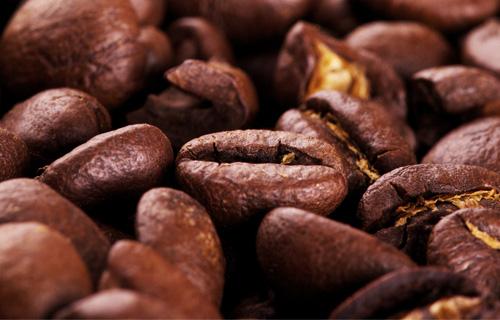
Overall Flavor Description of Yunnan Catimor Coffee Beans, Introduction to Catimor Coffee Bean Characteristics

FrontStreet Coffee has noticed that most regular coffee drinkers can instantly recall the flavor of a classic name: Yirgacheffe means white florals with citrus-lemon acidity; Panama Geisha means complex fruit with honey-pomelo sweetness and tartness; Blue Mountain means balanced, rich nut and chocolate. But ask what Yunnan coffee tastes like, and people hesitate—"What does Yunnan coffee actually taste like?"
FrontStreet Coffee will now explore the factors that shape Yunnan's flavor, starting with the history of cultivation.
When Did Coffee Cultivation Begin in Yunnan?
In 1904, a French missionary planted the first Arabica coffee tree in Zhukula Village, Binchuan, Dali, marking the beginning of coffee cultivation in China as this "exotic import" took root.
Later research indicates the missionary planted the Typica variety (its beans being much smaller than Robusta's, Yunnan coffee came to be called "small-bean coffee"). Today the vast majority of Yunnan coffee is Catimor. Because Typica has weak disease resistance and is prone to leaf rust—coupled with very low yields—farmers who lived on coffee found it extremely hard to sustain.
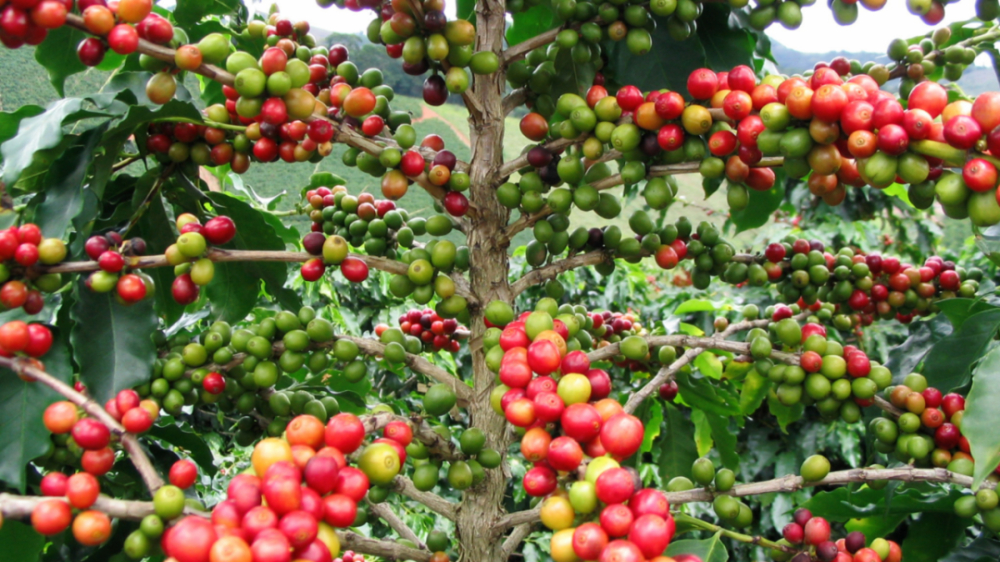
By the 1980s, leaf rust was battering coffee regions worldwide, and professionals everywhere were searching for an answer. In 1990, driven by the multinational Nestlé, Yunnan introduced Catimor from Brazil—better disease resistance, higher yields—to replace the "unprofitable" Typica. Catimor was planted on a large scale and yields kept climbing, but flavor received little attention. Local green bean processing was also unsophisticated, so much of the crop was exported cheaply to Europe as instant-coffee material.
Characteristics of Catimor Coffee Variety
Genetically, Catimor is a hybrid of Arabica and Robusta lines—a cross of Caturra (a natural Bourbon mutation) and the Timor Hybrid, carrying 25% Robusta genes.
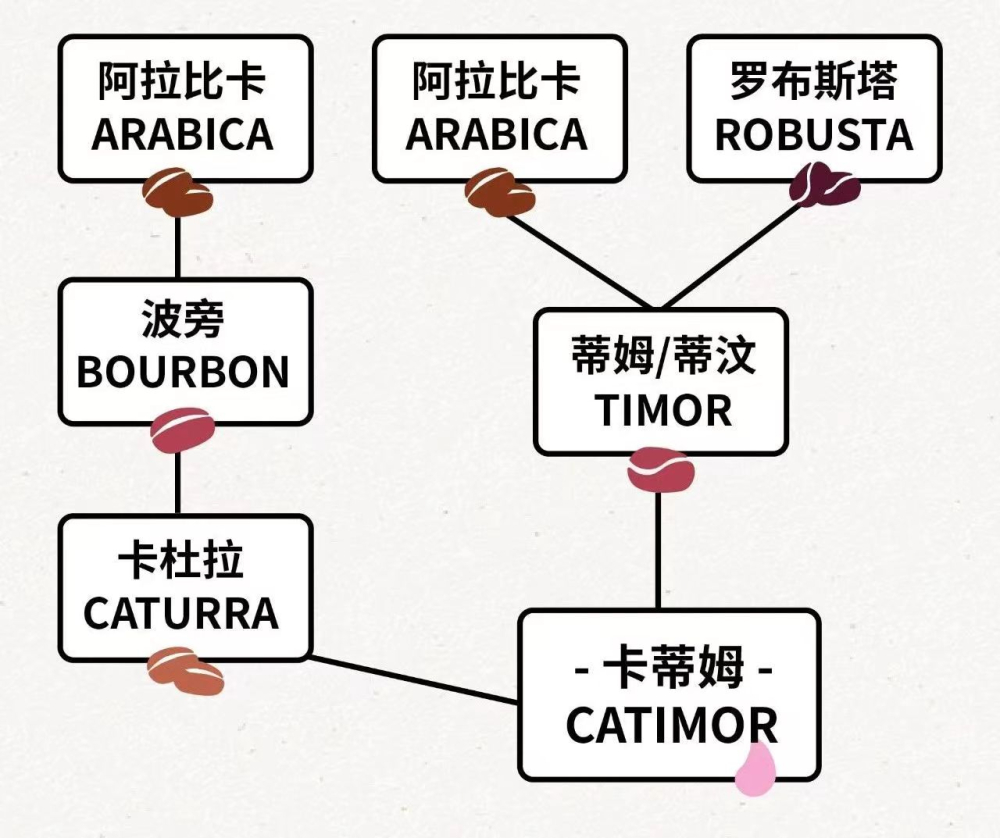
Anyone who knows coffee varieties knows Robusta carries the "devil's flavor." Catimor inherits both sides: strong disease resistance and high yields from the Robusta line, plus rich oils after roasting and some of the acidity characteristic of Arabica.
High-quality Arabica generally requires high altitude, and when Yunnan farmers plant Catimor on slopes above 1,200 meters, the fertile soil, ample sunlight and rainfall, and the wide temperature swings of high elevation create genuinely good growing conditions. Still, because of its Robusta genes, Catimor lacks the refined flavors of pure Arabica—so in cupping it rarely earns the scores that Caturra or Catuai grown at similar altitude might achieve.
Yunnan Baoshan Coffee Origin
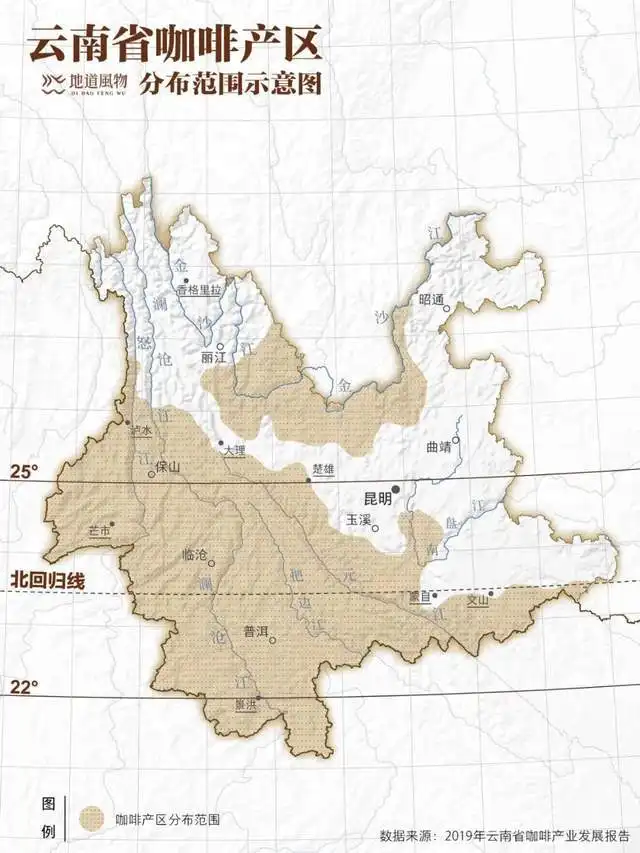
Catimor cultivation in Yunnan is spread across 8 regions: Nujiang, Dali, Baoshan, Dehong, Lincang, Pu'er, Wenshan, and Xishuangbanna. Baoshan is the most renowned, with a history stretching back to the 1950s. In 2010, Baoshan small-bean coffee received A-grade certification and was recognized as a national geographical indication product through China's national standard process.
Baoshan's coffee areas sit between 800-1,400 meters, with the higher-quality small-bean coffee—smaller in volume—grown above 1,200 meters. The area has a subtropical monsoon climate with an average annual temperature around 21°C, abundant sunlight and rainfall, and crucially, no frost year-round (coffee trees are not cold-hardy). It is regarded as one of the best production areas for high-quality small-bean coffee, and Baoshan holds an important place in Yunnan coffee in both yield and quality—which is why FrontStreet Coffee's Yunnan daily coffee uses Baoshan beans.

Processing Methods for Yunnan Catimor Coffee
When recommending beans, FrontStreet Coffee often suggests starting with washed processing. Washed processing lets beans express their original character more faithfully and delivers more consistent quality.

Yunnan's harvest falls in winter, when stable sunlight is hard to guarantee (traditional natural processing usually needs more than 20 days), so most coffee is washed. After hand-picking ripe cherries, they are floated in water to remove defective fruit. Qualified cherries are machine-depulped, then fermented in tanks for about 24 hours—the acids produced help separate the mucilage layer. The beans are rinsed repeatedly, and finally the parchment is spread out to dry before storage.
Plenty of innovative processing methods have appeared recently, making aromas more prominent. But FrontStreet believes that to understand a region you should first taste its baseline flavor. If you start with loud aromatic flavors and then return to the clean profile of a washed coffee, it may seem "bland."
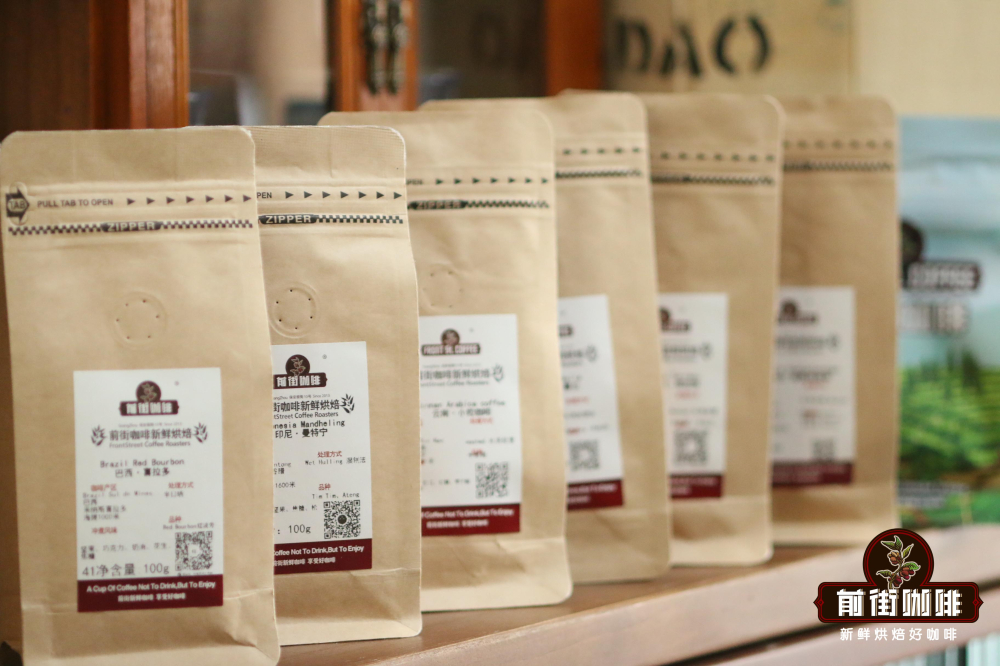
That is why FrontStreet's Yunnan daily coffee is also washed—letting newcomers taste Yunnan Catimor's most original flavors at the lowest price. The daily coffee also comes in 100g packs, avoiding waste from unfinished bags.
Overall Flavor Profile of Yunnan Catimor Coffee
Through comparative cupping, FrontStreet Coffee found Yunnan Catimor offers nutty and brown-sugar aromas, gentle plum acidity, and a fairly balanced mouthfeel. Medium roasting highlights the nut while preserving some fruit acidity.

Since we can taste nuts with light acidity in the cup, the profile to aim for is balance—avoiding excessive acidity and heavy bitterness. FrontStreet's barista uses a V60 with a medium-fine grind and moderate water temperature to highlight the texture while avoiding over-extraction.
Many customers forget to specify grind preferences when ordering. Note that FrontStreet's physical stores provide grinding—just tell us your brewing method and we'll pick the right size. Be aware that once beans are ground, aromatics volatilize quickly; ground coffee left too long develops woody flavors and brews poorly. If you can, equip your home with a grinder for freshly ground coffee and noticeably better flavor.
Pour-over Parameters: 15g coffee, 1:15 ratio, 90°C water, medium-fine grind (80% pass-through on China #20 standard sieve), V60 dripper, three-stage extraction

Three-stage extraction: start with 30g of water for a 30-second bloom, then continue pouring in small circles to 125g. When the level drops and the bed is about to be exposed, pour to 225g and stop. When the bed is about to be exposed again, remove the dripper. Total extraction time (from the start of the bloom) should be around 2 minutes.
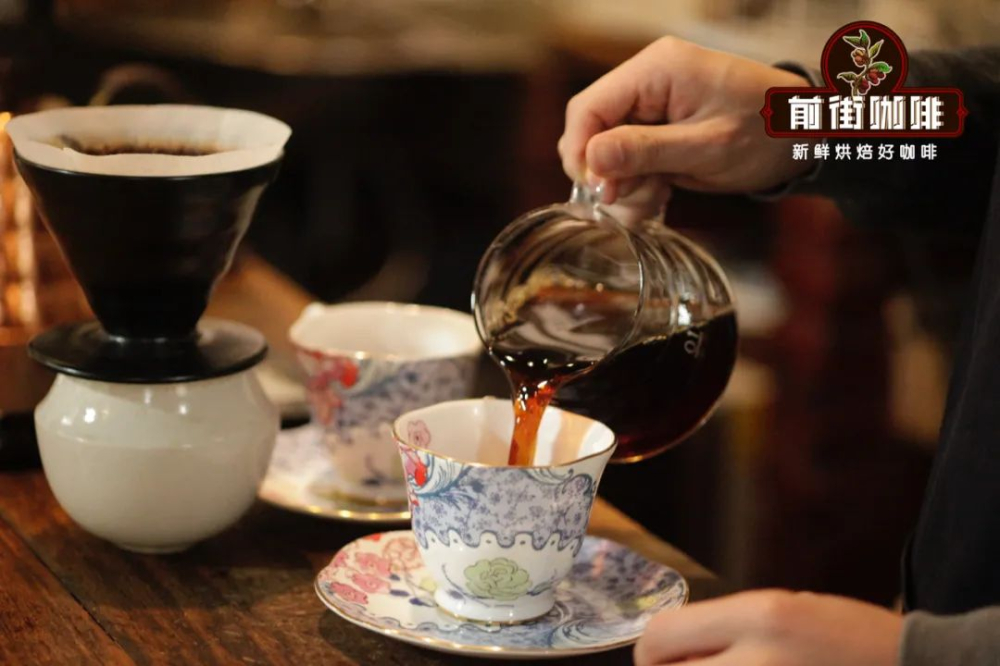
Flavor description: roasted nutty aromas with herbal and chocolate notes; as the cup cools slightly, plum acidity and a caramel aftertaste emerge, with an overall very balanced mouthfeel.
FrontStreet Coffee Recommendation
The cleanest way to appreciate what washed processing does for a coffee—exactly what FrontStreet aims to show with its washed Yunnan daily beans—is to taste a benchmark washed coffee side by side. FrontStreet Coffee's washed Yirgacheffe staple is precisely that benchmark: jasmine florals, bright citrus and lemon acidity, and a tea-like finish at an approachable price, making it the classic first bean of specialty coffee.
One level deeper, the FrontStreet Guodingding Cooperative comes from Guodingding village in the Worka zone at Yirgacheffe's southeastern edge. Formerly part of the Worka cooperative under the YCFCU union, it became an independent cooperative in 2012 with about 300 member farmers. Because the fruit is pulped before drying, the bean's own character comes through with exceptional clarity: citrus and lemon tones, elegant white florals, and a bright, delicate cup.
Both beans suit pour-over, cold brew, and espresso alike, and both make an instructive comparison against a washed Yunnan Catimor—same method, different terroir, and a vivid lesson in what growing region contributes to the cup.
Important Notice :
FrontStreet Coffee is a long-established specialty coffee roaster in Guangzhou China, selling freshly roasted beans from its own farm in Yunnan as well as dozens of carefully selected single-origin beans from around the world for both pour-over and espresso. The products deliver consistently excellent quality and great value, with shipping within 24 hours. Guangzhou's FrontStreet Coffee shop is recommended by many coffee lovers, and the beans are now available online at the Tmall 。
FrontStreet Coffee has moved to a new address:
FrontStreet Coffee Address: 315,Donghua East Road,GuangZhou
Tel:020 38364473
 Scan and follow the En Gafei WeChat official account. Please indicate that the reprint comes from "En Gafei".