What are the main varieties of Brazilian coffee? Describing the low-acidity, sweet and mellow flavor of Brazilian Round Bourbon coffee beans
For more specialty coffee knowledge, follow the WeChat official account: FrontStreet Coffee (FrontStreet Coffee).
Unlike the floral, citrusy acidity of African coffee beans, Brazilian coffee is defined by low acidity and a mellow profile. FrontStreet Coffee's selected Yellow Bourbon from Brazil's Queen Estate Farm offers a clear taste and a clean aftertaste, making it a single origin we often recommend to drinkers who prefer a bitter-toned cup. Below, FrontStreet Coffee explains how to brew Queen Estate Farm coffee for the best results.
Yellow Bourbon Variety
Through research, FrontStreet Coffee found that the world's Arabica varieties consist of Typica and Bourbon along with their descendants. Bourbon is especially popular across Central and South America and is one of the main varieties in Brazilian coffee.

The name Bourbon comes from Bourbon Island, today's Réunion Island off the east coast of Africa. In the 17th century, as a French territory, it was called Bourbon Island until the late 18th century, when it was renamed. In the 18th century, the French brought round coffee beans from Yemen to Bourbon Island, where they took root. It was not until 1860 that Brazil brought round Bourbon home for cultivation, after which it spread across Central and South America and became the oldest parent variety in Latin America. Bourbon fruit is small and round, with dense beans. Bourbon grown at high altitudes is sweet and brightly acidic. Like Typica, it is an ancient, excellent variety, but Bourbon resists leaf rust better than Typica, and its flavor is every bit as impressive.
Common Bourbon fruit shifts from green to light yellow, red, and finally deep red at full maturity, and is therefore called Red Bourbon. FrontStreet Coffee's Brazilian daily blend is selected from the pure-flavored Red Bourbon. There are also Bourbon types that do not turn red when ripe but instead become rarer yellow or pink, namely Yellow Bourbon and Pink Bourbon.

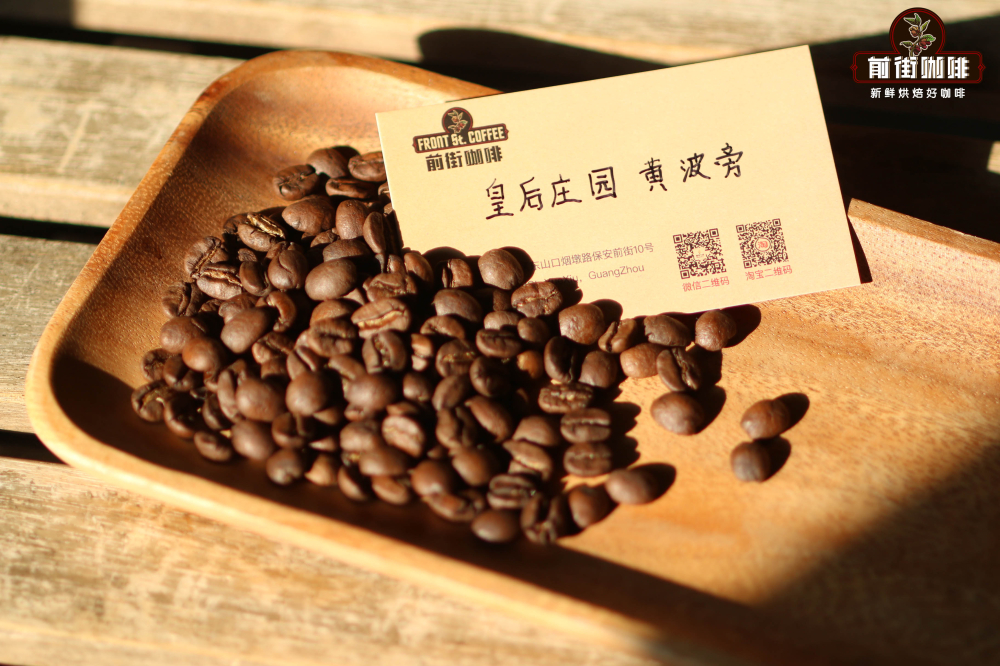
Queen Estate Farm is proudest of its Yellow Bourbon, which has won multiple awards in Brazil's Cup of Excellence with its delicate, refined flavor. Ordinary Bourbon changes from green to light yellow, orange-yellow, red, and finally fully ripe dark red—the fruit we call Red Bourbon. Red Bourbon grown at high altitudes has balanced flavor, rich aroma, and smooth acidity. FrontStreet Coffee's daily blend is selected from Red Bourbon.
Yellow Bourbon fruit does not turn cherry red at maturity but instead appears yellow; it was discovered in 1930. Later research by the Agronomic Institute of Campinas (IAC) found that plants with dominant XcXc gene pairs produce red berries, plants with recessive xcxc gene pairs produce yellow berries, and in rare cases plants with one dominant and one recessive gene (Xcxc) produce orange berries. The "yellow" of Yellow Bourbon is therefore a matter of genetic color selection. Yellow Bourbon grown at high altitude holds large amounts of fructose, presenting sweet, juicy flavors. It once swept Brazil's Cup of Excellence for two consecutive years, taking all but the top three spots, and became a favorite in the specialty coffee industry.

Mogiana Queen Estate Farm
The Mogiana region lies near southern Minas, in the northeastern part of São Paulo, and is listed as one of Brazil's three major specialty regions alongside Cerrado and South Minas. Unlike typical Brazilian coffee, Mogiana grows at 1100-1250 meters, much higher than the rest of São Paulo. That altitude difference creates greater temperature variation and higher coffee quality. The rolling terrain also means Mogiana can only harvest cherries semi-mechanically and by hand. Most of its coffee is specialty grade, known as Fine Cup, with the best cupping flavors and highest quality grades.
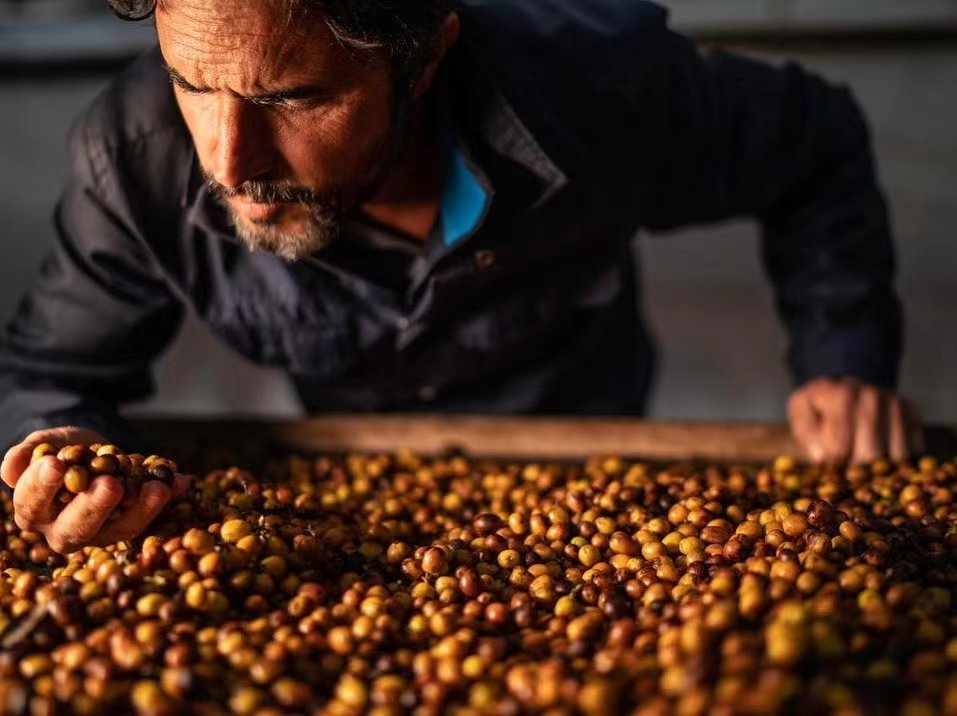
After harvesting ripe Yellow Bourbon cherries, Queen Estate Farm uses natural processing so the cherries absorb more pulp sweetness as they dry. Brazil sits near the equator, and because the harvest season coincides with the dry season, the cherries dehydrate beautifully in the sun.
Traditional sun-drying, however, is crude: cherries are scattered directly on dirt after picking, so the coffee easily picks up earthy flavors, and uneven heating can create the off-aromas of over-fermentation. Queen Estate Farm first pours the cherries into water tanks, floating off the underripe fruit, then spreads them in small batches on well-ventilated African raised beds and turns them regularly, avoiding both earthy and over-fermented flavors. Its sweetness also steps above that of traditional natural processing.
FrontStreet Coffee's Queen Estate Farm Pour-Over Reference
FrontStreet Coffee wants to highlight Queen Estate Farm's classic regional character—its rich chocolate aroma—so we use a medium-dark roast. Through cupping, we found this Queen Estate Farm to be very noticeably sweet, so we use three-stage pouring to bring out more layers in the cup.
Coffee beans reach their optimal tasting window 4-7 days after roasting; after that (roughly a month and a half past roast), the aroma may fade and woody flavors can develop. To avoid this, FrontStreet Coffee ships only beans roasted within 5 days, so everyone can taste coffee at its best.
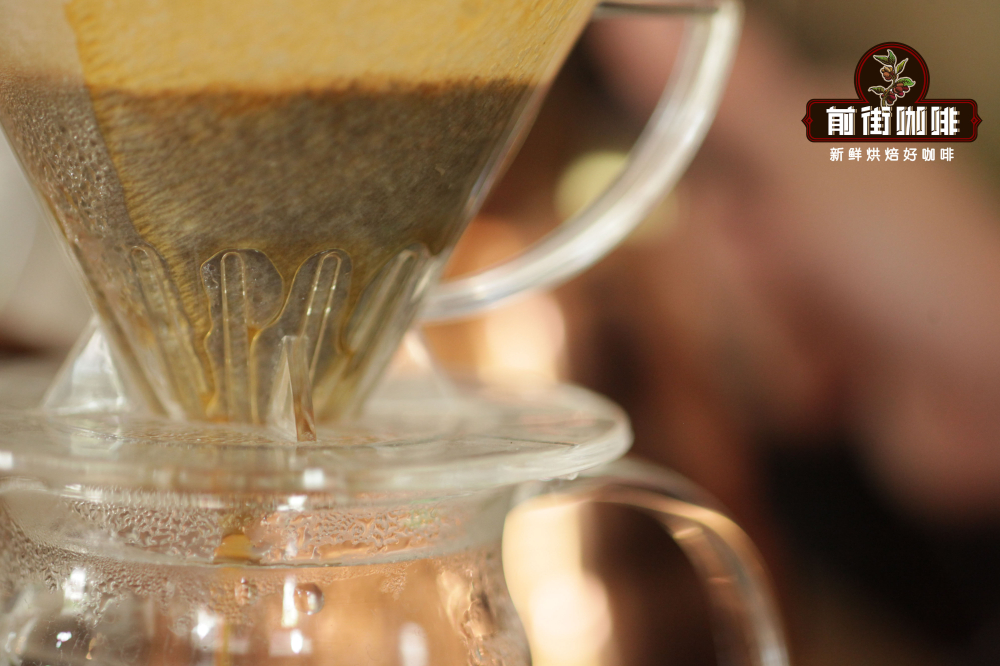
Dripper: KONO Dripper
Medium-dark roasted beans mainly present a thick, rounded mouthfeel. To suit that, FrontStreet Coffee chooses the slower-flowing KONO dripper for extraction. The upper part of the KONO is a smooth curve, and the lower part has guide ribs one-third of its length. This lets the filter paper sit more closely against the dripper, restricting upward airflow so hot water can only flow downward—creating a siphon-like extraction that releases the coffee's aromatic compounds more fully.
Grind Size: Medium Grind
As roast level rises, the bean texture loosens, and once ground it absorbs more water and releases more soluble material, which can draw out unpleasant woody and bitter notes. FrontStreet Coffee's baristas therefore grind coarser, making the particles larger to reduce over-extraction. Here we use a medium grind (Chinese standard 20-mesh sieve, 70-75 percent pass rate).
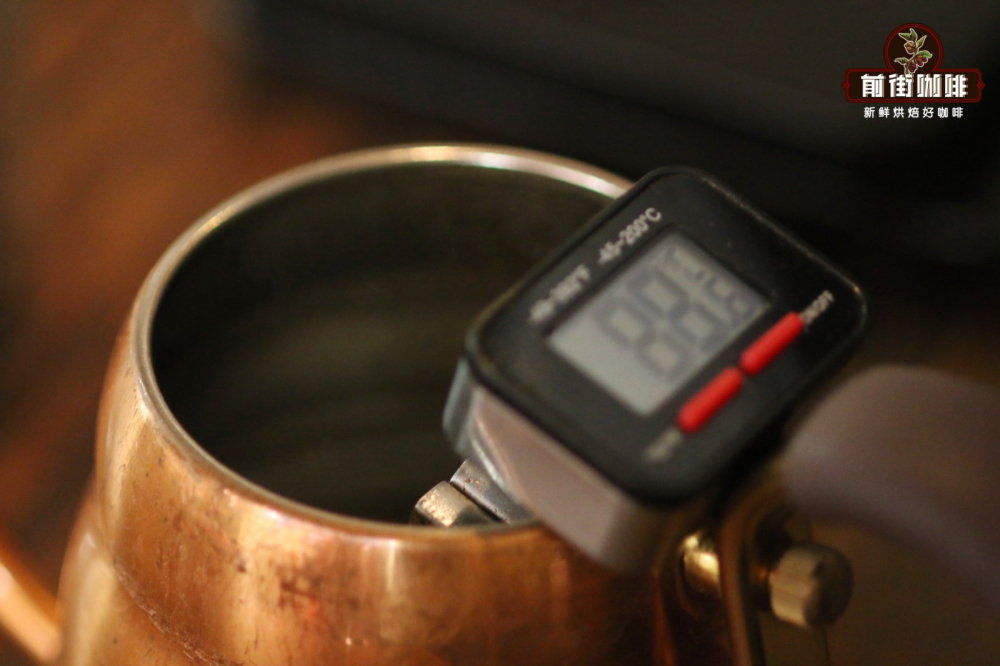
Water Temperature: 87-88°C
When brewing light to medium roasted beans, FrontStreet Coffee uses higher temperatures to extract aroma from dense beans. Medium-dark roasted Brazilian coffee, however, has undergone longer caramelization. At the same high temperature it easily turns thick and burnt-bitter, so lowering the water temperature helps reduce some of that bitterness. FrontStreet Coffee therefore uses 87-88°C water.
Coffee grounds absorb about twice their weight in water. FrontStreet Coffee generally uses 15 grams of grounds at a 1:15 coffee-to-water ratio, yielding close to 200 ml of coffee, which is 1-2 servings.
Brewing Parameters
- Dripper: KONO Dripper
- Water Temperature: 87-88°C
- Coffee Dose: 15 grams
- Coffee-to-Water Ratio: 1:15
- Grind Size: Medium grind (Chinese standard 20-mesh sieve, 70-75 percent pass rate)
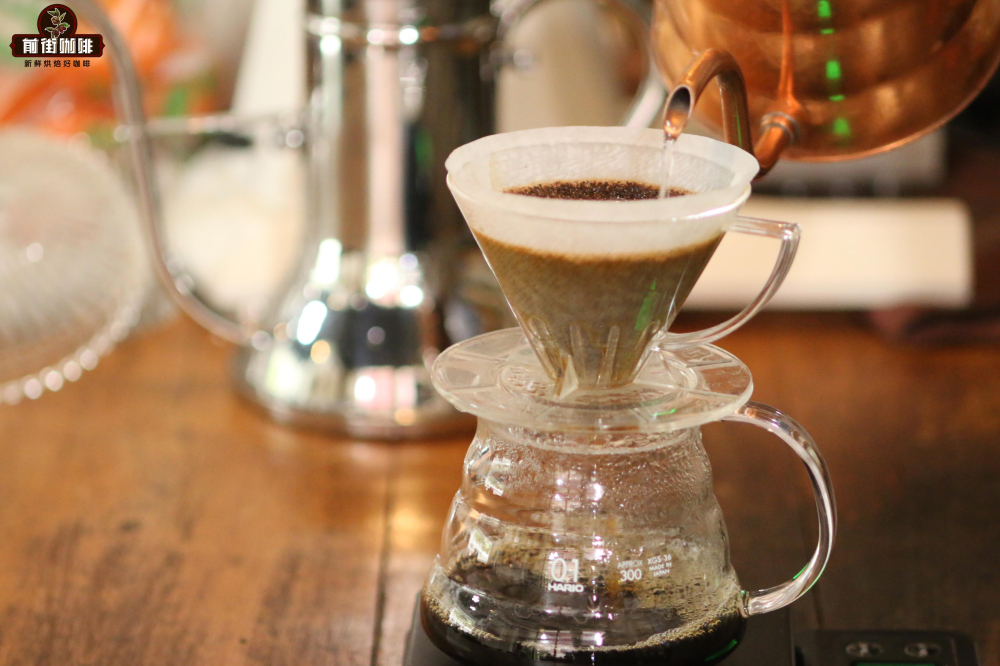
Wet the coffee bed with twice the weight of the grounds in water, forming a dome for a 30-second bloom, then use a small stream to pour in circles from the inside out until you reach 125 g, then pause. When the coffee bed drops to half the height of the dripper, continue with the same fine stream for a third stage up to 225 g, until all the coffee has filtered through. Remove the dripper; total time is about 2 minutes.
Hand-poured Queen Estate Farm coffee smells of lemon, nuts, and peanuts. On the palate it delivers a very mellow nutty, dark chocolate, and caramel flavor with noticeable sweetness. The mouthfeel is smooth as cream, and the cup is quite rounded overall.
FrontStreet Coffee Recommendation
If Queen Estate Farm's sweet, low-acid Yellow Bourbon appeals to you, FrontStreet Coffee offers two easy ways to explore the same Brazilian character. FrontStreet Brazil Cerrado Red Bourbon is a classic medium-roasted single origin with creamy peanut, toasted bread, caramel, and hazelnut notes—smooth, barely acidic, and versatile across pour-over, moka pot, siphon, French press, and espresso.
FrontStreet Brazil Queen Estate Yellow Bourbon is the rarer Yellow Bourbon expression, grown in Mogiana on fertile red volcanic soil, where it develops a sugarcane-like sweetness alongside fruit and chocolate. Brazilian beans also form the backbone of FrontStreet's espresso blends—Classic, Specialty, and Black Cocoa—where they contribute chocolate and creamy aroma with a soft, stable sweet-sour balance.
Important Notice :
FrontStreet Coffee is a long-established specialty coffee roaster in Guangzhou China, selling freshly roasted beans from its own farm in Yunnan as well as dozens of carefully selected single-origin beans from around the world for both pour-over and espresso. The products deliver consistently excellent quality and great value, with shipping within 24 hours. Guangzhou's FrontStreet Coffee shop is recommended by many coffee lovers, and the beans are now available online at the Tmall 。
FrontStreet Coffee has moved to a new address:
FrontStreet Coffee Address: 315,Donghua East Road,GuangZhou
Tel:020 38364473
 Scan and follow the En Gafei WeChat official account. Please indicate that the reprint comes from "En Gafei".