Characteristics and Flavor Profile of Yirgacheffe Black Coffee Differences Between Washed and Natural Processing
Introduction to FrontStreet Coffee's Yirgacheffe
Ethiopia's Yirgacheffe is celebrated as a specialty coffee classic, cherished for its distinctive lemon and citrus acidity and its floral, fruity aromas. FrontStreet Coffee's daily-selection range includes a washed Yirgacheffe — the range exists to give coffee lovers top value for money while delivering the most classic coffee flavors, and Yirgacheffe is arguably the most classic of them all. As the saying goes these days: you may never have tried FrontStreet Coffee's Blue Mountain, but you absolutely must not miss its Yirgacheffe.
Today, FrontStreet Coffee walks through the differences between washed and natural (sun-dried) Yirgacheffe. The differences are visible in the green bean — the washed lot carries more silverskin than the natural — and unmistakable in the cup: the washed offers lighter, brighter acidity, while the natural adds fermented notes and sweeter aromatics.
The Yirgacheffe Growing Region
Yirgacheffe has always been one of Ethiopia's most important coffee regions. Formerly part of Sidamo, it became an independent growing region precisely because of the unique flavor of its beans — Yirgacheffe is not just a place name, but shorthand for a specific flavor profile. It is a high-altitude growing area, with elevations around 2,000 meters, and more than 40 cooperatives, most of them run on a family-farm model.
Within the region are many well-known micro-regions, such as Kochere, Misty Valley, and Gedeb. Each is home to excellent cooperatives, and each produces Yirgacheffe with its own distinctive flavor signature.

Yirgacheffe Coffee Bean Grading
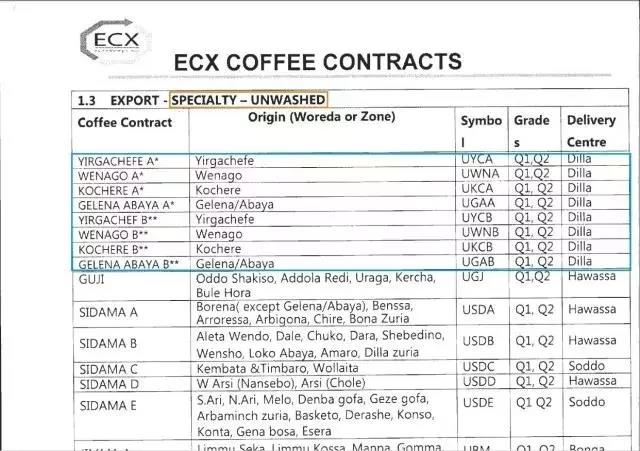
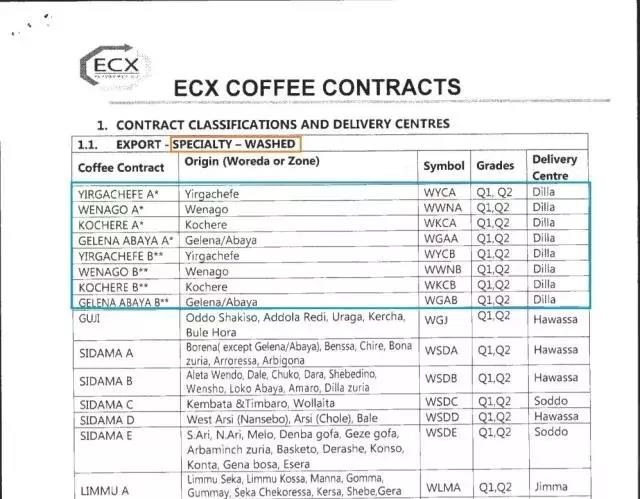
Yirgacheffe varieties are local heirloom types with relatively round, very small beans, mostly screening at 14–15 mesh. The ECX (Ethiopian Commodity Exchange, established in 2012) applies a two-tier grading system to Ethiopian coffee.
The first tier is defect-based. For both washed and natural export lots, green beans with 3 or fewer defects per 300g are graded G1, while those with 4–12 defects per 300g are graded G2.
The second tier is flavor-based. G1 and G2 beans are cupped using the SCA (Specialty Coffee Association) protocol: lots scoring 85 points or above are rated Q1, and those scoring 80–84.75 points are rated Q2.
Yirgacheffe Processing Methods
Ethiopia traditionally relied on ancient natural (sun-dried) processing, but after washed processing was introduced in 1972, its adoption grew over the following decades until it far outpaced the traditional method. Washing reduces defects and delivers a cleaner, brighter cup.

Yet some producers still champion the natural process. The coffee merchant Bagheshi, nostalgic for the flavors of traditional naturals and unwilling to let the craft be eclipsed by washing, refined the sun-drying method to enhance flavor and cut defect rates. He sourced several lots from Misty Valley with remarkable success, and natural Yirgacheffe reclaimed its standing.

The fundamental difference between the two processes is that drying preserves the fruit-pulp flavors while washing removes them. The mouthfeel differs accordingly — washed coffee is cleaner and brighter, while naturals offer richer complexity.
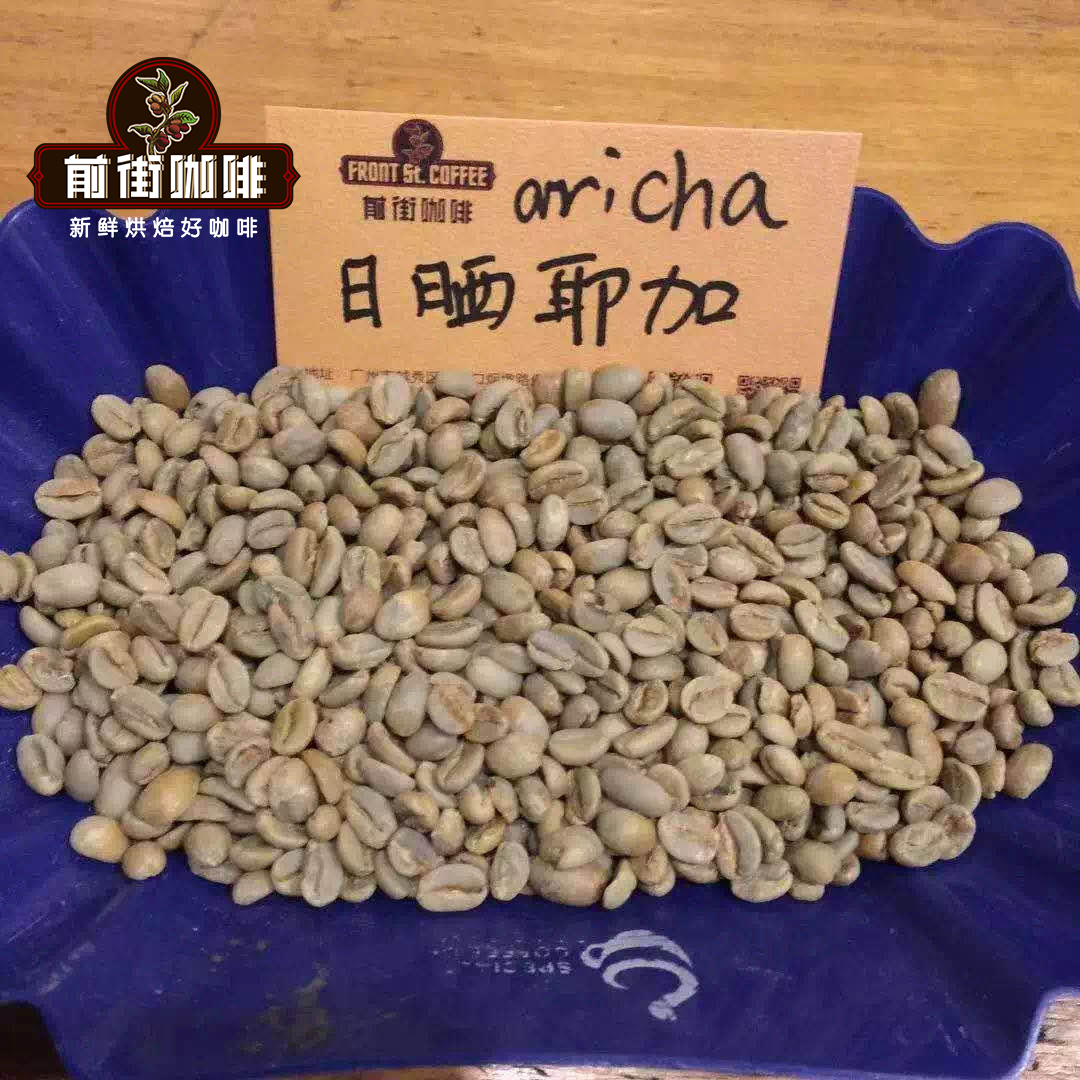
They are also easy to tell apart by appearance. Raw washed beans tend toward a greenish-blue hue, while natural beans are yellowish-green. After roasting, washed beans show visible silverskin, whereas natural beans carry almost none and have smoother surfaces.

Roasting Recommendations
Yirgacheffe's most iconic character is its refined acidity and rich floral-fruit aromatics, and to showcase this FrontStreet Coffee roasts light. Whether natural or washed, a light roast maximizes each lot's defining traits. Medium-to-dark Yirgacheffe roasts do exist on the market — they soften the acidity and thicken the body — but that comes down to personal preference, and light roast remains the mainstream choice for Yirgacheffe.

Roasting Machine: Yangjia 800N (550g batch size)
FrontStreet Coffee Natural Yirgacheffe
FrontStreet Coffee's roasting approach: Preheat to 200°C, set the damper to 3, heat to 150, maintain the damper setting. Turning point at 1'35". When drum temperature reaches 140°C, raise heat to 180 and open the damper to 4. At this point the bean surface turns yellow, the grassy aroma disappears completely, and the beans enter the drying phase. When drum temperature reaches 170°C, reduce heat to 150°C and maintain the damper setting. At 9'01", the bean surface shows pronounced wrinkles and dark spots, and the toast aroma clearly shifts into coffee aroma — the prelude to first crack. Listen carefully for the crack. At 9'25", first crack begins: reduce heat to 120°C and open the damper to 5. Develop for 1'40" after first crack and drop the batch at 196°C.
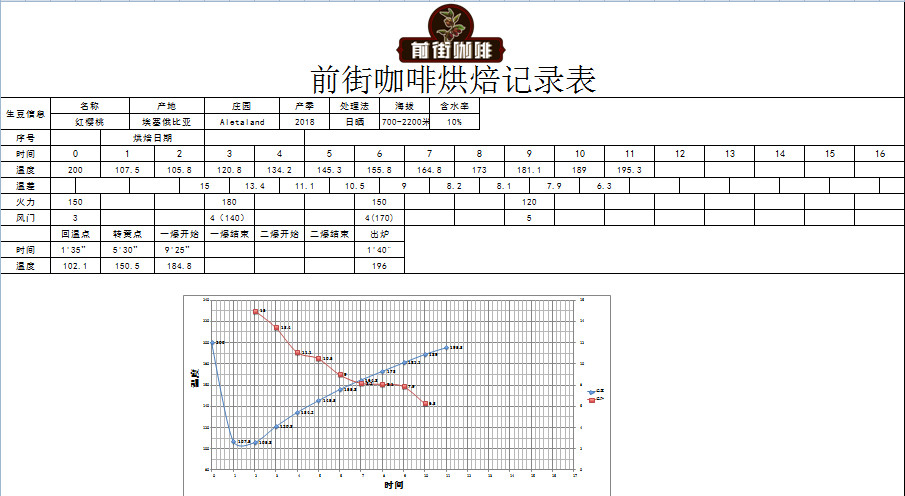
FrontStreet Coffee Natural Yirgacheffe Red Cherry Roasting Curve
FrontStreet Coffee Washed Yirgacheffe
FrontStreet Coffee's roasting approach: Preheat to 200°C, set the damper to 3, heat to 160, maintain the damper setting. Turning point at 1'32". When drum temperature reaches 151°C, adjust the damper to 3.5. When drum temperature reaches 140°C, raise heat to 180 and maintain the damper setting. At this point the bean surface turns yellow, the grassy aroma disappears completely, and the beans enter the drying phase. At 8'35", the bean surface shows pronounced wrinkles and dark spots, and the toast aroma clearly shifts into coffee aroma — the prelude to first crack. Listen carefully for the crack. At 8'53", first crack begins: maintain heat at 180 and open the damper to 4. Develop for 1'45" after first crack and drop the batch at 195°C.
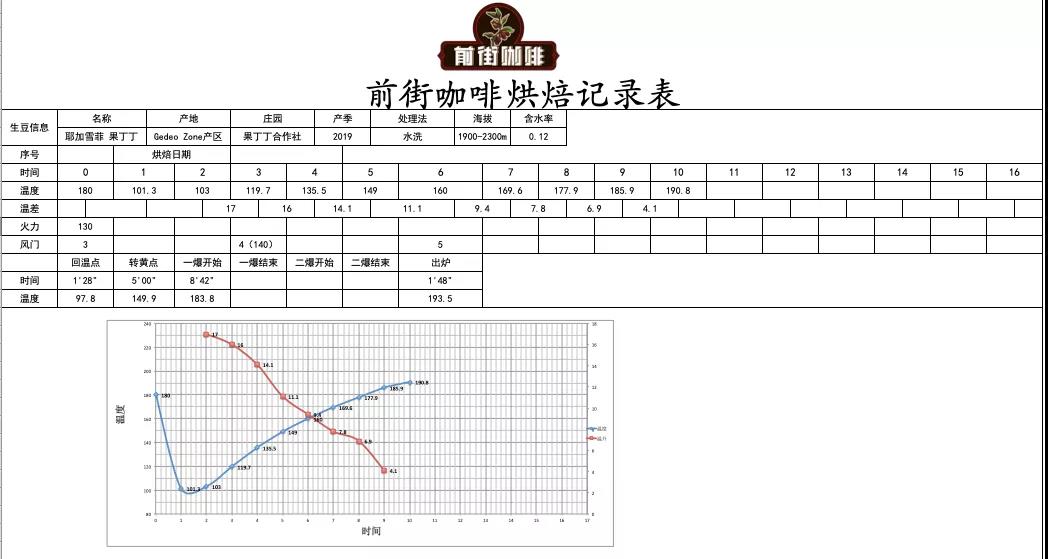
FrontStreet Coffee Washed Yirgacheffe Gedeb Roasting Curve
FrontStreet Coffee Yirgacheffe Brewing Recommendations
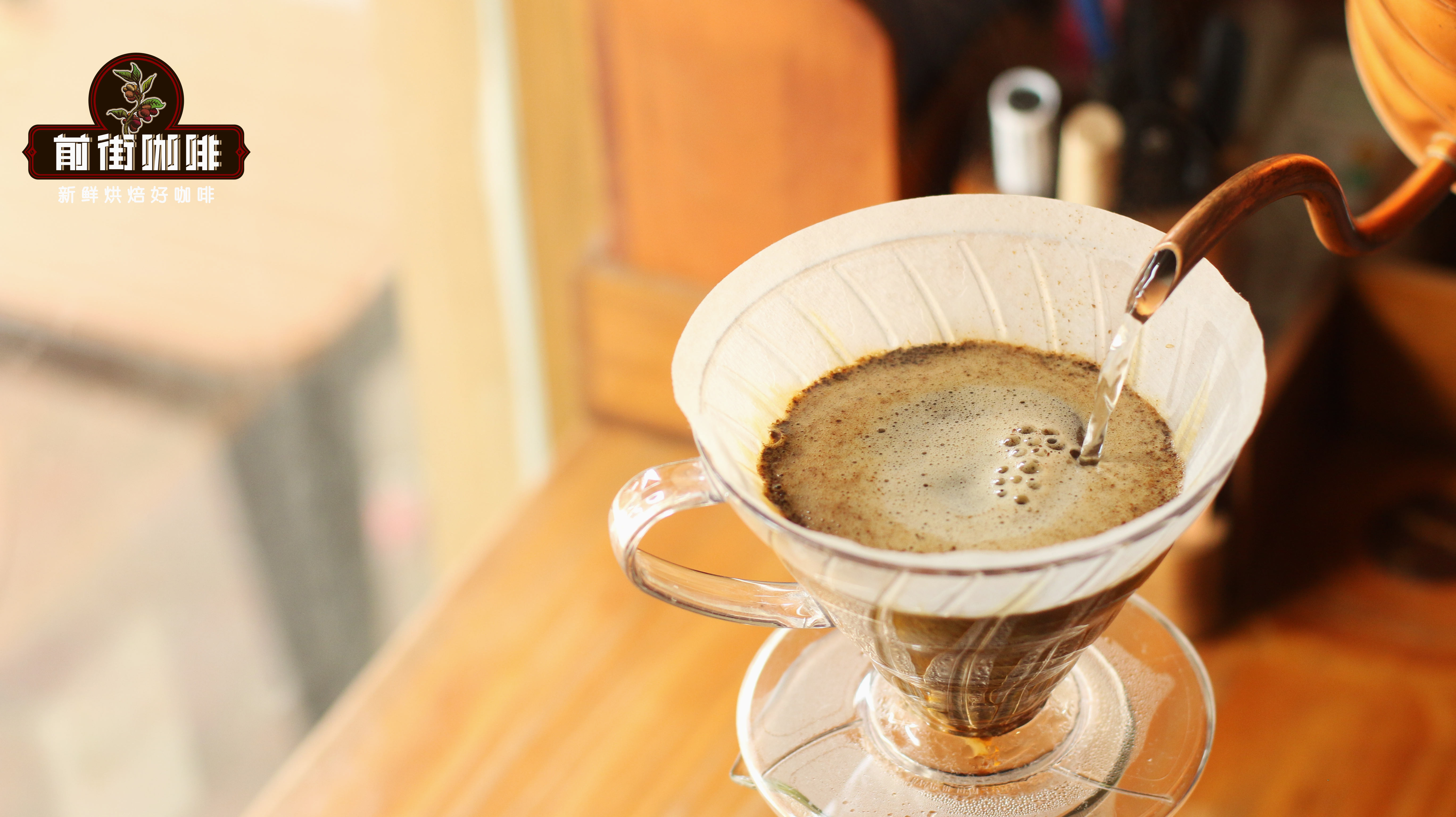
To fully extract Yirgacheffe's fruit acidity, FrontStreet Coffee uses a hotter water temperature and a finer grind. To keep that heat from tipping into over-extraction, it pairs the coffee with a fast-flowing brewer like the V60.
The V60's 60-degree cone concentrates the coffee grounds toward its center, so the pouring water naturally converges on the middle of the bed, ensuring sufficient contact between water and grounds for a proper extraction.
In addition, the spiral ribs inside the V60 run clockwise from bottom to top, holding the filter paper slightly off the wall. That promotes steady water flow, and together with the large bottom opening, gives the V60 a faster flow rate than most other drippers.

FrontStreet Coffee's parameters: V60 dripper, water at 90°C, water-to-coffee ratio 1:15, 15g dose, grind size BG#5F (80% pass-through on the China No. 20 standard sieve).
FrontStreet Coffee brews in stages. The bloom is twice the coffee dose — 30g of water for a 30-second bloom. Then pour in small circles to 125g and pause. When the water level drops and is about to expose the bed, continue pouring to 225g and stop. Total extraction time is 2 minutes.
Flavor Descriptions
FrontStreet Coffee Natural Yirgacheffe: Subtle fermented wine aroma, full mouthfeel, with citrus fragrance, honey sweetness, cocoa, and a persistent aftertaste.
FrontStreet Coffee Washed Yirgacheffe: Brighter, livelier acidity, lemon, citrus fragrance, a refreshing mouthfeel, and black tea notes in the finish.
In short, both the natural and washed Yirgacheffe share a fruit-acid core, with clear juice-like qualities reminiscent of lemon and citrus.

FrontStreet Coffee's Washed Yirgacheffe Selection
Having mapped out how washed and natural Yirgacheffe differ, it helps to remember that Yirgacheffe is a large region, and its various micro-regions and plots each express the profile differently. FrontStreet Coffee's Yirgacheffe line is divided into washed and natural series. Here is what the washed side offers.
FrontStreet Coffee Yirgacheffe Kochere
Region: Yirgacheffe Kochere
Altitude: 1650-1800m
Variety: Heirloom
Processing: Washed
Grade: G1
Flavor: Jasmine, lemon acidity, caramel, berries

FrontStreet Coffee Yirgacheffe Konga
Region: Yirgacheffe
Washing Station: Worka Konga Washing Station
Altitude: 1300-2000m
Variety: Heirloom
Processing: Washed
Grade: G1
Flavor: Jasmine, citrus, lemon, honey, green tea

FrontStreet Coffee Yirgacheffe Gedeb
Region: Yirgacheffe Gedeo Zone
Altitude: 1900-2300m
Variety: Heirloom
Processing: Washed
Grade: G1
Flavor: Opens with citrus and black tea, revealing cream, caramel, and almond as it cools, with a clearly sweet aftertaste and a clean, sweet mouthfeel
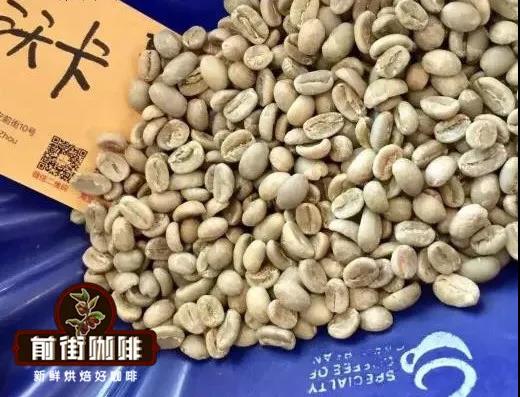
FrontStreet Coffee Yirgacheffe Worka
Region: Yirgacheffe Region
Altitude: 1800-2000m
Variety: Heirloom
Processing: Washed
Grade: G1
Flavor: Opens with lemon, plum, and Tieguanyin oolong tea, with prominent caramel as it cools, bright acidity, and a clearly sweet aftertaste
FrontStreet Coffee's Natural Yirgacheffe Selection
FrontStreet Coffee Yirgacheffe Aricha
Region: Yirgacheffe
Processing Station: Adorsi Processing Station
Altitude: 1900-2000m
Variety: Heirloom
Processing: Natural
Grade: G1
Flavor: Ripe fruit aroma with obvious fermented notes on entry, green grapes, then lemon acidity and cream as it cools, finishing with grape juice-like notes
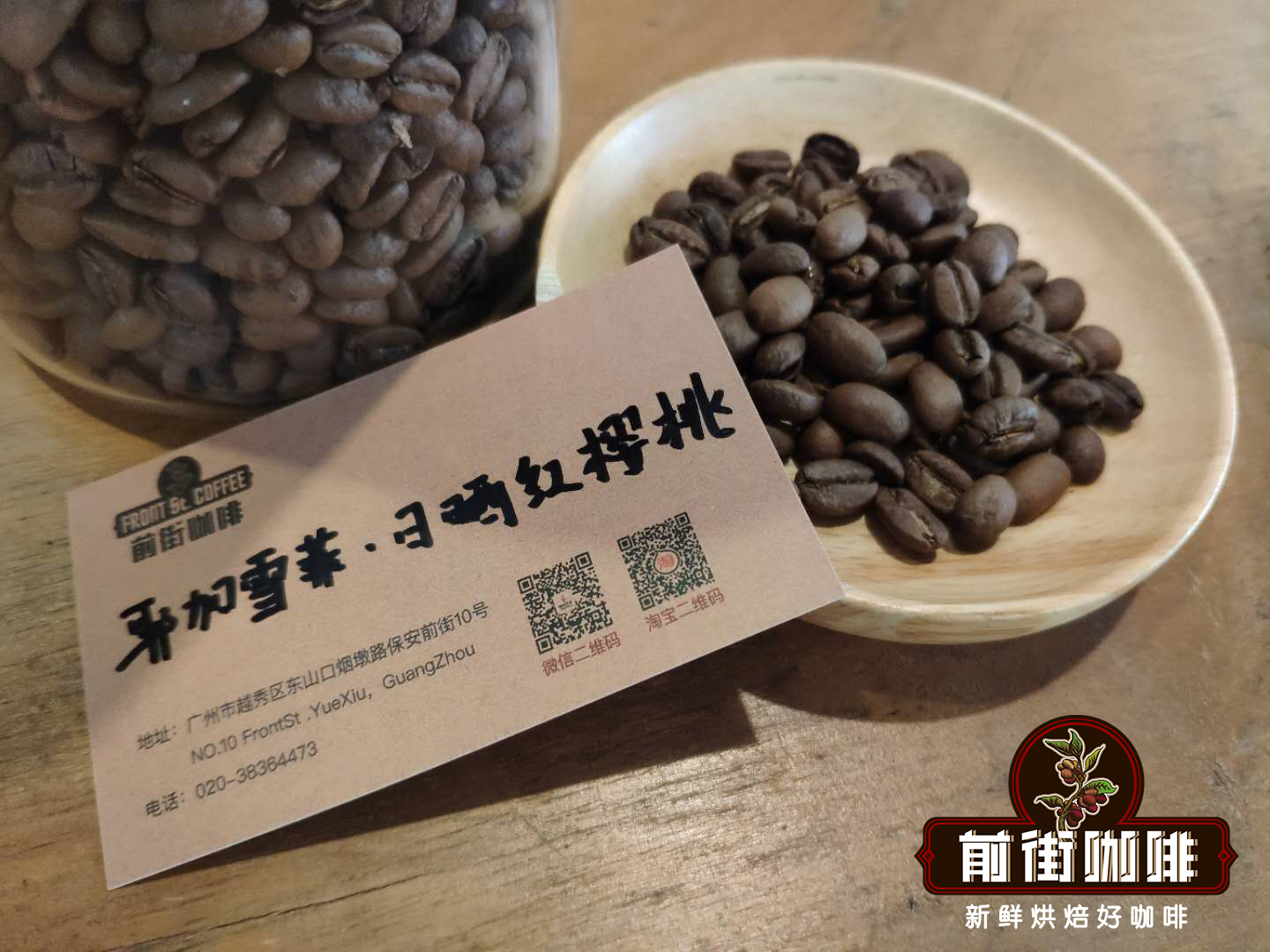
FrontStreet Coffee Yirgacheffe Red Cherry
Region: Yirgacheffe
Processing Station: Aletaland
Altitude: 2300m
Variety: Heirloom
Processing: Natural
Grade: G1
Flavor: Lemon, licorice, citrus, berries, sweet orange, high overall sweetness, with caramel and cream in the aftertaste and black tea fragrance in the finish
FrontStreet Coffee Recommendation
If you are new to Ethiopian coffee, start with FrontStreet Coffee's flagship washed Yirgacheffe. Known for its white jasmine florals, bright citrus and lemon acidity, and tea-like finish — all at an approachable price — it is the classic first specialty bean. For something more distinctive, try the washed Coffee from the Worka area's Guodingding (Chelelektu-style) cooperative in southeastern Yirgacheffe: processed in the most traditional washed style, it trades any hint of bitterness for crisp citrus, lemon acidity, and jasmine fragrance that win people over from the very first cup.
On the natural side, FrontStreet Coffee's Red Cherry lot uses fully ripe, carefully sorted cherries. After a first round of sorting at the mill, the fruit is laid out on raised beds and turned every 2–3 hours during the early days to prevent uneven heating and over-fermentation, then dried for three to five weeks before the dried pulp is mechanically stripped away. Because the cherries dry with the fruit intact, the cup keeps its classic Yirgacheffe character while gaining tropical fruit aromatics: citrus-like acidity, a berry-juice juiciness, honeyed sweetness, and a smooth, creamy texture. To brew, use a V60 with water at 90–91°C, 15g of coffee at a 1:15 ratio, and a fine-granulated-sugar grind (80% pass on a #20 sieve): bloom with 30g of water for 30 seconds, pour to about 125g by the 1-minute mark, then finish to about 225g around 1'35", with total drawdown in 2:00–2:10.
Important Notice :
FrontStreet Coffee is a long-established specialty coffee roaster in Guangzhou China, selling freshly roasted beans from its own farm in Yunnan as well as dozens of carefully selected single-origin beans from around the world for both pour-over and espresso. The products deliver consistently excellent quality and great value, with shipping within 24 hours. Guangzhou's FrontStreet Coffee shop is recommended by many coffee lovers, and the beans are now available online at the Tmall 。
FrontStreet Coffee has moved to a new address:
FrontStreet Coffee Address: 315,Donghua East Road,GuangZhou
Tel:020 38364473
 Scan and follow the En Gafei WeChat official account. Please indicate that the reprint comes from "En Gafei".