Colombian Coffee Bean Grading System and Flavor Profile Characteristics
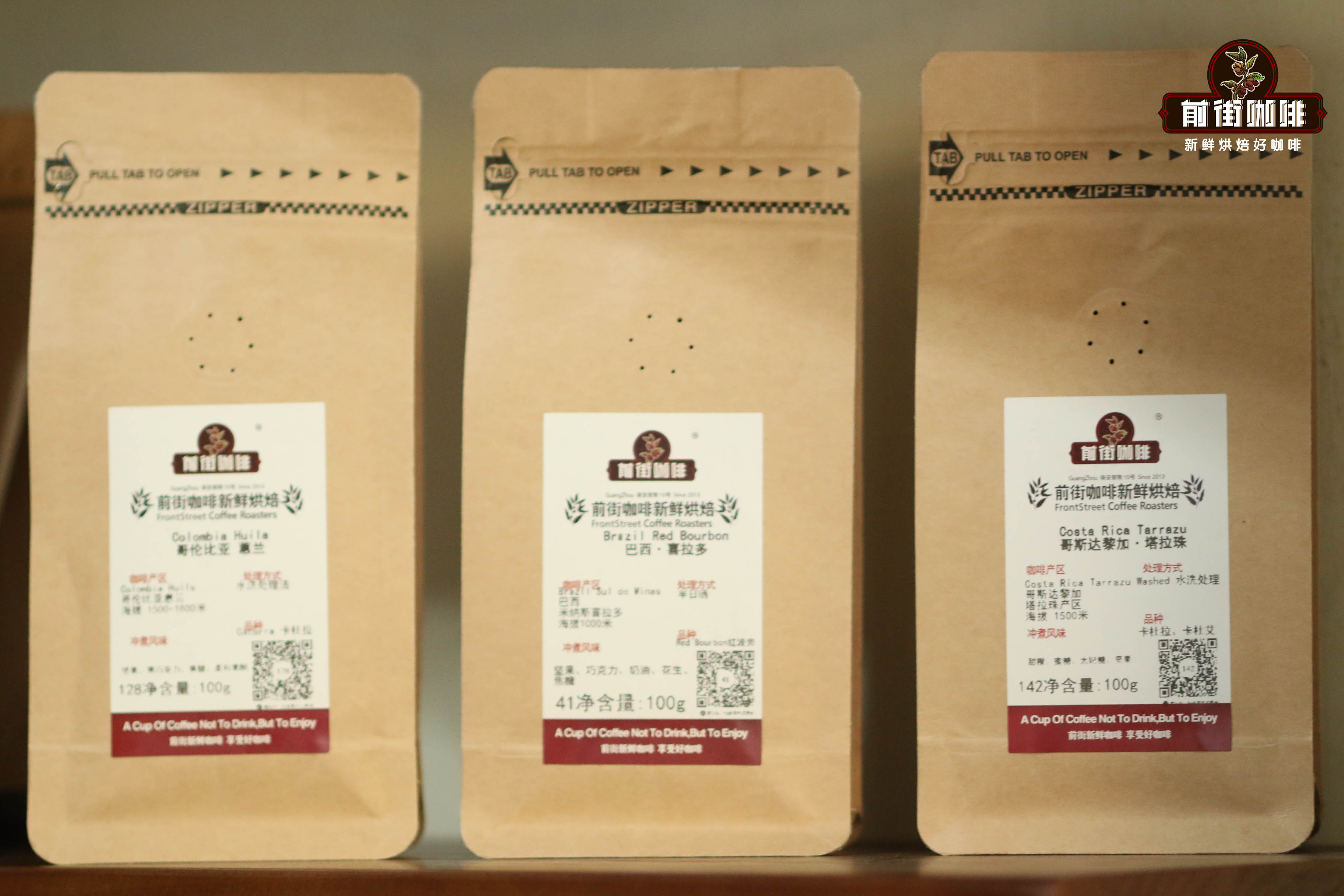
Colombia is the world's second-largest producer of Arabica coffee after Brazil. Everyone is familiar with the signature chocolate character of Colombian coffee. And while coffee originated in Ethiopia, if no one had ever brought seeds or seedlings to Colombia, we would have no Colombian coffee as we know it. There are various theories about how cultivation began there — one holds that Jesuit missionaries introduced coffee in 1723, and it gradually spread across the country to become an economic crop.
Colombian coffee wasn't commercialized until the nineteenth century, but by the late 1800s it had taken on pivotal importance as one of the government's main revenue sources. By the early twentieth century, Colombia had built a logistics system that let small-scale farmers in remote areas export their beans efficiently. Consequently, coffee came to account for about 50% of Colombia's total exports.

If you shop for Colombian beans at the supermarket, you'll likely see the "MAM" label. Some people assume MAM is a single growing region. FrontStreet Coffee would like to clarify: strictly speaking, "MAM" combines three major regions — Medellín, Armenia, and Manizales. These three are the country's most renowned commercial coffee areas.
Colombia's specialty coffee regions, by contrast, are generally found in the south. Let FrontStreet Coffee introduce them one by one:
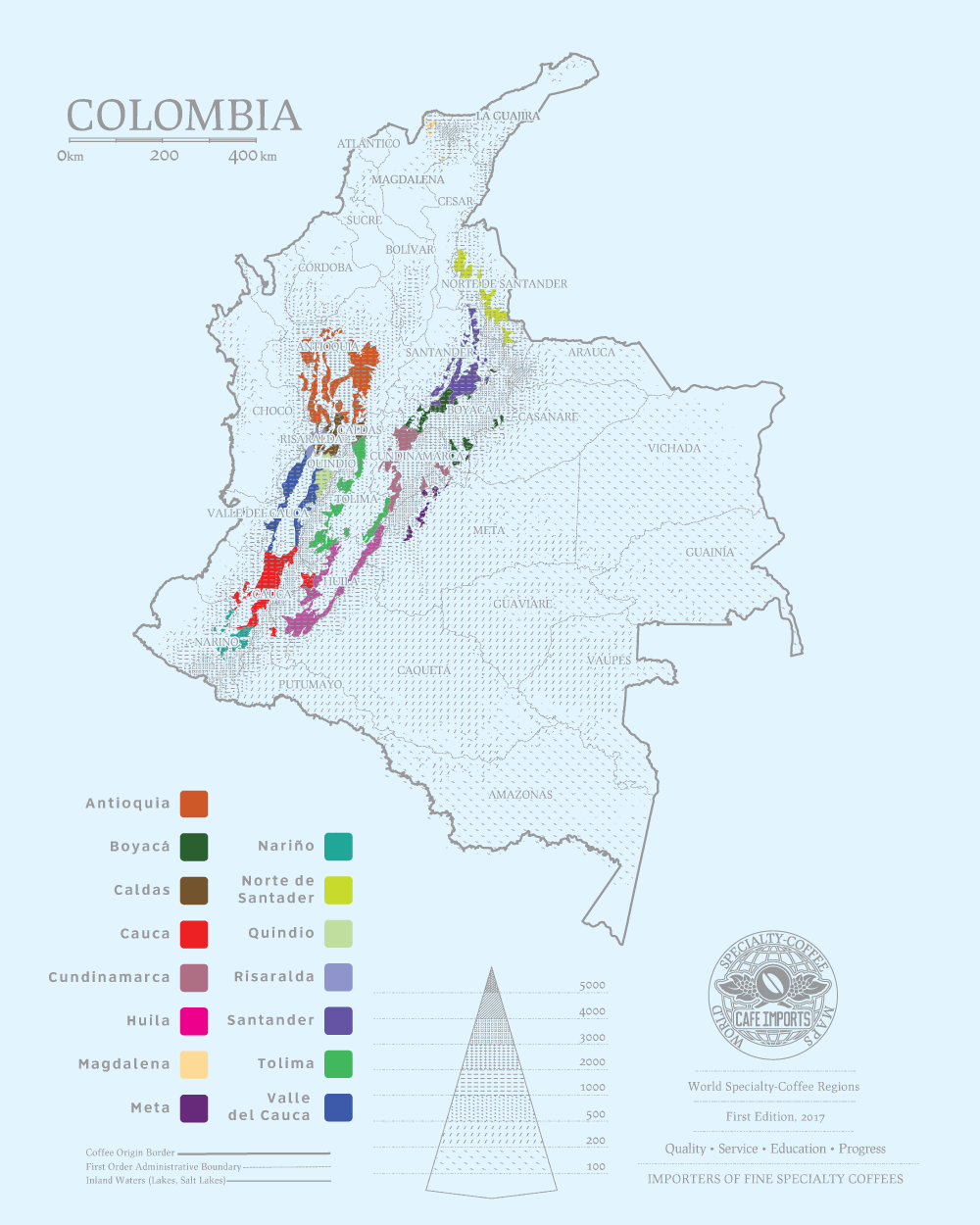
Antioquia
Antioquia is where Colombian coffee first took root. Most of the region sits at high elevations near the Andes, making it an important coffee-producing area.
Boyacá
Boyacá is one of the earliest regions in Colombia to cultivate coffee. Today it counts over 10,000 small-scale farmers, each carefully processing selected cherries at their own stations, and the region has a long history of cooperation with the FNC (Colombian Coffee Growers Federation).
Cauca
Cauca borders Tolima and Huila and carries origin certification. The average elevation is around 1,700 meters, with 80% of the terrain mountainous. Two major volcanoes, Sotara and Petacas, stand nearby, supplying fertile volcanic soil to Cauca's coffee farms.
Huila
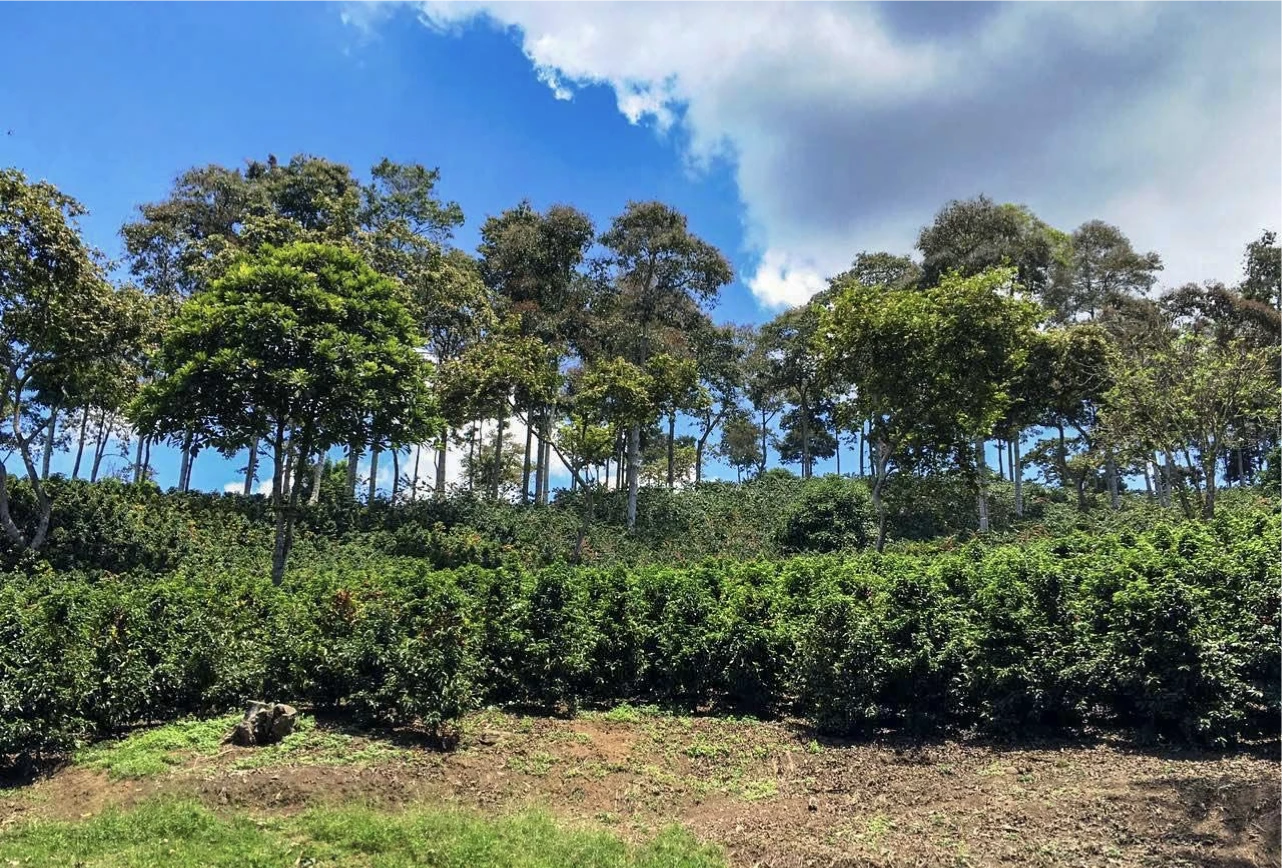
Huila is Colombia's most famous specialty coffee region, sitting along the Andes near the country's second-highest peak, the Nevado del Huila volcano. Fertile soil, lush forests, and a humid climate make it superb coffee country, and several important rivers converge in Huila, bringing abundant water and moisture.
Nariño
Nariño was the first Colombian coffee region to obtain origin certification. Its terrain is steep, and it hosts active volcanoes too — the Galeras volcano endows Nariño with plenty of fertile volcanic soil.
Santander
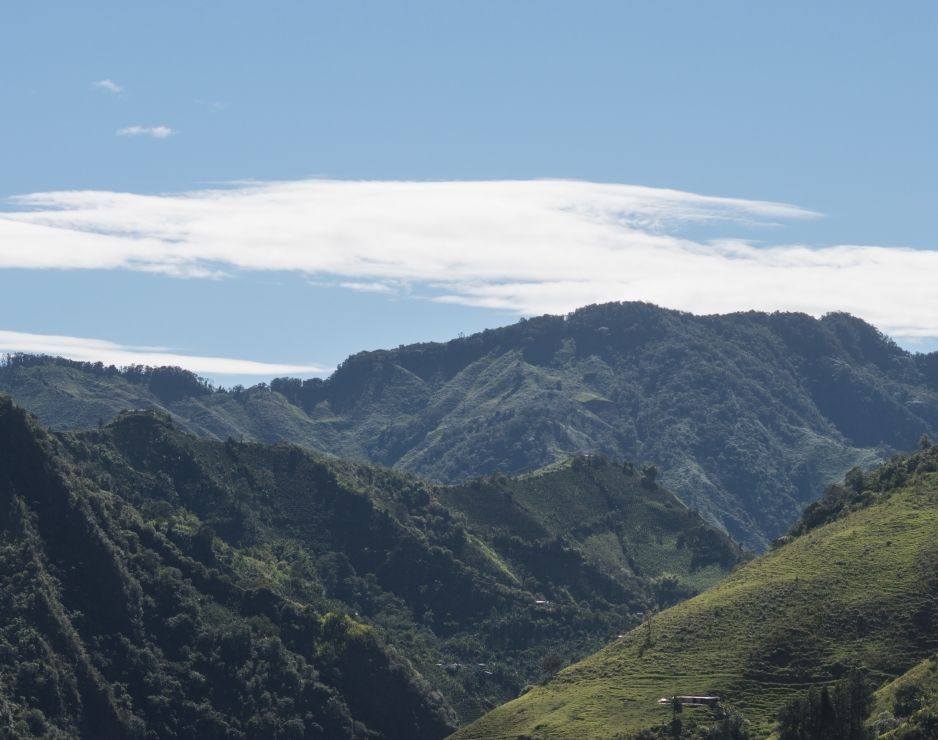
Santander is a renowned specialty region in northern Colombia. Its lower elevations and higher temperatures make Santander's coffee more intense with a rounder body. As of 2020, the region had 32,000 coffee-growing households and 37,000 coffee farms. FrontStreet Coffee's cupping of Santander beans found intense flavors, long aftertaste, and a unique fresh herbal character.
Tolima
Tolima is Colombia's third-largest coffee region, producing 12% of the country's coffee. The Andes and the Magdalena River basin completely surround Tolima, creating a relatively isolated environment.
Those who follow FrontStreet Coffee's daily-bean series will notice it is built from signature growing regions — including the Colombian Huila bean.

Huila is the largest specialty coffee region in Colombia — the highest in production, and equally impressive in quality. In 2013, Huila finally became a Colombian coffee region with origin certification.
Ask any barista in a FrontStreet Coffee store which region best represents Colombia, and they'll all answer: Huila. Colombian Huila coffee is characterized by light fruit acidity, rich nutty and chocolate flavors, and a balanced palate.
As the saying goes, fine ingredients need only the simplest cooking — and coffee is no different. Washed-processed beans present the most fundamental flavors of the region with the cleanest, brightest mouthfeel. Naturals, on the other hand, show more intense aroma, more obvious sweetness, and a more viscous mouthfeel.
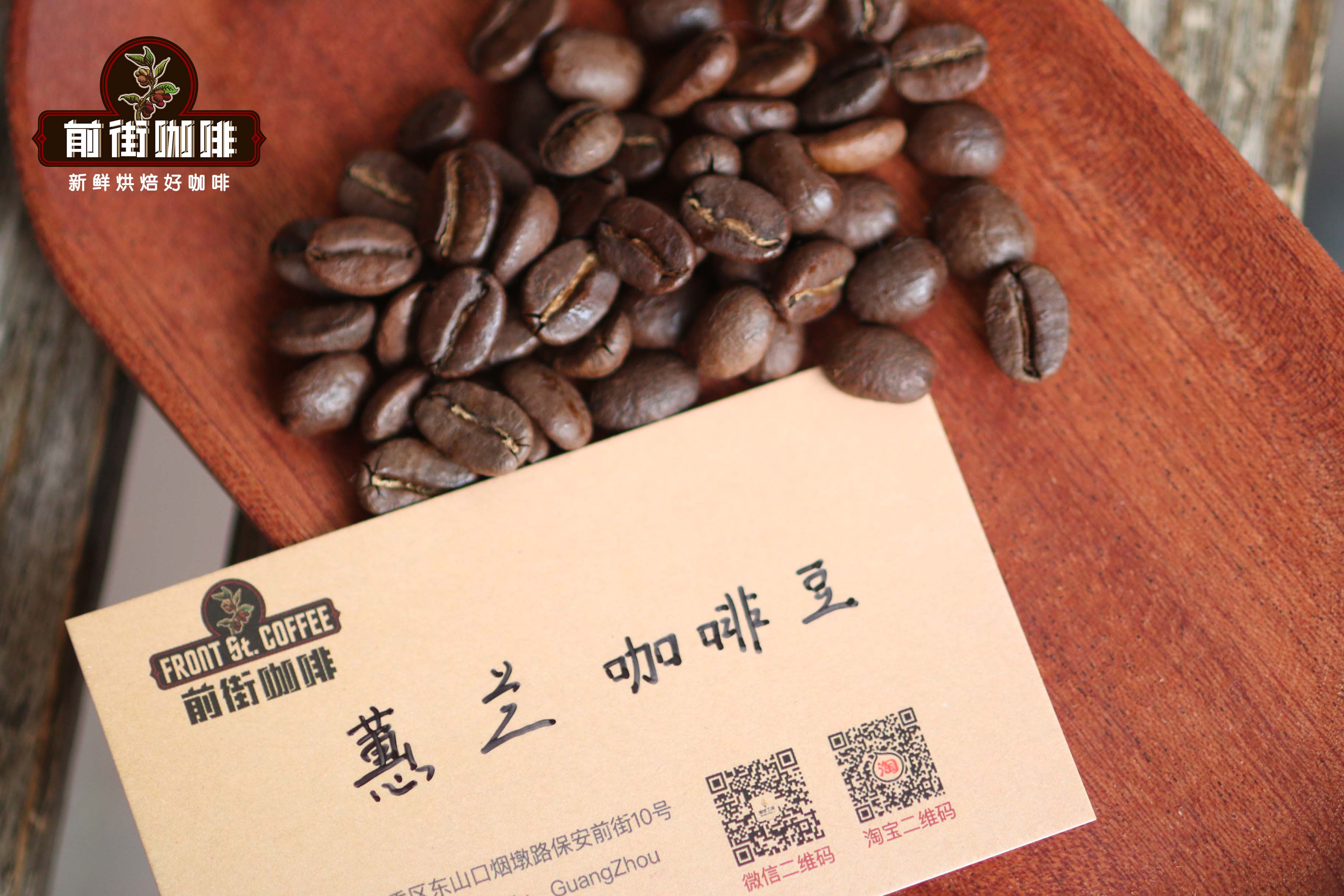
FrontStreet Coffee Colombian Huila Coffee Beans
Region: Colombian Huila
Elevation: 1,500-1,800 meters
Variety: Caturra
Processing Method: Washed
African beans are often roasted light to highlight acidity, Asian beans dark to emphasize body, while American beans are usually roasted medium to showcase their aroma. FrontStreet's roasters wanted to bring out Huila's nutty and chocolate notes while boosting caramel-like sweetness, so they chose a medium roast.

When FrontStreet's baristas brew this Colombian Huila, they consider its base flavor profile and roast degree, using 90°C water to extract as much aroma as possible. To avoid over-extraction and bitterness from overly hot water, they choose the fast-flowing Hario V60 dripper. And for a more layered cup, FrontStreet suggests a three-pour method.
Dripper: Hario V60
Water Temperature: 90°C
Coffee Dose: 15 grams
Coffee-to-Water Ratio: 1:15
Grind Size: 80% pass-through on a #20 sieve

First pour 30g of water for a 30-second bloom, then slowly pour in small circles to 125g. Wait until the water level drops to half, then continue with the third pour to 225g. Finally, wait for all the water to drain into the server below and remove the dripper. Total extraction time: about 2 minutes.
For more coffee bean information, follow FrontStreet Coffee (Coffee Workshop).
FrontStreet Coffee Recommendation
Love Colombia but want to compare it with its neighbors? Brazil — the world's largest coffee producer — grows an enormous variety of beans with moderate acidity and a beautiful balance of sweetness, bitterness, and body. That balance makes Brazilian coffee ideal for a medium roast, which coaxes out a wave of nutty aroma and a mellow, softly acidic cup — great as a single origin or in blends.
If you just want a first taste of Brazil, FrontStreet recommends the pulped-natural Cerrado Red Bourbon, a genuinely classic Brazilian single origin. Cerrado is one of the country's best-known growing regions, famous for high-quality beans, and this lot is a Red Bourbon — a variety common across South America. At a medium roast it shows rich aromas of creamy peanut, toasted bread, caramel, and hazelnut, with a rounded palate, no sourness, and only a light bitter edge. It works in a pour over, but equally in a moka pot, as espresso SOE, siphon, or French press. For something rarer, FrontStreet's Brazil Fazenda Rainha Yellow Bourbon comes from Mogiana near Sul de Minas, where fertile red volcanic soil feeds the fruit into full, aromatic maturity. Yellow Bourbon is a mutation of Red Bourbon with cleaner fruit character, and through a pour over, moka pot, or home machine, it reveals a sugarcane sweetness you won't find from other origins, alongside fruit and chocolate notes.
And if you're an espresso drinker, Brazil is already in your cup: its low acidity, balance, and friendly price make it the backbone of many premium espresso recipes. FrontStreet's crema-rich Classic Blend, nutty Premium Blend, well-balanced Dark Cocoa Blend, and shop-focused Commercial Blend all contain Brazil beans — adding chocolate and cream aromas, a soft interplay of sweet, sour, and bitter, and a balanced profile that stabilizes extraction.
Important Notice :
FrontStreet Coffee is a long-established specialty coffee roaster in Guangzhou China, selling freshly roasted beans from its own farm in Yunnan as well as dozens of carefully selected single-origin beans from around the world for both pour-over and espresso. The products deliver consistently excellent quality and great value, with shipping within 24 hours. Guangzhou's FrontStreet Coffee shop is recommended by many coffee lovers, and the beans are now available online at the Tmall 。
FrontStreet Coffee has moved to a new address:
FrontStreet Coffee Address: 315,Donghua East Road,GuangZhou
Tel:020 38364473
 Scan and follow the En Gafei WeChat official account. Please indicate that the reprint comes from "En Gafei".