How to Brew Kenyan Coffee: Correct Steps and Methods for Brewing Kenyan Coffee Beans
Say the words "African coffee" and most drinkers picture Ethiopia first, drawn in by its beguiling acidity and perfume. But Kenya deserves just as much attention. Where Ethiopian cups lean light, lifted and floral, with a clean fruit acidity, Kenyan coffee pushes harder: the acidity is sharper, denser and more layered. Picture the difference between the lemon-bright snap of a Yirgacheffe and the savory, tomato-like intensity of a good Kenyan. At FrontStreet Coffee, Ethiopian beans remain the house favorite, above all the washed Yirgacheffe, yet a devoted crowd swears by that bracing cherry-tomato punch that only Kenya seems to deliver.
Kenya's Growing Environment
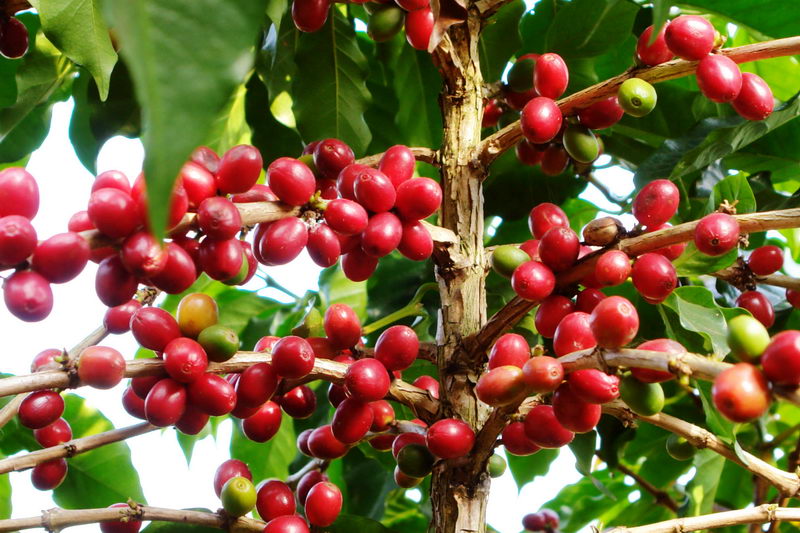
First-time tasters are often startled by Kenyan coffee: what exactly is this, and why is it so tart? Anyone who loves fruit will land on cherry tomato almost immediately, while others describe tomato juice instead. FrontStreet Coffee treats all of these readings as valid, because every palate is wired a little differently. Flavor, of course, starts with the land. Each producing region leaves its own signature, and producing countries differ even more.

Kenya sits in eastern Africa, straddling the equator, with the East African Rift Valley running north to south through its center. It shares borders with Somalia to the east, Tanzania to the south, Uganda to the west, and Ethiopia and South Sudan to the north, with the Indian Ocean to the southeast. Apart from the coastal plains, most of the country rises into highlands that average 1,500 meters. The capital, Nairobi, enjoys a temperate climate with an average annual temperature of 17.7°C and 1,049mm of rain a year. Cooler mountain air slows the ripening of the coffee, giving aromatic compounds time to develop fully, which in turn produces more pronounced fruit acidity and a denser bean. This fertile, crescent-shaped belt is Kenya's main specialty-coffee zone. The harvest is split across two rainy seasons: about 60% comes between October and December, and the remaining 40% between June and August, with dry spells in between. Annual rainfall drops from 1,500mm in the southwest to 200mm in the northeast.
Kenya's Main Coffee Regions
Kenyan coffee is grown mainly on volcanic soils at 1,600-2,100 meters, in the highlands around Nairobi and out toward the Kenyan highlands. The country's coffee belt is made up of six principal areas: Thika, Kirinyaga, Mt. Kenya West, Nyeri, Kiambu and Muranga. The Kenyan beans on FrontStreet Coffee's menu come from Thika.

Thika's growing altitude runs between 1,550 and 1,750 meters. Thika itself is a small town close to Nairobi; coffee plots surround the capital, and although Thika is an industrial town, farmland and waterfalls flank it on both sides. Roughly 2,000 farmers work the Thika region. On the cupping table, FrontStreet Coffee found the coffee here to be bright and fruit-forward, with generous berry-juice notes and a honeyed sweetness.
Kenyan Coffee Varieties
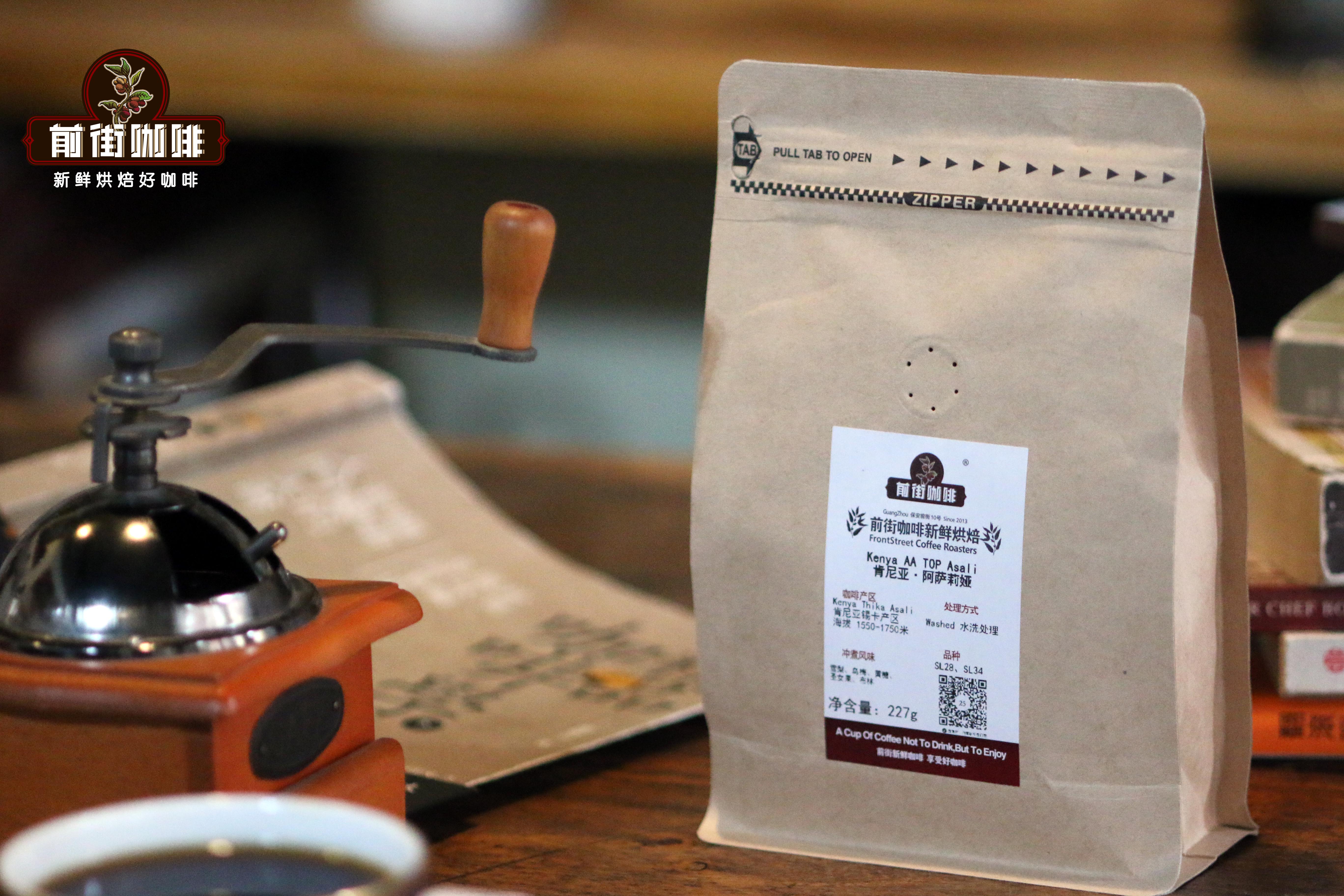
Kenyan varieties carry labels you won't recognize from the usual lineup of Typica, Geisha, Yellow Bourbon, Catuai or Pacas. In Kenya the names are SL28, SL34, Batian and Ruiru 11. Of these, SL28 and SL34 are the most celebrated. The Kenya Assalia that FrontStreet Coffee offers is built from SL28 and SL34.
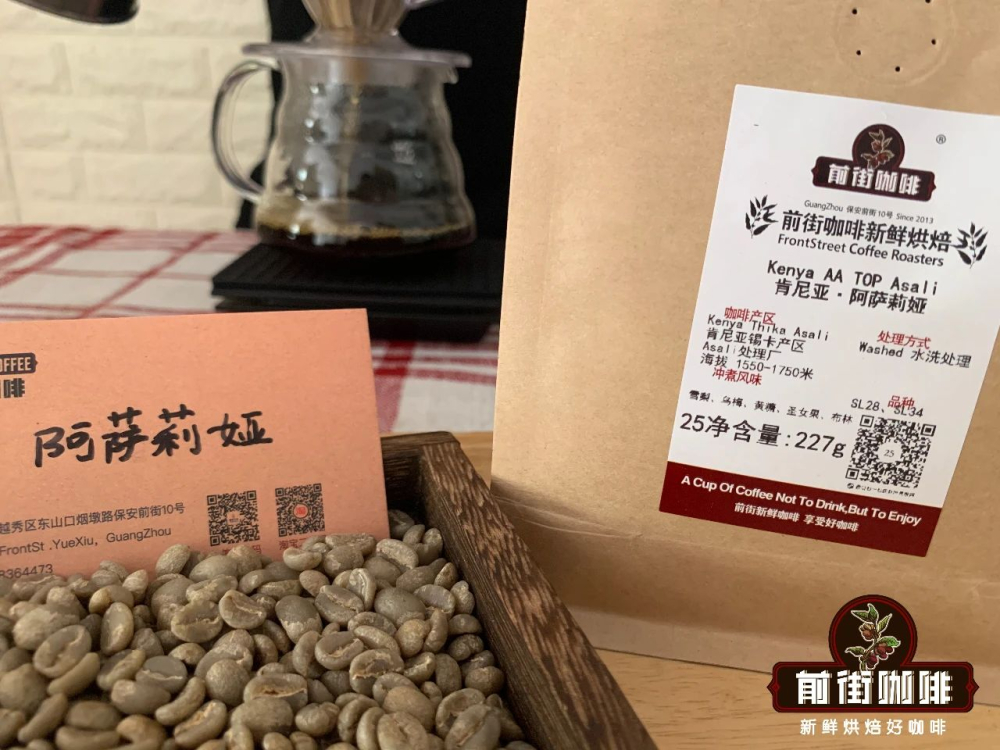
SL stands for Scott Laboratories, the coffee research institution set up in Kenya. Between 1934 and 1963, Scott Laboratories developed a series of varieties, working mainly from Mocha and Bourbon plants already growing in the country. The team selected 42 varieties from different origins, then studied their yield, quality, drought tolerance and disease resistance, numbering and screening them one by one until SL-28 and SL-34 emerged. Both were first developed in the 1930s, when the Kenyan government asked the newly founded Scott Labs to identify suitable varieties for the nation; after screening 42 candidates, the lab settled on SL-28 and SL-34. SL-28 descends from Bourbon, whereas SL-34 comes from Typica, so the two are not even from the same family line.
SL28: Bred from Tanganyika D.R. stock in 1931, SL 28 spread across Kenya, and its cupping scores confirm outstanding flavor. SL trees carry broad leaves with copper-colored tips. The beans are short, round and solid, delivering elevated acidity and clear sweetness. Some accounts say Scott Laboratories created SL 28 by crossing French missionary Bourbon, Mocha and Yemeni Typica. SL28 offers excellent flavor and good drought tolerance, holding up against drought, pests and disease, which makes it suitable for medium to high altitudes, though it remains vulnerable to several common diseases.
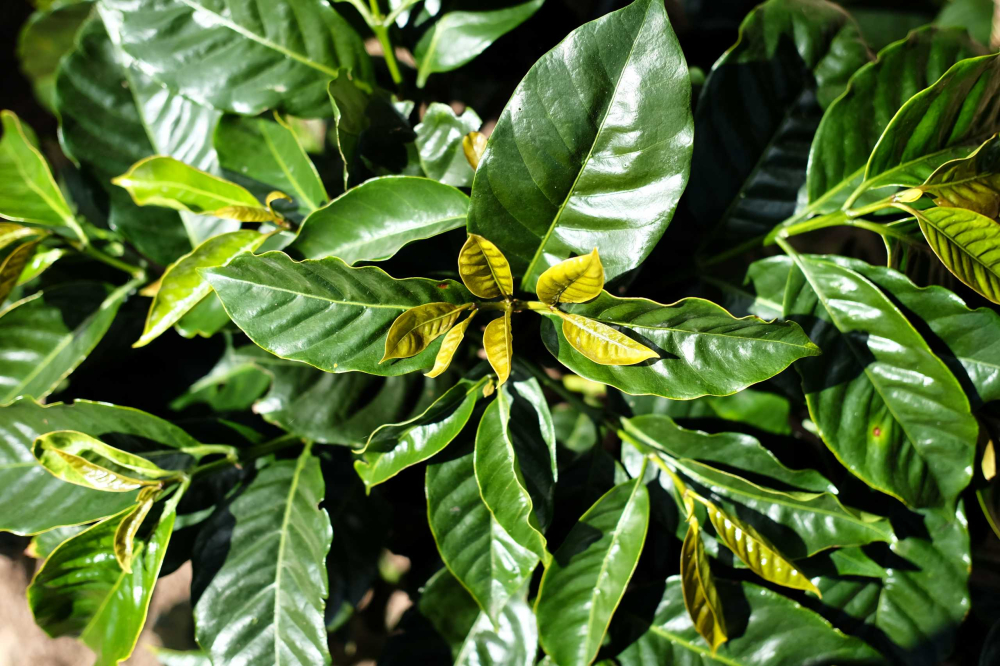
SL34: SL34 is a mutation of French missionary Bourbon, originating from the Loresho plantation in Kabete. SL 34 trees have broad leaves with dark brown tips. SL34 suits high-altitude sites with reliable rainfall, but it is likewise susceptible to a range of common coffee diseases.
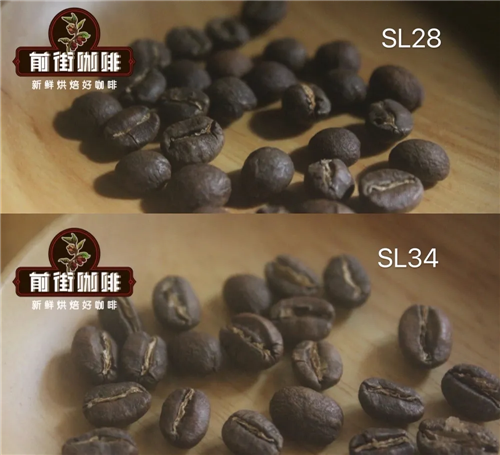
SL28 and SL34 taste similar, though SL34 brings richer acidity and a heavier mouthfeel. Both, however, carry the unmistakable Kenyan character: abundant fruit acidity wrapped in a balanced body.
Kenya's 72-Hour Washed Processing
Processing changes flavor dramatically, which is why Indonesia's wet-hulled method and Honduras's whiskey-barrel experiments produce such different cups. Kenyan coffee is famous in particular for its distinctive washed method. As FrontStreet Coffee understands it, Kenya departs from neighboring Ethiopia by repeatedly cycling the beans through washing after fermentation.

Once ripe, high-quality cherries are harvested, they are pulped straight away and fermented in tanks for 24 hours. At the end of that first 24 hours, they are washed immediately with large volumes of clean river water. They then ferment for another 24 hours in clean river water, and after the second 24 hours the previous step is repeated, completing a 72-hour cycle. Because the whole washing sequence takes 72 hours, it is known as the Kenyan 72-hour fermentation washed method, or K72 for short. Extended fermentation at low temperatures leaves the beans brighter and cleaner while somehow fuller in flavor. FrontStreet Coffee's Kenyan beans are processed with the K72 washed method.
How Should Kenyan Coffee Be Brewed?
Broadly speaking, any coffee can be pour-over brewed, but pour-over is not always the best showcase for a given bean. Brazilian coffee, for instance, tends to shine in a blend rather than as a solo pour-over. As FrontStreet Coffee noted above, top Kenyan coffee usually carries distinct acidity, elegant berry notes and a lifted structure, so it suits drinkers who enjoy acidity. For that reason, FrontStreet Coffee recommends serving Kenyan coffee cold: iced pour-over, ice drip or cold brew.
FrontStreet Coffee's Pour-over Parameters for Kenyan Coffee
The exact parameters FrontStreet Coffee uses are: V60 dripper, water temperature 90°C, water-to-coffee ratio 1:15, 15g of grounds, medium-fine grind (80% passing a No. 20 standard sieve).
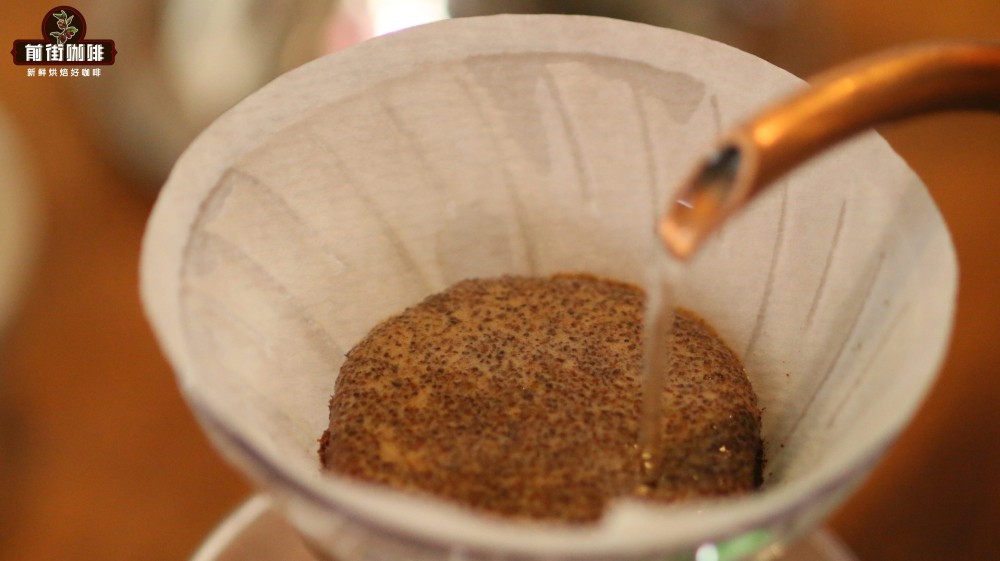
FrontStreet Coffee pours in three stages: 30g of water for a 30-second bloom, then a circular pour up to 125g, waiting for the water level to fall until the coffee bed is almost exposed, then pouring on to 225g and stopping. Remove the dripper once all the liquid has drained into the server; total extraction time is 2 minutes.
Assalia Bean Flavor: The wet aroma shows ripe tomato and florals. On the palate, cherry tomato and dark plum arrive first, backed by bright acidity and a clean, full body, with pronounced mid-palate sweetness and a juicy texture. The finish brings berry fragrance and brown-sugar sweetness alongside a green-tea aroma.

How to Make Iced Pour-over
FrontStreet Coffee's approach to iced pour-over is to extract a low-ratio, high-concentration liquid, then dilute it with ice.
Use 15g of coffee at a water-to-coffee ratio of 1:10, water temperature 90°C, medium-coarse grind (80% passing a 0.85mm sieve). Once the coffee is extracted, pre-chill a second server with ice, then discard the melted ice and add 100g of fresh ice. Pre-chilling keeps the ice from melting too quickly, which would water down the flavor.

Next, pour the extracted coffee over the ice and shake to combine. Cover the server, which both limits aroma loss and lets you pour without ice chips slipping through. Because iced pour-over relies on a concentrated extraction diluted by ice, it opens full-bodied and intense, then grows smoother as the ice melts, the flavors shifting from complex to refreshing.
How to Make Ice Drip Coffee
FrontStreet Coffee's ice drip method uses 60g of grounds to extract 600ml of coffee, at a coffee-to-water ratio of 1:10. The drip rate is about 3 drops every 10 seconds, with an ice-water mixture feeding the upper chamber. Extraction takes roughly 8 hours. Once finished, store the coffee in a sealed bottle in the refrigerator for 48 hours.
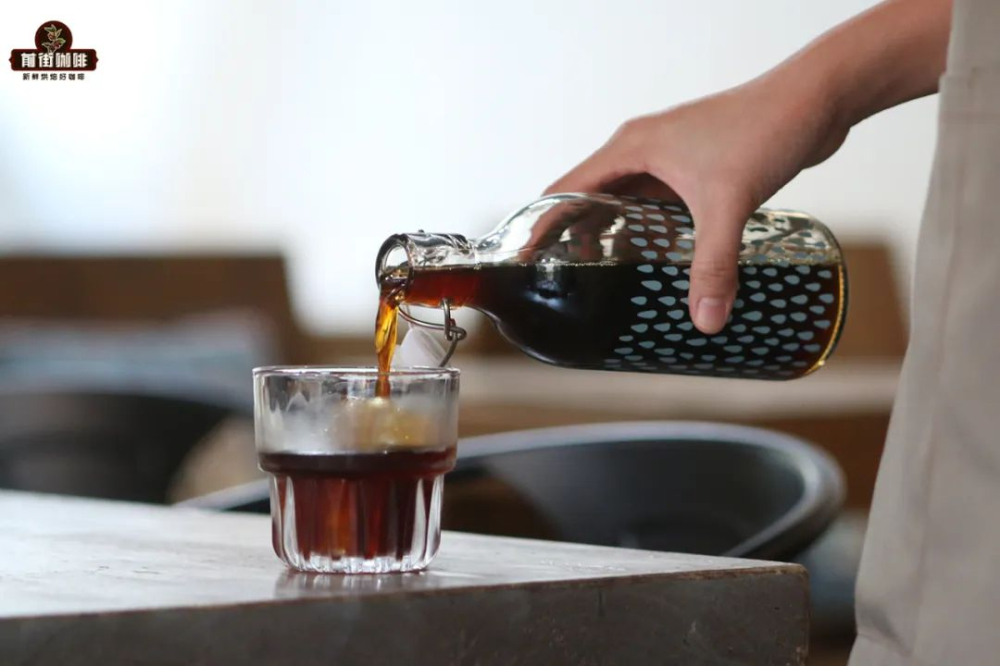
How to Make Cold Brew
FrontStreet Coffee's cold brew method uses 50g of grounds and returns to a 1:10 coffee-to-water ratio, so add 400ml of cold water plus 200g of hard ice (600g of ice and water in total, since the grounds absorb roughly twice their weight in water). Stir well, seal, and refrigerate for 8-12 hours. Then filter out the grounds through filter paper and keep the coffee in a clean sealed bottle in the refrigerator for 32 hours.

Brewing and Freshness Notes
Whichever coffee you brew, freshness matters most. FrontStreet Coffee has always held that bean freshness shapes flavor, which is why every order ships with beans roasted within 5 days. The house roasting philosophy is "Freshly Roasted Good Coffee," so customers receive the freshest possible coffee on arrival. Degassing takes roughly 4-7 days, which means the coffee reaches peak flavor right around the time it lands at your door.
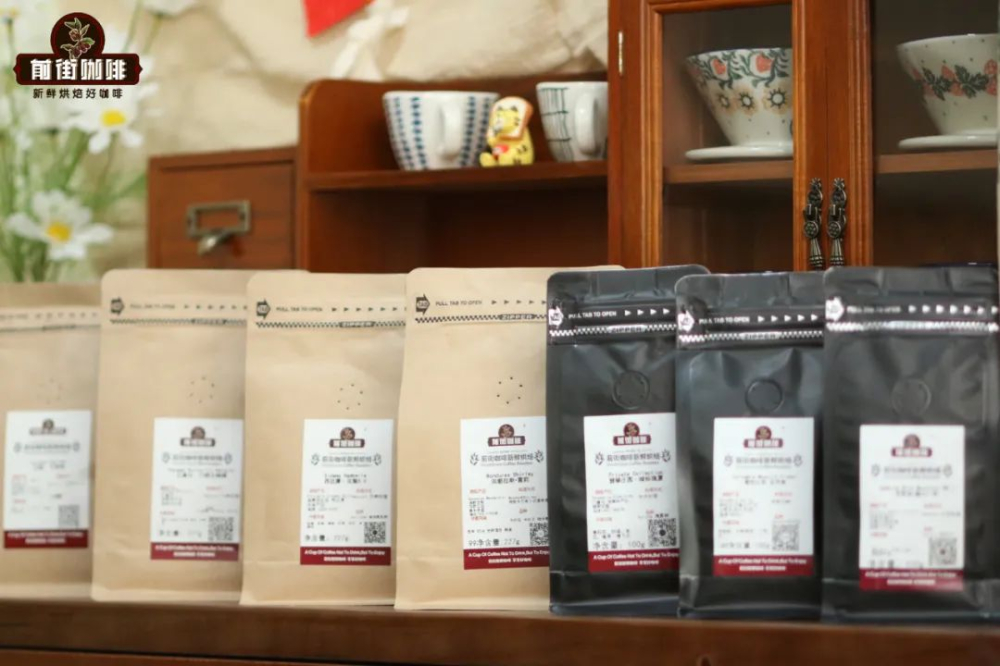
If you order pre-ground coffee, FrontStreet Coffee offers one gentle reminder: ground coffee needs no further degassing, because the carbon dioxide building up inside the packaging during transit helps round out the flavor, so you can brew a cup the moment it arrives. Ground coffee should be used promptly, however, since it oxidizes quickly once exposed to air, and its flavor fades faster as a result. FrontStreet Coffee therefore suggests buying whole beans and grinding fresh before each brew to experience the coffee at its fullest.
FrontStreet Coffee Recommendation
If it is the bright, savory intensity of Kenyan coffee that appeals to you, the same East African terroir also offers a softer, more floral expression worth exploring. FrontStreet Coffee's everyday washed Yirgacheffe comes from the town of Yirgacheffe in southern Ethiopia, where coffee grows between 1,700 and 2,100 meters, with the trees themselves planted above 1,800 meters, making this one of the highest coffee-growing regions in the world. The cup is built on white jasmine, bright citrus and lemon acidity, and a clean, tea-like finish, which is exactly why it has become the bean most drinkers try first as they step into specialty coffee.
For something more terroir-specific, the FrontStreet washed Gedeb cooperative coffee grows at the southeastern edge of Yirgacheffe, in the Worka area. Once part of the larger Worka cooperative under the YCFCU umbrella, it is now picked out and sold as a single-origin lot in the name of traceability, and it follows a traditional washed process. The result carries no bitterness at all: fresh, luminous citrus and lemon acidity show through, lifted by jasmine fragrance. Finally, if you lean toward the fruit-forward style, the FrontStreet natural Red Cherry lot is made only from fully ripe, unblemished cherries, dried whole on raised beds for three to five weeks and turned every two to three hours in the early days to keep fermentation even. Expect citrus acidity, a juicy berry body, honeyed sweetness and a creamy, smooth texture. All three are African coffees in the same bright, fruit-driven family as a good Kenyan, yet each tells the story of its own small village.
Important Notice :
FrontStreet Coffee is a long-established specialty coffee roaster in Guangzhou China, selling freshly roasted beans from its own farm in Yunnan as well as dozens of carefully selected single-origin beans from around the world for both pour-over and espresso. The products deliver consistently excellent quality and great value, with shipping within 24 hours. Guangzhou's FrontStreet Coffee shop is recommended by many coffee lovers, and the beans are now available online at the Tmall 。
FrontStreet Coffee has moved to a new address:
FrontStreet Coffee Address: 315,Donghua East Road,GuangZhou
Tel:020 38364473
 Scan and follow the En Gafei WeChat official account. Please indicate that the reprint comes from "En Gafei".