Colombian Coffee Bean History and Origin - Introduction to Colombian Pour-Over Specialty Coffee Flavor Characteristics

As the world's third-largest coffee producer, Colombia is also the largest producer of washed Arabica coffee. Currently, up to 40% of all exported beans are of specialty grade. It's not hard to find Colombian coffee in many cafes. For example, at FrontStreet Coffee you can find several varieties such as Rose Valley, Flower Moon Night, Big Navel, Sidra and Huila, all available as pour-over preparations.
Today, FrontStreet Coffee will start with Colombia's coffee cultivation story and take you on a virtual tour of this major specialty coffee producing country.

Colombian Coffee History
According to FrontStreet Coffee's research, coffee first appeared in Colombia in the nineteenth century. Don Mariano Ospina Rodriguez was one of Colombia's coffee pioneers, the first to invest in coffee cultivation experiments.
In 1835, Don Mariano established a coffee experimental plantation in Fredonia, Antioquia province. With extensive knowledge and experience in coffee cultivation, he began to promote and teach coffee cultivation to Colombian farmers.

In 1857, Don Mariano was elected President of Colombia.
In 1879, the Colombian government passed the Coffee Act to promote coffee cultivation.

In 1880, Don Mariano published the first textbook on coffee cultivation technique, titled "Coffee Cultivation: Basic Concepts That All Farmers Can Master." Shortly afterward, the price of Colombian coffee on the New York market rose from 10.6 cents per pound in 1887 to 18.8 cents per pound in 1893.
During the 1920s-1930s, the Colombian government implemented land reform and provided support to small producers. FrontStreet Coffee therefore believes that the success of Colombia's coffee industry is inseparable from the marketing efforts of the National Federation of Coffee Growers (FNC).

In 1927, the National Federation of Coffee Growers of Colombia (FNC) was established in Medellin. It is a union bringing together 560,000 coffee-producing families from 22 provinces and 590 cities across the country. The first FNC president was Luis Mariano Ospina Perez, grandson of President Ospina. Under Ospina's leadership, the FNC successfully consolidated the country's coffee industry and achieved tremendous success in the global market. This initiative also helped coffee become Colombia's main export crop, forever changing the country's economy.
Colombian Coffee Growing Regions
Colombia is located in the northern part of South America. On the map, Colombian coffee-growing areas are distributed along the Andes Mountains from south to north, with growing regions mainly concentrated in the western part of the country. Because the growing areas are so widely distributed, different geographical factors and climate characteristics create different production seasons, meaning Colombia can have coffee harvests year-round.

Colombia has high growing altitudes, ranging between 1,000 and 2,500 meters. Influenced by the diverse terrain of the Andes, the country has rich microclimates, abundant rainfall, and temperatures around 18°C year-round, making it very suitable for coffee trees. This is the primary reason for the superior quality of Colombian coffee. Here, 30%-40% of the rural population depends on coffee production. Local agriculture is managed through a small-farm model, and coffee is no exception: farms are not large, generally only about two hectares. Farm owners carefully tend the plants in their gardens, and local people plant tall trees or banana trees around the coffee to provide shade.
By geographical location, Colombian growing areas can be divided into three regions: northern, central and southern. By bean quality, they are mainly distributed in the southern region. Below, FrontStreet Coffee discusses several representative growing regions: Huila, Cauca, Narino and Santander.
Colombian Specialty Coffee Estate Representative - Sidra

At the 2022 World Barista Championship, champion barista Anthony Douglas chose Colombian Sidra beans for the competition. Coincidentally, at the 2019 World Barista Championship, that year's champion barista Jooyeon Jeon also chose Sidra coffee (though from Ecuador). This drew attention to what Sidra coffee is.
Through reviewing materials, FrontStreet Coffee found that Sidra coffee originally comes from Pichincha province, Ecuador, where locals call the variety Sydra. According to the information, Sidra is a laboratory variety, cultivated from a hybrid of Typica and Red Bourbon. Later, based on genetic comparison, Sidra was found to have similar genes to Ethiopian native varieties. Some scholars therefore speculate that Sidra is a hybrid between an experimental research variety exported from Ethiopia and local Ecuadorian Bourbon varieties. Currently, Sidra is mainly grown in producing countries like Ecuador and Colombia.
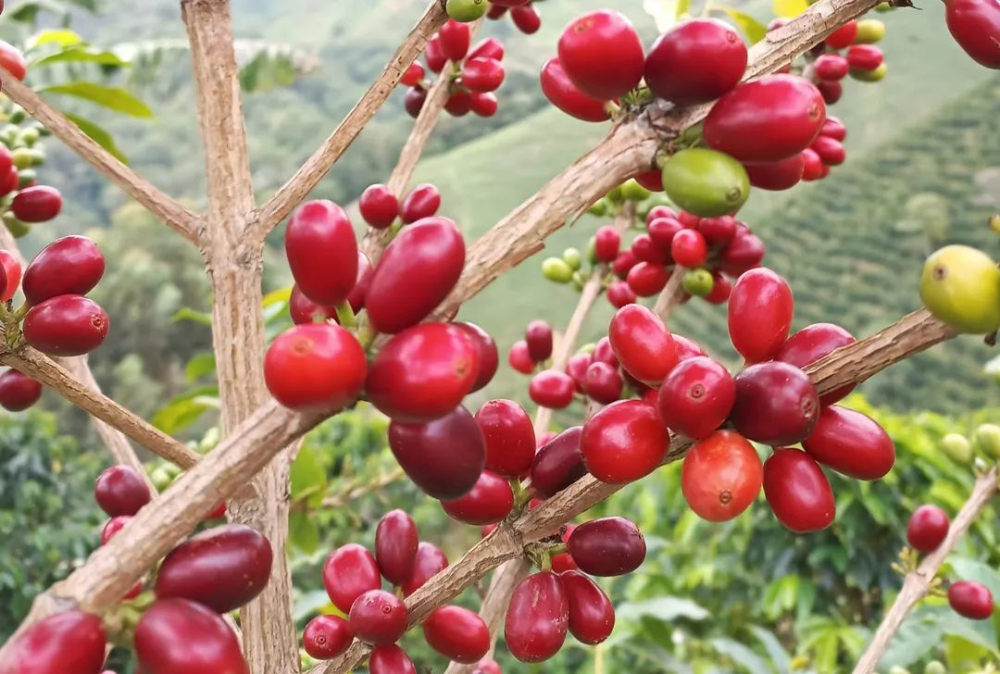
Following the exposure from Anthony Douglas's competition, people began searching for the champion barista's beans. The Sidra beans Anthony used came from Finca El Diviso in Colombia's Huila growing region.
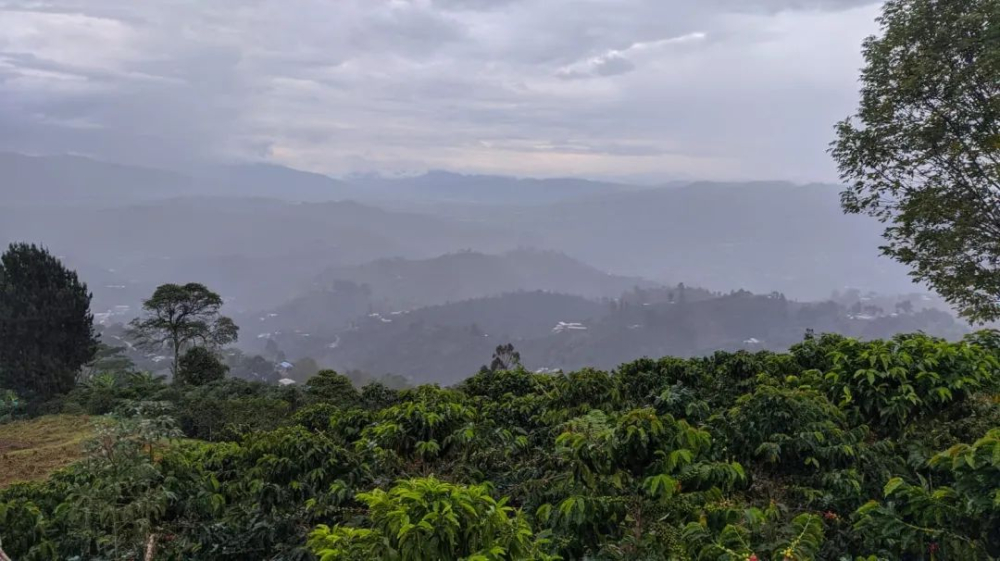
Where is Finca El Diviso?
Finca El Diviso is located in Huila, one of Colombia's most famous coffee growing regions, at an altitude of about 2,100 meters and covering an area of 14 hectares. This family-run estate was founded by Jose Uribe Lasso in 1996 and has over 25 years of coffee cultivation experience.
It is currently operated mainly by Nestor Lasso, who is young and full of motivation. His grandfather introduced him to the magnificent world of coffee, and his father inherited the farm with superior coffee-cultivation abilities. Influenced by this family, Nestor continually strives for excellence in cultivation and processing, growing twelve varieties including Caturra, Colombia, Sidra, Castillo, Geisha and Bourbon.
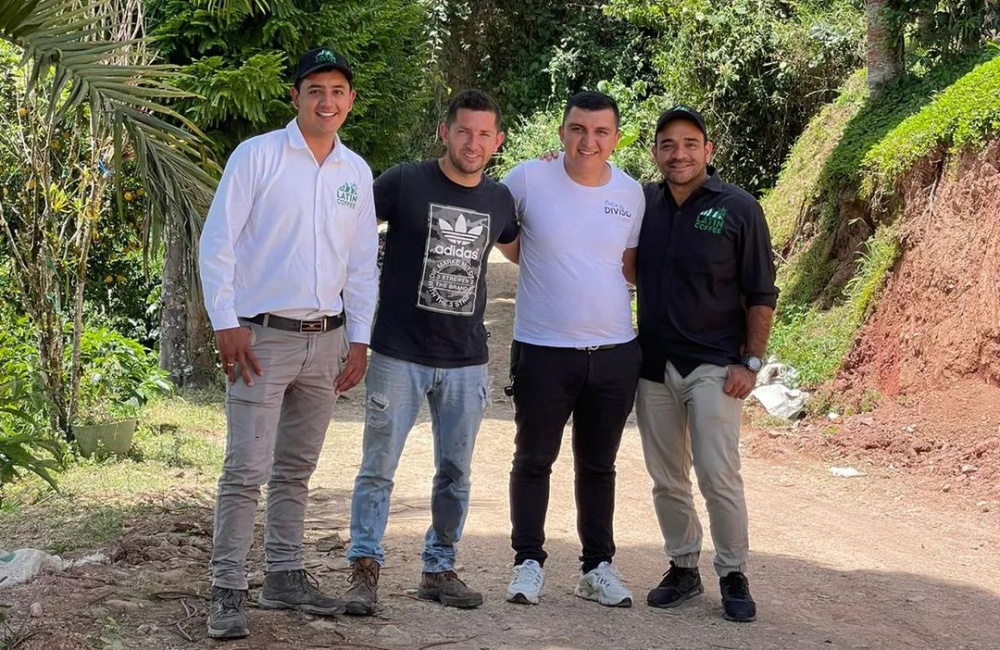
Nestor's family manages the estate together, continually improving bean quality, which has brought Nestor better returns. They successfully established a new large farm, cultivating and producing higher-quality beans in a continuing effort to become a great family estate. For Nestor, Finca El Diviso is a lucky new beginning. He believes Huila's land is very fertile, and that any hardworking person can escape poverty by growing coffee on nutrient-rich soil.
What are the characteristics of FrontStreet Coffee's Sidra?
Although genetic testing has shown that Sidra has genetic connections to Ethiopian coffee varieties, it is currently mainly grown in two countries - Colombia and Ecuador - at altitudes between 1,650 and 1,800 meters. In addition, some origins grow small quantities of Sidra for experimental purposes.

Sidra plants have thick trunks, reaching up to 4 meters at maximum. They require appropriate shade when planted, are immune to multiple pests, but are susceptible to leaf rust and coffee berry disease. The leaves are slender and bear five-petal flowers. Fruit distribution is dense, resulting in high yields. The fruit is larger and rounder than most Arabica varieties; green beans show a slender strip shape, somewhat similar to Geisha.

Given that Sidra is still relatively scarce in cultivation and possesses floral and fruity characteristics comparable to Geisha - expressing flavors such as peach, citrus, grape and honey, with moderate acidity and a rounded mouthfeel - its price is also relatively high.
FrontStreet Coffee has also imported Sidra beans from Finca El Diviso. These beans use double anaerobic washed processing, highlighting the coffee's rich acidity. FrontStreet Coffee uses medium-light roasting, and cupping notes reveal rich fruit flavors such as apricot, citrus and grape.

FrontStreet Coffee Sidra Pour-over Parameters
Dose: 15g
Ratio: 1:15
Water Temperature: 91°C
Grind Size: Medium-fine grind (80% pass-through on #20 sieve)
Pouring Method: Three-stage pour

First stage: pour 30ml and bloom for 30 seconds. Second stage: with a small flow, pour in a circular motion to 120ml. When the water level drops to 1/2, third stage: with a small flow, pour in a circular motion to 90ml. Total extraction time is 2 minutes.
FrontStreet Coffee Recommendation
Colombian coffee is used widely - in espresso blends and as pour-over single origins alike, with both fruity and full-bodied styles and aroma-forward types, so there's something for almost everyone. To understand the origin, start with FrontStreet's washed Colombia Huila. Grown above 1,500 meters in the country's most famous specialty region, it's medium-dark roasted to emphasize sweet dark chocolate and nut notes with moderate body, suiting pour-over and French press as well as moka pot and espresso machine for Americanos and lattes.
For a more experimental cup, FrontStreet's Colombia Finca El Diviso Sidra uses anaerobic natural processing, converting the coffee into richer tropical fruit aromas. Light-to-medium roasted, it delivers complex notes of passion fruit, grape, apricot and dried fruit whether brewed as pour-over, cold brew, drip bag or moka pot.
And for those with a home espresso machine or moka pot, FrontStreet's Specialty Blend is a strong bread-and-butter choice, combining Brazilian coffee's creamy nut aroma with Colombian coffee's dark chocolate bittersweet note and a fine golden crema - gentle with milk for a rich, smooth latte and equally suited to Americanos, cappuccinos and mochas.
Important Notice :
FrontStreet Coffee is a long-established specialty coffee roaster in Guangzhou China, selling freshly roasted beans from its own farm in Yunnan as well as dozens of carefully selected single-origin beans from around the world for both pour-over and espresso. The products deliver consistently excellent quality and great value, with shipping within 24 hours. Guangzhou's FrontStreet Coffee shop is recommended by many coffee lovers, and the beans are now available online at the Tmall 。
FrontStreet Coffee has moved to a new address:
FrontStreet Coffee Address: 315,Donghua East Road,GuangZhou
Tel:020 38364473
 Scan and follow the En Gafei WeChat official account. Please indicate that the reprint comes from "En Gafei".