Brazilian Coffee Bean Grades and Characteristics | Brewing Temperature and Techniques for Bourbon Coffee Beans from Brazil's South Minas Region

From three hundred years ago to the present, coffee has become Brazil's primary economic engine, and Brazil has become the world's largest coffee-producing country. Cupping Brazilian coffee beans, FrontStreet Coffee finds low acidity, a moderate nutty character, chocolate sweetness, and a rich mouthfeel. This is tied to Brazil's relatively low altitude, flat and monotonous terrain, lack of microclimates, and the practice of growing coffee in full sun — conditions that create Brazil's uniquely soft bean profile.
2020 Reduced Rainfall Will Cause a 2020-2021 Brazilian Coffee Production Decline!
In early to mid-October 2020, rainfall did reach Brazil's coffee-growing areas, but according to local media reports it was minimal, causing concern among coffee farmers. In short, October's rain eased local high temperatures but was not enough to replenish water shortages or improve crop conditions. Arabica was hit hardest, with flowering delayed by unfavorable weather in almost every Arabica-producing region. As of October 15th, sporadic flower drop was observed in Minas Gerais and the Franca region. If sufficient rainfall does not follow, all currently blooming flowers will drop, leading to reduced production.
Investment bank Itau BBA released its latest view stating that, due to insufficient rainfall during flowering and a cyclical low-production year, Brazil's 2020/21 coffee production is expected to fall by 14% to 21%, ultimately landing between 53.6 and 58.3 million bags. Since Brazilian coffee accounts for over one-third of global production, this shortfall could swing next year's global supply-demand balance from this year's surplus of 9.8 million bags to a deficit of 1.7-6.5 million bags. Beyond the rainfall problem, excessive heat has also hurt growth: average temperatures above 23°C exceed ideal growing conditions for Arabica, yet in late September and early October, average temperatures in Minas Gerais, São Paulo, and Paraná states reached 28-30°C.

Brazilian Coffee Growing Regions
As noted above, Brazil's Arabica growing regions are concentrated in Minas Gerais, São Paulo, and Paraná states. Brazil's overall production depends on whether Minas has a bountiful or poor harvest, and Minas's harvest depends on South Minas, Cerrado, and Mogiana. Brazilian Arabica comes mainly from southern Minas (South Minas) and the central Cerrado, with Minas producing Arabica that accounts for 66.7% of Brazil's Arabica core output.
South Minas (Sul de Minas) sits at altitudes above 1100 meters, with rolling foothills, varied terrain, distinct wet and dry seasons, large day-night temperature swings, and abundant microclimates — ideal conditions for flavorful Bourbon and Yellow Bourbon, which has naturally made it a heartland of specialty coffee.

Cerrado Region: The Cerrado savanna deserves special mention — it hosts some of the most complex plant species on Earth. But not every coffee grown on the savanna counts as Cerrado coffee: only coffee grown at 1100-1300m altitude in the prime areas of the Cerrado may carry the name. With high altitude and fertile soil, FrontStreet Coffee finds that beans from this region are clearly sweet, have high body, and lack earthy flavors.

Mogiana Region: This area lies very close to southern Minas. Coffee grows among shrubs, grasslands, and other vegetation, and many farming families work here — some with traditional large-scale methods, others with small-scale modern operations. The combination of modern technology and mountain coffee culture produces exceptionally high-quality green beans; in cupping, FrontStreet Coffee has found a sugarcane-like sweetness in lots from this region.
Brazilian Coffee Bean Grading System
On Brazilian coffee sacks you will usually see information like this: Brazil NY.2 SC 17/18 FC. This three-part grading system is unique to Brazil, a necessity given how vast the country is and how many beans it produces. Lots are frequently blended to create specific flavor profiles for export, so cupping-based grading lets consumers gauge quality at a glance from the green bean information alone.

1. Grading by Defect Rate
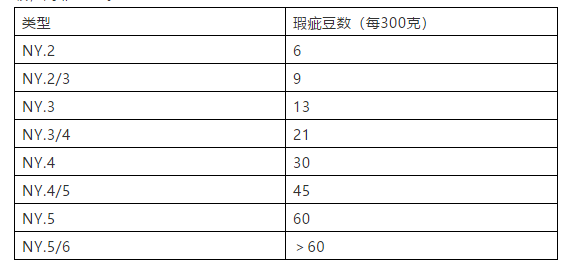
Brazilian coffee is evaluated by a "deduction method," grading lots by the number of defective beans per 300 grams. There are seven levels, from No.2 to No.8. If deductions fall below 4, the lot can be classified as No.2. Beans with no defects at all could theoretically be called No.1, but such lots are so rare that supply cannot be sustained — which is why Brazil sets No.2, not No.1, as its highest grade.
2. Grading by Bean Size
Screen size is measured with mesh sieves based on 1/64 inch, with screen sizes typically ranging from 14 to 20. Note that the screen number corresponds to the short side of the bean — its "width." The largest screen size for Brazilian beans is 19, but production is limited, so 17/18 screen is considered the highest practical grade.
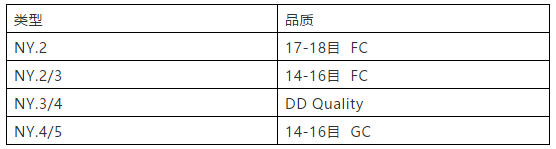
3. Cupping Quality
Fine cup | Fine | Good cup | Fair cup | Poor cup | Bad cup. FC (Fine Cup) and GC (Good Cup) are the most common. Many companies and platforms also append the processing method (natural/washed/honey) and estate information.
4. Flavor Grade
Brazilian beans are sorted into five major flavor categories: Strictly Soft → Very smooth, Soft → Smooth, Softish → Somewhat smooth, Hardish → Harsh, and Rioy → Iodine-like off-flavor. Cerrado beans cupped by the local coffee association have been rated Strictly Soft Fine Cup (very smooth) — the best grade. In short, Brazil NY.2SC – 17/18 FC Cerrado means: country Brazil, defect grade 2, screen size 17-18, Fine Cup quality, from Cerrado. This is also the Brazilian component bean FrontStreet Coffee uses in its house blend.

Brazilian Coffee Bean Varieties
Brazil primarily grows Bourbon. Bourbon is an Arabica variety and a branch of Typica, native to Bourbon Island in the Indian Ocean (now Réunion Island), and generally grown across Central and South America — El Salvador, Brazil, Rwanda, Panama, and elsewhere. Early Bourbon beans were variants of Ethiopian Typica transplanted to Yemen. Visually, the biggest differences from Typica are wider leaves, smaller cherries, and higher productivity; Bourbon cherries are smaller and rounder. Bourbon is frequently a champion in specialty cupping competitions across the Americas.
Most mature coffee cherries turn red, but in the Yellow Bourbon mutation the ripe cherries show yellow, hence the name. In Brazil — the world's largest coffee-producing country — Yellow Bourbon accounts for less than 1% of production, making it precious and rare. Yellow Bourbon is harder to cultivate and yields less, but the roasted beans present a dry, sweet taste with nut and cocoa/chocolate aromas. Yellow Bourbon is generally processed by the pulped natural (semi-washed) method, and some Bourbon lots show fruity notes, with especially pleasant aroma and sweetness in the brew.
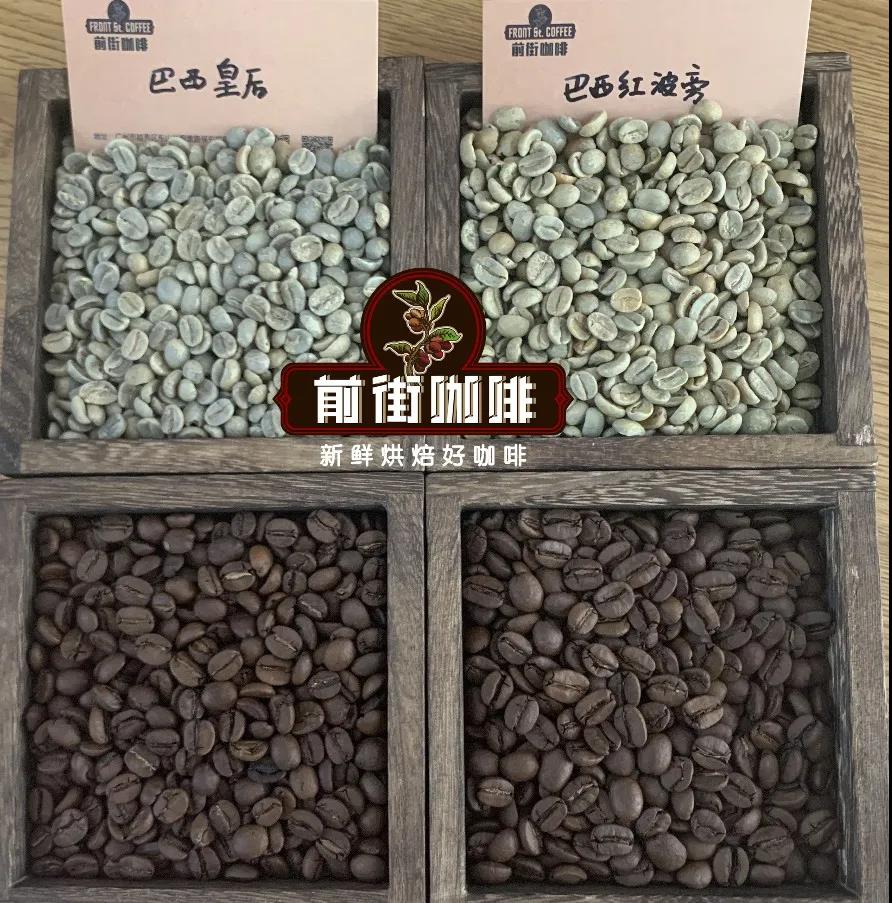
Red Bourbon characteristics: after coffee trees flower and set fruit, the cherries progress from green → light yellow → light orange → mature red → darker red when fully ripe, which is why some call it the "Red Bourbon variety." In fact, Red Bourbon is simply the Bourbon variety we all know. Cupping different Brazilian coffees, FrontStreet Coffee has found that Bourbon grown at high altitudes usually shows better aroma, brighter acidity, and sometimes even wine-like flavors.

Brazilian Coffee Bean Processing Methods
Before 1990, Brazil relied almost exclusively on crude natural processing, which left Brazilian beans prone to woody or earthy flavors — coffee cherries had to dry in the sun for two to three weeks, and any rain during that window could easily produce musty flavors. To end this dependence on the weather, Brazil leveraged its relatively dry climate and, in 1990, developed the pulped natural method to shorten processing time.

Pulped natural processing removes the cherry's skin and pulp, giving producers control over how the mucilage-coated beans ferment after depulping. Traditional natural processing dries the cherries with skin and pulp intact, making fermentation impossible to monitor. Pulped natural sits between natural and washed processing, but skips the "fermentation tank and fresh-water rinse" steps of washing — instead, the beans go straight to the drying patios. Although the methods look similar, the missing fermentation step means the flavors are completely different. During pulping, ripe pulp comes off easily while unripe green cherries are difficult to process, allowing a second screening that filters out immature fruit and standardizes ripeness.
Compared with natural processing, FrontStreet Coffee finds that beans handled this way gain in cleanliness and maturity, delivering more consistent flavor. That doesn't mean every Brazilian region uses it: the drier Cerrado still relies mainly on natural processing, with pulped natural second. However, the Red Bourbon FrontStreet Coffee sources from Cerrado is pulped natural.

Most popular at FrontStreet Coffee are the Yellow Bourbon beans from Brazil's Queen Estate.

Country: Brazil
Region: Mogiana
Altitude: 1400-1950m
Variety: Yellow Bourbon
Processing: Natural processing
FrontStreet Coffee Brazilian Coffee Bean Roasting Analysis
The green beans are dense and perform excellently in the roaster, with slight orange peel and spice notes. Their moisture content of 9.9% is relatively low, giving the beans strong heat absorption. FrontStreet Coffee's roasting plan therefore starts at 200°C, then uses high heat and low airflow to speed up drying. After the drying phase, medium airflow and medium heat carry the Maillard reaction — no rushing — and the roast finishes near the end of first crack.

Yangjia 800N, 550g charge: preheat to 200°C, set heat to 150, airflow at 3, turning point at 1'30". Maintain heat; the beans turn yellow at 5'10", the grassy aroma fades, and the drying phase begins — reduce heat to 125 and open airflow to 3.5. Drying completes at 8'20"; the bean surface shows wrinkles and black spots as the toast aroma shifts to coffee aroma, the prelude to first crack. At 178°C, reduce heat to 80 and listen for first crack. First crack starts at 9'14", airflow fully open at 5. Development time after first crack is 3'00", finishing at 201°C.
FrontStreet Coffee Brazilian Coffee Bean Cupping Report
FrontStreet Coffee cups samples within 8-24 hours after roasting. Its baristas typically use 200ml ceramic cupping bowls marked at 150ml and 200ml. Following SCAA standards, water TDS is around 150ppm — too low and you risk over-extraction; too high affects mouthfeel and causes under-extraction. Cupping water temperature is 94°C. Grind size follows SCAA cupping standards, controlled to a 70-75% pass rate through the standard #20 sieve (0.85mm). The ratio is 11g of coffee to 200ml of hot water — 1:18.18 — which puts extraction concentration inside the 1.15%-1.35% Gold Cup range. Steeping time: 4 minutes.

Brazil Queen Estate Cupping
Dry aroma: Roasted nuts, cinnamon
Wet aroma: Roasted nuts, peanuts
Flavor: Roasted nuts, peanut butter, fermented fruits, sugarcane sweetness
FrontStreet Coffee Brazilian Coffee Bean Brewing Tips
Filter: Kono
Water temperature: 89°C
Coffee dose: 15g
Coffee-to-water ratio: 1:15
Grind size: Medium-fine (75% pass-through with a #20 sieve)

FrontStreet Coffee's technique: 30g of water for a 30-second bloom, then small circular pours up to 125g for the second segment. Once the water level drops to just above the coffee bed, continue pouring to 225g and stop. When the level again drops to just above the bed, remove the dripper (timing starts from the bloom). Extraction time: 2'01".

Brewing flavor: The beans are naturally sweet and clean. The pulped natural process makes the acidity slightly brighter yet well integrated with sweetness — some lots even show tropical fruit notes — and the abundant aroma during brewing is a delight. Expect fresh sugarcane-juice sweetness, black tea, soft and pleasant fruit sweetness, distinct nutty flavors, balanced smooth acidity, weak and clean bitterness, rich chocolate and nut aromas, and a bright, clean mouthfeel with a smooth, delicate texture.
FrontStreet Coffee Recommendation
If you simply want a first taste of Brazil, FrontStreet Coffee's pulped natural Cerrado Red Bourbon is a classic single-origin starting point. Roasted medium, it shows rich aromas of cream, peanut, toasted bread, caramel, and hazelnut, with a rounded palate, no acidity, and just a light bitter finish — equally good through a moka pot, espresso as an SOE, siphon, or French press.
For something rarer, FrontStreet Coffee's Brazil Queen Estate Yellow Bourbon comes from Mogiana, near southern Minas, where fertile red volcanic soil helps the cherries develop a full aroma. A genetic mutation of Red Bourbon, the Yellow Bourbon here is cleaner in its fruit character, and brewed by pour-over, moka pot, or home espresso machine it reveals a sugarcane sweetness you won't find in other origins, alongside fruit and chocolate notes.
Brazil's low acidity and balanced, affordable cup also make it the backbone of many espresso blends — FrontStreet's classic, premium, Black Cocoa, and commercial blends all include Brazilian beans, contributing chocolate and cream aromas plus a gentle balance of sweet, sour, and bitter that keeps extraction stable.
Important Notice :
FrontStreet Coffee is a long-established specialty coffee roaster in Guangzhou China, selling freshly roasted beans from its own farm in Yunnan as well as dozens of carefully selected single-origin beans from around the world for both pour-over and espresso. The products deliver consistently excellent quality and great value, with shipping within 24 hours. Guangzhou's FrontStreet Coffee shop is recommended by many coffee lovers, and the beans are now available online at the Tmall 。
FrontStreet Coffee has moved to a new address:
FrontStreet Coffee Address: 315,Donghua East Road,GuangZhou
Tel:020 38364473
 Scan and follow the En Gafei WeChat official account. Please indicate that the reprint comes from "En Gafei".