What Does Costa Rica Yellow Honey Taste Like & How to Brew Costa Rican Coffee

Costa Rican Coffee Heritage and Processing Methods
Costa Rica has a long history of coffee cultivation, but over the past 10+ years a more innovative "dry" processing style has become the trend. Collectively known as "honey processing," this method uses pulping machines to adjust how much fruit pulp is removed, producing varying degrees of "honey character" from light to intense as the bean color ranges from light to dark (white, yellow-red-white, yellow-red-black). Each level offers a different depth of acidity, aromatic complexity, and body, and each has its own merits.
The Herbazu processing plant is located in the Naranjo producing region of the West Valley, an area with a strong reputation for quality. Besides working its own plantations, the mill also processes and produces green beans for nearby estates and smallholder farmers.
Flavor Profile
Flavor notes include brown sugar, florals, almond, black tea, orange, and sweet spice sensations, with gentle acidity, a syrupy mouthfeel, and an excellent finish.
The Caturra Variety
Caturra is a single-gene variant of Bourbon, discovered in Brazil in 1937. Both its yield and disease resistance surpass Bourbon, and the plant is shorter, making harvesting more convenient. Unfortunately, like Bourbon, it suffers from the biennial production cycle. Its adaptability is strong, however: it needs no shade trees and thrives in direct sunlight, earning it the nickname "Sun Coffee." It tolerates high-density planting but demands more fertilizer, which raises costs, so farmers were slow to accept it at first.
During the 1970s, though, when coffee prices skyrocketed, farmers switched to Caturra to boost yields. With vigorous promotion by the Brazilian and Colombian authorities, the results were fruitful. Farmer acceptance of Caturra drove a major transformation in cultivation technique: Brazil and Colombia adopted high-yield, high-density sun-grown methods. By 1990, one million hectares could harvest 14 million bags of coffee, a 60% increase in production capacity. No wonder Caturra, with its high yield and high quality, has become a variety relied upon by coffee-producing countries worldwide.
Brewing Method
Pour-over for yellow honey: use 15g of coffee at a medium grind (Fuji ghost-tooth burr grinder at #4) in a V60 dripper with water at 88-89°C. First pour 30g of water and bloom for 27 seconds. Pour to 105g, then pause. Once the level in the coffee bed drops to halfway, continue pouring slowly up to 225g in total, discarding the tail end. Coffee-to-water ratio 1:15, extraction time 2:00.
Caturra adapts readily to everything from low altitudes of 700 meters up to high altitudes of 1700 meters. The higher the altitude, the better the flavor, though yields fall accordingly, which is the fate of specialty coffee. Academics sometimes describe Caturra as the intensive, sun-grown version of Bourbon, a rather apt description. There is also a yellow Caturra variant (Caturra Amarello) in Central and South America, but its reputation does not match that of Yellow Bourbon.
Lightly roasted, Caturra shows a prominent acidic aroma and an overall bright profile. With proper processing, its sweetness can perform excellently, but the body is relatively lighter than Bourbon's, and the clarity of the mouthfeel is somewhat lacking.
Caturra typically produces red cherries, but in very rare regions yellow Caturras exist, such as the very few grown in Hawaii.
Product Information
FrontStreet Coffee roasts this Costa Rican yellow honey in-house and sells it as 227g of bulk roasted beans, medium roast, with a shelf life of 90 days.
Coffee Details
Costa Rica Helsar De Zarcero
Country: Costa Rica
Grade: SHB
Region: West Valley
Roast level: Medium roast
Processing method: Yellow honey
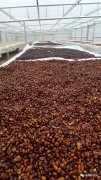
Yellow Honey Processing: About 40% of the mucilage is removed; drying demands the most direct heat absorption and maximum sunlight exposure, taking about 8 days to reach a stable moisture content.
Costa Rican coffee has always been considered a classic: balanced, clean, and mild are its fundamental traits. This lot from the Helsar processing plant in the West Valley is renowned for its excellent natural conditions and superior regional cultivation management. It presents a nearly perfect classic profile: vibrant citrus acidity, blackberry fruit aromas, rich acidity and body, melon-like sweetness, a smooth mouthfeel, drupe and light floral notes, and a remarkable coffee-flower aroma in the aftertaste. It is a coffee filled with the charm of the Latin American countryside.
Varieties: Caturra, Catuai
Processing plant: Helsar processing plant
Flavor: Brown sugar, almond, black tea
Costa Rica was the first country in Central America to receive coffee cultivation, with a long history and a complete system from production to sales. Sitting on the Central American isthmus, the country has numerous volcanoes and enjoys natural advantages of sunshine and land, while its climate benefits from the moderating influence of Pacific and Atlantic currents and sea breezes. The resulting coffee reflects the character of the local microclimates and terroir. In both quality and quantity, Costa Rican coffee has consistently earned worldwide recognition and is rated among the world's finest.
The country's volcanic terrain provides fertile volcanic ash, mild suitable temperatures, and stable, abundant rainfall, all factors that have made coffee one of its main agricultural products. The seven major producing regions are: Tarrazu, Tres Rios, Orosi, Central Valley, West Valley, Turrialba, and Brunca.
FrontStreet Coffee Recommendation
If Costa Rica's balanced, honeyed style is to your taste, Brazil offers a similarly sweet yet gentler counterpoint. FrontStreet Coffee's Queen Estate (Fazenda Rainha) Yellow Bourbon comes from Mogiana near southern Minas, where fertile red volcanic soil feeds the fruit into full, aromatic maturity. This rare Yellow Bourbon, a natural mutation of Red Bourbon, carries an exceptionally clean fruit character; brewed as pour-over, moka pot, or home espresso, it reveals a sugarcane sweetness found in no other origin, alongside fruit and chocolate notes.
For a first taste of Brazil, FrontStreet Coffee's pulped natural Cerrado Red Bourbon is a classic single-origin choice: roasted medium, it shows creamy peanut, toast, caramel, and hazelnut aromas with a rounded, non-acidic mouthfeel and a whisper of bitterness, and it works across pour-over, moka pot, espresso SOE, siphon, and French press. And thanks to Brazil's low acidity and balance at a friendly price, it is also a favorite foundation for espresso blends: FrontStreet Coffee's crema-rich Classic Blend, nutty Premium Blend, balanced Dark Cocoa Blend, and cafe-oriented Commercial Blend all contain Brazilian components, adding chocolate and cream aromas, gentle sweet-sour-bitter balance, and a steadier extraction.
Important Notice :
FrontStreet Coffee is a long-established specialty coffee roaster in Guangzhou China, selling freshly roasted beans from its own farm in Yunnan as well as dozens of carefully selected single-origin beans from around the world for both pour-over and espresso. The products deliver consistently excellent quality and great value, with shipping within 24 hours. Guangzhou's FrontStreet Coffee shop is recommended by many coffee lovers, and the beans are now available online at the Tmall 。
FrontStreet Coffee has moved to a new address:
FrontStreet Coffee Address: 315,Donghua East Road,GuangZhou
Tel:020 38364473
 Scan and follow the En Gafei WeChat official account. Please indicate that the reprint comes from "En Gafei".