Hartmann Wine Process Coffee Flavor & Aroma - Wine Process Coffee Varieties and Prices
Hartmann Hand Brew: 15g of coffee, medium grind (Fuji ghost tooth blade #4 grinder), V60 dripper, water temperature 88-89°C. First pour with 30g of water for a 27-second pre-infusion, then pour to 105g and pause. Wait until the water level in the coffee bed drops to halfway before continuing the pour. Slowly pour until reaching 225g total, discarding the tail section. Water-to-coffee ratio 1:15, extraction time 2:00.
This family-owned enterprise has a state-level cupping laboratory and sample roasting room. They meticulously cup each batch of coffee cherries, ensuring consistent quality from Hartmann Estate while continuously seeking improvement. Their scientific approach to coffee, combined with nearly 100 years of family experience, guarantees their exceptional output.
A legendary estate with state-level cupping laboratories and sample roasting rooms, where a rigorous attitude and strict standards keep Hartmann Estate's coffee consistently excellent.
This batch is red-wine-processed Caturra. From the moment it is ground, it releases an extremely intense fruit-wine aroma, accompanied by fresh smoked-wood spice notes. Combined with the special berry sweetness and fragrance of natural processing, its aroma alone is intoxicating. On the palate it reveals rich tropical fruit, like a cocktail meticulously blended from passion fruit, mango, orange, and various berry juices with peach wine. No, this is a cocktail from nature itself.
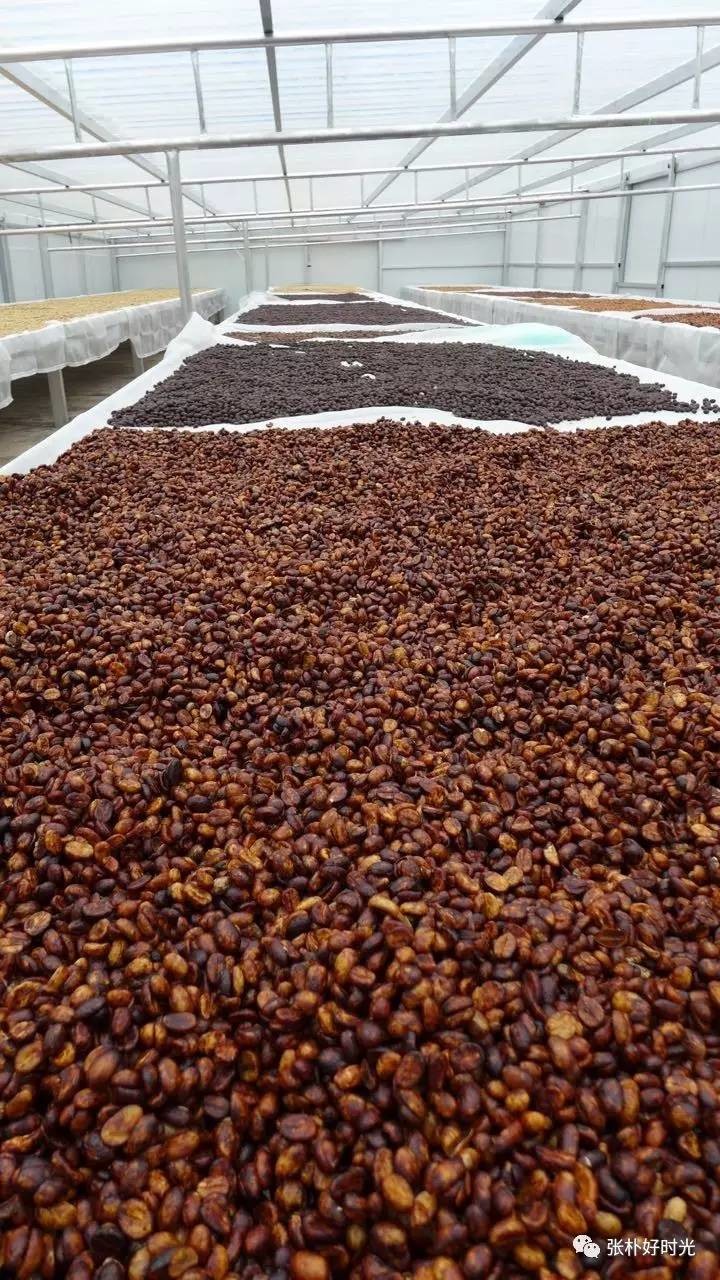
Among all coffee-growing regions on Earth, very few have successfully experimented with red-wine-like processing methods. After years of testing, this method can finally control the acid structure in coffee. Coffee fermented this way greatly enhances sweetness, cleanliness, and a multi-layered, complex yet elegant acidity, and the fermentation significantly improves the quality and uniqueness of the coffee output.
The red wine processing method is also called controlled fermentation, or the lactic acid / acetic acid fermentation method.
The experimental team is led by the American Felipe Sardi and consists of biological scientists and ecologists who apply technologies such as solar energy to cultivation and green bean processing.
Specialized hand-picking teams are trained to strictly follow specialty coffee bean picking requirements: unripe cherries under 2%, defective beans under 3%, and floaters under 5%.
Acetic Acid Fermentation Method: Aerobic Fermentation
Lactic Acid Fermentation Method: Anaerobic Fermentation
Flavor Expectations:
Acetic acid fermentation: cleaner, vibrant acidity, brighter acid quality, citric acid.
Lactic acid fermentation: rounder mouthfeel, slightly less clean than acetic fermentation, higher body, malic acid / tartaric acid.
Previously, processing plants used traditional manual methods passed down through generations, such as biting beans to feel the fermentation degree. That method is uncontrollable and variable.
The controlled fermentation method uses pH control to monitor the fermentation degree, achieving predictable results and consistent output for every batch.
Caturra is a single-gene variant of Bourbon, discovered in Brazil in 1937. Both its yield and its disease resistance are superior to Bourbon's, and the plant is shorter, making it easier to harvest. Unfortunately, like Bourbon, it suffers from biennial production cycles. It is, however, highly adaptable, needs no shade trees, and thrives in direct sunlight, which is why it is called Sun Coffee. It tolerates high-density planting but requires more fertilizer, raising costs, so farmer acceptance was initially low.
When coffee prices surged in the 1970s, however, farmers switched to Caturra to increase yields. With strong promotion from Brazilian and Colombian authorities, the results were fruitful. Farmers' acceptance of Caturra meant a major transformation in cultivation techniques, as Brazil and Colombia adopted high-yield, high-density sun cultivation. By 1990, one million hectares could harvest 14 million bags of coffee beans, a 60% increase in production. No wonder the high-yield, high-quality Caturra has become a variety that producing countries rely on.
Caturra can be cultivated from low altitudes of 700 meters up to high altitudes of 1700 meters, giving it strong altitude adaptability. The higher the altitude, the better the flavor, though the yield is correspondingly reduced, which is the destiny of specialty beans. Some academics call Caturra the intensive, sun-exposed version of Bourbon, a truly insightful description. Yellow Caturra variants, known as Caturra Amarello, also exist in Central and South America, but their reputation does not match that of Yellow Bourbon.
When lightly roasted, Caturra shows obvious acidic aroma and overall brightness, and with proper processing its sweetness can perform exceptionally well. Its body, however, is relatively low compared with Bourbon, and its mouthfeel cleanliness is somewhat lacking.
Caturra usually produces red berries, but in extremely rare regions there are yellow Caturras, such as the very few grown in Hawaii.
Coffee Information
Country: Panama
Grade: SHG
Region: Volcan Region
Altitude: 1250-1700 Meters
Processing Method: Red Wine Processing
Variety: Caturra
Estate: Hartmann Estate
Flavor Notes: Smoked wood spices, berries, fruit wine aroma
Panama Hartmann Estate Caturra Red Wine Processing
Manufacturer: FrontStreet Coffee. Ingredients: in-house roasted. Shelf life: 30 days. Net content: 227g. Packaging: bulk. Taste: neutral coffee beans. Raw/roasted degree: roasted coffee beans. Contains sugar: no sugar. Origin: Panama. Coffee type: other. Roasting degree: medium roast.
Hartmann Estate Introduction
Hartmann's story is as legendary as its coffee. Hartmann Estate is located in Chiriquí Province. Its founder was Mr. Alois St. Hartmann, known as Luis Hartmann. He was born on June 20, 1891, in the Moravia region of Austria-Hungary, now the Czech Republic, and died on May 25, 1970, at the age of 78.
After World War I began, he was abandoned as a small boy. Thanks to his mother, he managed to hide on a ship bound for Pennsylvania, in the United States, and survived. His two brothers both died in the war after joining the military. Luis Hartmann traveled through several countries with his friends until he reached Panama in 1911, settling in Chiriquí Province in 1912 and becoming mainly active in the Candelaria area. He built the first small cabin in that primeval forest.
Today's Hartmann Estate is a family enterprise founded in 1940 by Ratibor Hartmann, son of Luis Hartmann. In 1966, Ratibor married Dinorza Sandi, from Costa Rica. They had five children: Ratibor Jr., Allan, Alexander, Alicia, and Kelly. Each family member takes responsibility for coffee growing management, harvesting and processing, and estate tours. A family estate that has been growing coffee for more than 100 years is itself a legendary story.
FrontStreet Coffee Recommendation
For pour-over brewing, one dripper comes up again and again: the V60. When an experienced coffee person recommends something practical, easy to master, and good-looking, the V60 is usually the answer.
Hario, the company behind the V60, was founded in Tokyo in 1921 and is a well-known Japanese glassware maker that originally designed and produced heat-resistant glass instruments for research institutions; its heat-resistant glass server is a popular companion to pour-over setups. In 2004, Hario redesigned the V60 prototype, bringing its shape closer to the form we know today and naming it for its distinctive 60-degree cone and V shape. It went on sale a year later.
Compared with other drippers, the conical 60-degree design forces water to flow to the center before dripping into the server, lengthening the contact between water and coffee grounds so aroma and flavor can be fully extracted. The V60 has a single large hole that lets water flow freely, so the flow rate depends largely on the brewer's control, which shows directly in the cup.
FrontStreet Coffee favors the resin version of the Hario V60. Resin effectively blocks heat loss, and in standard industrial production it is the easiest material to shape with the smallest tolerances. Several FrontStreet coffees are especially well suited to the V60, including the Yirgacheffe Gedingding and Ethiopia Huakui for their bright floral and tropical-fruit character, the Strawberry Candy for its Geisha-like profile, and the Mozart for its raisin sweetness.
From FrontStreet's pour-over single-origin lineup, the Ethiopia Yirgacheffe Gedingding is a classic first step into specialty coffee, with vivid citrus, berry, and floral notes and a green-tea sweetness; its acidity is soft and bright rather than sharp. The Ethiopia Huakui stands out for its intense tropical-fruit aroma, with strawberry, passion fruit, jackfruit, and even lychee, plus a sweet, low-bitterness, juice-like body. The Panama Emerald Estate Red Label Geisha is elegant and transparent, with jasmine florals, citrus, bergamot, and black-tea finesse. The Kenya Little Tomato, from the Sica region at 1,550-1,750 meters and made from SL28 and SL34 with Kenya's signature 72-hour double washed fermentation, brings cherry-tomato, smoked-plum, pear, and black plum flavors with a clean, long finish. Rounding out the lineup are the PWN Indonesian Golden Mandheling and the Brazil Queen Estate for fuller, low-acid cups, the Jamaica Blue Mountain No. 1 for its creamy, caramel, chocolate, and nut balance, the 2013 Yunnan Sun-Dried Typica for a clean citrus-and-caramel profile at a very reasonable price, and the Papua New Guinea Bird of Paradise, grown at 1,600 to 1,800 meters on volcanic soil as an AA-grade Typica with a triple-washed process.
Important Notice :
FrontStreet Coffee is a long-established specialty coffee roaster in Guangzhou China, selling freshly roasted beans from its own farm in Yunnan as well as dozens of carefully selected single-origin beans from around the world for both pour-over and espresso. The products deliver consistently excellent quality and great value, with shipping within 24 hours. Guangzhou's FrontStreet Coffee shop is recommended by many coffee lovers, and the beans are now available online at the Tmall 。
FrontStreet Coffee has moved to a new address:
FrontStreet Coffee Address: 315,Donghua East Road,GuangZhou
Tel:020 38364473
 Scan and follow the En Gafei WeChat official account. Please indicate that the reprint comes from "En Gafei".