How to Properly Enjoy Costa Rica Honey-Processed Geisha Coffee & Price Guide
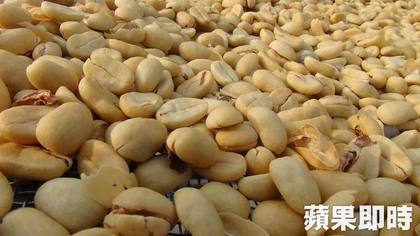
Variety: Geisha
Processing Plant: Otis Granite Processing Plant
Flavor: Floral tea, rosehip, green grape flavors
Costa Rica's Miel processing method, also known as the honey method, is unique. We recently got hold of this Costa Rican red honey-processed bean, and only then began to explore Costa Rica's distinctive Miel process.
Hand-poured yellow honey: 15g of coffee, medium-fine grind (Fuji ghost-tooth blade setting 3.5), V60 dripper, water temperature 91-93C, first pour of 30g of water, steam for 27 seconds, pour to 105g and stop, wait until the water level in the coffee bed drops to halfway before pouring again, slowly pouring until 225g, discard the tail section, water-to-coffee ratio 1:15, extraction time 2:00.
Introduction to Otis Granite Estate
Otis Granite Processing Plant in Costa Rica is an emerging estate. The family cooperative was founded in 1994, but it was not until 2005 that the family established its own processing plant, which now has a 17-year history. Otis Granite Processing Plant lies about 5km north of San Marcos Town in Tarrazu, and it supports ten coffee estates, including Yano Estate, spread across mountain slopes at altitudes from 1500 to 2000 meters. All are classified as SHB (Strictly Hard Bean), the highest grade.
Otis 2000m Estate Geisha - Golden Honey processing
Flavor: The dry aroma features a delicate spring-tea fragrance mixed with hints of orange peel and chocolate; floral tea, rosehip, and green grape flavors emerge gradually as the temperature changes, alongside the juicy sweetness of lemon and peach, with orange-strip chocolate in the aftertaste.
Factory Name: Coffee Workshop
Shelf Life: 90 days
Net Content: 100g
Packaging Method: Bulk coffee beans
Raw/Roasted Degree: Roasted coffee beans
Contains Sugar: Sugar-free
Origin: Costa Rica
Roast Level: Light roast
Mention Geisha beans and many people are captivated by their wonderful floral aroma and rich fruit acidity. In 2015 there was another surge of Panama Geisha fever, which led many to believe mistakenly that Geisha is a variety exclusive to Panama. It is not: Geisha was first discovered in Ethiopia in 1931, and after a series of transplantations and cultivation it found a home in other countries and regions.
Costa Rican Geisha has more body than Panamanian Geisha. If Panamanian Geisha is a fresh, light style, then Costa Rican Geisha is the more reserved style.
Costa Rica lies on the Central American isthmus at 10 degrees N latitude and 84 degrees W longitude. It borders the Caribbean Sea to the east and the North Pacific Ocean to the west. Costa Rica sits on the low-latitude volcanic belt of Central America, with the Central Plateau and mountain regions at altitudes of approximately 800-2000 meters, suited to coffee. Costa Rican coffee has always been famous for its extremely balanced, clean, bright flavors with berry-like fruit acidity, and excellent Costa Rican coffee shows spice and cocoa in the aftertaste. The country's most famous growing region is Tarrazu, near the capital San Jose. Tarrazu has the highest average altitude plus excellent climate and soil, making it the most famous and generally recognized as the best coffee region in Costa Rica. Tres Rios is a famous sub-region within Tarrazu. The most renowned Costa Rican single-estate coffee in the specialty world is La Minita Estate in the Tarrazu region, with an annual production of only 160,000 pounds.
Costa Rica Tarrazu Honey Geisha
Country: Costa Rica
Grade: SHB
Region: Tarrazu
Roast Level: Light roast
Processing Method: Honey processing
Honey Processing Method
After the pulp and fruit flesh are removed, the coffee beans are dried with their mucilage still on. The key to telling different honey methods apart lies in that remaining mucilage: how much is kept, how long the beans dry, and how they are dried.
Characteristics of the Honey Processing Method
At harvest the sugar content is tested first, and only cherries with a sugar content between 21-22% are picked. Honey processing differs from other methods in that it requires drying on African beds. Dried directly on a concrete floor or on the ground, the beans are easily scratched during turning, which invites bacterial infection, and direct ground drying can also give the coffee an earthy flavor.
Taste Differences Between Honey Processing and Washed Processing
Compared with washed processing, honey processing brings higher sweetness and higher sugar content with relatively more body, under the same roast level.
Beans processed with the honey method need good ventilation while drying; otherwise the retained mucilage can easily ferment or mold and cause off-flavors.
The honey methods we commonly see include yellow honey, red honey, and black honey.
FrontStreet Coffee Recommendation
Geisha, translated from the English "Geisha," is one of the most popular Arabica varieties. It won over countless coffee lovers with its unique floral aroma and superb sweet-and-sour character, and because it yields little, resists disease poorly, and demands careful cultivation, its price keeps climbing. If you want a Geisha that is good without being expensive, start by understanding the types and how they compare.
Panama is where Geisha made its name and Ethiopia is where it originated, so every coffee lover should know both. In Panama, high altitude, microclimate, and soil produced a deeply alluring cup. In 2003 the owner of Emerald Estate discovered it and entered it in the Best of Panama (BOP) competition, where its unique flavor stunned every judge and it took first place with an average cupping score of 94.6, breaking the BOP record. Overnight, Geisha became the champion variety the whole world chased. FrontStreet Coffee's highest grades, the Emerald Red Label and Emerald Green Label Geisha, show off that orange-blossom honey character when brewed pour-over, with fragrant florals, rich juicy fruit acidity, and a tea-like sweetness in the finish.
Emerald Estate's Geisha line is divided into Red Label and Green Label. FrontStreet's Red Label Geisha is officially called "Esmeralda Special"; it grows at 1600-1800 meters, and every batch must cup above 90 points. Each batch carries its own number and comes from a single small plot, for example FrontStreet's Red Label Geisha is from the Jaramillo plot, so buyers can choose the batch that suits their taste. FrontStreet's Green Label Geisha was originally named "Private Collection." Because its brand label has a green background it is commonly called Green Label. Unlike Red Label, it does not stress detailed plot information; instead it blends batches from several plots to express the signature Geisha flavor of Emerald Estate's high altitudes. Think of it as a Geisha lot without plot separation, and because it is more affordable, FrontStreet's Emerald Green Label is excellent value.
Panama Geisha shows a distinct orange-blossom honey character, its fragrant florals carrying rich, juicy fruit sweetness with a tea-like, sweet finish. To taste these refined flavors, buy the top grades, FrontStreet's Emerald Red Label Geisha and Emerald Green Label Geisha; brewed pour-over they release an intoxicating aroma.
In recent years people have gone back to coffee's homeland, Ethiopia, to seek the original taste of Geisha. A couple built the Geisha Village estate 12 miles from the Geisha forest, covering 475 hectares, and identified the varieties closest to Panamanian Geisha by plant form, bean shape, and cupping performance, in other words the heirloom Geisha. They brought it out of the forest to plant on the estate, hoping to produce higher-quality coffee. Ethiopia's Geisha carries a brighter fruit-acid character than Panama's. For newcomers, FrontStreet's Grana Estate Geisha is a good entry point: given a medium-light roast, it keeps a pleasant white florality while highlighting the sweet-sour qualities of orange, guava, and citrus, and it sharpens the finish as well. For a challenge at estate level, try FrontStreet's Geisha Village Gold Label and Red Label. Unlike the small-lot harvesting and processing of other origins, Geisha Village is one of Ethiopia's rare large estates. Sitting beside the original Geisha forest, with strict quality control and standardized management, it produces even finer Geisha coffee, a pour-over single origin that advancing drinkers should buy.
Geisha is a medium-light roasted floral-fruity type with a fairly hard texture, so when brewing it sinks easily and can clog the drain hole. FrontStreet suggests a grind of Chinese standard No. 20 sieve passing rate of 78% (roughly fine granulated sugar), with a brewing water temperature of 91C.
For pour-over Geisha, FrontStreet uses 15g of coffee with a small Hario V60 dripper and a 1:16 coffee-to-water ratio. Once everything is ready, use a three-stage pour: start the timer, pour to 30g of water, and bloom for 30s; then begin a second stage with a small stream, circling to 125g, wait until the water in the coffee bed drops halfway before pouring again, then continue with a small circling stream to 225g, and when it has fully drained the total extraction time is about 2:10-2:20.
Beyond pour-over, Geisha can also be made as an SOE. Using a single-origin bean for espresso is about hoping pressure extraction will also yield richer flavor, since dark-roasted beans often offer only a monotonous heaviness and lose the lively flavors that surprise you. So for Geisha SOE, start with the medium-roasted FrontStreet Grana Estate Geisha SOE: an Ethiopian premium single origin, medium roasted, it keeps Geisha's floral-fruity character and the sweet aroma of ripe dried fruit, plus the white flowers and lemon-like bright acidity of Ethiopian coffee, and extracted as espresso it turns into dried apricot, caramel, and nuts.
Before extracting, draft a recipe and then adjust by its parameters. FrontStreet's recipe here is 20g of coffee, a 1:2 coffee-to-liquid ratio, a 25-second extraction, and 40g of espresso. For a Geisha SOE americano, add 200g of hot water at 1:5, and it drinks with orange, nut, and blueberry notes. For a Geisha SOE latte, add 200g of milk, and it enters the mouth with the silky texture of cream cookies.
To meet more fans' wishes, FrontStreet also offers an affordable stand-in, FrontStreet Strawberry Candy, blending a Costa Rican honey process with a Panamanian Geisha so the coffee has both delicate florals and sweet fruit. It works for pour-over, moka pot, and espresso machine, and it also makes a refreshing cold brew.
Making Geisha cold brew is simple: prepare 30g of FrontStreet Strawberry Candy beans, ground like fine granulated sugar at EK43s setting 9, which corresponds to setting 24 on a C40 hand grinder. Put the grounds into a clean container, add 360g of room-temperature drinking water at a 1:12 ratio, stir well, seal with plastic wrap, and refrigerate. After 8 hours, take it out and filter out all the grounds with filter paper, then seal the coffee liquid and return it to the fridge to mature for 3 hours, and the Geisha cold brew is ready. It drinks with the flavors of grape juice, rose, sweet orange, and fruit wine.
Important Notice :
FrontStreet Coffee is a long-established specialty coffee roaster in Guangzhou China, selling freshly roasted beans from its own farm in Yunnan as well as dozens of carefully selected single-origin beans from around the world for both pour-over and espresso. The products deliver consistently excellent quality and great value, with shipping within 24 hours. Guangzhou's FrontStreet Coffee shop is recommended by many coffee lovers, and the beans are now available online at the Tmall 。
FrontStreet Coffee has moved to a new address:
FrontStreet Coffee Address: 315,Donghua East Road,GuangZhou
Tel:020 38364473
 Scan and follow the En Gafei WeChat official account. Please indicate that the reprint comes from "En Gafei".