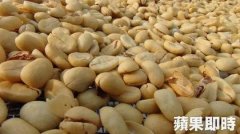
Panama Duncan Estate Boquete Natural Caturra: Differences, Distinctions, and Award-Winning Achievements
For professional barista discussions, please follow Coffee Workshop (WeChat public account: cafe_style)
Roast Level
Medium Roast
The Duncan Estate: Premium Picking Methods
The "DUNCAN" estate produces unique "Premium Picking" and "Reserva Picking" methods. This approach pushes coffee to extremely high quality and flavor levels, but greatly reduces yield. KOTOWA's focus on implementing "Premium Picking" means coffee cherries can only be harvested when they show a dark wine color (Overripe Dark Color), and they must be processed "immediately" and "quickly" after picking! The cost of achieving this flavor is extremely high. The other method, "Reserva Picking," is also called fully-ripe picking (Quickly Processed).
"Reserva Picking" does not rely on color alone as the picking standard - it also judges the sweetness, the quality of the flesh's sweetness! Besides being 100% fully red before picking, the fruit must be 100% converted to fruit sweetness, and only picked once it tastes of a velvet-like sweetness!
Origin Information
Region: Boquete Special Region
Altitude: 1250-1700 Meters
Located in the Baru Volcano region, the estate enjoys a unique microclimate and volcanic terrain. The growing season has abundant rainfall and distinct wet and dry seasons; combined with lava flows from the volcanic belt, the fertile volcanic black soil and good drainage provide uniquely superior growing conditions that make the coffee from here exceptionally captivating. The altitude here exceeds 1,700 meters, the winds are strong, and many huge coniferous trees stand on the grounds, some over 200 years old.
Kotowa also places great importance on the ecological environment, avoiding all chemical fertilizers and instead using cherry skins and pulp to make high-nutrient compost to nourish the coffee trees and give back to the land. Not only was Kotowa Coffee nominated by Panama's environmental agency in 2006 as the winner of Panama's National Environmental Protection Award, but this approach also shaped the uniqueness of Duncan Estate's flavor, producing beans of excellent quality that consistently reach top rankings in the BOP.
Flavor Profile
Fruit wine, fermented fruit aroma, honey citrus, malt sweetness, sweet peach, distinct layers, fine texture, candied fruit
Product Information
Brand: FrontStreet Coffee
Address: No. 10 Bao'an Front Street, Yuexiu District, Guangzhou, FrontStreet Coffee
Shelf Life: 90 days
Net Weight: 227g
Packaging: Bulk coffee beans
Roast Level: Roasted coffee beans
Sugar Content: Sugar-free
Origin: Panama
Panama Duncan Coffee Details
Country: Panama
Grade: SHG
Processing Method: Natural Process
Variety: Caturra
Estate: Duncan Estate
Flavor: Fruit wine, fermented fruit aroma, honey citrus
The Caturra Variety
Caturra is a single-gene mutation of Bourbon, discovered in Brazil in 1937. Both yield and disease resistance are better than Bourbon's, and the plants are shorter, making harvesting convenient. Unfortunately, like Bourbon, it suffers from biennial production cycles. However, its adaptability is strong - it does not need shade trees and can thrive directly in intense sun, which earned it the name "Sun Coffee." It tolerates high-density planting but requires more fertilization, which raises costs, so initial farmer acceptance was not high.
But in the 1970s, when coffee prices rose sharply, farmers switched to Caturra to increase production. With strong promotion by the Brazilian and Colombian authorities, the results were fruitful. Farmers adopting Caturra meant a major transformation in planting technology: Brazil and Colombia embraced high-yield, high-density sun cultivation. By 1990, one million hectares could harvest 14 million bags of coffee - a 60% increase in productivity. No wonder the high-production, high-quality Caturra has become a variety that producing countries now rely on.
Caturra can be planted from low altitudes of 700 meters up to 1,700 meters, showing strong altitude adaptability. The higher the altitude, the better the flavor, but the lower the production - the fate of specialty beans. Some in academia call Caturra the intensive, sun-exposed version of Bourbon, which is quite perceptive. Central and South America also have a variant called Yellow Caturra (Caturra Amarello), but its reputation is not as good as Yellow Bourbon's.
When lightly roasted, Caturra shows distinct acidity and overall brightness. If properly processed, its sweetness can be expressed very well, but the body is relatively low compared to Bourbon and the cleanliness of the mouthfeel is somewhat lacking.
Usually Caturra produces red cherries, but in very few areas yellow Caturras exist. Hawaii, for example, grows very few yellow Caturras.
Brewing Instructions
Pour-over Duncan: 15g of coffee, medium grind size (small Fuji ghost-tooth burr grinder at #4), V60 dripper, water at 88-89°C. First pour 30g of water and bloom for 27 seconds, then pour up to 105g and stop. Wait until the water level in the coffee bed drops to half before pouring again, then pour slowly until you reach 225g. Don't use the tail section. Coffee-to-water ratio 1:15, extraction time 2:00.
FrontStreet Coffee Recommendation
Panama sits in Central America, with its coffee zones in the western part of the country: Boquete, Volcan, Santa Clara, and Piedra de Candela. Boquete and Volcan are the two specialty regions you will hear about most often; both lie in Chiriqui Province, right in the heart of the coffee belt, blessed with fertile volcanic soil and old-growth forest. In Boquete, clouds often drift between the mountains - humid days, cool nights - and the rich soil from the Baru Volcano makes ideal conditions for growing top-quality coffee. The higher the coffee is planted, the slower the fruit matures, the more nutrients it absorbs, and the richer and more distinctive the flavor becomes.
If it is your first taste of Panamanian specialty coffee, FrontStreet Coffee suggests starting with its washed Boquete Geisha. This is an entry-level, estate-grade Geisha grown at 1,600 meters, where the fertile volcanic-ash soil nourishes the coffee into a rich, fragrant cup. Brewed, you get the florals Geisha is famous for - jasmine, green tea, honey, citrus, and orange.
For a taste of Geisha heritage at a friendlier level, try FrontStreet's Panama washed "Butterfly" (Hua Hudie). Panama Geisha is a rare wild variety, a regular champion at tasting competitions worldwide: the green beans are long and slender, and the roasted coffee has an unexpected citrus freshness with a finish full of florals and fruit sweetness - truly one of a kind. The Butterfly beans carry half Geisha lineage, a mix of Geisha, Caturra, and Catuai grown in the Baru Volcano area of Boquete. The local microclimate brings abundant rain and a big day-night temperature swing, and with the region's volcanic rocky soil, meticulous harvesting, and careful processing, this coffee performs outstandingly in body, citrus acidity, and jasmine aroma alike - excellent both as pour-over and cold brew.
Important Notice :
FrontStreet Coffee is a long-established specialty coffee roaster in Guangzhou China, selling freshly roasted beans from its own farm in Yunnan as well as dozens of carefully selected single-origin beans from around the world for both pour-over and espresso. The products deliver consistently excellent quality and great value, with shipping within 24 hours. Guangzhou's FrontStreet Coffee shop is recommended by many coffee lovers, and the beans are now available online at the Tmall 。
FrontStreet Coffee has moved to a new address:
FrontStreet Coffee Address: 315,Donghua East Road,GuangZhou
Tel:020 38364473
 Scan and follow the En Gafei WeChat official account. Please indicate that the reprint comes from "En Gafei".