Kenya Thirikiri Region TOP Peaberry PB Specialty Coffee Beans: Grade Characteristics, Flavor Profile, and Classification
Professional Barista Exchange
Follow Coffee Workshop (WeChat official account: cafe_style)
Many people know Kenya AA as the most common Kenyan coffee label in China. AA is in fact a grade of Kenyan coffee. Below it sits AB, and above it are AA+ and AA TOP, the premium grade. If beans are marked only as AA, it generally means the coffee is uniformly AA grade with no specific farm or cooperative information, and the flavor may not be the best; it shows only that the bean shape meets the standard and looks good. If, on the other hand, the label names a particular farm, cooperative or even purchaser, then the coffee, whether AA or AB, is worth trying.
Introduction to PB (Peaberry)
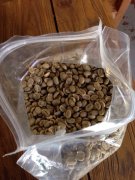
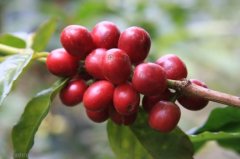
PB stands for Peaberry, which we often call a round bean. Normally a coffee fruit contains two seeds, the familiar beans we see with one curved side and one flat side, similar in shape to a peanut, which we call flat beans. A round bean occurs when a coffee fruit contains only a single seed. The shape is oval, and such beans make up a very small proportion of the fruit on any coffee tree. Round beans are all selected by hand, one by one, which ensures their overall quality, so it is no surprise that they taste good.
Pour-over Kenya Brewing Method
15g coffee powder, medium-fine grind (a Fuji ghost-tooth grinder at the 3.5 setting), V60 dripper, water temperature 91-93°C. First pour 30g of water and let it bloom for 27 seconds. Pour to 105g and stop. When the water level in the coffee bed drops to half, pour again slowly until you reach 225g. Avoid the tail end. The water-to-coffee ratio is 1:15, and the extraction time is 2:00.
Product Information
Manufacturer: Coffee Workshop
Address: No. 10 Bao'an Front Street, Yuexiu District, Guangzhou, FrontStreet Coffee
Contact: 020-38364473
Shelf life: 90 days
Net weight: 227g
Packaging: Bulk coffee beans
Roast level: Light roast
Sugar content: Sugar-free
Origin: Kenya
Roast degree: Light roast
Kenya Nyeri Gaturiri Peaberry
Country: Kenya
Grade: TOP PB
Region: Nyeri
Roast level: Light roast
Processing method: Washed
Varieties: SL 28, SL 34
Processing station: Chakuni Processing Station
Flavor notes: Dark plum, green grapes, cherry tomatoes
Kenya Nyeri Thagrini Peaberry Farm Introduction
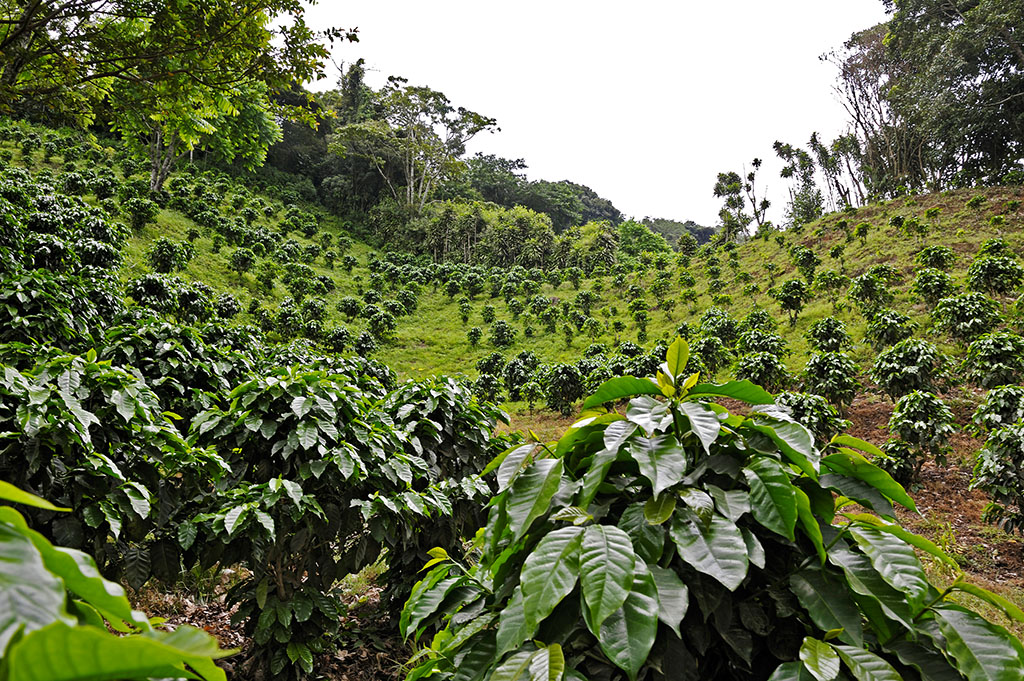
Kenya, in East Africa, is one of the major coffee-producing countries. Roughly 6 million people nationwide work in the coffee industry, mostly through a combination of small farmers and cooperatives. Kenya's coffee trees are mostly grown at altitudes of 1400-2000 meters, with growing regions including Ruiri, Thika, Kirinyaga, Mt. Kenya West, Nyeri, Kiambu and Muranga. The main areas are the foothills of Mt. Kenya and the Aberdare range. Many regions in Kenya strive to preserve native forest ecosystems, protect natural gene banks, support the reproduction of wild coffee varieties and nurture a diversity of coffee trees.
In the early 20th century, French and British missionaries and researchers selected and cultivated Bourbon varieties in Kenya. Over the past century these have adapted to Kenya's high-phosphorus soil, nurturing the distinctive acidic fragrance of Kenyan beans, which differs from that of Central and South American Bourbon. This Kenyan native variety was created in 1930 by Scott Laboratories and is abbreviated SL. Agronomists set out to find a Bourbon variety that resisted disease and pests while yielding well. Through their experiments they obtained SL28. SL28 is a genetic variant with a mixed heritage drawn from French missionaries, Mocha and Yemeni Typica. The original aim in cultivating SL28 was to mass-produce coffee beans that combined high quality with disease and pest resistance. Although SL28's later yields were not as high as hoped, its copper-colored leaves and broad bean shape deliver wonderful sweetness, balance and complex, varied flavors, with pronounced citrus and dark plum characteristics. This important variety introduced the world to the unique Kenyan style: strong, rich fruit acidity, a full body and beautiful balance. Kenya AA is one of them.
SL28 is a delicious variety suited to growing in medium to high altitude areas where leaf rust is a serious problem. It can yield 1.8 tons of green beans per hectare. Only when you taste that charming plum-like acidity do you experience Kenya's national treasure.
Region Introduction
This green bean comes from the Chakuni Processing Station in Nyeri, produced by surrounding family farms. On 0.5 acres (approximately 2023 square meters) of land, about 250 coffee trees are planted. Nyeri has historically been a classic coffee-producing region in Kenya, relying on Mount Kenya and enjoying an excellent environment for coffee. Most Kenyan coffee comes from small-scale farmers, about 65%, with large farms accounting for about 35%.
Flavor Profile
Classic Kenyan flavor: rich, high body, caramel, blackcurrant, apple, pure, with a long aftertaste. Full tropical fruit and fresh citrus aroma, and a sweetness like holding mango and plum preserves in your mouth. The refreshing lime aroma that emerges at medium to low temperatures is like drinking iced fruit tea. And a very distinctive cherry tomato flavor. Full of the passionate, bold flavors characteristic of African beans.
FrontStreet Coffee Recommendation: A Kenyan Peaberry for the V60
If the cherry-tomato and blackcurrant profile described above is what you want in the cup, FrontStreet Kenya Small Tomato is the closest thing to it: a washed Kenyan from the Thika region, grown at 1550-1750 meters from SL28 and SL34, given the classic 72-hour double washed fermentation and roasted light to protect its lively acidity. Expect cherry tomato and smoked plum up front, then snow pear and black plum, with yellow sugar and a whisper of green tea in the finish. Brew it in a Hario V60, whose 60-degree cone and single large hole let you control the flow and keep the fruit clean and layered.
Important Notice :
FrontStreet Coffee is a long-established specialty coffee roaster in Guangzhou China, selling freshly roasted beans from its own farm in Yunnan as well as dozens of carefully selected single-origin beans from around the world for both pour-over and espresso. The products deliver consistently excellent quality and great value, with shipping within 24 hours. Guangzhou's FrontStreet Coffee shop is recommended by many coffee lovers, and the beans are now available online at the Tmall 。
FrontStreet Coffee has moved to a new address:
FrontStreet Coffee Address: 315,Donghua East Road,GuangZhou
Tel:020 38364473
 Scan and follow the En Gafei WeChat official account. Please indicate that the reprint comes from "En Gafei".