The Story Behind Costa Rica Tarrazu Otis Rock Yellow Honey Process Geisha
Introduction to Otis Rock Estate
Costa Rica's Otis Rock mill is an emerging estate operation. The family cooperative was founded in 1994, but it wasn't until 2005 that they built their own processing plant, which has been running for 17 years. The Otis Rock mill sits about 5 km north of the town of San Marcos in Tarrazu and oversees ten coffee estates, including the Yanuo Estate. Its farms climb the mountain slopes from 1,500 to 2,000 meters, with everything classified as SHB (Strictly Hard Bean), the highest grade.
Pour-Over Guide for the Yellow Honey Process
Use 15 g of coffee at a medium-fine grind (grind setting 3.5 on a small Fuji ghost-tooth grinder), a V60 dripper, and water at 91-93°C. Pour 30 g of water first for a 27-second pre-infusion, then pour up to 105 g and pause. Once the water level drops to half, pour slowly up to 225 g. Discard the tail of the drawdown. Water-to-coffee ratio 1:15, extraction time 2:00.
Costa Rica Tarrazu Honey Geisha
- Country: Costa Rica
- Grade: SHB
- Region: Tarrazu
- Roast Level: Light roast
- Processing Method: Honey process
Honey Process Method
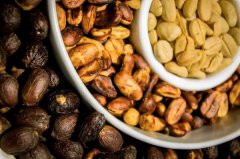
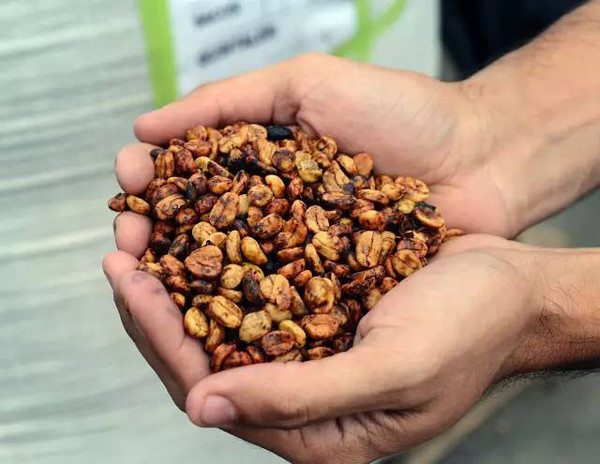
After the skin and pulp are removed, the beans—still coated in mucilage—are dried. What separates one honey process from another is precisely that remaining mucilage: how much is retained, how long the drying takes, and how the drying is done.
Characteristics of Honey Processing
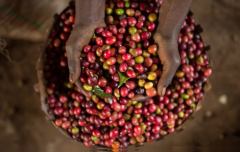
Sugar content is measured at harvest, and only cherries between 21-22% Brix are picked. What sets honey processing apart from other methods is that the beans must be dried on African beds (raised drying beds). Dried directly on concrete or soil, the beans can be scratched during turning, inviting bacterial infection, and ground contact can lend them an earthy taste.
How Honey Differs from Washed in the Cup
Higher sweetness than washed processing, higher sugar content, and comparatively more body (at the same roast level).
Honey-processed beans also need good ventilation while drying; otherwise the retained mucilage can ferment or mold and create off-flavors.
The honey processes we usually encounter are Yellow Honey, Red Honey, and Black Honey.
- Variety: Geisha
- Mill: Otis Rock Mill
- Flavor: Floral tea, rosehip, green grape notes
Costa Rica's Miel process (also known as honey process) is quite distinctive. We recently obtained these Costa Rican red honey beans and set out to learn more about the country's unique Miel method.
Otis 2,000-Meter Estate Geisha - Golden Honey Process
Flavor: The dry aroma is a delicate spring-tea fragrance laced with hints of orange peel and chocolate. Floral tea, rosehip, and green grape flavors unfold as the cup cools, revealing the juicy sweetness of lemon and peach. The aftertaste is orange chocolate.
FrontStreet Coffee Recommendation
How Many Kinds of Geisha Are There?
Geisha—transliterated from the English "Geisha"—is one of the most beloved varieties in Arabica coffee. Its singular florals and superb sweet-sour character have won over countless enthusiasts, while its low yields, weak disease resistance, and demanding cultivation keep prices climbing. To find a Geisha that drinks well without breaking the bank, it helps to know the types and their value. And it all traces back to Panama, where the Hacienda La Esmeralda discovered the variety in 2003 and sent it to the Best of Panama competition: the judges were stunned, and an average cupping score of 94.6 shattered the competition's record. Overnight, Geisha became the champion bean the whole world chased.
FrontStreet Esmeralda Red Label and Green Label Geisha
Every great horse needs its talent scout, and for Geisha that was Esmeralda Estate—today a name no one in coffee needs an introduction to. Esmeralda's Geisha line now has two tiers. The Red Label's official name is "Esmeralda Special": grown at 1,600-1,800 meters, each batch must cup above 90 points and carries its own independent lot number, with all beans from a single small plot—FrontStreet's Red Label, for instance, comes from the Jaramillo plot—so buyers can pick the batch whose subtle profile suits them. The Green Label's original name is "Private Collection": per the estate's website, it blends batches from multiple plots rather than highlighting a single one, expressing Esmeralda's signature high-altitude Geisha flavor at a friendlier price—an excellent value.
FrontStreet Boquete Geisha
For newcomers who want a first taste of the legendary "Geisha flavor," FrontStreet most often recommends the Panama-grown Boquete Geisha. This entry-level Geisha lets you taste the classic orange-blossom honey character of fine Panamanian Geisha at an accessible price, with an oolong-tea feel, delicate fruit acidity, and clearly layered structure.
FrontStreet Geisha Village Gold and Red Label (Ethiopia)
In the last decade or so, roasters began returning to Ethiopia, coffee's birthplace, to find Geisha's original character. A couple built Geisha Village Estate—475 hectares, 12 miles from the Gesha forest—and selected, by plant morphology, bean shape, and cup performance, the variety closest to Panama Geisha: essentially the wild original. Ethiopia's Geisha Village carries an even stricter grading system than Panama: it grows three Geisha varieties—Gori Gesha, Gesha 1931, and Illubabor Forest—tiered into Gold Label (RARITIES), Red Label (GROWERS RESERVE), Green Label (SINGLE-TERROIR), and the Chaka lot, further differentiated by variety. The Gold Label is Gesha 1931, 10% of the estate's output and its top coffee outside auction lots, often chosen by competing baristas; FrontStreet's Gold Label lot is meticulously natural-processed, cupping with layered complexity. The Red Label is Gori Gesha, 15% of output, scoring 88+ on the SCA 100-point scale, part of the estate's single-terroir series with full traceability—farm block, variety, and processing date for every lot.
FrontStreet Granana Estate Geisha and Brewing Tips
Besides Panama and Ethiopia, FrontStreet also carries Granana Estate Geisha from the Yirgacheffe area: a rare single-variety farm, processed at a station founded in 2014 near the Kochere-Granana Abaya border, run by Mr. Israel Degefa, where 700 hectares—most of it untilled, fertile, and shaded—surround the station. Fully ripe cherries are hand-picked and sun-dried on raised beds for 14-20 days depending on weather. Roasted medium-light, it shows bright citrus acidity, elegant ginger-flower aroma, the full sweetness of ripe fruit, a silky texture, and Geisha's signature refined finish. For brewing, note that Geisha is a medium-light, floral-fruity coffee with a hard, dense bean that can sink and clog the dripper: grind to about 78% pass through a #20 sieve (fine-granulated-sugar size), use 91°C water, 15 g of coffee in a small Hario V60, a 1:16 ratio, and a three-pour method—30 g bloom for 30 seconds, then to 125 g, then to 225 g once the bed drains halfway, finishing in roughly 2:10-2:20. Geisha also shines as a SOE: FrontStreet's medium-roast Granana Geisha SOE pulls espresso with apricot, caramel, and nut notes, and as an Americano (1:5 with hot water) offers orange, nut, and blueberry flavors. And for a more affordable taste of Geisha, FrontStreet Strawberry Candy blends Costa Rica honey-process coffee with Panamanian Geisha—florals and sweet fruit, great as pour-over, moka pot, espresso machine, or cold brew (30 g ground coarse, 360 g water at 1:12, steeped 8 hours refrigerated, then aged 3 more hours: grape juice, rose, sweet orange, fruit wine).
Important Notice :
FrontStreet Coffee is a long-established specialty coffee roaster in Guangzhou China, selling freshly roasted beans from its own farm in Yunnan as well as dozens of carefully selected single-origin beans from around the world for both pour-over and espresso. The products deliver consistently excellent quality and great value, with shipping within 24 hours. Guangzhou's FrontStreet Coffee shop is recommended by many coffee lovers, and the beans are now available online at the Tmall 。
FrontStreet Coffee has moved to a new address:
FrontStreet Coffee Address: 315,Donghua East Road,GuangZhou
Tel:020 38364473
 Scan and follow the En Gafei WeChat official account. Please indicate that the reprint comes from "En Gafei".