Honey Processed Ammani Estate Specialty Coffee Beans: Growing Conditions, Geography, Climate, and Altitude in West Java, Indonesia
Coffee Details
Varieties: Jember, S-795
Altitude: 1,400-1,600 meters
Flavor Profile: Fruity, with plum and jackfruit notes and a sweet, clean aftertaste
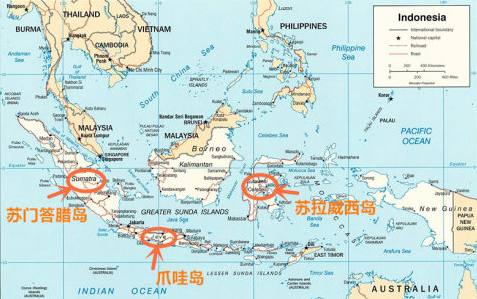
West Java, Indonesia
West Java is a first-level administrative province of Indonesia, occupying the western end of Java Island. It faces the Java Sea to the north and the Indian Ocean to the south, and its territory includes several offshore islands, covering some 46,300 square kilometers. The island has a tropical rainforest climate—hot and humid all year round. Temperatures are highest on the northern coastal plains and drop considerably in the mountainous interior, where the constant humidity can make the air feel heavy and enervating.
The northwest monsoon runs from November to March, bringing clouds and heavy rain; the southeast monsoon from April to October brings sunnier, drier weather. Jakarta averages about 1,760 millimeters (69 inches) of rain a year, with daily highs around 30°C (86°F) and lows around 23°C (74°F). In the inland highlands at Tosari, 1,735 meters (5,692 feet) above sea level, average temperatures range from 8-22°C (47-72°F). Java's soils are remarkably fertile, thanks to the volcanic ash that periodically replenishes the land.
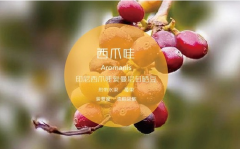
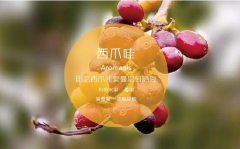
Aromanis is a traditional Indonesian sweet made from little more than flour and sugar. The producers gave this coffee the same name because the beans have a cotton-candy-like sweetness. They come from Ciwidey Garut in West Java. What matters is not any special seed variety but the processing: fully natural sun-drying gives the coffee its distinctive character. This style is still not widely known even within West Java.
After picking, the beans are separated from the fruit, rinsed, and laid out to dry immediately. They are turned every hour around the clock to ensure even drying—even at midnight. "Turning them at night is essential because of the high humidity," explained Arief of Transformed Coffee (August 5, 2014), speaking in the original Indonesian.
The whole process takes 25-26 days, which is why Aromanis beans command a higher price than ordinary coffee. The Coffee Farmers Cooperative sells green Aromanis beans for 130,000-150,000 rupiah per kilogram, while Transformed Coffee retails them at 80,000 rupiah per 200-gram bag.
West Java Honey Processing
In cupping, the West Java Aromanis honey-processed coffee has scored as high as 92 points. The name Aromanis means "sweet mango" in Indonesian.
Region: Mount Tangkuban Perahu, Indonesia
Altitude: 1,400-1,600 meters
Roast Level: Light
Processing Method: Honey process
Taste Description: Intense fruity aroma with plum and jackfruit flavors and a clean, sweet finish.
Flavor: Complex floral notes up front, followed by tropical fruit reminiscent of mango and jackfruit, a smooth and full-bodied mouthfeel, and a long, sweet aftertaste.
The Estate at a Glance
Country: Indonesia
Estate: Aromanis
Region: Mount Tangkuban Perahu
Roast Level: Light roast
Processing Method: Honey process
About Honey Process
Honey processing—sometimes called Miel Process—produces what the trade calls honey coffee. Estates in Costa Rica, Panama, and Guatemala pioneered the method. In essence, the beans are dried with their mucilage still intact. Once the outer pulp is removed, a sticky, gelatinous layer remains on the parchment. Traditional washed processing rinses this layer away with clean water, but in high-altitude regions where water is scarce, producers developed this direct sun-drying approach instead.
Honey processing is demanding: it is complex, time-consuming, and easy to get wrong. The first step is to select only sound, ripe cherries and depulp them while leaving the mucilage-covered parchment untouched—that mucilage is the heart of the method, rich in sugars and acids that slowly work their way into the bean during drying. The second step, drying, is the single most important factor in quality, and it must be managed carefully to avoid over-fermentation.
The reward is a cup that keeps the cleanliness of a washed coffee while gaining sweetness and caramel notes, even if some brightness is sacrificed. Depending on how much mucilage is left on and how the drying is managed, honey coffees are graded as yellow, red, or black honey. The great advantage of the method is that it preserves the natural sweetness of fully ripe cherries, giving the cup delicate brown-sugar and nut sweetness, with berry notes lending a winey undertone—a genuinely elegant style of coffee.
FrontStreet Coffee Recommendation
If this West Java honey-process lot has sparked your interest in Indonesian coffee, FrontStreet Coffee's Indonesian lineup is the natural next step. Indonesia's best growing regions sit on Java, Sumatra, and Sulawesi, and Sumatra's Mandheling is the classic the island is famous for: a moderate acidity paired with a deep, heavy aroma that very few origins can match.
FrontStreet's wet-hulled Mandheling comes from the Lake Toba area of the Lintong region. Because wet-hulled (giling basah) coffee is hulled while still half-dry, the green beans dry fully exposed to the air, which is exactly where Mandheling's signature herbal and spice notes come from. FrontStreet roasts it medium-dark to showcase the classic profile: low acidity, a full syrupy body, and rich aromas of caramel, dark chocolate, and toasted bread, with a long sweet finish. It is an excellent choice for anyone who loves a bold, heavy cup.
- FrontStreet Mandheling: wet-hulled Sumatra Arabica from the Lake Toba area, medium-dark roast, low acidity with caramel, dark chocolate, and toasted-bread notes—drink it black to appreciate the body.
- FrontStreet PWN Golden Mandheling: the flagship top-grade lot, triple-screened by machine and hand-sorted for density, size, shape, and color, yielding a clean, mellow, layered cup with sandalwood, herb, spice, roasted hazelnut, caramel, and dark chocolate notes—great for daily drinking or as a gift.
- Brewing tip: if you prefer honey-process style cleanliness alongside Indonesian weight, ask FrontStreet for their current light-roast Indonesian single origin and brew it as a pour-over at a medium grind size.
Important Notice :
FrontStreet Coffee is a long-established specialty coffee roaster in Guangzhou China, selling freshly roasted beans from its own farm in Yunnan as well as dozens of carefully selected single-origin beans from around the world for both pour-over and espresso. The products deliver consistently excellent quality and great value, with shipping within 24 hours. Guangzhou's FrontStreet Coffee shop is recommended by many coffee lovers, and the beans are now available online at the Tmall 。
FrontStreet Coffee has moved to a new address:
FrontStreet Coffee Address: 315,Donghua East Road,GuangZhou
Tel:020 38364473
 Scan and follow the En Gafei WeChat official account. Please indicate that the reprint comes from "En Gafei".