Origin, Development, History, and Culture of Premium Aromanis Estate Coffee Beans from West Java, Indonesia with Honey Processing
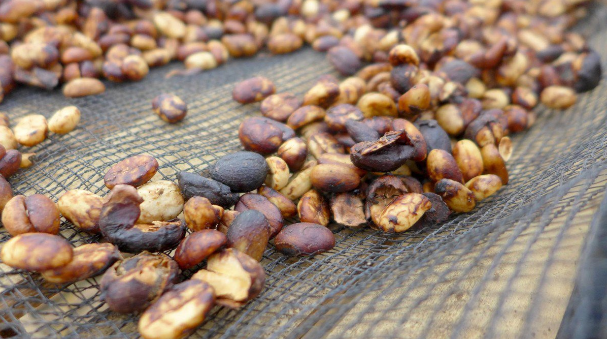
West Java Honey Processing
This West Java Honey processed coffee from Indonesia earns an impressive cupping score of 92 points. The bean's English name, Aromanis, comes from Indonesian and means "sweet mango."
Coffee Details
Region: Mount Tangkuban Perahu, Indonesia
Altitude: 1,400-1,600 meters
Roast Level: Light
Processing Method: Honey Process
Tasting Notes: Intense fruit aroma with plum and jackfruit flavors, clean and sweet aftertaste.
Flavor Profile: Complex floral notes on entry, tropical fruit flavors reminiscent of mango and jackfruit on the palate, a rich and smooth mouthfeel, and a long-lasting sweet aftertaste.
Product Information
Manufacturer: Coffee Workshop
Address: FrontStreet Coffee, Baoqian Front Street, Dongshankou, Yuexiu District, Guangzhou
Contact: 020-38364473
Shelf Life: 90 days
Net Weight: 227g
Packaging: Bulk coffee beans
State: Roasted coffee beans
Sugar Content: Sugar-free
Origin: Indonesia
Roast Level: Light roast
West Java Honey Processing Aromanis
Country: Indonesia
Estate: Aromanis
Region: Mount Tangkuban Perahu
Roast Level: Light roast
Processing Method: Honey Process
Varieties: Jember, S-795
Altitude: 1,400-1,600 meters
Flavor: Fruit notes, plum, jackfruit flavors, clean sweet aftertaste
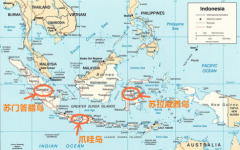
West Java, Indonesia
West Java Province is a first-level administrative division of Indonesia, located in the western part of Java Island. It borders the Java Sea to the north and the Indian Ocean to the south, and includes nearby islands, covering an area of 46,300 square kilometers. Java's climate is tropical rainforest, hot and humid year-round. The plains along the northern coast are the hottest, while the mountains are considerably cooler. High humidity often makes for an enervating climate.
From November to March comes the northwest monsoon, with more rain and cloud; from April to October comes the southeast monsoon, with more sunny days and less rainfall. Jakarta's average annual rainfall is about 1,760 millimeters (69 inches). Its average daily high is 30°C (86°F) and its low is 23°C (74°F). In the highland area of Tosari (elevation 1,735 meters [5,692 feet]), the average temperature ranges from 8-22°C (47-72°F). Because volcanic ash periodically fertilizes the land, Java's soil is very fertile.
Aromanis is a traditional Indonesian sweet snack made from the basic ingredients of flour and sugar. Here the name is borrowed for this coffee, indicating that the beans have a cotton candy-like texture. The beans themselves come from Ciwidey Garut in West Java. No special seeds are involved; it is the processing that draws out such distinctive flavors, though this flavor is not widely recognized in West Java itself.
The beans are picked from the branches and separated from the fruit, then rinsed and dried right away. They are "diserok," or turned, every hour to ensure even drying, including at midnight. "This is very important at night because of the high humidity," said Arief of Bianshen Coffee (Transform Coffee) on August 5, 2014.
The processing takes 25-26 days, which is no surprise given that Aromanis beans cost a little more than regular ones. The farmers' cooperative sells Aromanis green beans for 130,000-150,000 rupiah per kilogram, while Transform Coffee retails them at 80,000 rupiah per 200-gram package.
Honey Processing
Honey processing, also called the Honey Process or Miel Process, produces what is known as Honey Coffee. Plantations in Costa Rica, Panama, and Guatemala have all adopted it. Honey processing refers to drying the beans with the mucilage still attached. After the outer pulp is removed, a layer of sticky, gelatinous substance remains. Traditional washed processing would rinse it away with clean water, but in some high-altitude areas where water is limited, this direct-drying approach was born instead.
Honey processing is a relatively complex, time-consuming, and difficult method. The first step is to select high-quality fruit, then remove the pulp while leaving the endocarp, which is the core of the process. The endocarp holds rich sugars and acids, and during drying the sweetness and acidity slowly penetrate the beans. The second step is drying, which is also the most important condition for producing high-quality beans.
Honey processing lets coffee keep the cleanliness of washed processing. The brightness drops somewhat, but sweetness and caramel notes rise. Depending on the degree of processing, honey coffees are divided into yellow honey, red honey, and black honey. The advantage of the method is that it preserves the original sweet flavors of ripe coffee fruit, giving the coffee elegant brown sugar flavors and nut sweetness, while berry notes support a wine-like aroma, making it a very elegant product.
FrontStreet Coffee Recommendation
Indonesia is best known for a very different style of coffee, and it is worth tasting alongside this light, fruit-forward West Java lot. FrontStreet Mandheling comes from the Toba Lake area of the Lintong region in Sumatra, and Indonesian Mandheling is mostly processed with the local wet-hulled method: because the parchment is removed while the coffee is still half dry and half wet, the green beans dry fully exposed to the air, which gives the coffee its typical herbal and spice notes. To reach the classic Mandheling profile it is roasted medium-dark, leaving it low in acidity but full-bodied, with caramel, dark chocolate, and toasted bread aromas and a long sweet finish. It suits anyone who likes a strong cup.
For the top of the Indonesian range, FrontStreet PWN Golden Mandheling comes from PWN, a trading company that buys only top local Mandheling lots and produces solely at specialty grade. Golden Mandheling is its signature product, screened against strict standards for density, screen size, shape, and color, with defects removed by machine and then by hand so the beans come out complete, even, and large, with less of Mandheling's earthy and grassy character. Freshly roasted, it shows sandalwood, herbal, spice, roasted hazelnut, caramel, and dark chocolate, clean and richly layered, ideal for daily drinking or as a gift.
Mandheling is also a classic component of espresso. Before light, acidic coffee became fashionable, Mandheling was considered the world's fullest, richest coffee, and it went into Italian-style blends often, most famously the Mamba recipe of Mandheling and Brazil. FrontStreet Classic Blend builds on that idea, adding a small amount of Robusta and using a dark roast to push the dark chocolate, nut, and caramel aromas to the front while keeping the wild Mandheling character and Brazil's smooth body. It pours thick, golden crema, and even a beginner can make an authentic Mandheling-style shot with it.
Important Notice :
FrontStreet Coffee is a long-established specialty coffee roaster in Guangzhou China, selling freshly roasted beans from its own farm in Yunnan as well as dozens of carefully selected single-origin beans from around the world for both pour-over and espresso. The products deliver consistently excellent quality and great value, with shipping within 24 hours. Guangzhou's FrontStreet Coffee shop is recommended by many coffee lovers, and the beans are now available online at the Tmall 。
FrontStreet Coffee has moved to a new address:
FrontStreet Coffee Address: 315,Donghua East Road,GuangZhou
Tel:020 38364473
 Scan and follow the En Gafei WeChat official account. Please indicate that the reprint comes from "En Gafei".